The Real Cost of Owning a Tesla Model X: Beyond the Sticker Price
The Tesla Model X remains one of the most distinctive electric SUVs on the road — falcon-wing doors, a panoramic windshield, and performance that embarrasses sports cars. But prospective buyers searching for "Model X windshield replacement cost" are uncovering a truth that forums have discussed for years: the massive single-piece glass that stretches from the hood to the rear-view mirror area is spectacular to look at and spectacularly expensive to replace. This review covers everything you need to know about the 2026 Model X — range, charging, pricing, tax credits, and yes, the glass repair reality that catches many owners off guard.
2026 Tesla Model X Quick Specs
| Specification | Long Range AWD | Plaid (Tri-Motor) |
|---|---|---|
| EPA Range | 335 miles | 326 miles |
| Battery (usable) | ~100 kWh (NMC) | ~100 kWh (NMC) |
| Max DC Fast Charge | 250 kW | 250 kW |
| 10–80% DC Charge Time | ~32 minutes | ~32 minutes |
| Level 2 Home Charging | 11.5 kW (~44 mi/hr) | 11.5 kW (~44 mi/hr) |
| 0–60 mph | 3.8 seconds | 2.5 seconds |
| Horsepower | 670 hp | 1,020 hp |
| Drivetrain | Dual-Motor AWD | Tri-Motor AWD |
| MPGe (combined) | 101 MPGe | 98 MPGe |
| Base MSRP | $79,990 | $94,990 |
| Battery Warranty | 8 yr / 150,000 mi (70% retention) | 8 yr / 150,000 mi (70% retention) |
Source: fueleconomy.gov and Tesla specifications. Figures reflect 2025–2026 model year data.
Range: EPA Numbers vs. What You'll Actually Drive
The Model X uses a ~100 kWh NMC (nickel-manganese-cobalt) battery pack. Tesla chose NMC over LFP (lithium iron phosphate) here because the Model X demands high energy density to move its 5,185-pound curb weight while preserving interior volume. LFP chemistry, found in the Model 3 Standard Range, offers longer cycle life and can be charged to 100% daily without degradation concerns — but it's heavier per kWh, which would compromise the X's range and performance targets.
Efficiency comes in at roughly 101 MPGe combined for the Long Range, translating to about 33 kWh per 100 miles. That's less efficient than the Model Y or Model 3, which is expected given the X's larger frontal area, heavier weight, and the aerodynamic penalty of those falcon-wing door seams. On road trips, plan charging stops around the 220–250 mile mark to maintain a comfortable buffer and avoid the steep charge-curve taper above 80% SoC.
Charging Speed: Supercharger and Home Level 2
| Charging Level | Power (kW) | Miles Added per Hour | Notes |
|---|---|---|---|
| Level 1 (120V) | ~1.4 kW | ~3–4 mi/hr | Emergency/trickle only |
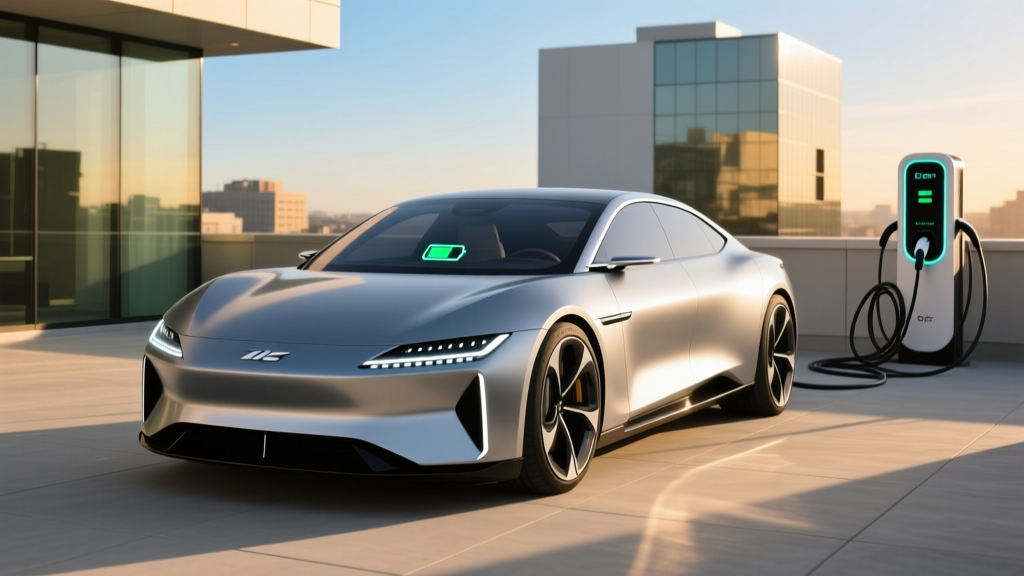
| Level 2 (240V, 48A) | 11.5 kW | ~44 mi/hr | Full overnight charge in ~9 hours |
| DC Fast (Supercharger V3) | 250 kW peak | ~200 mi in 15 min | Peak rate at low SoC; tapers significantly above 60% |
The Model X peaks at 250 kW on Tesla's V3 Superchargers, but sustained rates tell a different story. In real-world testing, the charge curve holds near peak power only between roughly 10–30% SoC, then progressively tapers. The 10–80% session takes approximately 32 minutes. If you arrive at a Supercharger with a cold battery and haven't preconditioned via the car's navigation routing, expect significantly slower initial charging — sometimes under 100 kW until the pack warms.
At home, a Wall Connector on a 60-amp circuit delivers 11.5 kW (48 amps continuous), adding about 44 miles of range per hour. Most owners who drive 40–60 miles daily simply plug in overnight and wake up full. Installation typically requires a 240V/60A circuit; if your electrical panel is near capacity, budget $1,500–$3,000 for a panel upgrade alongside the $500–$800 charger hardware and $800–$2,000 electrician labor.
The Windshield Replacement Cost Question Every Buyer Asks
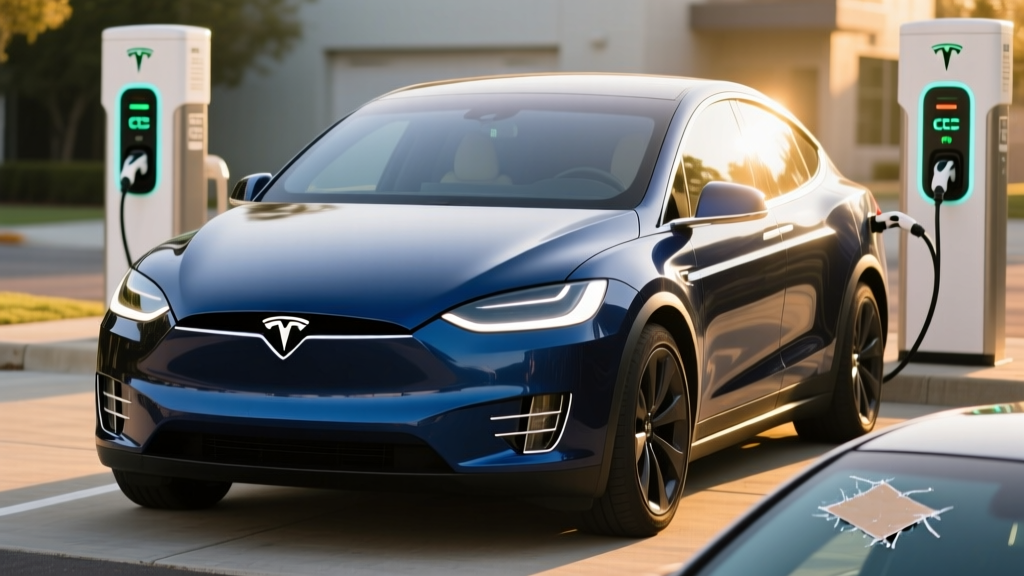
The Model X's panoramic windshield — a single, sweeping piece of glass extending from the cowl past the rear-view mirror toward the roofline — is one of the vehicle's most dramatic design features. It's also one of its most expensive consumables.
Here's what owners report and insurance data confirms:
- OEM windshield replacement: $1,200–$1,800 including calibration of the cameras and sensors mounted behind the glass
- Aftermarket glass (when available): $800–$1,200, though fit and acoustic properties may differ
- ADAS recalibration: The windshield houses the Autopilot camera cluster. Any replacement requires precise recalibration, adding $150–$300 to the job
- Wait times: Due to the specialized nature of the glass, owners have reported waits of 1–3 weeks for OEM replacement, depending on regional Tesla Service Center inventory
Why is it so costly? The Model X windshield is not a standard laminated automotive glass. It's a large-format, solar-tinted, acoustically dampened unit with embedded mounting points for the forward-facing camera module. There are fewer aftermarket suppliers capable of producing it, and Tesla's vertical integration means OEM supply flows primarily through their service network.
Practical advice: If you're buying a Model X, ensure your auto insurance policy includes comprehensive glass coverage with a low or zero deductible specifically for glass. Several Model X owners report that a single rock-chip incident on a highway trip turned into a $1,500+ out-of-pocket expense when their policy had a $500 comprehensive deductible. Some states mandate zero-deductible glass replacement — check your local regulations.
Pricing, Trims, and Federal Tax Credit Eligibility
| Trim | Base MSRP | Destination | Typical As-Tested | §30D Credit Eligible? |
|---|---|---|---|---|
| Long Range AWD | $79,990 | $1,390 | $85,000–$92,000 | No — exceeds MSRP cap |
| Plaid (Tri-Motor) | $94,990 | $1,390 | $100,000–$110,000 | No — exceeds MSRP cap |
The IRS §30D federal tax credit imposes an MSRP cap of $80,000 for SUVs and vans. The Model X Long Range at $79,990 sits tantalizingly close, but once destination charges and any options are added, the vehicle's total MSRP exceeds the threshold. Additionally, the buyer must meet income caps ($300,000 joint / $225,000 head of household / $150,000 single) and the vehicle's battery components and critical minerals must satisfy North American sourcing requirements that have tightened annually through 2026.
Bottom line: the Model X does not qualify for the $7,500 federal tax credit in its current configuration. Buyers should consult a tax professional and verify current-year rules at irs.gov before counting on any incentive. Some states offer separate EV rebates that have no MSRP cap — check your state's energy office for details.
Interior Space, Cargo, and Family Practicality
The Model X offers seating for up to seven passengers in its optional third-row configuration (six-passenger with captain's chairs is standard). Cargo volume is generous for the segment:
- Behind third row: ~15 cu ft
- Behind second row (third row folded): ~40 cu ft
- Maximum (all rear seats folded): ~82 cu ft
- Front trunk (frunk): ~6.5 cu ft — useful for charging cables and groceries
- Second-row legroom: ~38.4 inches
- Third-row legroom: ~32.7 inches — tight for adults on longer trips
The falcon-wing doors are genuinely practical for loading children into car seats — the roof opening provides stand-up clearance next to the second row. However, they require significant overhead clearance (approximately 12 inches of lateral space plus vertical clearance) and can be slow to open in tight parking garages. Owners in regions with heavy rain note that the doors expose the cabin to the elements longer than conventional doors during opening and closing.
Technology, Autopilot, and Driver Assistance
The 2026 Model X comes standard with Tesla's basic Autopilot (Traffic-Aware Cruise Control and Autosteer). Full Self-Driving (Supervised) remains an $8,000 add-on (or $99/month subscription) and includes features like Navigate on Autopilot, Auto Lane Change, Autopark, and Smart Summon. FSD has improved substantially in urban environments, but it still requires constant supervision and can behave unpredictably at complex intersections, construction zones, and in poor weather.
The 17-inch center touchscreen runs Tesla's proprietary infotainment system — no Apple CarPlay or Android Auto. The rear passengers get their own 8-inch screen for climate controls and entertainment. The 22-speaker audio system is excellent, and the gaming capability (full Steam integration while parked) is a genuine differentiator for families on road trips.
Who Should Buy the Model X — And Who Shouldn't
Choose the Model X if:
- You need a three-row electric SUV with Supercharger network access for road trips
- The falcon-wing doors genuinely help with car-seat loading in your daily routine
- You want 335 miles of EPA range and 250 kW DC fast charging in a premium package
- You accept the windshield replacement cost risk and have appropriate insurance coverage
Consider alternatives if:
- You want federal tax credit eligibility — look at the Model Y, Rivian R1S, or Hyundai Ioniq 9
- You park in tight urban garages where falcon-wing clearance is an issue
- You need Apple CarPlay or a more traditional dealership service experience
- Your budget is under $70,000 — the Kia EV9 and Hyundai Ioniq 9 offer three rows at lower prices
Pros and Cons
Pros
- 335-mile EPA range among the best in 3-row EV SUVs
- 250 kW Supercharger access with the most mature DC fast-charging network
- Falcon-wing doors genuinely aid car-seat loading
- Plaid variant's 2.5-second 0–60 is absurd for a 5,185-lb SUV
- Over-the-air updates continuously add features
- Strong frunk + rear cargo combination
Cons
- Windshield replacement costs $1,200–$1,800 with long lead times
- No federal tax credit due to MSRP cap and sourcing rules
- Falcon-wing doors slow in tight spaces and require overhead clearance
- No Apple CarPlay or Android Auto
- Third-row legroom is tight for adults
- Service center availability varies widely by region
Frequently Asked Questions
What is the real-world range of the Tesla Model X?
The EPA rates the Model X Long Range at 335 miles. In real-world highway driving at 70–75 mph, expect 270–290 miles. In cold weather below freezing, plan for 230–255 miles. The Plaid variant's more aggressive powertrain tuning drops its real-world highway range to approximately 260–280 miles.
How fast does the Model X charge at home and on the road?
On a Tesla V3 Supercharger, the Model X peaks at 250 kW and charges from 10–80% in approximately 32 minutes. At home on a Level 2 Wall Connector (240V, 48A), it charges at 11.5 kW, adding roughly 44 miles per hour — enough for a full overnight charge in about 9 hours.
How much does a Model X windshield replacement actually cost?
OEM windshield replacement runs $1,200–$1,800 including ADAS camera recalibration. Aftermarket options, when available, range from $800–$1,200. The panoramic windshield's size, acoustic lamination, solar tinting, and embedded camera mounts make it significantly more expensive than a conventional automotive windshield. Comprehensive glass coverage with a low deductible is strongly recommended.
Does the 2026 Model X qualify for the federal EV tax credit?
No. The IRS §30D credit caps SUV MSRP at $80,000, and the Model X Long Range starts at $79,990 before destination and options, pushing it over the limit. Additionally, buyers must meet income thresholds and the vehicle must satisfy increasingly strict battery-sourcing requirements. Consult a tax professional and check irs.gov for current-year rules.
Is the Model X worth buying vs. the Rivian R1S or Kia EV9?
The Model X wins on Supercharger network maturity, range (335 mi vs. R1S's ~352 mi Max Pack but at higher cost), and software integration. The Rivian R1S offers better off-road capability, more conventional doors, and a lower starting price with potential tax credit eligibility on certain configurations. The Kia EV9 is significantly more affordable ($54,900–$73,900) with three rows and available tax credits, though it sacrifices ~60 miles of range and doesn't have Supercharger access without an adapter. Your choice depends on budget, charging network preference, and how much the falcon-wing practicality matters to your routine.
What battery warranty does Tesla provide?
Tesla covers the Model X battery and drive unit for 8 years or 150,000 miles (whichever comes first), guaranteeing a minimum of 70% capacity retention. In practice, NMC packs in Teslas have shown approximately 10–12% degradation over the first 100,000 miles based on fleet data, though individual results vary with charging habits and climate.