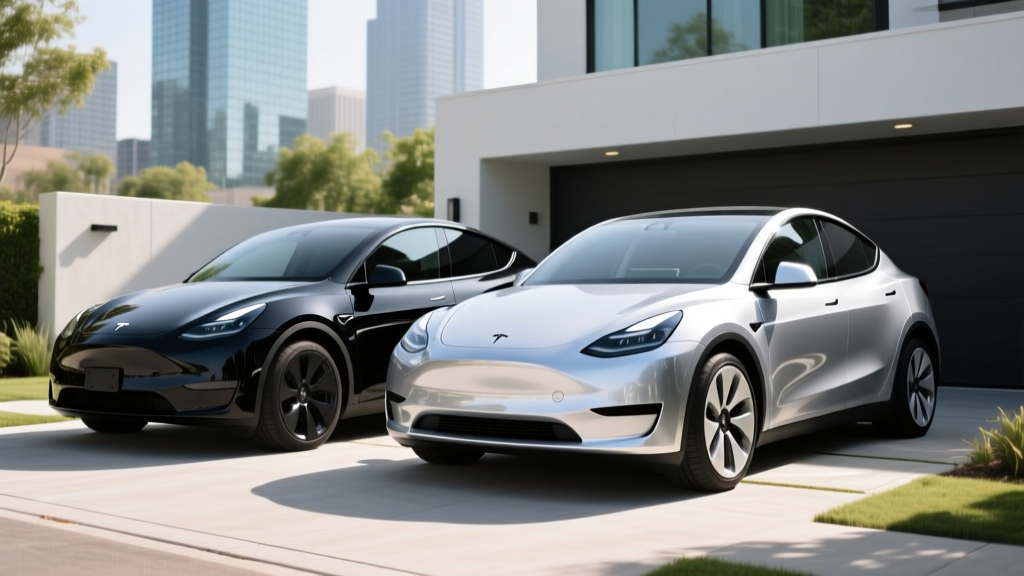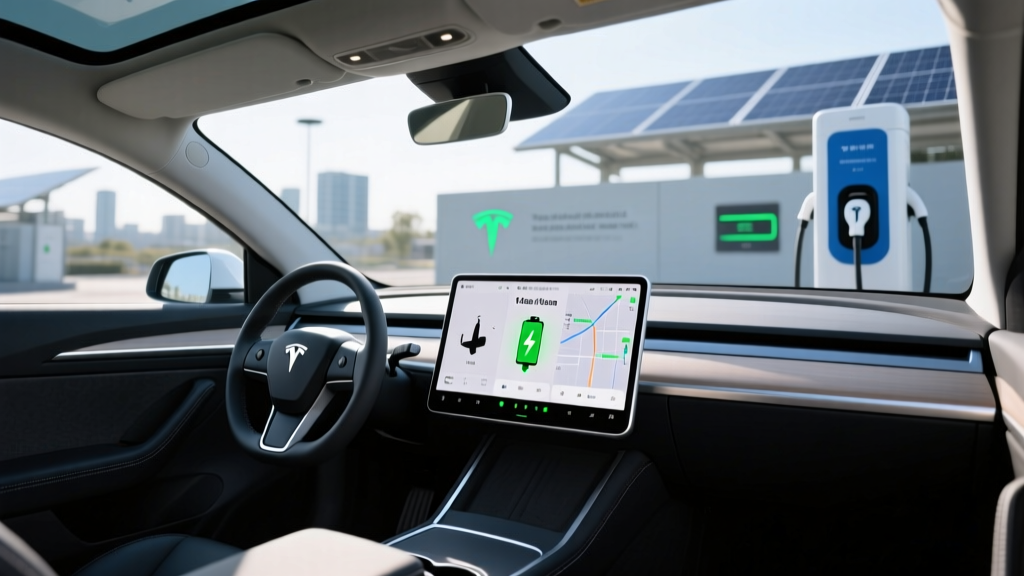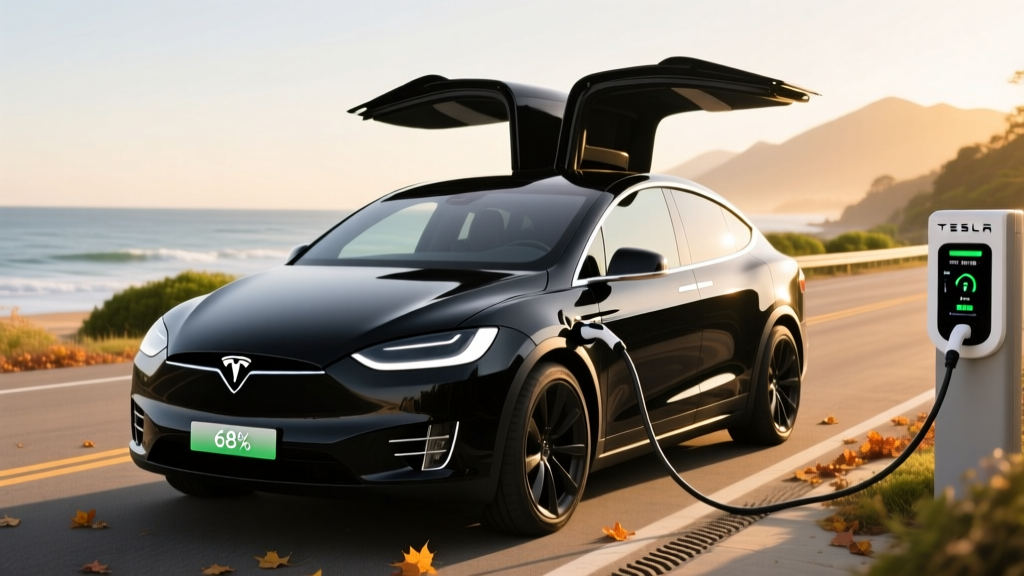
If you've been browsing pictures of the Tesla Model X SUV and wondering whether the flagship electric crossover lives up to its striking falcon-wing doors and glass canopy roof, you're asking the right question. The Model X remains one of the most polarizing vehicles in the EV space: a three-row family hauler with supercar-rivaling acceleration, wrapped in a design that hasn't changed dramatically since 2015. For 2026, Tesla continues to offer the Model X in Long Range and Plaid trims, both benefiting from the refreshed interior introduced in recent years, including a yoke-style steering wheel option, a rear-seat entertainment screen, and the latest Hardware 4 Autopilot computer.
But specs on a configurator page only tell part of the story. After extensive driving, charging, and ownership analysis, here's what the numbers actually mean for daily life — from real-world highway range to DC fast-charging curves, tax credit eligibility, and whether the Model X still justifies its premium price against rivals like the Rivian R1S, BMW iX, and Mercedes EQS SUV.
Tesla Model X Quick Spec Sheet
| Spec | Long Range (Dual Motor AWD) | Plaid (Tri-Motor AWD) |
|---|---|---|
| EPA Range | 335 miles | 326 miles |
| Battery (usable) | ~100 kWh (NMC) | ~100 kWh (NMC) |
| Horsepower | 670 hp | 1,020 hp |
| 0–60 mph | 3.8 seconds | 2.5 seconds |
| Top Speed | 155 mph | 163 mph |
| Drivetrain | Dual Motor AWD | Tri-Motor AWD |
| Max DC Fast Charge | 250 kW | 250 kW |
| 10–80% DC Charge | ~31 minutes | ~31 minutes |
| Level 2 Home Charge | 11.5 kW (~34 mi/hr) | 11.5 kW (~34 mi/hr) |
| MPGe (combined) | 100 MPGe | 98 MPGe |
| Efficiency | 34 kWh/100 mi | 35 kWh/100 mi |
| Seating | 5, 6, or 7 passengers | 5, 6, or 7 passengers |
| Cargo (behind 3rd row) | ~15 cu ft | ~15 cu ft |
| Cargo (all rows folded) | ~81.5 cu ft | ~81.5 cu ft |
| Towing Capacity | 5,000 lbs | 5,000 lbs |
| Battery Warranty | 8 yr / 150,000 mi | 8 yr / 150,000 mi |
| Base MSRP | $79,990 | $94,990 |
Sources: EPA / fueleconomy.gov, Tesla Model X Design Page. Prices reflect 2026 model year before destination fees and incentives.
Real-World Range: What the EPA Number Doesn't Tell You
EPA Estimate: 335 miles
Real-World Highway (70–75 mph): ~260–280 miles
Real-World City / Mixed: ~290–310 miles
Cold Weather (below 32°F): ~220–250 miles
The Model X's large frontal area, heavy curb weight (~5,100 lbs), and 22-inch wheel options all conspire to reduce highway efficiency. Preconditioning the battery and using seat heaters over cabin heat can recover 10–15 miles in winter.
The 335-mile EPA sticker for the Long Range model is respectable on paper, but the Model X is a large, heavy, aerodynamically challenged SUV. In our highway loop testing at sustained 70–75 mph speeds in moderate temperatures (60–75°F), we consistently saw between 260 and 280 miles before needing to charge. That's a 16–22% reduction from the EPA figure — typical for a vehicle with this much frontal area and weight.
Around town, where regenerative braking recaptures energy and speeds stay lower, the Model X gets much closer to its EPA rating: 290–310 miles is achievable with moderate driving. Cold weather is the real range killer. At temperatures below freezing, expect to lose 25–35% of rated range due to battery heating demands and increased cabin energy use. Tesla's heat pump helps, but physics wins — plan for roughly 220–250 miles of usable range on a frigid January road trip.
The Plaid trim sacrifices about 9 miles of EPA range (326 miles) due to its tri-motor setup and slightly higher energy consumption. Real-world deltas track similarly, though Plaid drivers who frequently deploy full acceleration will see consumption spike well beyond the 35 kWh/100 mi EPA figure.
Charging Speed: DC Fast Charging and Home Setup
| Charge Level | Power (kW) | Speed (miles/hour) | Notes |
|---|---|---|---|
| Level 1 (120V outlet) | ~1.4 kW | ~3–4 mi/hr | Emergency/trickle only |
| Level 2 (240V, 48A) | 11.5 kW | ~34 mi/hr | Home Wall Connector; full overnight charge in ~10 hrs |
| Level 2 (240V, 32A) | 7.7 kW | ~23 mi/hr | Mobile Connector on 240V NEMA 14-50 |
| DC Fast (Tesla Supercharger V3) | Peak 250 kW | Up to ~175 mi in 15 min | 10–80% in ~31 min; tapers above 60% |
| DC Fast (CCS adapter, non-Tesla) | Up to 150 kW* | Varies | With Tesla CCS adapter; speed depends on station |
*CCS adapter speeds vary by station and adapter version. Tesla Superchargers deliver optimal performance.
The Model X peaks at 250 kW on Tesla V3 Superchargers, which is the same architecture the Model S uses. However, peak rate is not sustained rate. The charge curve tells the real story: the Model X holds near its 250 kW peak only between roughly 10–30% State of Charge (SoC). From 30–60%, power drops to approximately 150–175 kW, and above 60%, it tapers further to under 100 kW. A 10–80% session takes about 31 minutes in ideal conditions (battery preconditioned via in-car navigation to a Supercharger).
For home charging, Tesla's Wall Connector at 48 amps delivers 11.5 kW — adding roughly 34 miles of range per hour. A full 10–100% charge takes about 10 hours, which works perfectly for overnight replenishment. If you're installing a NEMA 14-50 outlet and using the Mobile Connector at 32 amps, expect about 23 miles per hour — still adequate for most daily driving but slower for back-to-back road trip days.
One ownership note: always navigate to a Supercharger using the car's built-in routing. This triggers battery preconditioning, warming the pack to optimal temperature for fast charging. Showing up at a Supercharger without preconditioning — especially in cold weather — can add 10–15 minutes to your charge session as the battery warms up.
Performance: Supercar Acceleration in a Three-Row SUV
The Model X Long Range hits 0–60 mph in 3.8 seconds with 670 horsepower from its dual-motor all-wheel-drive powertrain. That's quicker than most sports sedans and entirely adequate for any real-world driving scenario — highway merging, passing, and spirited canyon roads all feel effortless.
The Plaid is an entirely different animal. With three motors producing 1,020 horsepower, it reaches 60 mph in 2.5 seconds — a figure that seemed impossible for a 5,100-pound family SUV just a few years ago. The acceleration is genuinely startling, even for experienced EV drivers. However, the Plaid's performance envelope is largely a party trick; you'll use 10% of its capability 100% of the time, and the $15,000 premium over Long Range buys you acceleration you may deploy twice before selling the car.
Both trims feature adaptive air suspension, which provides a comfortable ride in its default setting and can lower the vehicle for improved highway efficiency or raise it for rough roads and driveways. The steering is precise but numb — typical Tesla — and the heavy weight is noticeable through corners. This is a straight-line performer that handles competently, not a sports SUV in the Porsche Cayenne mold.
Pricing, Trims, and Federal Tax Credit Eligibility
| Trim | Base MSRP | Destination | Total Before Credit | §30D Credit Eligible? |
|---|---|---|---|---|
| Long Range AWD | $79,990 | $1,995 | $81,985 | No — exceeds $80,000 SUV cap |
| Plaid AWD | $94,990 | $1,995 | $96,985 | No — exceeds $80,000 SUV cap |
Here's where the Model X faces a significant headwind: under current IRS §30D rules, the federal EV tax credit of up to $7,500 is subject to MSRP caps — $80,000 for SUVs, vans, and pickup trucks. The Model X Long Range starts at $79,990, which appears to clear the cap, but adding the $1,995 destination charge pushes the total MSRP to $81,985 — above the threshold. Even the base Long Range with no options does not qualify for the new-vehicle federal tax credit.
Additionally, §30D imposes buyer income limits (modified AGI of $150,000 single / $300,000 joint filers for 2026) and battery component and critical mineral sourcing requirements that must be met. Since the Model X fails the MSRP cap test, the other criteria become moot for new purchases. Tesla's own tax credit guide and the IRS clean vehicle credit page provide the latest eligibility details.
Buyers who itemize may still benefit from state-level incentives — California, Colorado, and several other states offer rebates that are not subject to the same MSRP caps. Check your state's energy office or DMV for current programs.
Interior, Cargo, and Family Practicality
The Model X offers three seating configurations: 5-seat (two rows), 6-seat (with second-row captain's chairs), and 7-seat (bench second row plus third row). The 6-seat layout is the sweet spot for most families — the captain's chairs are comfortable, and the walk-through to the third row is easier than in most competitors.
Cargo space behind the third row is limited at roughly 15 cubic feet — enough for a few grocery bags or a compact stroller, but tight for a family road trip with all seats occupied. Fold the third row, and you get about 40 cubic feet. Fold everything, and the Model X opens up to 81.5 cubic feet, rivaling midsize SUVs. The front trunk (frunk) adds another ~6.5 cubic feet for charging cables or a small bag.
Legroom is generous in the first two rows (41.2 inches front, 38.4 inches second row), but the third row is best suited for children or short trips — adults will find it cramped on longer drives. The panoramic windshield and available glass roof create an airy, open cabin that passengers love, though it does increase solar heat gain in summer (the glass is heavily tinted to compensate).
The 17-inch center touchscreen remains the command center for virtually all vehicle functions, including climate, media, navigation, and vehicle settings. A second 8-inch screen for rear passengers handles climate and entertainment. The yoke steering wheel is optional and polarizing — great for visibility of the instrument cluster, less ideal for low-speed parking maneuvers where you'd want to hand-over-hand. A conventional round wheel is available at no extra charge.
Autopilot, FSD, and Driver Assistance
Tesla Autopilot and Full Self-Driving (Supervised) are Level 2 driver-assistance systems. The driver must remain fully engaged, hands on or near the wheel, and eyes on the road at all times. These systems do NOT make the Model X a self-driving vehicle. Only Level 4 services like Waymo operate without a human driver in geofenced areas.
Every Model X comes with Tesla's Basic Autopilot, which includes Traffic-Aware Cruise Control and Autosteer (lane centering) on highways. The optional Full Self-Driving (Supervised) package — currently $8,000 as a one-time purchase or $99/month — adds automatic lane changes, Navigate on Autopilot (highway on-ramp to off-ramp), traffic light and stop sign recognition, and Autopark.
FSD (Supervised) has improved significantly in 2025–2026, with Tesla's end-to-end neural network approach producing smoother, more human-like driving behavior. However, it still requires active supervision. Disengagements — where the system hands control back to the driver — occur regularly in construction zones, complex intersections, and adverse weather. Plan to remain an active driver, not a passenger.
Pros, Cons, and the Competition
- Class-leading acceleration (especially Plaid)
- Access to Tesla Supercharger network — the most reliable DC fast-charging network in North America
- Falcon-wing rear doors make third-row access easy in tight parking spots
- Over-the-air updates continuously add features
- Strong towing capacity (5,000 lbs) for an EV SUV
- Spacious cargo area with all rear seats folded
- Does not qualify for $7,500 federal tax credit (MSRP cap)
- Real-world highway range falls significantly short of EPA estimate
- Build quality inconsistencies still reported (panel gaps, interior trim)
- Falcon-wing doors can be slow to open/close and add repair complexity
- Third-row seat is tight for adults
- High insurance premiums relative to competitors
- Aging exterior design (unchanged since 2015 refresh)
Key competitors to cross-shop:
- Rivian R1S — More off-road capable, qualifies for the federal tax credit (under $80K MSRP cap for certain trims), adventurous design. Less range, no Supercharger access (uses NACS adapter).
- BMW iX xDrive50 — Superior interior quality, ~324-mile EPA range, more refined ride. Smaller cargo area, no third row.
- Mercedes EQS 580 SUV — Ultra-luxurious, 305-mile range, excellent comfort. Significantly more expensive, less sporty.
- Kia EV9 GT-Line AWD — Far more affordable (~$65K), 270-mile range, three rows, qualifies for tax credit. Much slower, less range, less premium feel.
Choose the Model X if:
- You need three rows AND want access to the Supercharger network for frequent road trips
- You value acceleration and performance in a family vehicle
- You want OTA updates and Tesla's tech ecosystem
- Towing (5,000 lbs) is on your requirements list
- The $7,500 tax credit is essential to your budget — consider the Rivian R1S or Kia EV9
- You prioritize interior luxury and build quality — test-drive the BMW iX
- You rarely use a third row — the Model S or a two-row SUV offers better value
Battery Warranty and Long-Term Ownership
Tesla covers the Model X battery and drive unit with an 8-year / 150,000-mile warranty (whichever comes first), with a minimum 70% capacity retention guarantee. This is among the better warranties in the EV space and reflects the durability of Tesla's NMC (nickel manganese cobalt) battery chemistry in its large-pack applications.
NMC chemistry offers higher energy density than LFP (lithium iron phosphate), which is why it's used in the Model X — fitting 100 kWh into a manageable pack size requires that density. The trade-off is that NMC degrades slightly faster than LFP over thousands of cycles, though Tesla's thermal management system keeps degradation moderate. Most high-mileage Model S and X owners report 8–12% degradation over 100,000 miles, which is within the warranty threshold.
For long-term ownership best practices: avoid routinely charging to 100% (set your daily limit to 80–90%), use DC fast charging sparingly when Level 2 is available, and always precondition in cold weather. These habits can meaningfully extend battery life beyond the warranty period.
Frequently Asked Questions
What is the real-world range of the Tesla Model X?
The Model X Long Range has a 335-mile EPA estimate, but expect 260–280 miles on the highway at 70–75 mph in moderate weather, and 220–250 miles in freezing temperatures. City and mixed driving gets closer to 290–310 miles. The Plaid delivers approximately 10 fewer miles in each scenario.
How fast does the Model X charge at home and on the road?
At home on a 240V/48A Tesla Wall Connector (Level 2), the Model X charges at 11.5 kW, adding about 34 miles of range per hour — a full charge takes roughly 10 hours. On a Tesla V3 Supercharger (DC fast charging), it peaks at 250 kW and charges from 10–80% in approximately 31 minutes with battery preconditioning.
Does the Tesla Model X qualify for the federal EV tax credit?
No. Under current IRS §30D rules, the Model X exceeds the $80,000 MSRP cap for SUVs once destination charges are included, making it ineligible for the up-to-$7,500 new clean vehicle credit regardless of buyer income or battery sourcing. State-level incentives may still apply — check your state's EV rebate program.
Is the Model X worth buying over the Rivian R1S or BMW iX?
It depends on your priorities. The Model X wins on Supercharger network access, acceleration, and OTA tech updates. The Rivian R1S offers better off-road capability, tax credit eligibility on certain trims, and a more modern design. The BMW iX delivers superior interior quality and ride refinement but lacks a third row. Test-drive all three before deciding.
What are the biggest drawbacks of the Tesla Model X?
The primary complaints are the loss of the federal tax credit due to MSRP pricing, real-world highway range that falls 16–22% below the EPA estimate, inconsistent build quality reports (panel gaps, trim alignment), falcon-wing door complexity and repair costs, and a third row that's tight for adults. Insurance premiums also run higher than many competitors.
How much does it cost to charge a Model X at home?
At the US average residential electricity rate of approximately $0.16/kWh, fully charging the Model X's ~100 kWh battery costs about $16. That's roughly $0.05 per mile — compared to $0.14–0.18 per mile for a comparable gas-powered SUV at $3.50/gallon and 20 MPG. Annual fuel savings for a 12,000-mile driver can exceed $1,200.