2026 Tesla Model X at a Glance: Design, Specs, and Real-World Photos
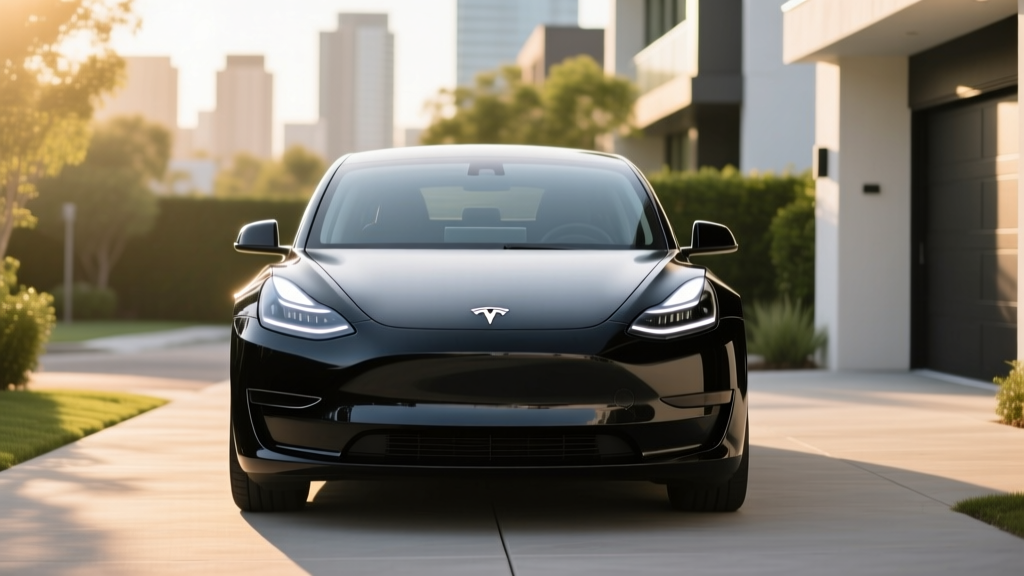
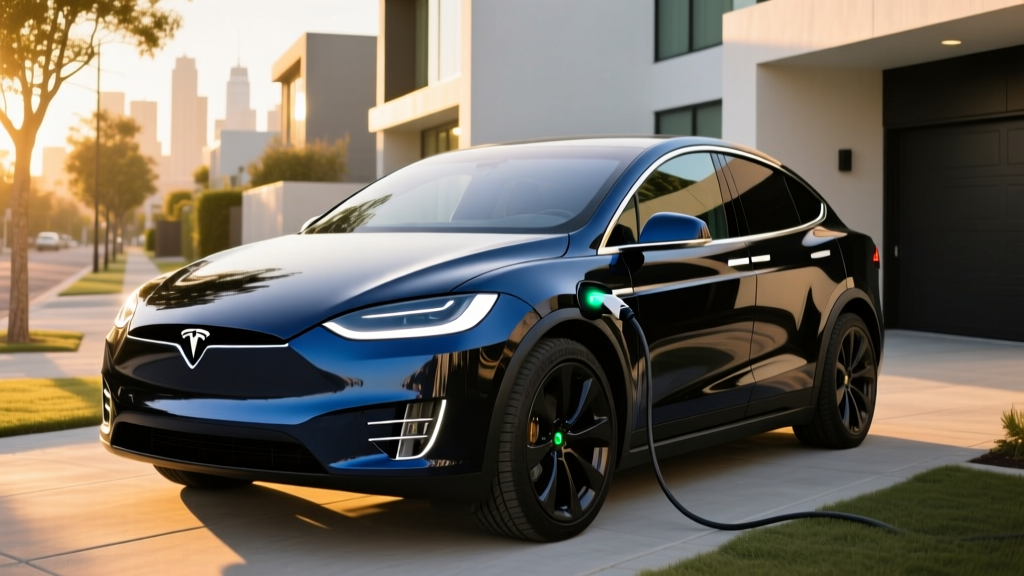
Search for Tesla X SUV pictures and you'll see the Model X's signature falcon-wing rear doors, panoramic windshield, and minimalist cabin. But photos only tell part of the story. As a three-row electric SUV that has been in continuous production since 2015 — with a major powertrain and interior refresh for the 2023+ model years — the 2026 Tesla Model X remains one of the few EVs combining 300+ miles of EPA range, supercar-level acceleration, and seating for up to seven. This review pairs detailed spec analysis with real-world ownership data to help you decide if it's the right electric SUV for your garage.
The 2026 Model X carries over the architecture introduced in recent refreshes: a 100 kWh (usable ~95 kWh) NMC lithium-ion battery pack, dual- and tri-motor powertrain options, and Tesla's proprietary NACS charge port granting native access to the Supercharger network. Pricing starts at $79,990 for the Long Range AWD and climbs to $94,990 for the tri-motor Plaid.
| Spec | Long Range AWD | Plaid (Tri-Motor AWD) |
|---|---|---|
| EPA Range | 348 miles | 320 miles |
| Battery (usable) | ~95 kWh, NMC | ~95 kWh, NMC |
| Drivetrain | Dual-Motor AWD | Tri-Motor AWD |
| Horsepower | 670 hp | 1,020 hp |
| 0-60 mph | 3.8 seconds | 2.5 seconds |
| Top Speed | 155 mph | 163 mph |
| Max DC Fast Charge | 250 kW | 250 kW |
| 10-80% DCFC Time | ~30 minutes | ~30 minutes |
| Level 2 Charge Rate | 11.5 kW (~34 mi/hr) | 11.5 kW (~34 mi/hr) |
| MPGe (combined) | 103 MPGe | 98 MPGe |
| Efficiency | 33 kWh/100 mi | 35 kWh/100 mi |
| Towing Capacity | 5,000 lbs | 5,000 lbs |
| Seating | 5, 6, or 7 | 5 or 6 |
| Base MSRP | $79,990 | $94,990 |
Range and Efficiency: What the EPA Number Doesn't Tell You
The Long Range Model X posts an EPA-estimated 348 miles, while the Plaid drops to 320 miles due to the tri-motor setup's higher energy draw. According to fueleconomy.gov, the Long Range achieves 103 MPGe combined (33 kWh per 100 miles), making it one of the more efficient large three-row electric SUVs on the market.
EPA 348 mi (Long Range) / 320 mi (Plaid). Expect approximately 280-310 miles in mixed highway driving at 70-75 mph. In freezing temperatures (below 32°F), plan for a 20-30% reduction, bringing usable range to roughly 220-260 miles. The Model X's heat pump helps mitigate winter losses compared to older EVs without one, but the large cabin volume still requires significant energy to heat. For road trips, plan charging stops at 200-220 mile intervals in winter to maintain a comfort buffer.
Efficiency in the Model X is aided by its slippery 0.24 Cd drag coefficient — remarkable for an SUV — and Tesla's mature thermal management system. On the flip side, the 5,185-pound curb weight (Long Range) works against it in stop-and-go city driving compared to lighter crossovers. Owners who primarily drive in moderate climates with mixed city/highway routes will find the EPA numbers closely achievable; those in the northern tier states should budget for meaningful seasonal range compression.
Charging Speed: Supercharger Network Advantage
The 2026 Model X peaks at 250 kW on DC fast chargers, utilizing Tesla's V3 and newer V4 Supercharger stalls. On a 400-volt architecture (not the 800V systems found in the Hyundai Ioniq 5 or Porsche Taycan), the Model X sustains its peak rate for a narrower portion of the charge curve, tapering noticeably above 60% state of charge.
| Charging Level | Power | Speed (Miles Added) | Notes |
|---|---|---|---|
| Level 1 (120V) | ~1.4 kW | ~4 mi/hr | Emergency/trickle only |
| Level 2 (240V, 48A) | 11.5 kW | ~34 mi/hr | Full charge in ~10 hours |
| DC Fast (Supercharger V3) | 250 kW peak | ~200 mi in 15 min | 10-80% in ~30 minutes |
| DC Fast (CCS adapter) | Up to 150 kW | Varies by station | Requires Tesla CCS adapter |
At home on a Wall Connector (up to 48 amps / 11.5 kW), the Model X recovers roughly 34 miles of range per hour of charging. A full overnight session easily replenishes a day's worth of driving. For public charging, the Model X's native NACS port means you pull into a Supercharger stall and plug in — no adapter needed, no payment app fumbling. This remains Tesla's strongest ownership advantage. For non-Tesla networks like Electrify America or EVgo, Tesla offers a CCS adapter (included with newer vehicles or available for purchase) that opens up a wider DCFC ecosystem, though at slightly reduced peak speeds due to adapter throughput limits.
Charge-curve reality: The 250 kW peak is achieved roughly between 10-40% SoC under ideal battery preconditioning. Above 60%, speeds taper to roughly 100-120 kW, and above 80% they drop further to 40-60 kW. The quoted 10-80% time of approximately 30 minutes assumes you've navigated to a Supercharger in the car's navigation, triggering automatic battery preconditioning. Without preconditioning, add 5-10 minutes to your stop.
Performance: Supercar Acceleration in a Family SUV
The dual-motor Long Range Model X delivers 670 horsepower and hits 0-60 mph in 3.8 seconds — a figure that would embarrass most sports sedans a decade ago. The Plaid variant, with three motors producing 1,020 horsepower, drops the 0-60 time to an astonishing 2.5 seconds, making it one of the quickest production SUVs ever built.
Both variants use Tesla's dual-motor (or tri-motor) all-wheel-drive system with torque vectoring. The adaptive air suspension lowers the vehicle at highway speeds for efficiency and raises it for rough roads or steep driveways, providing up to 8.1 inches of ground clearance in its highest setting. Towing capacity is rated at 5,000 pounds across both trims — sufficient for a small boat, utility trailer, or a pair of ATVs, though towing will reduce range by roughly 30-40% depending on trailer aerodynamics and weight.
Interior, Cargo Space, and the Tech Experience
The Model X interior centers on a 17-inch landscape-oriented touchscreen that controls virtually all vehicle functions. A second 8-inch screen serves rear passengers for climate and entertainment. The yoke steering wheel (a round wheel is available at no extra charge) and the absence of physical buttons define the cabin's minimalist character. Whether you find this elegant or frustrating depends on your tolerance for menu-diving to adjust mirrors or open the glovebox.
Cargo space is generous: 88.1 cubic feet behind the first row (with second and third rows folded in the 5-seat config), 41.1 cubic feet behind the second row, and a front trunk (frunk) adding 6.5 cubic feet for charging cables or groceries. Legroom measures 41.2 inches in the front, 41.1 inches in the second row, and 32.7 inches in the third row — the third row is best suited for children or short trips.
The falcon-wing rear doors are the Model X's most photographed feature, and for good reason: they articulate upward in tight parking spaces using ultrasonic sensors to avoid overhead obstacles. They also make loading car seats and cargo dramatically easier than conventional doors. The tradeoff: they're mechanically complex, can be slow to operate in rain (exposing the cabin), and have historically been a source of maintenance complaints in earlier model years.
On the tech front, the Model X includes Tesla's Basic Autopilot (lane centering, adaptive cruise control, automatic emergency braking) as standard. Full Self-Driving (Supervised) — a SAE Level 2 system requiring continuous driver attention — is available as an $8,000 add-on or $99/month subscription. Despite the "FSD" branding, this is not autonomous driving; the driver must remain engaged with hands on or near the wheel at all times.
Pricing, Trims, and Federal Tax Credit Eligibility
The 2026 Model X lineup is straightforward:
| Trim | Base MSRP | Destination | As-Tested (typical options) |
|---|---|---|---|
| Long Range AWD | $79,990 | $1,990 | $82,000-$88,000 |
| Plaid (Tri-Motor AWD) | $94,990 | $1,990 | $97,000-$105,000 |
Common options that push the as-tested price higher include the six-seat interior layout ($6,500), FSD (Supervised) at $8,000, premium paint colors ($1,500-$2,500), and 22-inch Turbine wheels ($5,500).
The Model X Long Range at $79,990 (MSRP) sits just under the IRS §30D SUV MSRP cap of $80,000, potentially qualifying for up to $7,500 in federal tax credits — if the buyer meets income limits (adjusted gross income ≤ $300,000 for joint filers, ≤ $150,000 for single filers) and the vehicle's battery components and critical minerals meet domestic sourcing thresholds that tighten annually. The Plaid at $94,990 exceeds the MSRP cap and does not qualify. The credit can now be transferred to the dealer at point of sale as an instant discount per current IRS guidance. Battery sourcing requirements change yearly — always verify eligibility on the IRS qualified vehicles list before purchase.
Ownership Costs, Warranty, and Long-Term Battery Health
Tesla covers the Model X with a 4-year/50,000-mile basic vehicle warranty and an 8-year/150,000-mile battery and drive unit warranty, guaranteeing at least 70% capacity retention over that period. This is competitive with rivals like the BMW iX (8-yr/100,000-mi battery warranty) and slightly better than the Rivian R1S (8-yr/120,000-mi).
Real-world battery degradation data from Tesla's fleet suggests NMC packs in the Model X lose roughly 10-12% capacity over the first 100,000 miles, after which degradation slows considerably. Owners who charge primarily on Level 2 at home and avoid frequent 100% charges or repeated DC fast-charging sessions tend to see better long-term State of Health (SoH). The Model X's liquid-cooled thermal management system is among the best in the industry for preserving battery longevity.
Insurance costs tend to run higher than average for the segment — expect $2,500-$3,800 annually depending on your state and driving record, driven by the Model X's repair costs and performance classification. Maintenance is minimal: no oil changes, no transmission fluid, cabin air filter replacement every 2-3 years, brake fluid checks, and tire rotations. Tesla recommends checking the brake calipers and pads periodically since regenerative braking reduces but doesn't eliminate friction brake wear.
Model X vs. the Competition: Rivian R1S, BMW iX, Mercedes EQB
The Model X competes in a growing but still limited field of three-row electric SUVs. Here's how it stacks up on the metrics that matter:
| Metric | Tesla Model X LR | Rivian R1S (Dual-Motor) | BMW iX xDrive50 | Kia EV9 (GT-Line AWD) |
|---|---|---|---|---|
| EPA Range | 348 mi | ~340 mi (Max Pack) | 324 mi | 279 mi |
| Base MSRP | $79,990 | $79,900 | $87,250 | $73,900 |
| 0-60 mph | 3.8 sec | 5.0 sec | 4.6 sec | 5.0 sec |
| Max DCFC | 250 kW | 220 kW | 195 kW | 236 kW |
| Third Row | Yes (tight) | Yes (tight) | No (2-row) | Yes (usable) |
| Tax Credit | Potential (LR only) | Yes (most configs) | No (over MSRP cap) | Yes (under cap) |
The Rivian R1S offers superior off-road capability, a more traditional SUV interior layout, and broader tax credit eligibility, but can't match the Model X on range or acceleration. The BMW iX delivers a more luxurious cabin and quieter ride but seats only five and costs more. The Kia EV9 is the value play — significantly cheaper, genuinely usable third row, but 70 fewer miles of range and markedly slower performance. The Model X wins on range, Supercharger access, and raw speed; it loses on interior material quality and third-row comfort compared to some newer competitors.
Pros, Cons, and Who Should Buy the 2026 Model X
- Class-leading 348-mile EPA range (Long Range)
- Native Supercharger network access — best public charging experience
- Supercar 0-60 times across both trims
- Falcon-wing doors are genuinely practical for car-seat loading
- Over-the-air updates continuously add features
- 5,000-lb towing capacity
- Strong battery warranty (8 yr / 150,000 mi)
- Third-row legroom is tight (32.7 in) — kids only
- Plaid trim exceeds $80K MSRP cap — no federal tax credit
- Minimalist interior lacks physical controls; divisive yoke steering
- Falcon-wing doors can be slow and problematic in freezing rain
- Insurance costs run high for the segment
- Panel gaps and build consistency still lag German competitors
- Aging platform design (introduced 2015, refreshed but not rearchitected)
Choose the Model X if you need a three-row electric SUV with maximum range, want seamless access to the Supercharger network for road trips, value extreme acceleration, and can work within the Long Range trim to stay under the tax credit MSRP cap. It's ideal for tech-forward families who prioritize charging infrastructure and performance over traditional luxury interior finishes.
Look elsewhere if you regularly carry adults in the third row (consider the Kia EV9 or wait for larger electric SUVs), want a quieter and more traditionally luxurious cabin (BMW iX), need serious off-road capability (Rivian R1S), or want the broadest federal and state incentive eligibility.
Frequently Asked Questions
What is the real-world range of the 2026 Tesla Model X?
In mixed driving at moderate temperatures, expect 290-320 miles from the Long Range model (EPA 348). Highway driving at 75+ mph drops this to roughly 270-300 miles. In sub-freezing winter conditions, plan for 220-260 miles of usable range before needing to charge. The Plaid delivers roughly 10% less in all scenarios.
How fast does the Model X charge at home and on the road?
At home on a Tesla Wall Connector (240V, 48A), it charges at 11.5 kW, adding about 34 miles per hour — a full overnight session replenishes the battery. On DC fast chargers, it peaks at 250 kW on V3/V4 Superchargers, achieving 10-80% in approximately 30 minutes with battery preconditioning active.
Does the 2026 Model X qualify for the $7,500 federal EV tax credit?
The Long Range trim at $79,990 MSRP falls under the §30D $80,000 SUV cap and may qualify — provided the buyer's AGI is within limits ($300K joint / $150K single) and the vehicle meets that year's battery component and critical mineral sourcing thresholds. The Plaid at $94,990 exceeds the MSRP cap and does not qualify. Always check the IRS qualified vehicles list before purchasing.
Is the Model X worth buying over the Rivian R1S or Kia EV9?
It depends on your priorities. The Model X wins on range, charging speed, Supercharger access, and performance. The Rivian R1S is better for off-road use and offers a more rugged, adventure-oriented build. The Kia EV9 costs $6,000-$15,000 less and has a more usable third row, but sacrifices 70 miles of range and significant acceleration. For road-tripping families who value charging convenience above all, the Model X still holds an edge.
What are the biggest drawbacks of owning a Model X?
The third row is cramped for adults, the falcon-wing doors add mechanical complexity, insurance costs are elevated, the minimalist control scheme requires screen-based interaction for basic adjustments, and the platform — while updated — dates to 2015. Panel gap consistency and interior material quality also lag behind newer competitors from BMW and Mercedes-Benz.
How long will the Model X battery last?
Tesla warranties the battery for 8 years or 150,000 miles (whichever comes first) with a 70% minimum capacity retention guarantee. Fleet data suggests real-world degradation of roughly 10-12% over 100,000 miles, after which the curve flattens. With proper charging habits (primarily Level 2, avoiding sustained 100% SoC), many Model X batteries are expected to deliver 200,000+ miles before approaching the warranty threshold. A full battery replacement outside of warranty currently costs in the range of $15,000-$22,000 depending on the pack configuration.