The Cheapest Tesla You Can Actually Buy in 2026
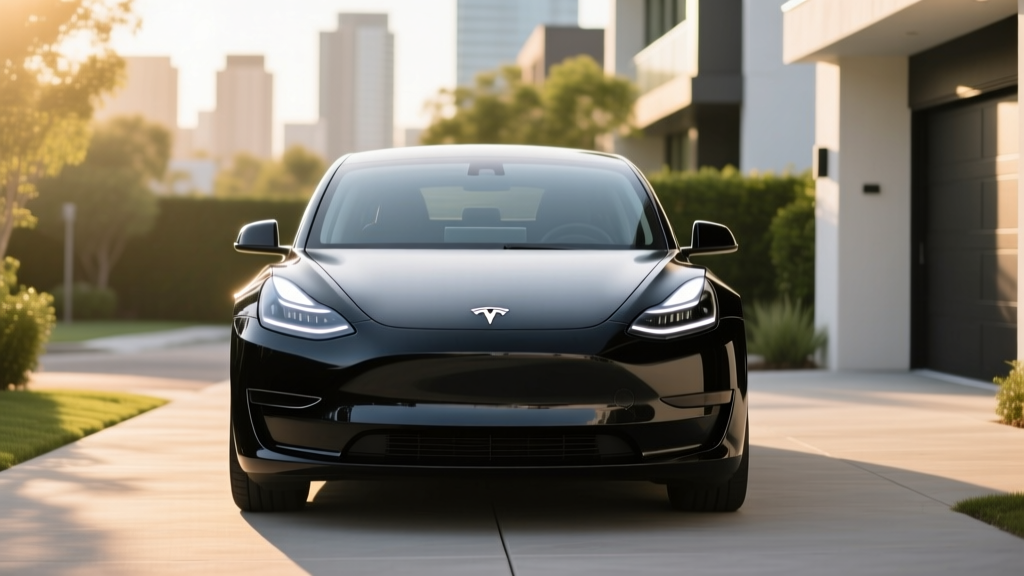
Shoppers searching "what is the cheap Tesla" are usually looking for the lowest entry point into the Supercharger network, Tesla's software ecosystem, and a proven electric sedan. In 2026, that answer is the Tesla Model 3 Rear-Wheel Drive (RWD), also known as the Standard Range. Starting at $38,990 (including destination), it undercuts the Long Range AWD by $8,500 while retaining the refreshed "Highland" interior, 15.4-inch touchscreen, and access to Tesla's 20,000+ Supercharger stalls nationwide.
But "cheap" for Tesla still means a premium midsize sedan competing against the Hyundai Ioniq 6, BMW i4 eDrive35, and Chevrolet Equinox EV. This review breaks down whether the base Model 3 delivers real value or just the lowest monthly payment on a Tesla badge.
2026 Tesla Model 3 RWD: Full Spec Sheet
| Attribute | Value |
|---|---|
| Base MSRP (incl. destination) | $38,990 |
| EPA Range | 363 miles |
| Battery (usable / gross) | ~60 kWh usable / ~66 kWh gross |
| Battery Chemistry | LFP (Lithium Iron Phosphate) |
| Drivetrain | Rear-Wheel Drive, single motor |
| Horsepower | 271 hp |
| 0–60 mph | 5.8 seconds |
| Top Speed | 125 mph |
| MPGe (city / hwy / combined) | 145 / 127 / 136 MPGe |
| Efficiency | 25 kWh / 100 mi |
| Max DC Fast Charge | 170 kW peak |
| 10–80% DC Fast Charge | ~25 minutes |
| Level 2 Home Charge | 11.5 kW (~44 mi/hr) |
| Charging Port | NACS (native Tesla connector) |
| Cargo Volume (trunk + frunk) | 23.0 cu ft (rear) + 3.1 cu ft (frunk) |
| Rear Legroom | 35.3 inches |
| Basic Warranty | 4 yr / 50,000 mi |
| Battery & Drive Unit Warranty | 8 yr / 100,000 mi (70% retention) |
Sources: fueleconomy.gov, Tesla official specifications.
Real-World Range: What to Expect Beyond the EPA Sticker
Real-World Expectations:
• City / moderate weather: 340–365 miles (LFP efficiency shines in stop-and-go regen)
• Highway (70–75 mph): 280–310 miles
• Cold weather (below 32°F): 230–270 miles (25–35% loss without preconditioning)
• Combined mixed driving: 300–330 miles
The Model 3 RWD uses an LFP (lithium iron phosphate) battery pack. LFP cells have slightly lower energy density than the NMC chemistry in the Long Range model, but they offer two major owner benefits: longer cycle life and the ability to charge to 100% regularly without accelerating degradation. Tesla explicitly recommends periodic 100% charges for LFP packs to maintain accurate state-of-charge calibration.
In real-world highway testing at sustained 70–75 mph speeds, expect roughly 280–310 miles before needing to stop. The Model 3's heat pump (standard on all 2026 trims) recovers cabin waste heat, reducing cold-weather range loss compared to older resistance-heater EVs. Still, sub-freezing temperatures will drop usable range by 25–35% unless you precondition the battery while plugged in — a critical habit for LFP owners in northern climates.
Charging Speed: DC Fast, Level 2, and the LFP Advantage
| Charge Level | Power (kW) | Speed | Use Case |
|---|---|---|---|
| Level 1 (120V outlet) | ~1.4 kW | ~5 mi/hr | Emergency / overnight trickle |
| Level 2 (240V, 48A Wall Connector) | 11.5 kW | ~44 mi/hr | Daily home charging |
| DC Fast Charge (Supercharger) | 170 kW peak | 10–80% in ~25 min | Road trips |
The RWD's 170 kW peak DC fast-charge rate is lower than the Long Range AWD's ~250 kW capability. On a V3 Supercharger (250 kW capable), the RWD will peak around 170 kW and taper as it approaches 80%. A 10–80% session takes approximately 25 minutes — adequate for a rest stop but noticeably slower than the Long Range on long corridor drives.
Here's where LFP ownership pays off at home: because LFP chemistry tolerates 100% state-of-charge without the degradation concerns of NMC, you can set your daily charge limit to 100% and wake up to the full 363 miles every morning. For commuters with home Level 2 charging, this effectively eliminates range planning for daily use.
Home charging cost: At the US average electricity rate of ~$0.16/kWh, a full 60 kWh charge costs roughly $9.60 — equivalent to about 360 miles of driving. Compare that to $45–55 for the same distance in a 30 MPG gas car at $3.50/gallon.
Performance and Driving Dynamics
The single rear motor produces 271 horsepower and delivers a 5.8-second 0–60 mph time. That's brisk enough for confident highway merging but a full 1.7 seconds behind the Long Range AWD (4.1 seconds). The RWD's lighter front end (no front motor) gives it slightly more neutral steering feel than the AWD variants, and the low center of gravity from the floor-mounted battery keeps body roll well-controlled through corners.
Regenerative braking on the Model 3 RWD is strong enough for true one-pedal driving in most conditions. Tesla removed the user-adjustable regen setting in recent software updates, so the braking feel is fixed — something to test-drive if you're coming from a vehicle with blended or coasting modes.
Pricing, Trims, and Federal Tax Credit Eligibility
| Trim | MSRP | Est. After §30D Credit | Drivetrain |
|---|---|---|---|
| RWD (Standard Range) | $38,990 | $31,490* | Rear-Wheel Drive |
| Long Range AWD | $47,490 | $39,990* | Dual Motor AWD |
| Performance | $54,990 | $47,490* | Dual Motor AWD |
*Tax credit estimates assume full $7,500 eligibility under IRS §30D. Actual credit depends on individual circumstances.
- Income caps: AGI ≤ $150K single / $225K head of household / $300K joint
- MSRP cap: ≤ $55,000 for sedans (all Model 3 trims qualify)
- Battery sourcing: Critical minerals and battery components must meet phased-in domestic/FtA sourcing thresholds
- Point-of-sale transfer: Eligible buyers can apply the credit at purchase, reducing the financed amount immediately
Check current eligibility at IRS.gov §30D. Battery-sourcing requirements tighten annually — verify the specific VIN qualifies before purchase.
The Model 3 RWD's $38,990 starting price makes it the most affordable Tesla and one of the lowest-priced premium electric sedans on the market. With the full $7,500 federal credit applied at point of sale, the effective price drops to approximately $31,490 — territory that competes directly with well-equipped non-premium EVs and even some gas sedans when total cost of ownership is factored in.
Options that increase price: Ultra Red paint ($2,500), 19-inch Nova wheels ($1,500), and Full Self-Driving (Supervised) capability ($8,000). A fully loaded RWD can approach $50,000 before incentives, so stick to the base configuration if value is the priority.
Interior, Tech, and Daily Livability
The "Highland" refresh brought meaningful upgrades over the pre-2024 Model 3: ventilated front seats, ambient lighting, rear-seat touchscreen for climate and media control, acoustic glass on all windows, and a significantly quieter cabin at highway speeds. The minimalist interior still centers on the 15.4-inch touchscreen — there are no physical stalks (turn signals are steering-wheel buttons) and no separate instrument cluster.
Standout tech:
- Tesla Supercharger network access (20,000+ stalls, highest reliability of any US network)
- Over-the-air software updates that add features post-purchase
- Sentry Mode dashcam recording while parked
- Dog Mode / Camp Mode climate management
- Phone-as-key with Bluetooth proximity unlock
Notable drawbacks:
- No Apple CarPlay or Android Auto — Tesla's native infotainment only
- Turn-signal buttons on the steering wheel rim require adaptation
- Rear visibility is limited; relies heavily on camera feed
- No heads-up display or traditional gauge cluster
- Build quality has improved but panel-gap variance still occurs
Cargo space totals 23.0 cubic feet in the rear trunk plus a 3.1 cu ft front trunk (frunk). Rear legroom at 35.3 inches is adequate for adults but tighter than the Hyundai Ioniq 6 or BMW i4. The 60/40 split-folding rear seats expand cargo capacity for longer items, and the frunk is useful for charging cables or a small bag.
Autopilot and Driver Assistance: Level 2, Not Self-Driving
The driver must remain fully engaged, hands on the wheel, eyes on the road at all times. Tesla's Autopilot and Full Self-Driving (Supervised) are driver-assistance systems, not autonomous driving. You are legally responsible for the vehicle's operation.
Every Model 3 includes Basic Autopilot: adaptive cruise control, lane-centering, and automatic emergency braking. The optional Full Self-Driving (Supervised) package ($8,000) adds automatic lane changes, traffic-light recognition, and city-street navigation — but requires constant driver supervision and has drawn ongoing NHTSA scrutiny for driver-engagement monitoring.
For most buyers, Basic Autopilot covers the daily commute effectively. FSD (Supervised) remains a technology preview rather than a reliable daily feature — purchase it only if you value early access to evolving software, not as a substitute for attentive driving.
Who Should Buy the Model 3 RWD (and Who Shouldn't)
- You have home Level 2 charging and a daily commute under 150 miles round-trip
- You want Supercharger network access for road trips without CCS adapter hassles
- You prioritize lowest Tesla entry price and can live without AWD
- You prefer LFP chemistry for long-term daily 100% charging
- You qualify for the full $7,500 §30D credit, bringing effective price below $32K
- You need AWD for snow-belt winters (step up to Long Range AWD or consider the Ioniq 5 AWD)
- You regularly drive 300+ mile highway trips and want faster 250 kW charging (Long Range or Ioniq 6)
- You need CarPlay, physical buttons, or a traditional instrument cluster
- Rear-seat passenger space is a priority (the Equinox EV and Ioniq 6 offer more room)
- You don't qualify for the §30D credit due to income limits — the value proposition weakens significantly
Model 3 RWD vs. Key Competitors
| Spec | Tesla Model 3 RWD | Hyundai Ioniq 6 SE | Chevrolet Equinox EV 2LT | BMW i4 eDrive35 |
|---|---|---|---|---|
| MSRP | $38,990 | $38,650 | $34,995 | $52,200 |
| EPA Range | 363 mi | 361 mi | 319 mi | 301 mi |
| Max DC Charge | 170 kW | 235 kW | 190 kW | 205 kW |
| 0–60 mph | 5.8s | 5.1s | 7.7s | 5.5s |
| Charging Network | NACS (native) | CCS (NACS adapter avail.) | CCS (NACS adapter avail.) | CCS (NACS adapter avail.) |
| §30D Credit Eligible | Yes | No (Korea-built) | Yes | No (Germany-built) |
The Model 3 RWD's strongest competitive advantages are native Supercharger access, Tesla's software ecosystem, and §30D credit eligibility. The Ioniq 6 charges faster and offers CarPlay; the Equinox EV costs less upfront but offers less range; the BMW i4 is a premium step up in build quality but costs $13K more and doesn't qualify for the federal credit.
Frequently Asked Questions
What is the cheapest Tesla available in 2026?
The Tesla Model 3 Rear-Wheel Drive (RWD) at $38,990 MSRP. With the $7,500 federal tax credit, the effective price can drop to approximately $31,490 for eligible buyers. The next cheapest option is the Model Y RWD at $44,990.
Does the cheap Tesla (Model 3 RWD) qualify for the $7,500 federal tax credit?
The Model 3 RWD qualifies for up to $7,500 under IRS §30D, subject to buyer income caps ($150K single / $300K joint), the $55K sedan MSRP cap (all trims pass), and battery-sourcing requirements that tighten annually. Verify your specific VIN's eligibility at IRS.gov before purchasing. The credit can be transferred at point of sale to reduce your financed amount.
How fast does the Model 3 RWD charge at home and on road trips?
At home on a 240V Level 2 Wall Connector (48A), the Model 3 RWD charges at 11.5 kW, adding approximately 44 miles of range per hour — a full charge in about 5.5 hours. On DC fast chargers (Tesla Superchargers), it peaks at 170 kW and charges from 10–80% in roughly 25 minutes. This is slower than the Long Range AWD (250 kW peak) but sufficient for most road-trip rest stops.
What is the real-world range of the Model 3 RWD?
The EPA rates the Model 3 RWD at 363 miles. In real-world driving, expect 300–330 miles in mixed conditions, 280–310 miles at sustained highway speeds (70–75 mph), and 230–270 miles in cold weather (below 32°F). LFP chemistry allows daily 100% charging without degradation concerns, so your full EPA range is available every morning when charging at home.
Is the Model 3 RWD worth buying over the Long Range?
If you charge at home daily, don't need AWD, and rarely drive more than 250 miles between stops, the RWD saves $8,500 and offers the LFP battery's longevity advantages. The Long Range justifies its premium for frequent road-trippers (faster 250 kW charging, 341-mile EPA range with AWD), snow-belt drivers, and those who want the extra acceleration (4.1s 0–60). For most commuters, the RWD is the rational financial choice.
Does the Model 3 RWD have a frunk?
Yes. The Model 3 RWD includes a 3.1 cubic-foot front trunk (frunk) in addition to the 23.0 cu ft rear trunk. The frunk is useful for storing charging cables, a small bag, or items you want separated from the main cargo area.