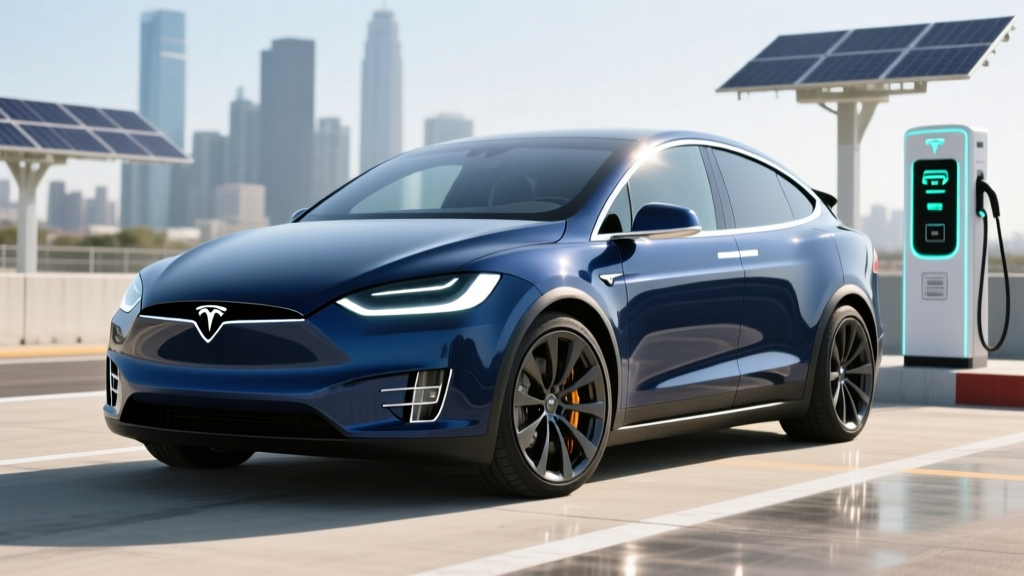
If you're searching for how fast a Tesla Model X really is, the short answer depends entirely on which trim you choose. The dual-motor Long Range variant hits 60 mph in 3.8 seconds — quick for a three-row SUV weighing over 5,000 pounds. The tri-motor Plaid variant obliterates that benchmark at 2.5 seconds, placing it in hypercar territory. But speed is only one dimension of ownership. Below, we break down every performance, range, charging, and pricing metric you need before signing a purchase agreement.
Performance by the Numbers: Dual-Motor vs Tri-Motor Plaid
Tesla offers the 2026 Model X in two configurations. The powertrain difference isn't just about straight-line speed — it changes the character of the vehicle in corners, under hard acceleration merges, and when towing near the 5,000-pound limit.
| Metric | Long Range (Dual-Motor AWD) | Plaid (Tri-Motor AWD) |
|---|---|---|
| 0–60 mph | 3.8 seconds | 2.5 seconds |
| Top Speed | 155 mph | 163 mph |
| Peak Horsepower | 670 hp | 1,020 hp |
| Drivetrain | Dual-Motor AWD | Tri-Motor AWD (1 front, 2 rear) |
| Curb Weight | 5,185 lbs | 5,390 lbs |
| Towing Capacity | 5,000 lbs | 5,000 lbs |
The Plaid's tri-motor setup uses a single front motor and two rear motors with torque vectoring. This isn't just a marketing gimmick — the independent rear motors can apply different torque to each rear wheel, improving corner exit grip. In practice, the Plaid feels planted where a heavy SUV has no business feeling planted. The Long Range dual-motor setup uses one front and one rear motor, which is more than adequate for daily driving and highway passing.
Real-World Range: EPA Estimates vs What You'll Actually Get
Tesla equips both Model X trims with a ~100 kWh usable battery pack using NMC (nickel manganese cobalt) chemistry. The Long Range achieves a higher EPA range due to lower weight and less drivetrain loss.
EPA Estimate: Long Range — 348 miles | Plaid — 320 miles
Real-World Highway (70 mph, 72°F): Expect ~290–310 miles (Long Range), ~265–285 miles (Plaid)
Cold Weather (20°F, highway): Expect ~230–260 miles (Long Range), ~210–240 miles (Plaid) — a 25–30% reduction from EPA
With Cabin Preconditioning + Heat Pump: Cold-weather loss mitigated to ~20% reduction
The Model X uses a heat pump (Tesla's "Octovalve" thermal management system) that scavenges waste heat from the battery and motors to warm the cabin. This is significantly more efficient than resistive heating and explains why Tesla's cold-weather range retention is among the best in the industry. Still, physics is physics — below freezing, expect to lose at least 20% of your rated range on highway trips.
For efficiency, the Long Range achieves 100 MPGe combined (34 kWh/100 mi), while the Plaid returns 98 MPGe combined (35 kWh/100 mi), per fueleconomy.gov. These are respectable figures for a 5,000+ lb SUV, but they trail lighter competitors like the BMW iX and Rivian R1S slightly on the efficiency-per-pound metric.
Charging Speed: DC Fast Charge and Home Level 2 Breakdown
Charging speed is where the Model X's 400-volt architecture shows its age compared to 800-volt competitors like the Hyundai Ioniq 9 or Kia EV9, which can sustain higher charge rates longer. Still, Tesla's Supercharger network reliability keeps the ownership experience strong.
| Charging Method | Max Rate | Speed / Time |
|---|---|---|
| DC Fast Charge (Supercharger V4) | 250 kW peak | 10–80% in ~30 minutes; ~175 miles added in 15 min |
| DC Fast Charge (CCS adapter at non-Tesla stations) | 250 kW peak | Same curve as Supercharger; adapter included since 2024 |
| Level 2 Home (Tesla Wall Connector, 48A / 11.5 kW) | 11.5 kW | ~34 miles of range per hour; full charge in ~10 hours |
| Level 2 Home (NEMA 14-50 outlet, 32A / 7.7 kW) | 7.7 kW | ~23 miles of range per hour; full charge in ~14 hours |
| Level 1 (120V standard outlet) | ~1.4 kW | ~4 miles of range per hour (emergency use only) |
Charging curve reality: The Model X peaks at 250 kW only when the battery is preconditioned and between roughly 10–30% state of charge. Above 50%, the rate tapers to ~120 kW, and above 80% it drops below 50 kW. This is standard for NMC chemistry — the battery management system protects cell longevity by slowing charge as voltage rises. Plan your road-trip stops around the 10–80% window for the fastest experience. Charging from 80–100% at a Supercharger can add 20+ minutes and is rarely worth the wait unless you need maximum range for the next leg.
The Model X now ships with a native NACS (North American Charging Standard) port, meaning it plugs directly into Tesla Superchargers without an adapter. For Electrify America, EVgo, and other CCS-based networks, Tesla includes a CCS adapter in the glovebox.
Pricing, Trim Levels, and Federal Tax Credit Eligibility
The Model X sits firmly in the luxury SUV pricing tier. Here's where each trim lands before and after potential incentives.
| Trim | Base MSRP | Destination Fee | Total Before Incentives |
|---|---|---|---|
| Long Range (Dual-Motor, 5-seat) | $79,990 | $1,390 | $81,380 |
| Long Range (6-seat interior) | $84,990 | $1,390 | $86,380 |
| Long Range (7-seat interior) | $84,990 | $1,390 | $86,380 |
| Plaid (Tri-Motor, 5-seat) | $94,990 | $1,390 | $96,380 |
| Plaid (6-seat interior) | $99,990 | $1,390 | $101,380 |
- MSRP Cap: SUVs/vans must be ≤$80,000 MSRP. The Long Range 5-seat at $79,990 qualifies. All 6-seat, 7-seat, and Plaid trims exceed the cap and are ineligible.
- Income Cap: Buyer AGI must be ≤$150,000 (single), ≤$225,000 (head of household), ≤$300,000 (joint).
- Battery Sourcing: Critical minerals and battery component requirements phase in annually under the Inflation Reduction Act. Tesla's supply chain has adapted, but confirm current-year compliance at IRS.gov's qualified vehicle list before purchasing.
- Point-of-Sale Transfer: Eligible buyers can transfer the up-to-$7,500 credit to the dealer at purchase, reducing the out-of-pocket price immediately rather than waiting for a tax refund.
- Best Case: Long Range 5-seat, eligible buyer → ~$73,880 effective price after $7,500 credit.
State incentives may stack on top. California, Colorado, and several other states offer additional rebates — check your state energy office for current programs.
Interior, Cargo, and Tech: What Living With a Model X Is Actually Like
The Model X remains one of only a handful of three-row electric SUVs, and its falcon-wing rear doors are the most recognizable feature in the EV market. Here's how the practical dimensions stack up:
- Cargo behind 3rd row: 15.0 cu ft (enough for 3–4 carry-on bags)
- Cargo behind 2nd row (3rd row folded): 42.5 cu ft
- Cargo behind 1st row (all rear seats folded): 81.4 cu ft
- Front trunk (frunk): 6.6 cu ft — useful for charging cables and a small bag
- 2nd-row legroom: 40.2 inches
- 3rd-row legroom: 32.7 inches (tight for adults on long trips; best for children)
The 17-inch center touchscreen runs Tesla's latest infotainment software with wireless Apple CarPlay and Android Auto (added in late 2024 updates). The yoke steering wheel is standard on the Plaid and optional on the Long Range. A conventional round wheel remains available at no cost.
Driver Assistance: Tesla's Basic Autopilot is standard and includes adaptive cruise control and lane centering. Full Self-Driving (Supervised) is an $8,000 add-on (or $99/month subscription) that adds automatic lane changes, traffic light recognition, and city-street navigation.
Tesla Autopilot and FSD (Supervised) are SAE Level 2 driver-assistance systems. The driver must remain fully attentive, keep hands on the wheel (or demonstrate engagement via the cabin camera), and be prepared to take over at any moment. These systems are not self-driving. Only Level 4 services like Waymo operate without a human driver, and those are limited to mapped urban geofences.
Warranty and Long-Term Battery Durability
Tesla provides a straightforward warranty structure for the Model X:
- Basic Vehicle Limited Warranty: 4 years / 50,000 miles (whichever comes first)
- Battery & Drive Unit Warranty: 8 years / 150,000 miles, with a minimum 70% capacity retention guarantee
The 150,000-mile battery warranty is competitive with BMW's 8-year/100,000-mile coverage on the iX and slightly better than Rivian's 8-year/175,000-mile on the R1S (Rivian offers more miles but a similar timeframe). Real-world data from Tesla's fleet suggests NMC packs in the Model X retain approximately 90% capacity at 100,000 miles based on aggregated owner reports, though individual results vary based on charging habits and climate exposure.
Battery care tips for NMC chemistry: Avoid routinely charging to 100%. Set your daily charge limit to 80–90% and only charge to 100% before long road trips. This practice reduces calendar degradation and preserves your warranty claim eligibility.
How Does the Model X Compare to Key Rivals?
The three-row electric SUV segment has grown substantially. Here's how the Model X stacks up against its primary competitors on the metrics buyers care about most:
| Metric | Tesla Model X LR | BMW iX xDrive50 | Rivian R1S Dual-Motor | Kia EV9 GT-Line AWD |
|---|---|---|---|---|
| EPA Range | 348 mi | 324 mi | 352 mi | 280 mi |
| 0–60 mph | 3.8 sec | 4.4 sec | 5.0 sec | 5.0 sec |
| Peak DC Charge | 250 kW | 200 kW | 200 kW | 236 kW |
| Base MSRP | $79,990 | $87,250 | $79,900 | $73,900 |
| 3rd-Row Seats | Yes (opt.) | No (2-row only) | Yes (std.) | Yes (std.) |
| Max Tow Capacity | 5,000 lbs | 3,500 lbs | 7,700 lbs | 5,000 lbs |
The BMW iX is a two-row vehicle, so it's only a cross-shop if you don't need a third row. The Rivian R1S is the most capable off-road and the strongest tow vehicle in this group. The Kia EV9 undercuts on price significantly but sacrifices range and performance. The Model X occupies a unique position: it's the fastest, has the longest range among three-row options (alongside the R1S), and benefits from Tesla's Supercharger network — though the gap is closing as other automakers gain NACS access.
Pros and Cons at a Glance
- Class-leading 348-mile EPA range (Long Range)
- Plaid's 2.5-sec 0–60 is unmatched in any SUV, electric or gas
- Access to the Tesla Supercharger network (20,000+ stalls in North America)
- Falcon-wing doors improve car-seat access in tight parking spots
- Over-the-air updates continuously add features
- Heat pump standard for efficient cold-weather operation
- Most trims exceed the $80,000 MSRP cap for the federal tax credit
- 400V architecture limits sustained DC fast-charge rate vs 800V rivals
- 3rd row is tight for adults (32.7" legroom)
- Falcon-wing doors can be slow to open and have had reliability complaints historically
- Panel gaps and interior fit/finish still lag BMW and Mercedes standards
- Insurance premiums run 15–25% higher than segment average
Who Should Buy the 2026 Tesla Model X?
Buy the Model X Long Range if: You need a three-row electric SUV for family duty, want the longest possible range for road trips, and can fit within the 5-seat configuration to stay under the $80,000 federal tax credit MSRP cap. It's also the right pick if you road-trip frequently and want the reliability of the Supercharger network.
Buy the Model X Plaid if: Performance is a non-negotiable priority, budget is flexible (you'll pay over $96,000 and won't qualify for the federal credit), and you want an SUV that embarrasses sports cars at stoplights. The Plaid is a niche within a niche — thrilling, but hard to justify purely on rational grounds.
Look at the Rivian R1S instead if: You need serious towing capacity (7,700 lbs), genuine off-road capability, or a more rugged aesthetic. The R1S Quad-Motor is also seriously quick.
Look at the Kia EV9 instead if: Budget is your primary constraint and you don't need 300+ miles of range. The EV9 GT-Line AWD starts ~$6,000 lower and offers a practical three-row package with competitive charging speed.
Frequently Asked Questions
How fast is a Tesla Model X from 0 to 60?
The 2026 Model X Long Range (dual-motor) accelerates from 0–60 mph in 3.8 seconds. The tri-motor Plaid variant does it in 2.5 seconds, making it one of the quickest production SUVs ever built.
What is the real-world highway range of the Model X?
While the EPA rates the Long Range at 348 miles, expect approximately 290–310 miles at sustained highway speeds (70 mph) in mild weather. In freezing temperatures, that drops to roughly 230–260 miles due to increased battery resistance and cabin heating demands.
Does the Tesla Model X qualify for the $7,500 federal tax credit?
Only the Long Range 5-seat trim at $79,990 MSRP falls under the §30D SUV cap of $80,000. All 6-seat, 7-seat, and Plaid trims exceed the cap. Additionally, buyer income must fall under IRS thresholds ($150K single / $300K joint), and battery sourcing must meet current-year critical mineral requirements. Verify eligibility at IRS.gov before purchasing.
How long does it take to charge a Model X at home?
Using a Tesla Wall Connector at 48 amps (11.5 kW), a full charge from near-empty takes approximately 10 hours and adds about 34 miles of range per hour. On a NEMA 14-50 outlet at 32 amps (7.7 kW), expect about 14 hours for a full charge and 23 miles per hour of charging.
Is the Model X Plaid worth the $15,000 premium over the Long Range?
For daily driving and road trips, the Long Range is the rational choice — it's already fast, has 28 more miles of EPA range, and may qualify for the federal tax credit. The Plaid's 2.5-second 0–60 time is extraordinary but rarely usable on public roads. Pay the premium only if performance bragging rights and the tri-motor torque-vectoring experience matter to you personally.
What is the Model X battery warranty?
Tesla covers the battery and drive unit for 8 years or 150,000 miles, whichever comes first, with a guaranteed minimum of 70% capacity retention during that period. If the battery degrades below 70% within the warranty window, Tesla will repair or replace it at no cost.