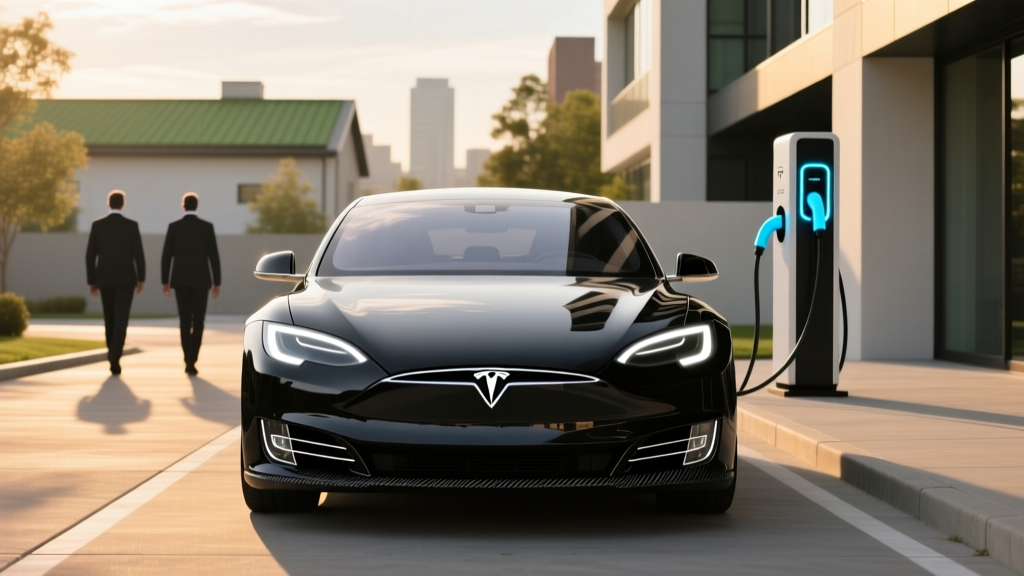
Rumors about the Tesla Model X and S being discontinued have circulated in EV forums and automotive media for years. As of early 2026, neither vehicle has been formally axed — but Tesla's flagship sedan and SUV occupy a precarious position in the lineup, overshadowed by higher-volume models like the Model Y and the refreshed Model 3. Production continues at the Fremont factory, yet order lead times and trim availability tell a story of a brand quietly deprioritizing its original premium offerings.
This profile examines where the Model S and Model X stand right now: real-world range, charging performance, pricing after federal incentives, and whether either vehicle still makes sense against rivals like the Lucid Air, BMW i7, and Rivian R1S. If you've been searching for clarity on whether the Model X and S are discontinued or simply sidelined, here's the data-driven answer.
Current Status: Are the Model X and S Actually Discontinued?
No. As of the 2026 model year, Tesla continues to list both the Model S and Model X on its configurator and accepts orders. However, several signals suggest Tesla is winding down its commitment to these platforms:
- Limited trim availability: The high-performance Plaid variants remain listed, but delivery estimates stretch months out, suggesting low-volume production runs.
- No major refresh since 2021: While the Model 3 received a significant "Highland" redesign and the Model Y a "Juniper" update, the S and X have seen only incremental software and packaging changes since their 2021 interior overhaul.
- Declining sales share: Tesla's quarterly delivery reports lump S/X together under "Other Models," which typically represents under 5% of total deliveries — a fraction of Model Y/3 volume.
- Robotaxi pivot: Tesla's public emphasis has shifted toward the Cybercab robotaxi program and next-generation compact platform, leaving little strategic oxygen for six-figure luxury EVs.
The most accurate framing: the Model S and X are not discontinued, but they are deprioritized — low-volume halo products that Tesla continues to sell without significant reinvestment. For buyers, this means you can still order one, but long-term parts support, resale value, and feature parity with newer Tesla models carry legitimate uncertainty.
Model S 2026: Range, Battery, and Efficiency
The 2026 Tesla Model S Long Range carries an EPA-estimated range of 402 miles on its approximately 100 kWh (usable) battery pack, which uses NMC (nickel manganese cobalt) chemistry. The Plaid variant, with its tri-motor setup and higher energy draw, drops to an EPA-estimated 359 miles.
EPA estimates assume a mix of city and highway driving at moderate temperatures. In real-world highway testing at 70-75 mph, expect the Model S Long Range to deliver approximately 330-360 miles before needing a charge. In cold weather (below 30°F), range can drop an additional 15-25%, bringing effective highway range to roughly 270-310 miles. The Plaid's real-world highway range typically lands between 290-320 miles in mild conditions.
Efficiency for the Long Range model is rated at 124 MPGe combined (approximately 27 kWh/100 mi), which remains competitive among large luxury sedans but trails the more aerodynamically optimized Lucid Air Grand Touring (131 MPGe).
| Spec | Long Range | Plaid |
|---|---|---|
| EPA Range | 402 mi | 359 mi |
| Battery (usable) | ~100 kWh, NMC | ~100 kWh, NMC |
| Drivetrain | Dual-Motor AWD | Tri-Motor AWD |
| Horsepower | 670 hp | 1,020 hp |
| 0-60 mph | 3.1 sec | 1.99 sec |
| Top Speed | 155 mph | 200 mph |
| MPGe (combined) | 124 MPGe | 116 MPGe |
| Cargo Volume | 28 cu ft (rear seats up) | 28 cu ft |
| Frunk | ~3.1 cu ft | ~3.1 cu ft |
| Rear Legroom | 40.9 in | 40.9 in |
Model X 2026: Range, Battery, and Practicality
The 2026 Tesla Model X Long Range achieves an EPA-estimated 348 miles of range, while the Plaid variant manages 326 miles. Both use the same ~100 kWh NMC battery architecture as the Model S, but the X's larger, heavier body and less aerodynamic profile reduce efficiency.
Efficiency lands at approximately 109 MPGe combined (31 kWh/100 mi) for the Long Range — noticeably thirstier than the sedan. On real-world highway trips at 70+ mph, expect 280-310 miles from the Long Range model and 260-290 miles from the Plaid. Cold weather pushes those figures down to roughly 230-260 miles for the Long Range.
| Spec | Long Range | Plaid |
|---|---|---|
| EPA Range | 348 mi | 326 mi |
| Battery (usable) | ~100 kWh, NMC | ~100 kWh, NMC |
| Drivetrain | Dual-Motor AWD | Tri-Motor AWD |
| Horsepower | 670 hp | 1,020 hp |
| 0-60 mph | 3.8 sec | 2.5 sec |
| MPGe (combined) | 109 MPGe | 101 MPGe |
| Cargo (behind 3rd row) | ~15 cu ft | ~15 cu ft |
| Cargo (all seats folded) | ~82 cu ft | ~82 cu ft |
| Seating | 5, 6, or 7 passengers | 5, 6, or 7 passengers |
| Towing Capacity | 5,000 lbs | 5,000 lbs |
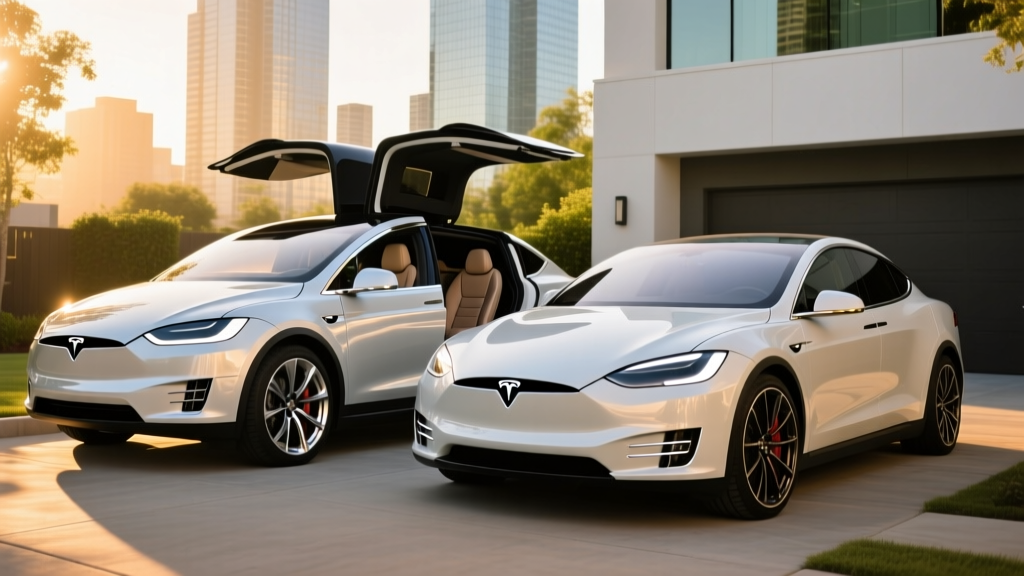
The Model X's falcon-wing rear doors remain its most polarizing feature. They provide excellent curb-side access to second- and third-row seats in tight parking spaces but add mechanical complexity that has historically driven higher repair costs. Tesla has improved the door actuator reliability since the early production years, but out-of-warranty replacements remain expensive.
Charging Speed: DC Fast Charging and Home Level 2
Both the Model S and Model X support DC fast charging at up to 250 kW on Tesla's V3 and V4 Supercharger stalls using the native NACS connector. On a V3 stall with battery preconditioning enabled (the car automatically warms the pack when a Supercharger is set as your navigation destination), the Long Range models achieve a 10-80% charge in approximately 27-30 minutes.
| Charging Level | Power | Speed (approx.) | Notes |
|---|---|---|---|
| Level 1 (120V) | ~1.4 kW | ~3-4 mi/hr | Emergency/trickle only |
| Level 2 (240V, 48A) | 11.5 kW | ~34 mi/hr | Home Wall Connector; full charge in ~9-10 hrs |
| DC Fast (V3 Supercharger) | Peak 250 kW | ~180 mi in 15 min (10-80% in ~28 min) | Requires preconditioning; tapers above 60% |
| DC Fast (CCS via adapter) | Up to ~150 kW | Slower than native NACS | Tesla CCS adapter required for non-Tesla networks |
Charging curve reality: The 250 kW peak only holds between roughly 10-30% state of charge. The rate tapers progressively — dropping to ~150 kW by 50% SoC and ~70 kW by 70%. This is standard for NMC lithium-ion packs, but it means the second half of your charge takes considerably longer than the first. Plan road-trip stops around 10-60% top-ups for maximum efficiency rather than waiting for 80%+.
For home charging, Tesla's Gen 3 Wall Connector at 48 amps (11.5 kW) adds approximately 34 miles of range per hour of charging. A full overnight charge from 10% to 90% takes roughly 8-9 hours. Installation costs vary widely: expect $500-$1,500 if your electrical panel has capacity, or $2,000-$4,500+ if a panel upgrade to 200A service is needed. Always get a quote from a licensed electrician before purchasing equipment.
Pricing, Trims, and Federal Tax Credit Eligibility
For 2026, Tesla's pricing structure remains straightforward with two trims per model:
| Model / Trim | Base MSRP | As-Tested (typical) | §30D Federal Credit |
|---|---|---|---|
| Model S Long Range | $79,990 | $83,000-$88,000 | Not eligible (MSRP exceeds $55,000 sedan cap) |
| Model S Plaid | $94,990 | $98,000-$105,000 | Not eligible (MSRP exceeds $55,000 sedan cap) |
| Model X Long Range | $84,990 | $89,000-$95,000 | Not eligible (MSRP exceeds $80,000 SUV cap) |
| Model X Plaid | $99,990 | $104,000-$110,000 | Not eligible (MSRP exceeds $80,000 SUV cap) |
Tax credit reality: Neither the Model S nor the Model X qualifies for the IRS §30D federal EV tax credit. The Model S is classified as a sedan with an MSRP cap of $55,000; the Model X as an SUV with an $80,000 cap. Both exceed their respective thresholds in every available trim. Additionally, buyer income caps ($150,000 single / $300,000 joint AGI) and battery critical-mineral sourcing requirements apply to the credit generally, but the MSRP disqualification is the immediate barrier here.
Some states offer additional incentives that are not MSRP-capped — check your state energy office or the DOE's alternative fuels incentive database for local programs. But for the federal credit specifically, budget accordingly: the sticker price is the price you'll pay.
Tech, Driver Assistance, and Interior
Both vehicles feature Tesla's 17-inch center touchscreen with a tilting "butterfly" display, a 12.3-inch digital instrument cluster, and a yoke-style steering wheel (a conventional round wheel is available as a no-cost option). The infotainment system remains one of the most responsive in the industry, with native navigation, streaming, and gaming capabilities.
Autopilot and FSD (Supervised): Every Model S and X includes basic Autopilot (traffic-aware cruise control and lane centering). Tesla's Full Self-Driving (Supervised) package, available as a $8,000 add-on or $99/month subscription, adds automated lane changes, traffic light recognition, and city-street navigation.
Despite the "Full Self-Driving" name, Tesla's FSD (Supervised) is a SAE Level 2 driver-assistance system. The driver must remain fully engaged, hands on the wheel (or providing torque input), and eyes on the road at all times. This is not autonomous driving. Level 4 driverless operation (no human needed) is currently only available through commercial robotaxi services like Waymo in select metro areas.
The Model X's standout feature remains its HEPA air filtration system with "Bioweapon Defense Mode," which pressurizes the cabin and filters particulate matter at a level far exceeding typical automotive HVAC systems. Both vehicles also offer a panoramic glass roof, ventilated front seats, and a 22-speaker audio system.
Notable drawbacks: The yoke steering wheel, while offering an unobstructed view of the instrument cluster, requires adaptation for low-speed maneuvers and roundabouts. Build quality, while improved since 2021, still shows occasional panel-gap inconsistencies that wouldn't pass muster at Mercedes-Benz or BMW. The Model X's falcon-wing doors, while dramatic, remain a long-term maintenance concern.
Warranty and Long-Term Ownership
Tesla covers the Model S and X with the following warranty structure:
- Basic Vehicle: 4 years / 50,000 miles
- Battery and Drive Unit: 8 years / 150,000 miles (whichever comes first), with a guaranteed minimum 70% capacity retention over the warranty period
The 8-year/150,000-mile battery warranty is more generous than many competitors (BMW and Mercedes typically offer 8 years/100,000 miles for their EV batteries). However, replacement costs outside of warranty are substantial: a Model S/X battery pack replacement has been reported in the $15,000-$22,000 range depending on labor and pack availability.
NMC battery chemistry, while offering higher energy density than LFP (lithium iron phosphate), tends to degrade slightly faster with repeated DC fast charging and sustained high states of charge. Tesla recommends daily charging to 80-90% for routine use and reserving 100% charges for road trips. Following this guidance, most owners report minimal perceptible degradation within the first 100,000 miles — typically 5-8% capacity loss based on fleet data.
Model S/X vs. Key Competitors
If you're cross-shopping the Model S and X, here's how they stack up against their most direct rivals:
| Vehicle | EPA Range | 0-60 mph | Peak DC Charge | Base MSRP |
|---|---|---|---|---|
| Tesla Model S LR | 402 mi | 3.1 sec | 250 kW | $79,990 |
| Lucid Air Pure | 419 mi | 3.8 sec | 200+ kW | $69,900 |
| BMW i7 eDrive50 | 318 mi | 4.5 sec | 195 kW | $105,700 |
| Tesla Model X LR | 348 mi | 3.8 sec | 250 kW | $84,990 |
| Rivian R1S (Dual) | 352 mi | 4.5 sec | 220 kW | $75,900 |
| BMW iX xDrive50 | 324 mi | 4.4 sec | 195 kW | $87,250 |
- You prioritize maximum range and Supercharger network access
- You want sub-3.5-second 0-60 performance without spending six figures
- Tesla's software ecosystem and over-the-air updates matter to you
- You want more interior space and a more traditional luxury sedan experience
- Longer EPA range (419 mi on the Pure) is your top priority
- You don't mind relying on CCS charging adapters for road trips
- You need 7-passenger seating in an electric SUV with falcon-wing door convenience
- You want 5,000-lb towing capacity with Supercharger access for road trips
- The tri-motor Plaid's 2.5-second 0-60 appeals to you
- Off-road capability and adventure-oriented design are priorities
- You prefer a more conventional SUV aesthetic and build philosophy
- Lower starting price ($75,900) with competitive range matters
The Verdict: Should You Buy a Model S or X in 2026?
The Tesla Model S remains one of the most capable electric sedans on the market — its 402-mile range, Supercharger access, and proven powertrain are genuinely hard to match at its price point. The Model X offers a unique combination of three-row seating, falcon-wing doors, and 5,000-lb towing in an electric package that simply has no direct equivalent.
But the discontinuation question isn't really binary. The concern isn't that Tesla will announce these models are gone tomorrow — it's that the company's investment, innovation, and marketing energy have clearly moved elsewhere. Buying a Model S or X in 2026 means accepting that you're purchasing a mature, incrementally updated platform from a company focused on robotaxis and mass-market compacts. Resale value uncertainty, the lack of a significant refresh, and the absence of any federal tax credit all factor into the calculus.
If the specs align with your needs and you can negotiate a competitive price (or find a certified pre-owned example), both vehicles remain excellent machines. Just go in with eyes open about where Tesla's priorities lie.
- 402-mile EPA range is among the highest of any production EV
- Access to Tesla's Supercharger network (17,000+ stalls in North America)
- 670 hp dual-motor AWD with 3.1-second 0-60
- Over-the-air updates keep software current
- 8-yr/150,000-mi battery warranty
- No federal tax credit (exceeds $55K sedan MSRP cap)
- No major platform refresh since 2021
- Yoke steering requires adaptation
- Interior quality below BMW/Mercedes at this price
- Long-term parts/support uncertainty given deprioritization
- Only electric SUV with falcon-wing doors and 7-seat config
- 5,000-lb towing with 348-mile range
- HEPA bioweapon defense air filtration
- Tri-motor Plaid offers 2.5-second 0-60 in a family hauler
- 82 cu ft cargo with seats folded
- No federal tax credit (exceeds $80K SUV MSRP cap)
- Falcon-wing doors are a long-term maintenance risk
- 109 MPGe is inefficient for the class
- Real-world range drops significantly on highway/cold weather
- Starting near $85K with no incentive offset
Frequently Asked Questions
What is the real-world range of the Tesla Model S and Model X?
The Model S Long Range delivers approximately 330-360 miles on real-world highway drives in mild weather, dropping to 270-310 miles in cold conditions. The Model X Long Range achieves roughly 280-310 miles on the highway, or 230-260 miles in winter. The Plaid variants sacrifice 20-30 miles in each scenario due to their tri-motor energy draw.
How fast do the Model S and X charge?
Both support up to 250 kW DC fast charging on Tesla V3/V4 Superchargers, achieving a 10-80% charge in approximately 27-30 minutes with battery preconditioning. Home Level 2 charging at 11.5 kW (48A) adds about 34 miles per hour, with a full charge taking 8-10 hours.
Do the Tesla Model S and Model X qualify for the federal EV tax credit?
No. Under IRS §30D rules, the Model S exceeds the $55,000 MSRP cap for sedans, and the Model X exceeds the $80,000 cap for SUVs/vans/pickups. Neither vehicle qualifies regardless of buyer income or battery sourcing. State-level incentives may still apply depending on your jurisdiction.
Is the Tesla Model X and S discontinued for 2026?
No, both remain in production and available to order from Tesla's website. However, they have not received a major redesign since 2021, and Tesla's strategic focus has shifted to higher-volume vehicles and its robotaxi program. They are best described as deprioritized rather than discontinued.
Is the Model S or X worth buying vs. competitors?
The Model S is compelling for range-focused buyers who value Supercharger access, though the Lucid Air offers more interior luxury and slightly longer EPA range. The Model X is unique as a 7-seat electric SUV with falcon-wing doors, but the Rivian R1S offers better off-road capability and a lower starting price. If Supercharger network access and Tesla's software are top priorities, both remain strong choices.
What is the battery warranty on the Model S and X?
Tesla covers the battery and drive unit for 8 years or 150,000 miles (whichever comes first) with a guaranteed minimum 70% capacity retention. Out-of-warranty battery replacements have been reported in the $15,000-$22,000 range.