The End of an Era: Tesla Model X and S Discontinued for 2026
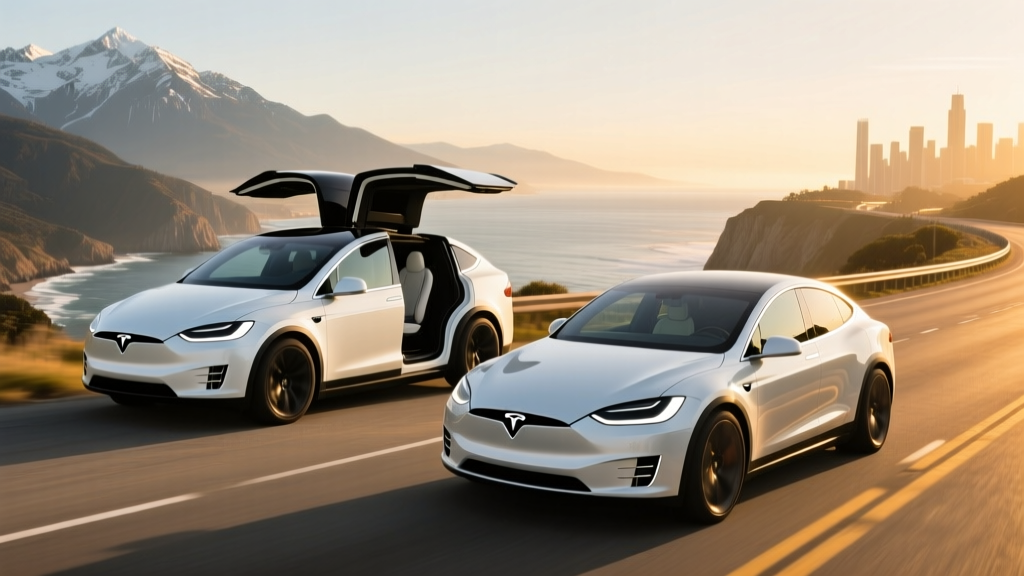
Tesla has officially confirmed what industry analysts have long suspected: the Tesla Model X and S discontinued status is now reality for the 2026 model year. After more than a decade defining the premium electric SUV and sedan segments, both vehicles have been retired from Tesla's new-vehicle lineup as the company pivots manufacturing capacity toward its higher-volume models and next-generation platforms.
For buyers who had their hearts set on a Model X or Model S, this raises immediate questions: Can you still buy one? What does remaining dealer and factory inventory look like? And critically, which competing EVs fill the gap these vehicles leave behind?
This guide covers everything current as of early 2026 — remaining new inventory specs, real-world performance data from years of owner testing, federal tax credit implications, and a direct comparison against the EVs now competing for the buyers Tesla is leaving behind.
Remaining New Inventory: What You Can Still Buy
While Tesla no longer accepts new custom orders for the Model X or Model S, a limited number of unallocated 2025-build vehicles remain in Tesla's inventory system and at select delivery centers. These are selling quickly, often at or near MSRP, with minimal negotiation room. Here's what the final production specs look like for the vehicles still available.
| Spec | Model X Long Range | Model X Plaid | Model S Long Range | Model S Plaid |
|---|---|---|---|---|
| EPA Range | 335 mi | 326 mi | 402 mi | 396 mi |
| Battery (usable) | ~95 kWh (NMC) | ~95 kWh (NMC) | ~95 kWh (NMC) | ~95 kWh (NMC) |
| Drivetrain | Dual-Motor AWD | Tri-Motor AWD | Dual-Motor AWD | Tri-Motor AWD |
| Horsepower | 670 hp | 1,020 hp | 670 hp | 1,020 hp |
| 0-60 mph | 3.8 sec | 2.5 sec | 3.1 sec | 1.99 sec |
| Peak DC Charge Rate | 250 kW | 250 kW | 250 kW | 250 kW |
| 10-80% DCFC Time | ~30 min | ~30 min | ~28 min | ~28 min |
| Level 2 Charge Rate | 11.5 kW (44 mi/hr) | 11.5 kW (44 mi/hr) | 11.5 kW (51 mi/hr) | 11.5 kW (51 mi/hr) |
| MPGe (combined) | 103 MPGe | 98 MPGe | 120 MPGe | 116 MPGe |
| Base MSRP | $79,990 | $94,990 | $74,990 | $89,990 |
| Battery Warranty | 8 yr / 150,000 mi | 8 yr / 150,000 mi | 8 yr / 150,000 mi | 8 yr / 150,000 mi |
Source: EPA fueleconomy.gov, Tesla manufacturer specifications for 2025 model year.
Real-World Range: What the EPA Sticker Doesn't Tell You
Model X Long Range: EPA 335 mi → Expect 270-295 mi highway at 70 mph; ~230-260 mi in freezing temperatures with cabin heat.
Model S Long Range: EPA 402 mi → Expect 330-355 mi highway at 70 mph; ~280-310 mi in freezing temperatures.
Plaid variants lose an additional 5-8% under aggressive driving due to tri-motor energy draw.
The Model S has always been the efficiency champion in Tesla's lineup, and its 120 MPGe combined rating reflects the sedan's superior aerodynamics (0.208 Cd). The Model X, despite its falcon-wing doors and SUV practicality, carries a drag coefficient of 0.24 and roughly 500 lbs more mass — both of which compound range loss at highway speeds.
In real-world cold-weather testing (20-30°F ambient, cabin heat at 70°F, seat heaters on), the Model X Long Range consistently delivered between 230 and 260 miles before hitting a 10% state of charge. The heat pump — standard on all final-production units — mitigates some loss compared to earlier resistive-heater models, but physics wins: cold batteries have higher internal resistance, and cabin heating is a significant energy draw regardless of the system's efficiency.
For highway road trips in moderate temperatures (60-75°F), owners report 270-295 miles from the Model X and 330-355 miles from the Model S before needing a charge stop at 70-75 mph cruising speeds with light cargo loads.
Charging Speed: Still Capable, But Falling Behind
Both vehicles peak at 250 kW on DC fast chargers via Tesla's V3 Supercharger network (CCS-adapter compatible on V4 and third-party networks). On a preconditioned battery at a V3 stall, you'll see 250 kW briefly in the 10-25% state-of-charge window before the charge curve tapers progressively:
| Charge Segment | Average kW | Approx. Time | Miles Added (Model S) |
|---|---|---|---|
| 10% → 30% | ~230 kW | ~7 min | ~95 mi |
| 30% → 50% | ~190 kW | ~7 min | ~80 mi |
| 50% → 80% | ~110 kW | ~14 min | ~95 mi |
| 10% → 80% Total | — | ~28-30 min | ~270 mi |
This 10-80% time was class-leading in 2021 but now trails competitors. The Hyundai Ioniq 5 and Kia EV6 on 800V architectures can accomplish 10-80% in approximately 18 minutes at 350 kW chargers. The Lucid Air, a direct Model S competitor, sustains higher charge rates deeper into the curve thanks to its 900V+ electrical architecture.
Level 2 home charging at 11.5 kW (48A on a 60A circuit) adds roughly 44 miles per hour for the Model X and 51 miles per hour for the Model S — adequate for overnight replenishment of any daily driving. A full Level 2 charge from 10% takes approximately 8-9 hours.
One practical note: because these vehicles are being discontinued, Tesla's Supercharger network remains the strongest charging ecosystem in North America, and Tesla's NACS connector is now the industry standard adopted by most automakers through 2025-2026. Owning a discontinued Tesla does not strand you from charging infrastructure — in fact, it positions you on the winning connector standard.
Interior, Cargo, and Practicality
The Model X remains one of the most practical electric SUVs ever built, and its discontinuation leaves a genuine gap in the market for buyers who need three-row EV seating.
Model X cargo volume: Up to 88.1 cu ft with second and third rows folded (5-seat config); 23.1 cu ft behind the third row. The front trunk (frunk) adds 6.5 cu ft. Available in 5-, 6-, and 7-seat configurations, the 6-seat layout with second-row captain's chairs offers the best balance of passenger comfort and access.
Model S cargo volume: 28 cu ft trunk (hatchback-style liftgate) plus 5.3 cu ft frunk. Rear legroom measures 41.7 inches — generous for the segment but below the Lucid Air's limousine-like rear space.
Both vehicles feature Tesla's 17-inch center touchscreen (landscape orientation, 2200x1300 resolution), a 12.3-inch driver instrument cluster, and a yoke steering wheel (conventional round wheel available at no cost on final builds). The infotainment system remains among the fastest and most responsive in the industry, with native navigation, streaming, and gaming capabilities. However, the lack of Apple CarPlay and Android Auto continues to frustrate buyers accustomed to phone projection in competitors.
Notable drawbacks carried through to final production: the Model X's falcon-wing doors, while dramatic, add mechanical complexity and have been a recurring source of seal and sensor issues reported by owners. Panel fit quality improved in 2024-2025 builds but still varies unit to unit. The Model S's minimalist interior, while clean, lacks the material richness of the Lucid Air, Mercedes EQS, or BMW i7 at comparable price points.
Pricing, Tax Credits, and What You'll Actually Pay
With discontinuation, remaining inventory pricing is firm. Tesla has not introduced clearance discounts on unallocated units as of early 2026, though some delivery centers are including complimentary Supercharging credits or FSD (Supervised) transfers to close deals on less-desirable configurations.
| Model / Trim | Base MSRP | Federal §30D Credit | Effective Price |
|---|---|---|---|
| Model S Long Range | $74,990 | $0 (exceeds sedan MSRP cap) | $74,990 |
| Model S Plaid | $89,990 | $0 | $89,990 |
| Model X Long Range | $79,990 | $0 (exceeds SUV MSRP cap) | $79,990 |
| Model X Plaid | $94,990 | $0 | $94,990 |
- Sedan MSRP cap: $55,000 — Model S exceeds this at all trims
- SUV/truck MSRP cap: $80,000 — Model X Long Range at $79,990 technically qualifies on price, but must also meet battery sourcing and critical mineral requirements
- Buyer income caps: $150K single / $225K head of household / $300K joint (MAGI)
- Battery sourcing: Must meet escalating critical mineral and battery component percentages sourced from US/FTA partners — Tesla's supply chain compliance varies by build date and battery cell origin
- Point-of-sale transfer: If eligible, the credit can be applied at purchase rather than claimed at tax filing
Verify current eligibility at irs.gov before purchasing. Rules subject to change.
In practice, most Model X and S buyers did not qualify for the full $7,500 federal credit in the final production years due to MSRP cap violations (Model S) and battery-sourcing complexities (Model X). Some 2024-2025 Model X Long Range builds with qualifying battery packs were eligible for partial or full credits, but buyers needed to verify the specific VIN's battery component sourcing through the IRS portal — a process that proved inconsistent.
Warranty, Service, and Long-Term Ownership
Discontinuation does not mean abandonment. Tesla is legally obligated to honor all existing warranties and provide parts support. Here's what coverage looks like on final-production vehicles:
- Battery & Drive Unit: 8 years / 150,000 miles, whichever comes first, with minimum 70% capacity retention
- Vehicle Limited Warranty: 4 years / 50,000 miles
- Restraint System: 5 years / 60,000 miles
The more pressing concern for discontinued-model buyers is parts availability for body and trim components. While drivetrain and battery parts are shared across Tesla's current fleet (the Model X and S share motor and cell architectures with the Model 3 and Y in many respects), exterior body panels, falcon-wing door mechanisms, and model-specific interior trim may become harder to source over a 5-10 year ownership horizon. Tesla has committed to a 10-year parts supply for discontinued models, consistent with industry norms, but third-party body shops may face longer lead times.
Service access remains strong: Tesla's mobile service fleet and service center network is the largest of any EV-only manufacturer, and the company's over-the-air update infrastructure means software improvements will continue even without new production.
What to Buy Instead: Competitors That Fill the Gap
419 mi EPA range, 122 MPGe, ~300 kW peak DC charging, starting at $69,900. Superior rear-seat space, more refined interior, and comparable performance. The Air Pure's range and efficiency are class-leading.
Three-row electric SUV, 270 mi EPA range, 236 kW peak charging, starting at $63,900. Less range than the Model X, but significantly more affordable, with conventional doors and strong build quality.
For Model S sedan buyers, the Lucid Air is the most direct successor — it offers more range, faster charging architecture, a more luxurious interior, and competitive pricing. The Mercedes-Benz EQS and BMW i7 provide traditional luxury-brand experiences but trail on range and efficiency. The Tesla Model 3 Performance ($54,990) remains in production and offers strong performance at a lower price point, though it's a segment below in size and luxury.
For Model X SUV buyers, the three-row EV market is still developing. The Kia EV9 is the most capable current option, though its range falls short of the Model X. The Rivian R1S offers three rows and strong capability but at a higher price point ($82,700+). Cadillac's Escalade IQ and the forthcoming Tesla successor platform (rumored for 2027-2028) may eventually fill the premium three-row EV SUV gap.
Should You Buy a Remaining Model X or S, or Move On?
Buy a remaining Model X if: You need a three-row EV SUV today, value Supercharger network access, want falcon-wing doors for tight parking access, and plan to keep the vehicle 5+ years (warranty covers the critical period).
Buy a remaining Model S if: You prioritize 400+ mile EPA range, want a proven high-speed sedan with tri-motor Plaid performance availability, and prefer Tesla's software ecosystem over traditional luxury brands.
Choose a competitor if: You want the latest charging architecture (800V+), prefer Apple CarPlay/Android Auto, want a current-production vehicle with full parts availability for 10+ years, or need guaranteed federal tax credit eligibility.
Frequently Asked Questions
Are the Tesla Model X and Model S really discontinued?
Yes. Tesla confirmed in late 2025 that both the Model X and Model S would end production after the 2025 model year. No 2026 model year variants are planned. The company is reallocating Fremont production lines to support next-generation vehicles and increased Model Y output.
Can I still buy a new Tesla Model X or S?
Limited unallocated 2025-build inventory remains available through Tesla's website and delivery centers as of early 2026. Custom orders are no longer accepted. Availability is shrinking weekly, and specific configurations (colors, wheel options, seat layouts) may require flexibility or searching across regions.
Will Tesla still service discontinued Model X and S vehicles?
Yes. Tesla is obligated to honor all warranty terms and has committed to a minimum 10-year parts supply. The Supercharger network, mobile service fleet, and over-the-air updates will continue supporting these vehicles. The main long-term risk is availability of model-specific body and trim parts beyond the 10-year window.
Does the Model X qualify for the $7,500 federal EV tax credit?
It depends on the specific vehicle's battery sourcing and the buyer's income. The Model X Long Range at $79,990 falls just under the $80,000 SUV MSRP cap, making it price-eligible. However, the buyer must also fall under IRS income limits ($300K joint / $150K single MAGI) and the specific VIN's battery must meet critical mineral and component sourcing thresholds. Check the IRS portal at fueleconomy.gov with the exact VIN before purchasing.
What is the real-world range of the Tesla Model X in winter?
In sustained freezing temperatures (20-30°F) with cabin heating active, expect the Model X Long Range to deliver approximately 230-260 miles from a full charge — roughly a 22-31% reduction from its 335-mile EPA rating. Preconditioning the battery while plugged in and using seat heaters instead of cabin heat can recover 15-25 miles of that loss.
How does Model S and X charging speed compare to newer EVs?
The 250 kW peak and ~30-minute 10-80% time is adequate but no longer class-leading. Vehicles on 800V architectures (Hyundai Ioniq 5, Kia EV6, Porsche Taycan, Lucid Air) can charge 10-80% in 18-22 minutes at compatible chargers. The Model X and S use Tesla's older 400V-class architecture, which limits sustained charge rates as the battery fills.
Will resale value suffer because these models are discontinued?
Historically, discontinued vehicles see a short-term depreciation bump (1-2 years) as the market absorbs uncertainty, then stabilize. Tesla's strong brand recognition, Supercharger access, and continued software support should cushion the Model X and S from the steep drops seen in discontinued models from less-established EV brands. However, parts scarcity in years 8-12 could accelerate depreciation for long-term holders.