The Short Answer on the Electric CLA Mercedes
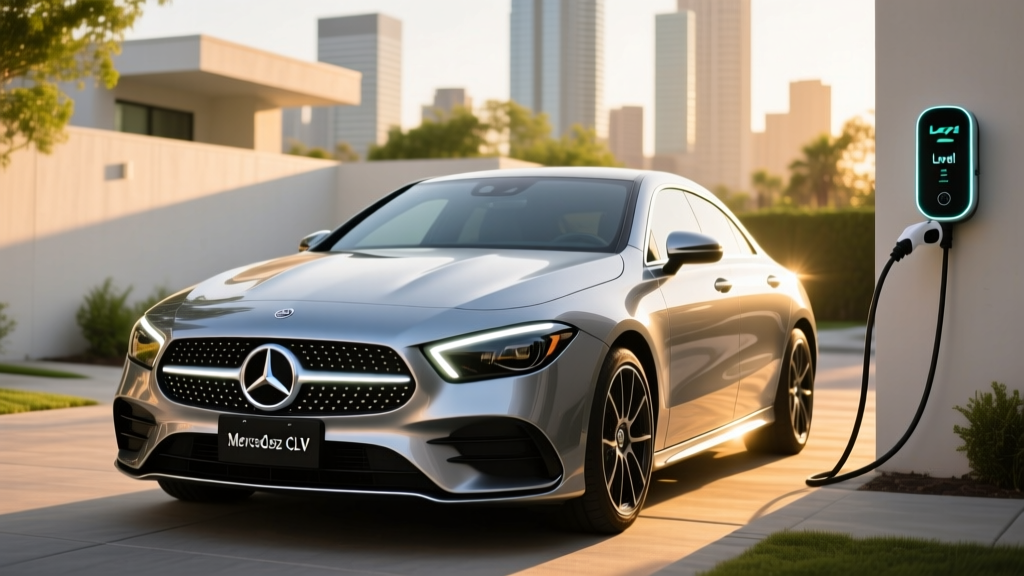
The 2026 Mercedes-Benz CLA EV is the brand's first production model built on the dedicated 800-volt Mercedes-Benz Electric Architecture (MMA). It pairs an estimated 85 kWh usable NMC battery with a rear-mounted permanent-magnet motor producing roughly 268 horsepower. Targeted EPA range sits around 350 miles for the rear-wheel-drive CLA 250 variant, with peak DC fast-charging capability of up to 250 kW — enabling a 10–80% charge in approximately 21 minutes when preconditioned. Pricing is expected to start near $47,000 for the base trim, rising to $55,000+ for dual-motor 4MATIC versions. Federal §30D tax-credit eligibility remains uncertain due to battery-sourcing and critical-mineral rules that vary by build date — always verify with the IRS Clean Vehicle Credit page before purchase.
What the Electric CLA Mercedes Actually Is
The CLA has long been Mercedes-Benz's entry-level luxury sedan, competing with the Audi A3 and BMW 2 Series Gran Coupe. For 2026, Mercedes is splitting the nameplate: the combustion CLA continues alongside a fully electric CLA built on the new MMA platform. This is not a "compliance car" or an adapted gas chassis — the MMA architecture was engineered from day one for battery-electric propulsion, with an 800-volt electrical system that enables faster charging and more efficient power delivery than the 400-volt systems found in older Mercedes EQ models.
The electric CLA sits slightly above the gas CLA in price but below the EQE sedan, making it the most accessible way into a dedicated-platform Mercedes EV. Mercedes has also confirmed a CLA Shooting Brake (wagon) variant for select markets, though U.S. availability remains unconfirmed as of early 2026.
Range, Battery, and Charging: The Numbers That Matter
Range is where the electric CLA makes its strongest case. Mercedes has targeted over 750 km on the WLTP cycle for the RWD variant — but U.S. buyers should focus on EPA figures, which are typically 15–20% lower than WLTP. Based on pre-production data and comparable MMA-platform efficiency, expect the following:
| Specification | CLA 250 (RWD) | CLA 35 4MATIC (AWD) |
|---|---|---|
| Battery (usable) | ~85 kWh (NMC) | ~85 kWh (NMC) |
| EPA Range (est.) | ~350 mi | ~310 mi |
| Real-World Highway | ~280–300 mi | ~250–270 mi |
| Cold-Weather (20°F) | ~240–260 mi | ~210–230 mi |
| Motor Output | 268 hp / 284 lb-ft | ~402 hp (combined) |
| 0–60 mph | ~6.2 sec | ~4.5 sec |
| Peak DC Charge Rate | 250 kW | 250 kW |
| 10–80% DC Time | ~21 min | ~21 min |
| Level 2 (11 kW AC) | ~9 hr (0–100%) | ~9 hr (0–100%) |
| Efficiency (est.) | ~120 MPGe | ~105 MPGe |
Real-World Range Reality Check
The ~350-mile EPA estimate for the RWD CLA is impressive, but real-world highway driving at 75 mph with climate control running typically yields 280–300 miles. In winter conditions (sub-30°F), expect a 25–30% reduction from the EPA figure — bringing usable range down to roughly 240–260 miles. The heat pump (standard on MMA vehicles) mitigates some of this loss, but physics is physics: cold batteries have higher internal resistance and cabin heating demands energy. Plan road trips around 200–220 mile segments in winter to maintain a comfortable buffer.
The 800-volt architecture is a genuine differentiator. At a 350 kW-capable DC fast charger (such as Electrify America's newest stations), the CLA can accept up to 250 kW — but only in a narrow state-of-charge window (roughly 10–40%). Above 60% SoC, the charge curve tapers significantly, dropping to around 100 kW by 70% and below 50 kW past 85%. This is normal lithium-ion behavior, but it means the advertised "21-minute 10–80%" time assumes a preconditioned battery and an available high-power charger.
Electric CLA vs Gas CLA: A Cost and Experience Comparison
The most direct cross-shop for most buyers is the gas-powered CLA 250. Here's how they stack up on the metrics that affect your wallet and daily experience:
| Metric | 2026 CLA EV (RWD) | 2026 CLA 250 (Gas) |
|---|---|---|
| Starting MSRP | ~$47,000 | ~$40,000 |
| EPA Range / Tank Range | ~350 mi | ~380 mi (13.2 gal × 29 mpg) |
| Fuel/Energy Cost per Mile | ~$0.045 (home L2, $0.14/kWh) | ~$0.12 ($3.50/gal, 29 mpg) |
| Annual Fuel/Energy (12k mi) | ~$540 | ~$1,440 |
| Annual Maintenance (est.) | ~$300 | ~$650 |
| 5-Year Fuel + Maint. | ~$4,200 | ~$10,450 |
| 0–60 mph | ~6.2 sec | ~6.8 sec |
| Federal Tax Credit | Up to $7,500 (if eligible) | $0 |
| Drivetrain Complexity | Single-speed, ~20 moving parts | 7-speed DCT, hundreds of parts |
The math is straightforward: the electric CLA costs roughly $7,000 more upfront, but saves approximately $1,250 per year in fuel and maintenance. That payback period is about 5.6 years without a tax credit, or 4.6 years if you qualify for the full $7,500 §30D credit. If you charge primarily on public DC fast chargers (at $0.35–$0.50/kWh), your per-mile cost rises to roughly $0.09–$0.12, nearly matching gas — so home charging access is a critical variable.
Ownership Costs: The Full 5-Year Picture
Purchase price is only one input. Here's a realistic 5-year / 60,000-mile total cost of ownership breakdown:
| Cost Category | CLA EV (RWD) | CLA 250 (Gas) |
|---|---|---|
| Purchase Price (MSRP) | $47,000 | $40,000 |
| Federal Tax Credit | −$7,500 (if eligible) | $0 |
| Effective Purchase | $39,500 | $40,000 |
| Estimated Depreciation (5 yr) | $18,800 (40%) | $17,200 (43%) |
| Insurance (5 yr avg.) | $11,400 ($2,280/yr) | $9,500 ($1,900/yr) |
| Energy/Fuel (5 yr) | $2,700 | $7,200 |
| Maintenance (5 yr) | $1,500 | $3,250 |
| Home Charger Install | $1,200 (one-time) | $0 |
| Total 5-Year Cost | $44,400 | $49,950 |
Key assumptions: home Level 2 charging at $0.14/kWh national average, 12,000 miles/year, premium fuel at $3.50/gal. Insurance is typically 15–20% higher for EVs due to higher repair costs and parts pricing — get quotes from your carrier before committing. Depreciation estimates reflect current EV resale trends, which have stabilized after the 2023–2024 price-war-driven drop in used EV values.
Tax Credit Eligibility: What You Actually Need to Know
The §30D Clean Vehicle Credit can reduce your federal tax liability by up to $7,500 — and since 2024, it can be transferred to the dealer as a point-of-sale discount. But eligibility is not automatic. Here's the checklist for the 2026 tax year:
- MSRP Cap: Sedans must be under $55,000 MSRP. The CLA EV base trim is expected to clear this, but higher trims or optioned-up builds may exceed the cap.
- Buyer Income Limits: Modified AGI must not exceed $150,000 (single), $225,000 (head of household), or $300,000 (joint filing).
- Battery Sourcing: At least 60% of battery component value must be manufactured or assembled in North America, AND at least 50% of critical minerals must be sourced from the U.S. or a free-trade-agreement partner. Mercedes has not publicly confirmed full compliance for all CLA EV battery packs — this is the key variable.
- Final Assembly: Vehicle must undergo final assembly in North America. The CLA EV's assembly location should be verified via the DOE's VIN lookup tool at the time of purchase.
- FEOC Restriction: Battery components cannot be sourced from a Foreign Entity of Concern (primarily Chinese manufacturers). This is the most common disqualifier for European-brand EVs using CATL or similar cells.
Bottom line: Do not assume you'll receive the credit. Confirm eligibility with your dealer and a tax professional before signing, and check the IRS's regularly updated list of qualifying vehicles. Rules can change mid-year.
First-Time EV Buyer: What the CLA Demands of You
If the electric CLA is your first EV, here's what you need to plan for that a gas-car purchase never required:
Home Charging Is Non-Negotiable for Cost Savings
The CLA's cost advantage over gas depends heavily on home Level 2 charging. A 240-volt, 48-amp Level 2 charger (such as a ChargePoint Home Flex or Mercedes-branded wallbox) adds roughly 30–35 miles of range per hour and fully replenishes the 85 kWh battery in about 9 hours — ideal for overnight charging. Professional installation typically costs $800–$2,000, depending on your electrical panel's capacity. If your panel is at or near its amperage limit (common in older homes with 100-amp service), a panel upgrade to 200 amps can add $1,500–$3,000. Get an electrician's assessment before purchase.
Public Charging: Available but Variable
The CLA uses the NACS (North American Charging Standard) connector, giving it native access to Tesla's Supercharger network — the most reliable and widespread DC fast-charging infrastructure in the U.S. with over 25,000 stalls. It can also use Electrify America, EVgo, and other CCS networks via adapter. For road trips, the Mercedes me Charge app aggregates networks and provides real-time stall availability, though in our experience, third-party apps like PlugShare remain more reliable for verifying charger status.
Cold Climate? Plan Around 25% Range Loss
If you live where winters regularly drop below freezing, the CLA's real-world range will shrink to roughly 240–260 miles (from 350 EPA). The standard heat pump helps — it's roughly 3–4× more efficient at cabin heating than resistive elements — but battery chemistry itself loses efficiency in the cold. Preconditioning the battery (via the Mercedes me app while still plugged in) before departure recovers some range and significantly improves DC charging speed.
Common Misconceptions About the Electric CLA
| Myth | Fact |
|---|---|
| "It's just an EQA with a new badge." | The CLA EV rides on the entirely new MMA platform with 800V architecture, not the older MFA2-based EQA. |
| "The battery will need replacing in 5 years." | Mercedes warranties the battery for 8 years/100,000 miles with a 70% state-of-health guarantee. Industry data shows NMC packs retaining 85–90% capacity at 100k miles. |
| "I can charge it on any outlet." | A standard 120V outlet (Level 1) adds only ~3–4 miles per hour — roughly 40 miles overnight. For daily use, Level 2 (240V) is essential. |
| "It qualifies for the $7,500 tax credit." | Eligibility depends on battery sourcing, MSRP, buyer income, and final assembly location — all of which must be verified per-vehicle at time of purchase. |
| "350 miles means I'll always get 350 miles." | Highway driving, cold weather, and aggressive acceleration reduce range by 15–30%. Real-world daily range is typically 280–300 miles in moderate conditions. |
Decision Framework: Is the Electric CLA Right for You?
Choose the Electric CLA If:
- You have access to Level 2 home charging (garage or driveway with 240V circuit)
- Your daily commute is under 80 miles round-trip (covers 95%+ of U.S. commutes)
- You want a compact luxury sedan with sub-$50k pricing and genuine 300+ mile range
- You value NACS/Supercharger access for road trips without adapter hassle
- You plan to own the car 5+ years to capture fuel/maintenance savings
Choose the Gas CLA 250 (or Wait) If:
- You live in an apartment or condo without charging access and rely on street parking
- You regularly drive 300+ miles in a single day in areas with sparse DC fast-charging infrastructure
- Your budget is strictly under $40,000 and you can't absorb the upfront premium
- You live in an extreme cold climate (frequent sub-0°F temps) where range loss compounds with long rural distances
- The CLA EV doesn't qualify for the §30D credit in your purchase year, extending payback beyond your ownership horizon
Consider the CLA 35 4MATIC EV If:
- You need all-wheel drive for snow/ice and value the ~4.5-second 0–60 time
- You accept a ~40-mile range penalty (to ~310 EPA) for the performance and traction upgrade
- Your budget extends to the $55,000+ range (note: this may exceed the §30D MSRP cap for sedans)
Battery Longevity and Warranty
Mercedes covers the CLA EV's high-voltage battery with an 8-year/100,000-mile warranty, guaranteeing a minimum of 70% state of health (SoH) over that period. The MMA platform uses an NMC (nickel manganese cobalt) cell chemistry optimized for energy density — necessary to hit the 350-mile target in a compact sedan footprint. NMC cells historically show slightly faster degradation than LFP (lithium iron phosphate) chemistry, but modern thermal management systems keep degradation in the 10–15% range over 100,000 miles based on fleet data from comparable platforms.
To maximize battery life: avoid routinely charging to 100% (set daily limit to 80–90%), use DC fast charging sparingly (it's fine for road trips, but daily L2 is gentler), and always precondition in extreme temperatures. Mercedes' battery management system includes a buffer (roughly 3–5 kWh above and below the usable window) that protects against deep discharge and overcharge at the cell level.
Frequently Asked Questions
When can I actually buy the electric CLA Mercedes?
The 2026 CLA EV is expected to arrive at U.S. dealerships in late 2025 or early 2026. Mercedes revealed the Concept CLA Class in 2023 and confirmed production specifications throughout 2024–2025. Reservations may be available through Mercedes-Benz USA's website prior to launch. Verify with your local dealer for exact timing, as production allocation varies by market.
Will the electric CLA use the Tesla Supercharger network?
Yes. The CLA EV is equipped with the NACS connector natively, providing direct access to Tesla's Supercharger network without an adapter. This is a significant advantage over CCS-equipped vehicles that require adapters for Supercharger access. You'll also retain access to Electrify America, EVgo, and other networks — either natively (if they've added NACS cables) or via a CCS adapter.
How does the CLA EV compare to the Tesla Model 3?
The Model 3 Long Range starts around $42,000 with 341 miles of EPA range, slightly undercutting the CLA on price while matching range. The Model 3 charges at up to 250 kW on its own Supercharger network and offers a more minimalist interior. The CLA counters with a more traditional luxury cabin, Mercedes' MBUX infotainment with the new MMA-generation software, and a more conventional sedan design. If interior materials and brand prestige matter, the CLA wins; if value and charging-network maturity are your priorities, the Model 3 remains the benchmark. Check fueleconomy.gov for official efficiency comparisons once EPA numbers are finalized.
What happens if I need to charge on a road trip?
With NACS and Supercharger access, road-trip charging is straightforward. At 250 kW peak, the CLA adds roughly 150–180 miles of range in a 15-minute stop (10–55% SoC). The Mercedes me navigation system will automatically route you through chargers and precondition the battery for optimal charge speed. Plan stops every 200–220 miles in moderate weather, or every 160–180 miles in winter. Apps like A Better Routeplanner can model trips with elevation, temperature, and speed variables.
Is the electric CLA eligible for any state incentives?
State incentives vary widely and change frequently. States like California, Colorado, and Massachusetts have offered rebates of $1,000–$4,000 for qualifying EVs, often with income-based tiers. Check your state's energy office or environmental agency website for current programs. These stack with the federal §30D credit if you qualify for both. Your dealer should have a summary of applicable incentives, but always verify independently — state programs can exhaust their funding mid-year.
What are the ongoing maintenance costs?
EVs have dramatically fewer wear items than gas cars. Expect to replace cabin air filters ($50–$100 annually), wiper blades, brake fluid (every 2 years), and tires (EVs tend to wear tires faster due to instant torque and heavier weight — budget $800–$1,200 for a set of premium all-seasons every 30,000–40,000 miles). Brake pads last significantly longer thanks to regenerative braking — often 100,000+ miles. There's no oil, no spark plugs, no transmission fluid, no timing belt. Annual maintenance should average $250–$350 versus $600–$800 for the gas CLA.