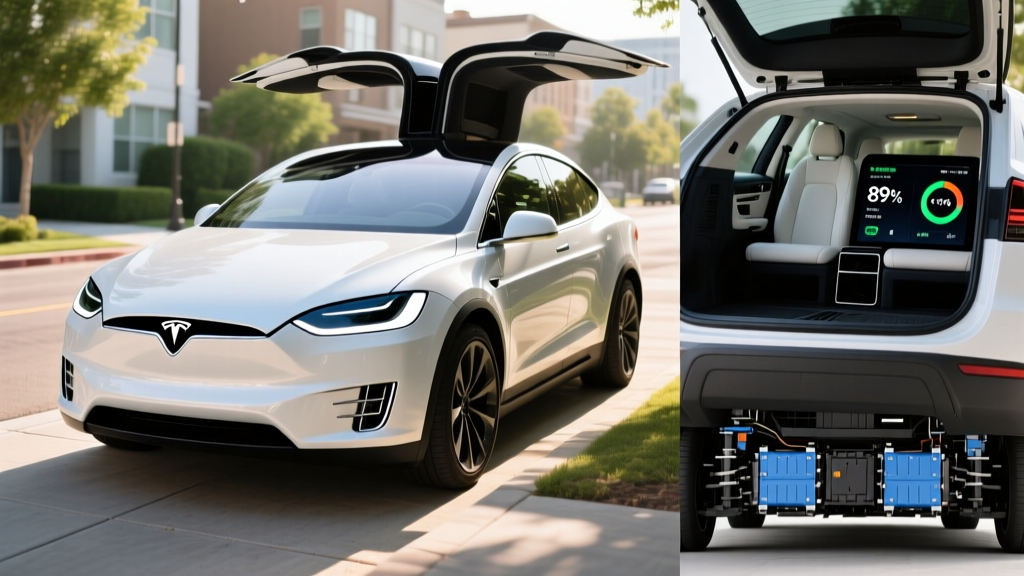
The Tesla Model X remains one of the most distinctive electric SUVs on the road. Falcon-wing rear doors, a massive panoramic windshield, and access to the Supercharger network make it a compelling family hauler. But with new pricing hovering near $80,000, many buyers are turning to the secondary market. If you're evaluating a Tesla Model X pre-owned, the decision hinges on battery health, charging hardware generation, and which model year you target.
This guide focuses on what matters when buying a used Model X in 2026: real-world range versus EPA stickers, battery degradation patterns, DC fast-charge capability by model year, and the specific inspection points that separate a smart buy from a money pit.
Quick Verdict: Is a Pre-Owned Model X Worth It?
A used Model X makes sense for families who need three-row seating, want Supercharger access, and can verify battery health through Tesla's diagnostics. The sweet spot is a 2021–2023 Model X Long Range with the refreshed interior, 405-volt architecture, and NMC battery chemistry. Avoid early 2016–2018 models unless the battery has been replaced under warranty — those 90D and 100D packs degrade faster and charge slower.
Choose a pre-owned Model X if: You need 6–7 seats, tow up to 5,000 lbs, and want Supercharger access for road trips.
Consider alternatives (Rivian R1S, Kia EV9) if: You want newer ADAS hardware, more competitive pricing, or don't need falcon-wing doors.
Real-World Range vs. EPA Estimates by Model Year
EPA range stickers tell only part of the story. The Model X's large frontal area and heavy curb weight (~5,100 lbs) hit efficiency hard at highway speeds. Add cold weather, and you'll see significant reductions from the sticker number.
| Model Year / Trim | Battery (kWh usable) | Chemistry | EPA Range | Real-World Highway | Cold-Weather (20°F) |
|---|---|---|---|---|---|
| 2023–2025 Long Range | ~100 kWh | NMC | 348 mi | ~280–300 mi | ~230–260 mi |
| 2023–2025 Plaid | ~100 kWh | NMC | 333 mi | ~265–285 mi | ~220–250 mi |
| 2020–2022 Long Range Plus / LR | ~100 kWh | NMC | 371 mi (2020) / 360 mi (2021) | ~290–320 mi | ~240–270 mi |
| 2016–2019 100D | ~100 kWh | NMC | 295 mi | ~230–260 mi | ~190–220 mi |
| 2016–2019 P100D | ~100 kWh | NMC | 289 mi | ~225–255 mi | ~185–215 mi |
Real-World Range Reality Check: A 2023 Model X Long Range carries an EPA rating of 348 miles. Expect 280–300 miles at sustained 70–75 mph highway driving in moderate temperatures (60–80°F). In sub-freezing conditions, plan for 230–260 miles due to cabin heating demands and reduced battery chemistry efficiency. City driving with regenerative braking recovers closer to the EPA figure.
Pre-2021 models used an older battery management system and thermal architecture that resulted in more aggressive degradation curves. According to fueleconomy.gov, the 2020 Long Range Plus achieved 371 miles EPA — the highest of any Model X variant — but real-world owners commonly report 10–15% less on road trips.
Charging Speed: What Pre-Owned Buyers Must Verify
Charging hardware varies significantly across Model X generations. This directly affects road-trip practicality and is the single most overlooked factor when buying pre-owned.
| Generation | Max DC Fast Charge | 10–80% Time | Level 2 (Home) | Connector |
|---|---|---|---|---|
| 2021+ Refresh (Long Range / Plaid) | 250 kW peak | ~30–35 min | 11.5 kW (~44 mi/hr) | NACS (native) |
| 2019–2020 (Raven / LR Plus) | 150 kW peak | ~40–45 min | 11.5 kW (~44 mi/hr) | Tesla proprietary (NACS-compatible) |
| 2016–2018 (90D / 100D / P100D) | 120–145 kW peak | ~50–60 min | 10–11.5 kW (~38–44 mi/hr) | Tesla proprietary |
The 2021+ refresh models support 250 kW DC fast charging on V3 Superchargers, though peak rate is only sustained between roughly 10–30% SoC before tapering. Above 60%, expect charge rates to drop to 80–100 kW, and above 80% they fall further to 30–50 kW. This is normal lithium-ion charge-curve behavior — Tesla's battery management system protects cell longevity by reducing current at higher states of charge.
Home Level 2 charging on a 48-amp circuit (requiring a 60-amp breaker) delivers 11.5 kW, adding approximately 44 miles of range per hour. A full overnight charge from 20% to 80% takes roughly 5–6 hours. Note: kW (kilowatts) measures charging power — the rate of energy delivery — while kWh (kilowatt-hours) measures total battery energy capacity. A 100 kWh battery charged at 11.5 kW requires roughly 8.7 hours for a full 0–100% charge, minus efficiency losses.
Pre-purchase check: Ask the seller for a Supercharger session log. If the vehicle consistently peaks below 120 kW on a V3 Supercharger (250 kW cabinet), the battery may have thermal management issues or cell imbalance.
Performance, Drivetrain, and Efficiency Specs
Every Model X sold since 2019 comes with dual-motor all-wheel drive. The Plaid variant adds a third rear motor for extraordinary acceleration.
| Spec | 2023–2025 Long Range | 2023–2025 Plaid | 2020 Long Range Plus |
|---|---|---|---|
| Drivetrain | Dual-Motor AWD | Tri-Motor AWD | Dual-Motor AWD |
| Horsepower | 670 hp | 1,020 hp | ~518 hp |
| 0–60 mph | 3.8 seconds | 2.5 seconds | 4.4 seconds |
| EPA Efficiency | 101 MPGe (combined) | 98 MPGe (combined) | 101 MPGe (combined) |
| Energy Consumption | 33 kWh/100 mi | 34 kWh/100 mi | 33 kWh/100 mi |
| Towing Capacity | 5,000 lbs | 5,000 lbs | 5,000 lbs |
MPGe (miles per gallon equivalent) translates the electrical energy consumed into a gasoline-equivalent figure. At 33 kWh per 100 miles, the Model X Long Range costs roughly $4.50–$6.50 per 100 miles to charge at home (at $0.14–$0.20/kWh), versus $12–$15 for a comparable gas SUV at 20 MPG combined.
Battery Degradation: What to Expect in a Used Model X
All Model X variants use NMC (nickel manganese cobalt) lithium-ion cells. Unlike LFP (lithium iron phosphate) chemistry found in some Model 3/Y Standard Range vehicles, NMC offers higher energy density but is more sensitive to sustained high states of charge and deep discharges.
Based on aggregated fleet data, expect the following degradation trajectory for a Model X NMC pack:
- Year 1–2: 3–5% capacity loss (initial settling)
- Year 3–5: Additional 3–5% loss (total ~8–10% from new)
- Year 6–8: Gradual loss of 1–2% per year (total ~12–16% from new)
- Year 10+: Highly variable; some packs retain 80%+, others drop below
A 2019 Model X Long Range with 80,000 miles may realistically deliver 300–320 miles of range when new, dropping to approximately 260–285 miles today. This is still practical for most daily driving but reduces road-trip margins.
Warranty coverage: Tesla's battery and drive unit warranty covers the Model X for 8 years or 150,000 miles (whichever comes first), with a guaranteed minimum 70% capacity retention. If you're buying a 2018 model, that warranty expires in 2026. A 2021 model remains covered through 2029. Always verify warranty status through Tesla's app or a service center before purchase.
Pricing, Tax Credits, and the Used Model X Market
Used Model X pricing in early 2026 varies dramatically by model year, mileage, and condition:
| Model Year / Trim | Typical Pre-Owned Price | Mileage Range | Federal Used EV Credit (§25E) | Effective Price |
|---|---|---|---|---|
| 2023–2024 Long Range | $65,000–$75,000 | 10,000–30,000 | Not eligible (over $25k cap applies to used) | $65,000–$75,000 |
| 2021–2022 Long Range | $52,000–$62,000 | 25,000–55,000 | Not eligible (MSRP when new exceeded cap) | $52,000–$62,000 |
| 2019–2020 Long Range | $42,000–$52,000 | 40,000–75,000 | Not eligible | $42,000–$52,000 |
| 2016–2018 100D / P100D | $28,000–$40,000 | 60,000–110,000 | Up to $4,000 (§25E, if under $25,000 sale price) | $24,000–$40,000 |
Critical tax credit note for used EVs: The IRS §25E used EV credit offers up to $4,000 (30% of sale price, capped at $4,000) for pre-owned EVs. However, the vehicle's sale price must be $25,000 or less, the buyer must meet income caps ($75,000 single / $150,000 joint), and the vehicle must be at least two model years old. Most used Model X vehicles sell above $25,000, meaning only high-mileage 2016–2018 examples may qualify. The new-vehicle §30D credit ($7,500) does not apply to pre-owned purchases. Always consult a tax professional and verify current-year rules on irs.gov before relying on credit eligibility.
For comparison, a new 2025 Model X Long Range starts at approximately $79,990 (before destination), making even a lightly used 2023 model a significant savings — though you forfeit the new-vehicle tax credit and full warranty runway.
Interior, Cargo, and Family Practicality
The Model X offers three seating configurations: 5-seat (two rows), 6-seat (captain's chairs in row two), and 7-seat (bench in row two). The 6-seat layout is the most common and most practical, with a center aisle providing access to the third row without folding the second row forward.
| Dimension | 5-Seat | 6-Seat | 7-Seat |
|---|---|---|---|
| Cargo (behind 3rd row) | N/A | ~15 cu ft | ~15 cu ft |
| Cargo (3rd row folded) | ~37 cu ft | ~37 cu ft | ~37 cu ft |
| Cargo (all rear rows folded) | ~88 cu ft | ~82 cu ft | ~82 cu ft |
| Front headroom | 41.7 in | 41.7 in | 41.7 in |
| 2nd-row legroom | 41.1 in | 39.6 in | 38.4 in |
| 3rd-row legroom | N/A | 30.5 in | 30.5 in |
The frunk (front trunk) adds approximately 6.6 cubic feet of sealed storage — useful for charging cables or groceries. The falcon-wing rear doors require roughly 12 inches of side clearance to open (less than a conventional door swing), making them practical in tight parking spaces despite their dramatic appearance.
The 2021+ refresh brought a significantly improved interior: a 17-inch landscape touchscreen (replacing the older portrait unit), a rear-seat 8-inch display, ventilated front seats, a yoke or round steering wheel option, and improved sound insulation. Pre-2021 interiors feel noticeably dated by comparison, with slower infotainment processors and less premium materials.
Driver Assistance, Tech, and Notable Drawbacks
SAE Automation Level: Level 2. Tesla's Autopilot and Full Self-Driving (Supervised) are Level 2 driver-assistance systems. The driver must remain fully engaged, hands on or near the wheel, and eyes on the road at all times. These systems do not make the Model X self-driving. Only Level 4 robotaxi services (Waymo, Zoox) operate without a human driver in defined areas.
Autopilot (standard) includes adaptive cruise control, lane centering, and automatic emergency braking. Full Self-Driving (Supervised) adds auto lane changes, navigation-based on-ramp to off-ramp driving, traffic light/stop sign recognition, and Smart Summon. FSD transfers with the vehicle in most pre-owned sales — a significant value add, as new FSD purchases cost approximately $8,000 (or $99/month).
Pre-2019 Model X vehicles use Hardware 2.5 or earlier, which lacks the processing power for current FSD features. Hardware 3 (introduced April 2019) or Hardware 4 (2023+) is strongly recommended for buyers who want ongoing ADAS improvements. Tesla has offered HW3 retrofits for some older vehicles, but availability is limited.
Known Drawbacks of Pre-Owned Model X:
- Falcon-wing door sensors and actuators can fail — replacement costs $2,000–$4,000 per door
- Early (2016–2018) MCU1 infotainment screens are prone to delamination and yellowing
- Air suspension on pre-2020 models may require $1,500–$2,500 strut replacements after 80,000+ miles
- Panel gaps and wind noise were common complaints on pre-2021 builds
- Insurance premiums run 25–40% higher than comparable gas SUVs due to repair costs
Pre-Owned Model X vs. Key Competitors
The used Model X competes against several three-row electric and plug-in-hybrid alternatives:
| Attribute | Model X LR (2022, Pre-Owned) | Rivian R1S (2023, Pre-Owned) | Kia EV9 GT-Line (New 2025) |
|---|---|---|---|
| Typical Price | $55,000–$65,000 | $60,000–$72,000 | $73,900 (new) |
| EPA Range | 352 mi | 316–390 mi | 270–304 mi |
| DC Fast Charge | 250 kW | 200 kW | 236 kW |
| Seating | 5/6/7 | 7 | 6/7 |
| Towing | 5,000 lbs | 7,700 lbs | 5,000 lbs |
| Supercharger Access | Native | NACS adapter (2024+) | CCS (NACS adapter available) |
| Off-Road | Limited | Excellent | Limited |
The Rivian R1S is the stronger pick for towing and off-road capability but costs more on the used market and has a smaller service network. The Kia EV9 is the value option with a full new-vehicle warranty and available §30D tax credit, but offers less range and no Supercharger access.
Pre-Purchase Inspection Checklist
Before committing to a pre-owned Model X, verify these items:
- Battery health report: Request a Tesla service center diagnostic showing current capacity vs. original (kWh). This is the single most important data point.
- Supercharger charge curve: Plug into a V3 Supercharger and confirm the vehicle reaches at least 200 kW peak (2021+ models) or 130+ kW (2019–2020).
- Falcon-wing door operation: Open and close all doors 10+ times. Listen for grinding or hesitation in the actuators.
- Air suspension: Cycle through all ride heights. Listen for compressor strain and check for uneven ride height after parking overnight.
- Hardware version: Confirm HW3 or HW4 via Settings → Software → Additional Vehicle Information.
- Service history: Check for battery or drive unit replacements under warranty — these are a positive, not a negative.
- Title status: Verify clean title; salvage or rebuilt titles void remaining Tesla warranty.
Who Should Buy a Pre-Owned Model X?
Pros:
- Supercharger network access — still the most reliable DC fast-charging network in North America
- 348–371 miles EPA range (2020+ models) covers most road trips with one stop
- 6/7-seat flexibility with genuine third-row usability
- FSD may transfer with the vehicle (verify before purchase)
- 5,000-lb towing with integrated trailer brake controller
- OTA updates continue to add features to older hardware
Cons:
- Falcon-wing door repairs are expensive and specialized
- Pre-2021 models charge slower (120–150 kW vs. 250 kW)
- High insurance costs relative to competitors
- No federal new-vehicle tax credit on used purchases
- Third-row space tight for adults on long trips
- Service center wait times can be lengthy in some regions
The pre-owned Model X is ideal for: families needing three rows who take regular road trips (Supercharger access is transformative), buyers who can verify battery health and target a 2021+ refresh model, and those who value performance (3.8-second 0–60 in the Long Range is extraordinary for a 5,100-lb SUV).
It's a poor fit for: buyers on a strict budget (maintenance and insurance costs add up), those who need maximum cargo volume (the Rivian R1S or a minivan offers more), and anyone who can't access home Level 2 charging (relying solely on public charging with a 100 kWh battery is expensive and time-consuming).
Frequently Asked Questions
What is the real-world range of a pre-owned Tesla Model X?
A 2022–2023 Model X Long Range delivers approximately 280–300 miles at highway speeds in moderate weather, and 230–260 miles in freezing conditions. Older 2016–2019 models with degraded batteries may deliver 200–250 miles real-world. Always check the vehicle's current battery capacity through Tesla diagnostics.
How fast does a used Model X charge at home and on the road?
At home on a 48-amp Level 2 charger (240V), any Model X adds roughly 44 miles of range per hour (11.5 kW). On DC fast chargers, 2021+ models peak at 250 kW with a 10–80% charge in about 30–35 minutes. Pre-2021 models peak at 120–150 kW, requiring 40–60 minutes for the same session.
Does a pre-owned Model X qualify for any federal tax credit?
The IRS §25E used EV credit offers up to $4,000, but only if the sale price is $25,000 or less and the buyer meets income caps. Most used Model X vehicles sell above this threshold, so only high-mileage 2016–2018 examples may qualify. The $7,500 new-vehicle §30D credit does not apply to pre-owned purchases.
Is it worth buying a pre-owned Model X vs. a new EV SUV?
A 2021+ Model X Long Range at $55,000–$65,000 offers range, performance, and Supercharger access that few new EVs match at that price. However, a new Kia EV9 or Hyundai Ioniq 9 provides a full warranty, the latest ADAS hardware, and potential tax-credit eligibility. The Model X wins on range and charging infrastructure; competitors win on warranty peace of mind and interior refinement.
What are the biggest risks of buying a used Model X?
Battery degradation beyond warranty coverage (replacement costs $15,000–$22,000), falcon-wing door actuator failures ($2,000–$4,000 per door), air suspension wear on pre-2020 models, and high insurance premiums. A pre-purchase diagnostic at a Tesla service center mitigates most of these risks.
Does FSD transfer when buying a pre-owned Model X?
In most cases, yes — Full Self-Driving (Supervised) stays with the vehicle when sold privately or through Tesla's used inventory. However, Tesla's policy can change, and FSD does not always transfer on trade-ins or third-party dealer sales. Always verify FSD status in the vehicle's Settings → Software menu before finalizing the purchase.