Tesla Model X Long Range Review: The Ultimate 3-Row Electric SUV Ownership Guide
When the Tesla Model X first debuted, it fundamentally disrupted the luxury SUV market. Today, the current generation of the Tesla Model X Long Range continues to be a benchmark in the premium electric vehicle segment. Combining the practicality of a three-row family hauler with the performance of a sports sedan, it remains a highly sought-after vehicle for eco-conscious families. However, beyond the mesmerizing Falcon Wing doors and blistering acceleration, prospective buyers must consider the long-term financial realities of living with a premium electric SUV.
In this comprehensive review, we dive deep into the real-world range, charging infrastructure, interior technology, and driving dynamics of the Model X Long Range. Most importantly, we break down the true ownership costs, examining depreciation, maintenance, insurance, and energy expenses to help you decide if this flagship EV is the right investment for your garage. For a broader look at the market, be sure to check out our guide to the best three-row electric SUVs available today.
Real-World Range & Efficiency
Range anxiety is a common concern for families planning road trips, and the Model X Long Range is engineered to alleviate those fears. According to EPA estimates, the dual-motor Long Range variant achieves an impressive rating of approximately 348 miles on a full charge when equipped with standard 20-inch wheels. Opting for the larger 22-inch turbine wheels will slightly reduce this figure due to increased rolling resistance and aerodynamic drag.
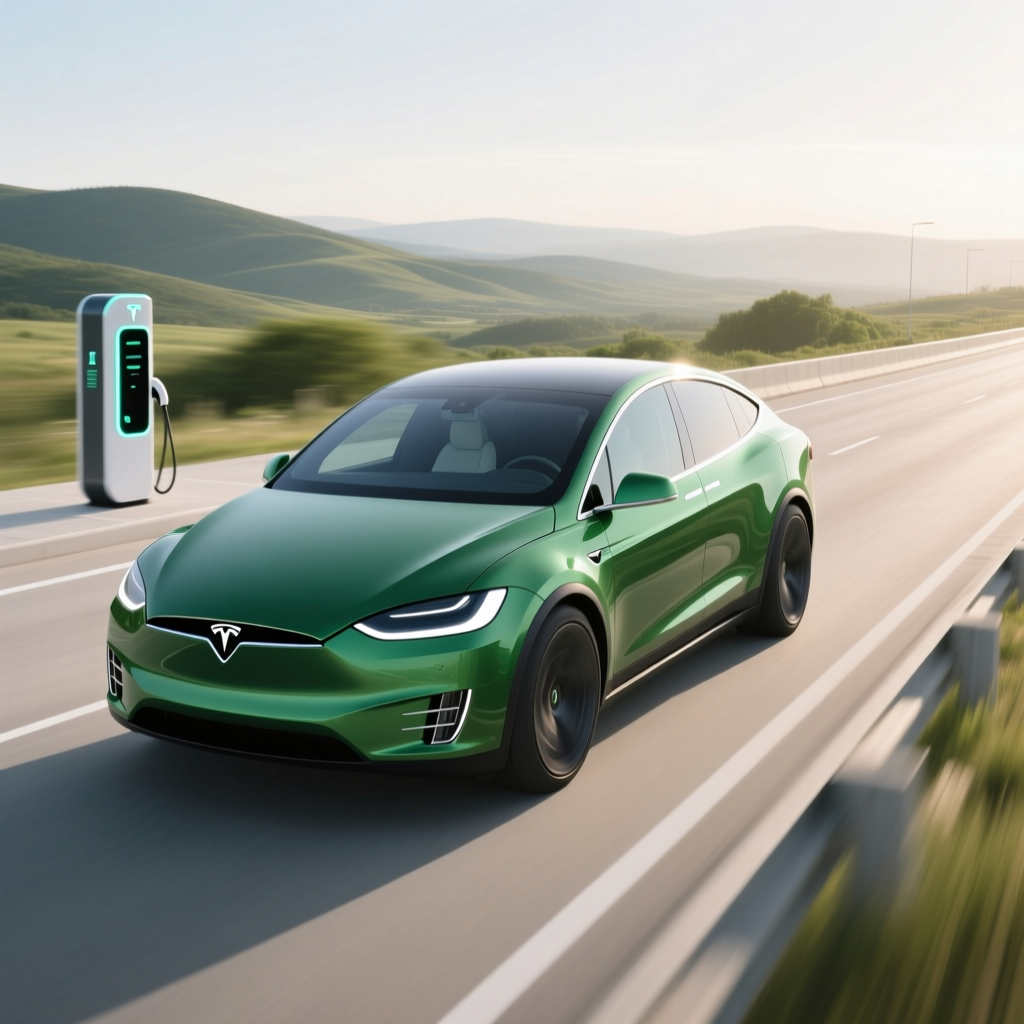
However, EPA ratings rarely tell the whole story. Independent real-world highway testing consistently shows that the Model X Long Range can achieve between 300 and 320 miles at sustained speeds of 70 mph in mild weather conditions. The vehicle’s exceptional aerodynamics, featuring a drag coefficient of just 0.24 Cd, play a massive role in preserving battery life at highway speeds. Furthermore, Tesla’s highly efficient heat pump system ensures that cabin heating during colder months draws significantly less power from the main battery pack compared to older resistive heating systems.
For daily commuting and city driving, regenerative braking allows the SUV to easily meet or even exceed its EPA rating. The one-pedal driving experience not only reduces brake wear but also maximizes energy recapture, making the Model X remarkably efficient for its substantial 5,185-pound curb weight.
Charging Speed & Infrastructure
The true advantage of owning a Tesla lies in its seamless access to the Supercharger network. The Model X Long Range supports peak charging speeds of up to 250 kW on V3 Superchargers. In optimal conditions—where the battery is properly preconditioned via the vehicle's navigation system—you can add up to 175 miles of range in just 15 minutes. A typical 10% to 80% charge takes roughly 30 to 35 minutes, making highway rest stops relatively brief.
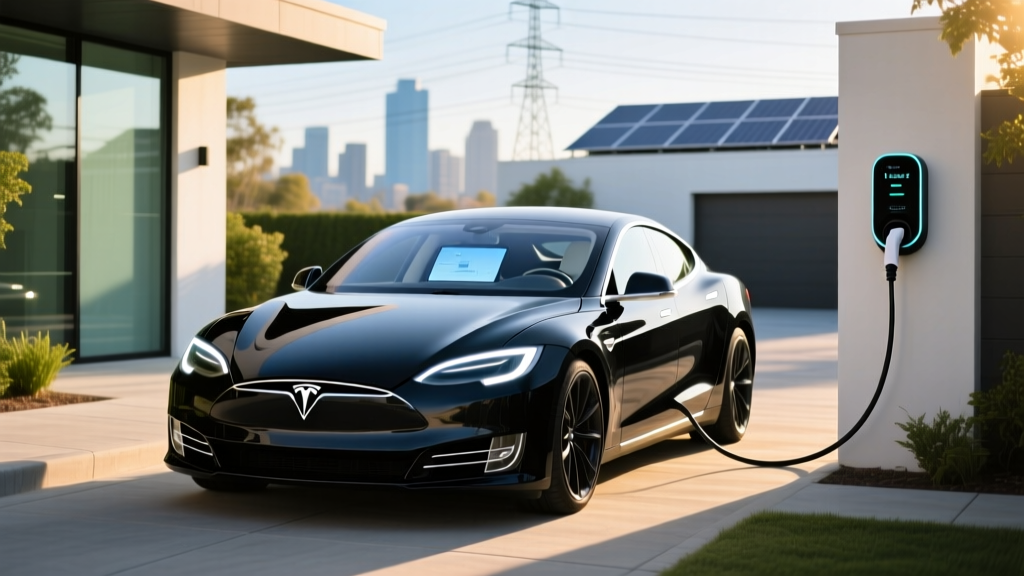
While the public charging infrastructure for non-Tesla EVs is rapidly expanding, the reliability and plug-and-play simplicity of the Supercharger network remain unparalleled. For home charging, Tesla’s Wall Connector is a must-have accessory. Capable of delivering up to 44 miles of range per hour of charging on a 60-amp circuit, it ensures your SUV is fully replenished every morning. If you are new to home charging setups, our home charger installation guide covers everything you need to know about electrical requirements and costs.
It is worth noting that the Model X utilizes the North American Charging Standard (NACS) port natively, meaning you will never need to fumble with adapters at Tesla stalls, and you will have native access to other networks that are adopting the NACS standard in the coming years.
Interior, Tech & Cargo Space
Stepping into the Model X Long Range is an exercise in modern minimalism. The cabin is dominated by a stunning 17-inch cinematic touchscreen that floats elegantly on the center console. This display controls virtually every function of the vehicle, from climate control and glovebox release to media and navigation. The infotainment system is powered by a robust AMD Ryzen processor, ensuring lightning-fast responsiveness and console-level gaming capabilities for passengers during charging stops.
For second-row passengers, an additional 8-inch touchscreen provides dedicated climate controls and entertainment options, a crucial feature for keeping children occupied on long journeys. The optional Yoke steering wheel remains a polarizing choice; while it offers an unobstructed view of the digital instrument cluster, many drivers still prefer the traditional round wheel for everyday low-speed maneuvering and parking.
The party piece of the exterior and interior experience is undoubtedly the Falcon Wing rear doors. Equipped with ultrasonic sensors, they articulate upward and outward, adjusting their opening arc to avoid low ceilings or adjacent vehicles. This design makes loading children into car seats significantly easier than in traditional SUVs. However, the mechanism does add complexity, which we will address in the ownership costs section.
Cargo capacity is exceptional. With the third row folded, the Model X offers up to 88 cubic feet of storage space. Even with all three rows in use, the rear trunk and the front trunk (frunk) provide ample room for groceries, strollers, and carry-on luggage. The third row itself is best suited for children or adults on short trips, as headroom and legroom are slightly compromised by the sloping roofline.
Driving Dynamics & Performance
Do not let the family-friendly three-row configuration fool you; the Model X Long Range is astonishingly quick. The dual-motor all-wheel-drive system generates an estimated 670 horsepower, launching this heavy SUV from 0 to 60 mph in just 3.8 seconds. The instant torque delivery provides effortless highway merging and confident passing power, making it one of the quickest SUVs on the road, regardless of the powertrain.
Ride quality is managed by Tesla’s adaptive air suspension. It automatically adjusts the ride height based on speed and GPS location—you can program it to raise the nose for your steep driveway or lower itself at highway speeds for better aerodynamics. The suspension does an admirable job of isolating the cabin from road imperfections, though the sheer weight of the battery pack means you will still feel sharp impacts over large potholes.
Steering is precise and heavily weighted, offering a sporty feel that belies the vehicle's size. When comparing driving dynamics to rivals like the Rivian R1S, the Model X leans slightly more toward car-like handling, whereas the Rivian offers a more rugged, truck-like demeanor. For a direct head-to-head, read our Tesla Model X vs. Rivian R1S comparison.
Ownership Costs & Depreciation
The purchase price of a Tesla Model X Long Range places it firmly in the luxury tier, but the long-term ownership costs require careful consideration. Let us break down the financial realities of living with this electric SUV.
Purchase Price & Incentives
While the initial sticker price is steep, buyers may be eligible for various federal, state, and local incentives. Navigating these can significantly reduce the effective purchase price. We highly recommend reviewing our EV tax credits guide to see which incentives apply to your specific situation and income bracket.
Depreciation
Depreciation is historically the largest hidden cost of owning a luxury vehicle, and the Model X is no exception. Tesla’s frequent adjustments to new vehicle pricing, combined with rapid advancements in battery technology and software, have led to a steeper depreciation curve compared to legacy luxury brands like Porsche or Lexus. Buyers who plan to hold the vehicle for five to seven years will absorb the brunt of this depreciation, while leasing might offer a buffer against sudden market value shifts.
Maintenance & Repairs
Routine maintenance on the Model X is remarkably low. There are no oil changes, spark plugs, or transmission fluid flushes to worry about. Your primary scheduled maintenance will consist of cabin air filter replacements, wiper fluid top-ups, and brake fluid checks. Because regenerative braking handles most of the deceleration, the physical brake pads and rotors can easily last well over 100,000 miles.
However, tire wear is a significant expense. The combination of instant electric torque and a heavy curb weight means you will likely need to replace premium, high-load-capacity tires every 20,000 to 30,000 miles. Budgeting for a set of four premium EV-specific tires every few years is a necessity.
Insurance Premiums
Insurance costs for the Model X tend to be higher than the industry average for luxury SUVs. The high cost of replacement parts, specialized repair requirements for the aluminum unibody and battery pack, and the vehicle's high performance all contribute to elevated premiums. It is highly recommended to shop around with multiple insurers, including Tesla’s own insurance product, which uses real-time driving data to calculate premiums in select regions.
Energy Costs
Where the Model X shines is in daily fuel savings. Charging at home using off-peak electricity rates can cost a fraction of what you would spend on premium gasoline for a similarly sized V8 or twin-turbo V6 SUV. Even with the higher costs of DC fast charging on road trips, the overall cost per mile for electricity remains vastly superior to internal combustion engines.
Pros & Cons
Pros:
- Exceptional real-world range and access to the Supercharger network.
- Blistering acceleration and car-like handling for a large SUV.
- Falcon Wing doors offer unmatched access for child seats.
- Industry-leading infotainment and over-the-air software updates.
- Massive cargo capacity with both a frunk and deep rear trunk.
Cons:
- High initial purchase price and steep depreciation curve.
- Premium insurance rates and accelerated tire wear.
- Third-row seating is tight for adults on long journeys.
- Panel gaps and interior trim quality can sometimes lag behind legacy luxury rivals.
Key Specifications Comparison
How does the Model X Long Range stack up against other notable three-row electric SUVs? Below is a quick comparison of key specifications.
| Feature | Tesla Model X LR | Rivian R1S Dual Motor | Kia EV9 GT-Line AWD |
|---|---|---|---|
| Estimated Range | 348 miles | 352 miles | 270 miles |
| 0-60 MPH | 3.8 seconds | 4.5 seconds | 5.0 seconds |
| Peak Charging Speed | 250 kW | 220 kW | 236 kW |
| Seating Capacity | 5, 6, or 7 | 7 | 6 or 7 |
| Max Towing Capacity | 5,000 lbs | 7,700 lbs | 5,000 lbs |
Frequently Asked Questions
Is the Tesla Model X Long Range worth the premium price?
For families who prioritize cutting-edge technology, access to the most reliable charging network, and sports-car-level acceleration, the Model X Long Range is absolutely worth the premium. The combination of range, cargo space, and the convenience of the Falcon Wing doors creates a unique ownership experience that is difficult to replicate. However, if you prioritize traditional luxury materials, off-road capability, or slower depreciation, rivals like the Rivian R1S or BMW iX might be worth considering.
How much does it cost to charge a Model X at home?
Home charging costs depend entirely on your local electricity rates. The Model X Long Range features a battery pack of roughly 100 kWh. If your local utility charges an average of $0.15 per kWh, a full charge from empty to 100% would cost approximately $15.00. By utilizing time-of-use plans and charging during off-peak hours (often late at night), you can drop this cost significantly, making daily commuting incredibly affordable compared to gasoline.
Do the Falcon Wing doors cause maintenance issues?
In the early days of the Model X, the complex hinge mechanisms and sensors of the Falcon Wing doors were a source of reliability complaints. However, Tesla has heavily revised the hardware and software in the current generation. While they are inherently more complex than traditional doors and carry a higher potential repair cost out of warranty, recent owner surveys indicate that they are far more reliable today. Keeping the sensor areas clean from ice and heavy debris will ensure smooth operation.
How is the third-row space for adults?
The third row in the Model X is best described as occasional seating for adults. While the panoramic windshield creates an airy feel and prevents claustrophobia, legroom and headroom are limited due to the battery floor and sloping roofline. Adults over six feet tall will find their knees pressed against the second-row seats. It is perfectly adequate for children, teenagers, or adults on short trips around town, but for long cross-country road trips with six adults, a larger traditional SUV or minivan may offer more comfort.
What is the expected battery degradation over time?
Tesla’s battery management systems are among the best in the industry. Data aggregated from high-mileage Tesla owners shows that the battery packs typically experience a rapid degradation of about 5% in the first 20,000 miles, followed by a very slow, linear degradation curve. Most Model X vehicles retain between 85% and 90% of their original battery capacity even after 150,000 miles. Furthermore, the battery and drive unit are covered by an 8-year or 150,000-mile warranty, providing substantial peace of mind for long-term ownership.
For more insights on electric vehicle ownership, maintenance tips, and head-to-head comparisons, explore our complete electric vehicle reviews hub.