2026 Tesla Model X: The Leasing Equation for a Flagship EV SUV
If you have been searching for Tesla X lease deals, you are likely weighing whether Tesla's flagship three-row SUV makes financial sense on a lease versus an outright purchase — especially given its premium pricing, rapid depreciation history, and evolving federal incentive landscape. The 2026 Model X remains one of the most capable electric SUVs on the market, blending supercar-rivaling acceleration with genuine family-hauling practicality. But leasing a six-figure EV requires a clear-eyed look at the numbers.
This review breaks down every spec that matters to a lease shopper: real-world range, charging speed, trim pricing, tax-credit eligibility, and total cost of ownership — so you can negotiate from a position of knowledge rather than sticker shock.
Range and Efficiency: EPA vs. the Real World
The 2026 Model X comes in two trims, each with a distinct range profile:
| Trim | Battery (usable kWh) | Chemistry | EPA Range | MPGe (combined) | kWh/100 mi |
|---|---|---|---|---|---|
| Long Range (AWD) | 100 kWh | NMC (Nickel Manganese Cobalt) | 348 mi | 101 MPGe | 33 |
| Plaid (AWD Tri-Motor) | 100 kWh | NMC | 311 mi | 96 MPGe | 35 |
The Model X uses Tesla's NMC battery chemistry, which offers higher energy density than LFP (lithium iron phosphate) but is more sensitive to sustained high-state-of-charge storage. For lease holders, this is actually less of a concern — you will return the vehicle before meaningful degradation occurs, and Tesla's battery management system is among the best in the industry for preserving cell health.
Charging Speed: DC Fast Charging and Home Level 2
Charging speed is where the Model X's 800V-capable architecture shows its advantage, though with important caveats about sustained rates versus peak rates.
| Charging Level | Power / Rate | Time or Miles Added |
|---|---|---|
| DC Fast Charge (peak) | 250 kW (Supercharger V3/V4) | 10–80% in ~30 minutes |
| DC Fast Charge (sustained avg) | ~160 kW average 10–80% | Charge curve tapers sharply above 80% |
| Level 2 (Tesla Wall Connector, 48A) | 11.5 kW | ~34 miles of range per hour |
| Level 2 (standard 240V/32A outlet) | 7.7 kW | ~23 miles of range per hour |
| Level 1 (120V household) | 1.4 kW | ~4 miles of range per hour |
The Model X uses the NACS (North American Charging Standard) connector natively — the same port used across Tesla's Supercharger network. With over 20,000 Supercharger stalls in North America now open to non-Tesla EVs as well, the network remains the most reliable DC fast-charging option available. At a V3 Supercharger, the Model X peaks at 250 kW but only sustains that rate between roughly 10–30% state of charge. Above 50%, the curve tapers significantly, and above 80%, charging slows to under 50 kW to protect the NMC cells.
Lease-relevant insight: Most Model X lessees will charge primarily at home on Level 2. Budget $800–$2,000 for a Tesla Wall Connector installation (including electrician labor and potential panel upgrade), which adds a full overnight charge in about 9 hours. Source: Tesla Home Charging.
Performance: What 1,020 Horsepower Feels Like in a Three-Row SUV
| Spec | Long Range AWD | Plaid (Tri-Motor AWD) |
|---|---|---|
| Horsepower | 670 hp | 1,020 hp |
| 0–60 mph | 3.8 seconds | 2.5 seconds |
| Top Speed | 155 mph | 163 mph |
| Drivetrain | Dual-Motor AWD | Tri-Motor AWD |
| Towing Capacity | 5,000 lbs | 5,000 lbs |
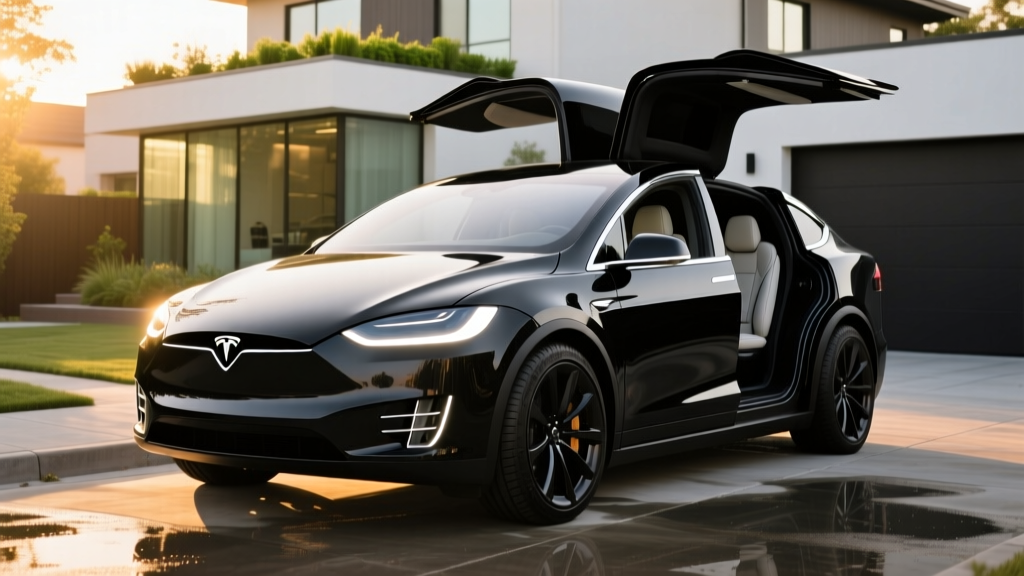
The Long Range trim's 3.8-second 0–60 time already outpaces most performance SUVs from BMW, Porsche, and Mercedes. The Plaid's 2.5-second run is hypercar territory in a vehicle with falcon-wing rear doors and a third row. Both trims feature adaptive air suspension, which adjusts ride height for highway efficiency or rough-road clearance.
Towing is rated at 5,000 pounds for both trims — adequate for a small boat or utility trailer. Expect range to drop 40–50% when towing near max capacity at highway speeds.
Interior, Cargo, and Technology
The Model X seats up to seven (2+3+2 configuration) or six with optional second-row captain's chairs. Key interior dimensions:
- Cargo (behind 3rd row): 15.0 cu ft
- Cargo (3rd row folded): 43.9 cu ft
- Cargo (all rear rows folded): 75.4 cu ft
- Front trunk (frunk): 6.5 cu ft
- Second-row legroom: 38.4 inches
- Third-row legroom: 32.7 inches (tight for adults on long trips)
The 17-inch center touchscreen runs Tesla's latest software, including a full gaming suite (Cyberpunk 2077-capable), streaming services, and over-the-air updates. The yoke steering wheel is standard on Plaid and optional on Long Range — a love-it-or-hate-it feature that takes genuine adaptation for low-speed maneuvers.
Standout tech:
- Falcon-wing rear doors with ultrasonic obstacle sensing (opens in tight parking spaces)
- HEPA air filtration with bioweapon-defense mode
- 17-inch cinematic touchscreen + 8-inch rear passenger display
- 22-speaker, 960-watt audio system
- Full Self-Driving (Supervised) capability — SAE Level 2 driver assistance (requires active driver supervision at all times; this is not autonomous driving)
Notable drawbacks: The third row is best suited for children. Build quality, while improved since 2023, still shows occasional panel-gap inconsistency. The lack of Apple CarPlay/Android Auto frustrates some buyers. The yoke steering wheel remains controversial.
Pros
- Best-in-class Supercharger network access
- Class-leading acceleration (especially Plaid)
- 348-mile EPA range (Long Range) is among the highest for any 3-row EV SUV
- Continuous OTA updates add features over the lease term
- Falcon-wing doors are genuinely practical for car-seat loading
- Low running costs vs. comparable ICE luxury SUVs
Cons
- Starting MSRP near $80K — lease payments are substantial
- Third-row space is tight for adults
- No Apple CarPlay or Android Auto
- Yoke steering wheel requires adjustment period
- Insurance costs run 20–40% higher than comparable ICE SUVs
- Historical depreciation hurts resale (less relevant on a lease)
2026 Pricing, Lease Deals, and Federal Tax Credit Eligibility
| Trim | Base MSRP | As-Tested (typical options) | Est. Monthly Lease (36 mo, $5K down) |
|---|---|---|---|
| Long Range AWD | $79,990 | $84,000–$88,000 | $1,050–$1,250/mo |
| Plaid Tri-Motor AWD | $94,990 | $99,000–$108,000 | $1,300–$1,550/mo |
Important note on Tesla leasing: Tesla does not offer traditional leases directly through its website in most states. Instead, you lease through Tesla's third-party leasing partners or through independent luxury leasing brokers. Monthly payments vary significantly based on money factor (interest rate), residual value assumptions, and down payment. In 2026, 36-month residuals for the Model X typically land around 50–55%, reflecting the vehicle's historical depreciation curve.
Does the Model X Qualify for the Federal EV Tax Credit?
This is where lease shoppers need to pay close attention. Under IRS §30D rules for 2026, the Model X faces several eligibility hurdles:
- MSRP Cap: SUVs must be ≤$80,000. The Long Range at $79,990 just clears this cap. The Plaid at $94,990 does NOT qualify.
- Buyer Income Cap: AGI ≤$300,000 (joint filers), ≤$225,000 (head of household), ≤$150,000 (single). Exceed these, and no credit.
- Battery Sourcing: Critical minerals and battery components must meet phased-in domestic/free-trade-partner sourcing thresholds. Tesla's supply chain has been progressively qualifying, but verify current-year compliance at purchase.
- Point-of-Sale Transfer: Eligible buyers can transfer the credit to the dealer at purchase, reducing the purchase price directly. However, this applies to purchases — not leases.
Critical lease nuance: When you lease a vehicle, the lessor (financing company) technically claims any tax credit, not you. Some leasing companies pass the credit benefit through as a capitalized-cost reduction (lowering your monthly payment), but this is not guaranteed. Always ask the lessor explicitly whether the §30D credit is factored into the lease terms. Under the commercial clean vehicle credit (§45W), some lessors structure leases to capture the credit even when purchase eligibility fails — this can make leasing a more attractive path for the Plaid trim, which exceeds the §30D MSRP cap. Consult a tax professional for your specific situation.
Model X vs. Key Competitors: Is It Worth the Lease?
| Vehicle | EPA Range | 0–60 mph | Base MSRP | Max DC Charge | 3rd Row? |
|---|---|---|---|---|---|
| Tesla Model X LR | 348 mi | 3.8s | $79,990 | 250 kW | Yes (7-seat) |
| Rivian R1S (Dual-Motor) | 352 mi | 4.5s | $79,900 | 220 kW | Yes (7-seat) |
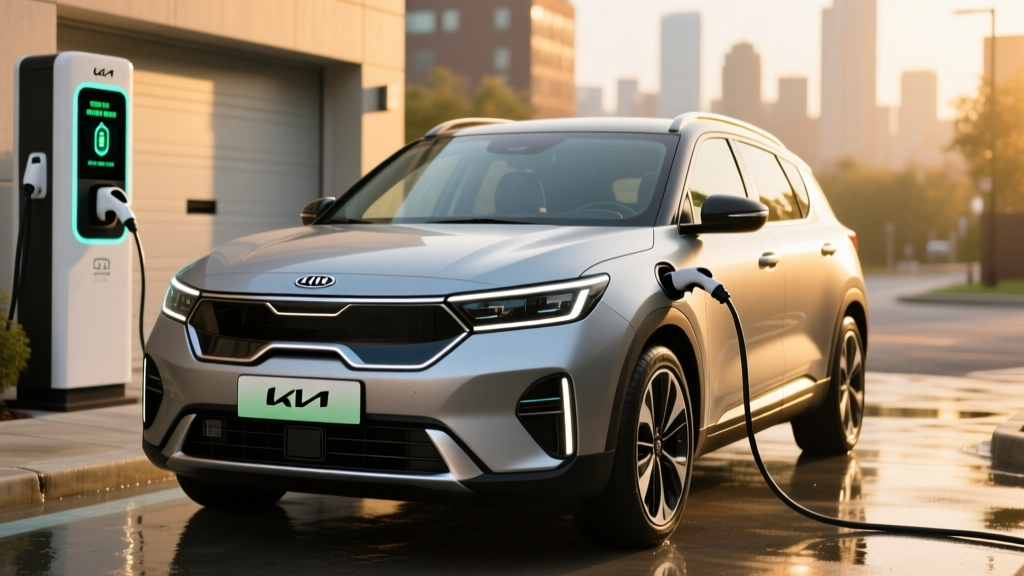
| Kia EV9 GT-Line AWD | 270 mi | 5.0s | $63,900 | 236 kW | Yes (7-seat) |
| BMW iX xDrive50 | 324 mi | 4.4s | $87,250 | 200 kW | No (5-seat) |
Choose the Model X if: You prioritize Supercharger network reliability, want the fastest acceleration in the segment, value falcon-wing doors for car-seat access, and plan to use Tesla's FSD (Supervised) on highway commutes.
Choose the Rivian R1S if: You want genuine off-road capability, a more traditional SUV driving feel, and better third-row adult comfort — at a similar price point.
Choose the Kia EV9 if: Budget is a priority, you want a more conventional interior layout, and 270 miles of range covers your daily needs with home charging.
Choose the BMW iX if: You only need two rows, value luxury interior materials and ride quality, and prefer a traditional dealership experience for service.
Warranty and Long-Term Reliability
| Coverage | Term |
|---|---|
| Basic Vehicle Limited Warranty | 4 years / 50,000 miles |
| Battery & Drive Unit Warranty | 8 years / 150,000 miles (Long Range) |
| Battery & Drive Unit Warranty (Plaid) | 8 years / 150,000 miles |
| Battery Capacity Retention Guarantee | ≥70% over warranty period |
For a 36-month lease, you will be well within the basic warranty window. Tesla's 8-year battery warranty guarantees at least 70% capacity retention — though real-world data from high-mileage Model X fleets suggests NMC packs managed by Tesla's thermal system typically retain 85–90% capacity at 100,000 miles. Source: Tesla Limited Warranties.
Who Should Lease the 2026 Model X?
- Tech-forward families who need three rows but refuse to drive a minivan, and who have reliable home charging
- High-mileage commuters (80+ miles/day round trip) who benefit from low per-mile electricity costs vs. premium fuel
- Buyers who upgrade vehicles every 3 years — leasing sidesteps the Model X's steep depreciation curve
- Tesla ecosystem users already invested in Powerwall, solar, or Supercharger-heavy travel routes
- Apartment dwellers without home or workplace charging access
- Buyers who regularly need adult-sized third-row seating (consider the Rivian R1S or a plug-in hybrid minivan)
- Those seeking a traditional dealership service experience
Frequently Asked Questions
What is the real-world range of the 2026 Tesla Model X?
The Long Range trim delivers an EPA-estimated 348 miles, but expect 280–300 miles at sustained highway speeds and 220–260 miles in freezing temperatures. The Plaid's real-world range is closer to 250 miles on the highway. Preconditioning the battery before fast charging and using seat heaters instead of cabin heat can recover 10–15 miles of range in cold weather.
How fast does the Model X charge at home and on the road?
On a Tesla Wall Connector (48A Level 2), the Model X charges at 11.5 kW, adding roughly 34 miles of range per hour — a full charge takes about 9 hours overnight. On a V3/V4 Supercharger, it peaks at 250 kW and reaches 10–80% in approximately 30 minutes, though sustained average power is closer to 160 kW due to charge-curve taper above 50% SoC.
How much does a 2026 Model X lease cost per month?
Expect $1,050–$1,250/month for a Long Range on a 36-month lease with $5,000 due at signing, and $1,300–$1,550/month for the Plaid. Actual payments depend on the money factor, residual value, and whether the leasing company passes through any tax-credit benefit as a cap-cost reduction.
Does the Model X qualify for the $7,500 federal EV tax credit?
The Long Range (MSRP $79,990) barely clears the $80,000 SUV cap under §30D, but eligibility also depends on your income (≤$300K joint), battery sourcing compliance, and whether you purchase or lease. The Plaid ($94,990) exceeds the MSRP cap and does not qualify under §30D for purchase — though some lease structures under §45W may pass a credit benefit through. Always verify with the IRS and a tax professional before relying on credit eligibility.
Is it better to buy or lease the Model X?
Leasing makes sense if you plan to keep the vehicle 3 years or less, want to avoid depreciation risk (the Model X has historically lost 40–50% of value over 3 years), and prefer predictable monthly costs. Buying makes more sense if you drive the vehicle 5+ years, can claim the §30D tax credit on a Long Range purchase, and want to build equity. For high-mileage drivers (15,000+ miles/year), watch lease mileage caps carefully — overage penalties of $0.25–$0.30/mile add up fast.
How does the Model X compare to the Rivian R1S for families?
The Model X wins on acceleration, Supercharger network access, and tech features. The Rivian R1S wins on third-row adult comfort, off-road capability, build quality consistency, and a more conventional SUV driving experience. Both start near $80,000 and have similar EPA range figures. If car-seat loading ease matters, the Model X's falcon-wing doors are a genuine advantage in tight parking spots.