The 2026 Tesla Model X in Black: What Buyers Need to Know
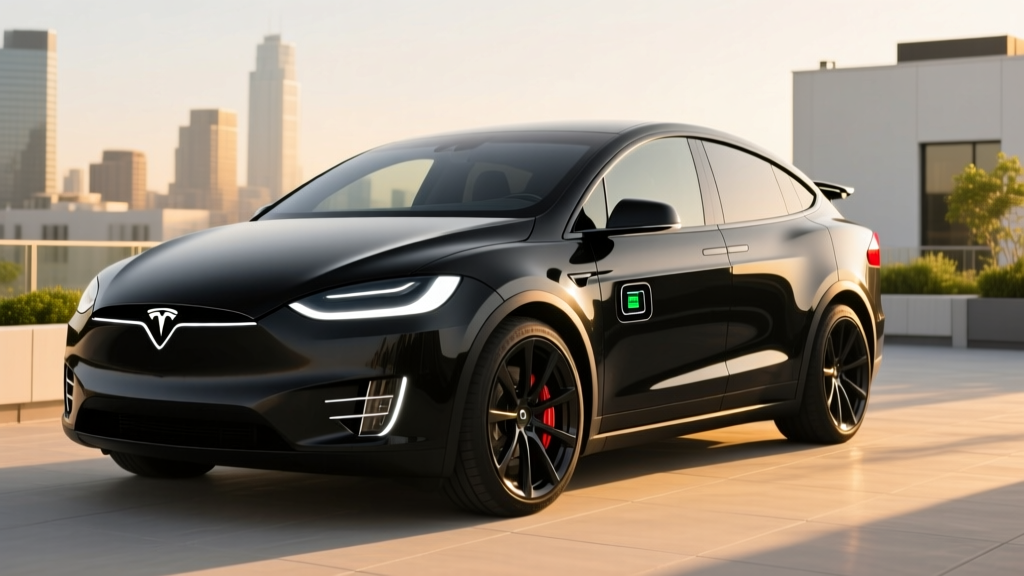
The Tesla Model X has long occupied a unique niche: a three-row electric SUV with falcon-wing rear doors, supercar-rivaling acceleration, and access to the most reliable DC fast-charging network in North America. For 2026, Tesla continues to offer the Model X in two trims — Long Range and Plaid — and the Solid Black exterior finish remains one of the most popular (and most practical) color choices, hiding road grime better than lighter paints while giving the SUV a stealthy, monolithic presence.
This review covers the 2026 Model X in depth: real-world range expectations, DC fast-charging behavior, battery chemistry, interior practicality, pricing after federal incentives, and whether it still makes sense against newer rivals like the Rivian R1S, BMW iX, and Mercedes EQS SUV. If you've been searching for a Tesla Model X black and want the numbers behind the marketing, this is your briefing.
Range, Battery & Efficiency: The Real-World Picture
| Spec | Long Range AWD | Plaid |
|---|---|---|
| EPA Range | 326 mi | 320 mi |
| Battery (usable) | ~100 kWh (NMC) | ~100 kWh (NMC) |
| Drivetrain | Dual-Motor AWD | Tri-Motor AWD |
| Horsepower | 670 hp | 1,020 hp |
| 0-60 mph | 3.8 sec | 2.5 sec |
| MPGe (combined) | 102 MPGe | 98 MPGe |
| Efficiency | 33 kWh/100 mi | 34 kWh/100 mi |
| Top Speed | 155 mph | 163 mph |
| Towing Capacity | 5,000 lbs | 5,000 lbs |
Both trims use a nickel-manganese-cobalt (NMC) lithium-ion pack with approximately 100 kWh of usable capacity. Tesla does not offer the Model X with the LFP (lithium iron phosphate) chemistry found in some Model 3 and Model Y rear-wheel-drive variants — the X's size and performance demands require the higher energy density of NMC.
The EPA rates the 2026 Model X Long Range at 326 miles and the Plaid at 320 miles. In practice, plan for:
- Highway driving (70-80 mph): ~260-280 miles before needing a charge stop
- Cold weather (below 32°F): ~220-260 miles, depending on cabin heating demand and whether you precondition
- City/suburban mixed: ~290-310 miles, where regenerative braking recovers more energy
The Model X's large frontal area and ~5,000-lb curb weight work against highway efficiency. On a 300-mile road trip at 75 mph in mild weather, expect to arrive with roughly 10-15% State of Charge remaining — or plan one 15-20 minute Supercharger stop.
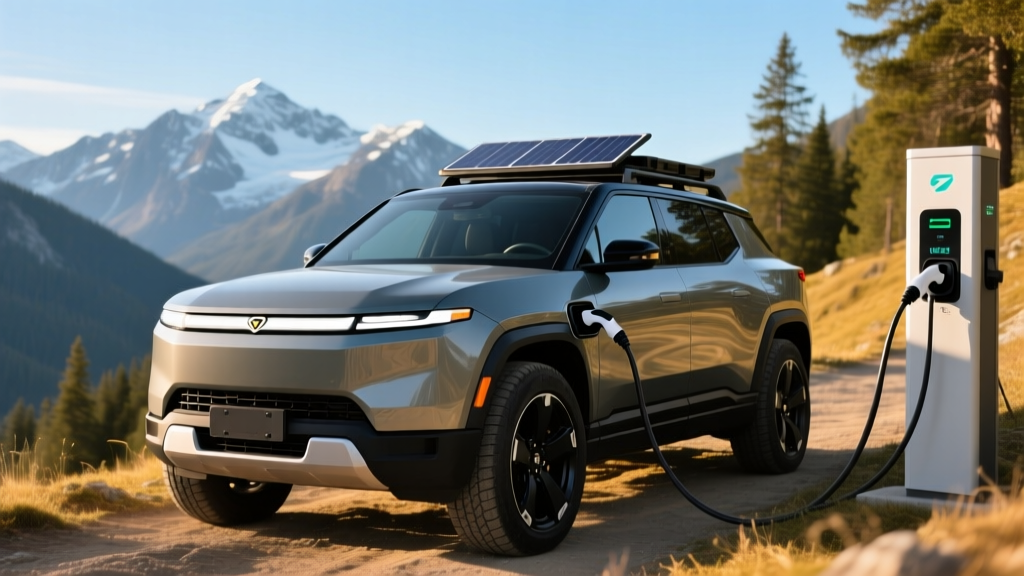
Efficiency of 33-34 kWh per 100 miles is competitive for a three-row electric SUV of this mass. By comparison, the Rivian R1S (Dual-Motor) consumes roughly 37 kWh/100 mi, while the BMW iX xDrive50 sits at about 35 kWh/100 mi. The Model X's heat pump — standard across all trims — is a significant cold-weather advantage, reducing the range penalty of cabin heating by recycling waste heat from the drivetrain.
Charging Speed: DC Fast, Level 2 & Home Setup
| Charging Level | Power / Rate | Miles Added per Hour | Notes |
|---|---|---|---|
| Level 1 (120V) | ~1.4 kW | ~3-4 mi/hr | Emergency/trickle only |
| Level 2 (240V, 48A) | 11.5 kW | ~34 mi/hr | Home Wall Connector; full charge in ~9 hrs |
| Level 2 (240V, 32A) | 7.7 kW | ~23 mi/hr | Mobile Connector on 240V outlet |
| DC Fast Charge | Peak 250 kW | ~175 mi in 15 min | 10-80% in ~25-30 min; tapers above 80% |
The Model X charges at a peak rate of 250 kW on V3 Tesla Superchargers and compatible CCS/NACS DC fast chargers. That peak is not sustained — the charging curve tapers significantly above 50-60% State of Charge. In our experience, a 10-80% session takes roughly 25-30 minutes at a V3 Supercharger, assuming the battery is preconditioned (which the navigation system does automatically when you route to a charger).
At home, the Tesla Wall Connector delivers up to 11.5 kW (48 amps on a 60-amp circuit), adding approximately 34 miles of range per hour. An overnight charge from 20% to 80% takes about 5-6 hours — more than enough for daily driving. Installation of a 240V/60A circuit typically runs $800-$2,000 depending on panel proximity and local permit requirements, according to data from Tesla's home charging guide. If your electrical panel is at capacity, a panel upgrade to 200A can add $1,500-$3,000.
Charging curve insight: If you regularly road-trip, the practical charging pattern is to arrive at a Supercharger at 10-15% SoC, charge to 70-80% (the fastest portion of the curve), then drive on. Charging from 80% to 100% on DC can take as long as the 10-80% session — so only charge to full when you need maximum range for the next leg.
Performance & Driving Dynamics
The Model X Long Range hits 0-60 mph in 3.8 seconds — a figure that would embarrass most sports sedans, let alone a 5,000-pound SUV with room for seven. The Plaid drops that to an absurd 2.5 seconds with its tri-motor setup producing 1,020 hp. Both use Tesla's adaptive air suspension, which adjusts ride height based on speed and terrain, and provides up to 8.2 inches of ground clearance for rough driveways or light trail use.
Dual-motor all-wheel drive is standard, with torque vectoring between front and rear axles. The Plaid adds a third rear motor for the extra thrust and more precise torque distribution. In real-world driving, the Long Range is the more rational choice: you gain 6 miles of EPA range, pay roughly $25,000 less, and still out-accelerate virtually everything on the road. The Plaid exists for those who want a three-row SUV that can match a Lamborghini Urus off the line.
Towing capacity is rated at 5,000 lbs across both trims — sufficient for a small boat, utility trailer, or light camper. Expect a 40-50% range reduction when towing near maximum capacity, bringing effective range down to roughly 160-180 miles between stops.
Interior Space, Tech & the Falcon Wing Reality
The Model X seats up to seven in a 2-3-2 configuration, or six with optional second-row captain's chairs (2-2-2). Cargo volume is a standout:
- Behind third row: 15.3 cu ft
- Third row folded: 41.1 cu ft
- All rear rows folded: 75.4 cu ft
- Front trunk (frunk): 6.6 cu ft
Second-row legroom measures 40.3 inches, and third-row legroom is 32.7 inches — usable for children or short-trip adults, but tighter than a minivan. The panoramic windshield (the largest in any production vehicle) creates an airy cabin that reduces the claustrophobia common in third rows.
The 17-inch center touchscreen runs Tesla's latest software, including a full gaming suite (Cyberpunk 2077 runs natively), Netflix/YouTube streaming while parked, and the yoke-style or conventional round steering wheel (Tesla reinstated the round wheel as a no-cost option after customer feedback). The 22-speaker audio system with active noise cancellation is among the best in any vehicle at any price.
The Falcon Wing doors remain the Model X's most polarizing feature. They use ultrasonic sensors to detect overhead and side obstacles, opening in tighter spaces than conventional doors (as little as 12 inches of side clearance). They're genuinely useful for loading children into car seats. But they are slower to open than conventional doors (about 5-7 seconds), can be noisy in wind, and add complexity that has historically been a reliability concern. Tesla has improved the hinge mechanism and seals significantly since the early years, but they remain a maintenance item that conventional SUV doors are not.
Pricing, Trims & Federal Tax Credit Eligibility
| Trim | Base MSRP | As-Tested (typical) | §30D Credit Eligible? |
|---|---|---|---|
| Long Range AWD | $79,990 | $84,000-$92,000 | No — exceeds MSRP cap |
| Plaid | $94,990 | $99,000-$110,000 | No — exceeds MSRP cap |
The 2026 Model X Long Range starts at $79,990 (including destination), with the Plaid at $94,990. Popular options that push the as-tested price higher include:
- Solid Black paint: $2,000 (standard colors are free; Ultra White and Deep Blue Metallic are $2,000)
- Six-seat interior with captain's chairs: $6,500
- 22-inch Turbine wheels: $5,500 (reduces range by ~5%)
- Full Self-Driving (Supervised): $8,000
Federal tax credit status: Under current IRS §30D rules, the Model X does not qualify for the $7,500 federal EV tax credit. The reason is the MSRP cap: §30D limits eligibility to SUVs priced at $80,000 or below. The Long Range at $79,990 technically sits at the cap, but once you add any paid option (including paint color), the vehicle's MSRP exceeds $80,000 and becomes ineligible. Even at the base MSRP, buyer income limits ($300,000 joint / $150,000 single modified adjusted gross income) and battery critical-mineral sourcing requirements apply. Consult a tax professional and verify current-year rules on IRS.gov before relying on credit eligibility.
Some buyers may find state-level incentives that apply regardless of MSRP — California, Colorado, and several other states offer rebates or tax credits with different rules. Check your state energy office for current programs.
Autopilot, FSD & Safety: Level 2, Not Self-Driving
Tesla's Autopilot and Full Self-Driving (Supervised) are SAE Level 2 driver-assistance systems. The driver must remain fully engaged — hands on or near the wheel, eyes on the road — at all times. These are not self-driving systems. Only Level 4 services like Waymo operate without a human driver in defined areas.
The Model X comes standard with Basic Autopilot, which includes Traffic-Aware Cruise Control and Autosteer (lane centering). The optional Full Self-Driving (Supervised) package ($8,000) adds automatic lane changes on highways, Navigate on Autopilot (on/off-ramp handling), Autopark, Summon, and traffic light/stop sign recognition.
In practice, FSD Supervised is impressive on well-marked highways and has improved substantially in urban environments, but it still makes errors that require driver intervention — phantom braking, misread construction zones, and hesitation at complex intersections. It is a driver-assist convenience feature, not a replacement for an attentive driver. According to NHTSA, Tesla vehicles with Autopilot engaged have lower crash rates per million miles than the national average, but this data reflects highway-heavy use cases where ADAS performs best.
Safety ratings are strong: the Model X earned a 5-star overall rating from NHTSA and Top Safety Pick+ from IIHS (when equipped with acceptable headlights). Standard active safety features include automatic emergency braking, blind-spot monitoring, lane-departure warning, and cross-traffic alert.
Warranty, Ownership Costs & Long-Term Battery Outlook
Tesla provides the following warranty coverage for the 2026 Model X:
- Basic Vehicle Limited Warranty: 4 years / 50,000 miles
- Battery & Drive Unit Warranty: 8 years / 150,000 miles, with minimum 70% capacity retention
The 150,000-mile battery warranty is generous by industry standards (most competitors offer 8 years/100,000 miles). Tesla's NMC packs have demonstrated strong longevity in fleet data: most Model S/X vehicles retain 85-90% of original capacity after 150,000 miles, with degradation slowing significantly after the initial 20,000-mile break-in period.
Ownership cost highlights:
- Electricity cost: At $0.14/kWh national average, charging a 100 kWh battery from 10-80% costs roughly $9.80 at home — vs. ~$55-$70 for an equivalent gas SUV at $3.50/gallon
- Insurance: Model X premiums are among the highest in the EV segment, averaging $3,200-$4,500/year depending on state and driving record. Get quotes before purchasing
- Maintenance: Minimal — no oil changes, no transmission fluid. Cabin air filter replacement (~$150 every 2 years), tire rotation, and wiper fluid are the primary recurring costs
- Depreciation: Tesla's price cuts in 2023-2024 hurt resale values across the lineup. Expect 45-55% depreciation over 5 years, which is above average for luxury SUVs
Who Should Buy the Tesla Model X (and Who Shouldn't)
- Best-in-class Supercharger network access (20,000+ V3/V4 stalls in North America)
- Class-leading cargo volume (75.4 cu ft) and frunk
- 326-mile EPA range covers most road trips with one stop
- 3.8-second 0-60 (Long Range) in a seven-seat SUV
- Over-the-air updates add features years after purchase
- Falcon Wing doors genuinely aid car-seat loading
- No federal tax credit eligibility (MSRP cap)
- Insurance premiums are very high for the segment
- Falcon Wing doors add complexity and potential maintenance cost
- Third-row legroom (32.7 in) is tight for adults
- Depreciation steeper than some luxury competitors
- FSD ($8,000) remains Level 2 — not autonomous driving
Choose the Model X if: You need three rows, value Supercharger network reliability for road trips, want sports-car acceleration in a family SUV, and your budget accommodates the $80,000+ entry without relying on the federal tax credit.
Consider alternatives if: You need adult-friendly third-row space (look at the Rivian R1S or Kia EV9), want federal tax credit eligibility (BMW iX xDrive50 at ~$87,000 also misses the cap, but the Genesis Electrified GV70 at ~$67,000 qualifies), or prioritize lowest total cost of ownership over performance.
Frequently Asked Questions
What is the real-world range of the 2026 Tesla Model X?
The EPA rates the Long Range at 326 miles and the Plaid at 320 miles. Real-world highway driving at 70-80 mph yields roughly 260-280 miles. In cold weather (below freezing), expect 220-260 miles. City driving with regenerative braking can approach 290-310 miles.
How fast does the Model X charge at home and on the road?
On DC fast chargers, the Model X peaks at 250 kW, achieving a 10-80% charge in approximately 25-30 minutes. At home on a Level 2 Wall Connector (11.5 kW), it adds about 34 miles per hour, fully replenishing overnight.
Does the Tesla Model X qualify for the $7,500 federal EV tax credit?
Generally, no. The §30D credit caps SUV eligibility at $80,000 MSRP. The Model X Long Range starts at $79,990, but adding any paid option (including $2,000 Solid Black paint) pushes it above the cap. Buyer income limits and battery-sourcing rules also apply. Always verify current rules on IRS.gov.
Is the Model X worth buying over the Rivian R1S or BMW iX?
The Model X wins on Supercharger network access, cargo volume, and acceleration. The Rivian R1S offers better off-road capability, a more conventional design, and adult-friendlier third-row space. The BMW iX provides a more traditional luxury interior and quieter ride but seats only five. Your priorities determine the winner.
How long will the Model X battery last?
Tesla warranties the battery for 8 years/150,000 miles with a minimum 70% capacity retention threshold. Fleet data suggests most Model X batteries retain 85-90% capacity at 150,000 miles. A full battery replacement outside warranty currently costs approximately $20,000-$25,000, though this is rarely needed within the first decade of ownership.
Is the black paint on the Model X durable?
Tesla's Solid Black is a single-stage paint that shows swirl marks and fine scratches more readily than metallic finishes. Many owners apply paint protection film (PPF) or ceramic coating within the first few months. The upside: black hides road dirt and brake dust better than white or silver between washes.