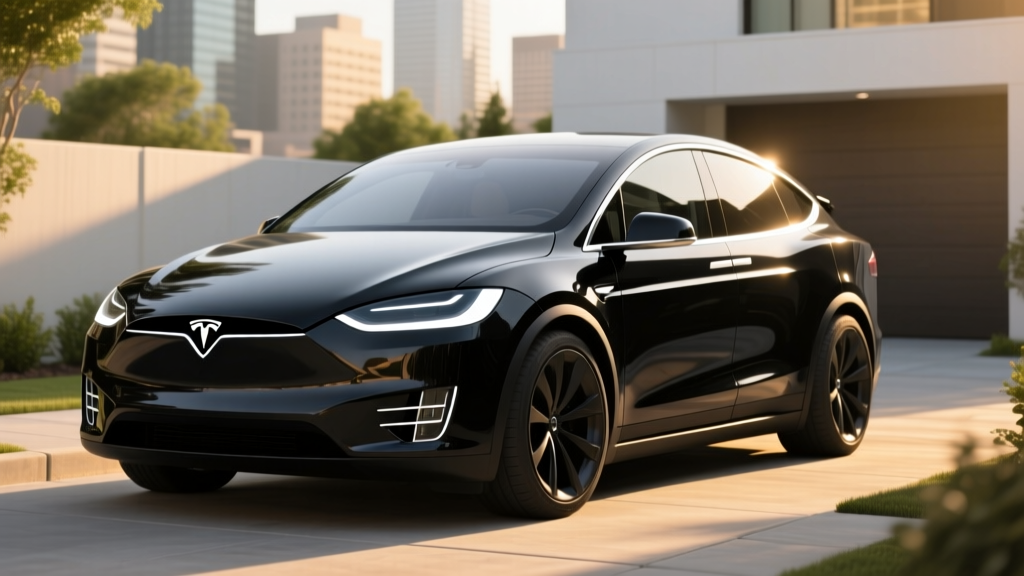
If you search for a Tesla 3rd row SUV, you're looking at the Model X — Tesla's flagship family hauler and one of the few premium electric SUVs offering genuine three-row seating with over 300 miles of EPA range. Now in its 2026 model year with the refreshed "Juniper" architecture borrowed from the Model S, the Model X remains a compelling, if polarizing, choice for families ready to go fully electric.
But at a starting price near $80,000 and with formidable competitors like the Kia EV9, Rivian R1S, and Hyundai Ioniq 9 closing the gap, does the Model X still justify its premium? This review breaks down every spec that matters — real-world range, charging curves, third-row practicality, and the tax-credit math that could shave thousands off the sticker.
Quick Verdict: Who Should Buy the 2026 Model X?
The 2026 Tesla Model X is best suited for families who need Supercharger network access for frequent road trips, want a tech-forward cabin, and can absorb a premium MSRP. It's less ideal for buyers prioritizing third-row comfort on a budget (the Kia EV9 offers more space for less) or those wary of Tesla's minimalist interior philosophy. If your daily commute is under 50 miles but you take 400-mile road trips twice a year, the Model X's range-and-charging combo is hard to beat.
- You rely on the Tesla Supercharger network for road trips
- You want Falcon Wing doors and a panoramic windshield
- Performance matters — 2.5-second 0-60 in Plaid trim
- Third-row adult comfort is a priority (consider Rivian R1S or Kia EV9)
- Your budget caps below $70,000
- You prefer physical buttons and traditional luxury finishes
Range, Battery, and Real-World Efficiency
| Spec | Model X Long Range AWD | Model X Plaid |
|---|---|---|
| EPA Range | 341 miles | 320 miles |
| Battery Capacity (usable) | ~95 kWh | ~95 kWh |
| Battery Chemistry | NMC (nickel manganese cobalt) | NMC |
| MPGe (combined) | 103 MPGe | 98 MPGe |
| Efficiency (kWh/100 mi) | 33 kWh | 35 kWh |
The Model X uses NMC (nickel manganese cobalt) chemistry, which offers higher energy density than LFP (lithium iron phosphate) — essential for packing 341 miles into a heavy SUV. The trade-off: NMC cells degrade slightly faster over thousands of cycles and carry higher raw-material costs, which affects long-term replacement pricing. Tesla recommends charging to 80% daily and 100% only before long trips to preserve battery health.
Charging Speed: Supercharger, DC Fast, and Home Level 2
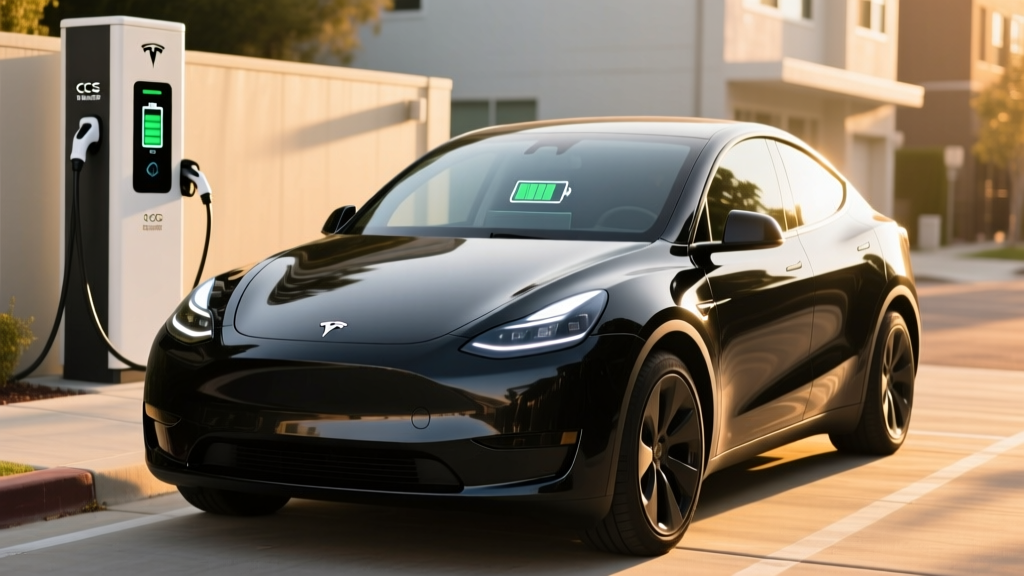
Charging speed is where Tesla's vertical integration still pays dividends. The 2026 Model X supports up to 250 kW peak DC fast charging on V3 and V4 Superchargers, though sustained rates taper as the battery fills.
| Charging Method | Power | Speed / Time |
|---|---|---|
| Tesla Supercharger V3/V4 (DC) | Up to 250 kW peak | 10–80% in ~28 minutes; ~175 miles in 15 min |
| Non-Tesla DC Fast (CCS via adapter) | Up to 250 kW (station-dependent) | 10–80% in ~30–35 minutes |
| Home Level 2 (Tesla Wall Connector, 48A) | 11.5 kW | ~34 miles per hour of charging; full charge in ~10 hours |
| Level 1 (120V outlet) | ~1.4 kW | ~4 miles per hour — emergency/trickle only |
A few practical notes from real-world use: the Model X's charge curve peaks near 250 kW only between roughly 10–30% state of charge, then drops to ~150 kW through 60%, and tapers sharply above 80%. If you're road-tripping, plan stops to arrive at 10–15% and leave at 70–80% for the fastest average speed. Preconditioning the battery (navigating to a Supercharger triggers this automatically) is critical — cold batteries without preconditioning can cut charge speeds in half.
At home, a 48-amp Tesla Wall Connector on a 60-amp circuit delivers 11.5 kW — enough to replenish a full day's driving overnight. Installation typically runs $800–$2,500 depending on your panel capacity and run distance. Homes with 100-amp panels may need a $2,000–$4,000 upgrade to 200 amps to support a dedicated 60-amp EV circuit alongside existing loads.
Performance and Drivetrain
| Spec | Long Range AWD | Plaid |
|---|---|---|
| Drivetrain | Dual-motor AWD | Tri-motor AWD |
| Horsepower | 670 hp | 1,020 hp |
| 0–60 mph | 3.8 seconds | 2.5 seconds |
| Top Speed | 155 mph | 163 mph |
| Towing Capacity | 5,000 lbs | 5,000 lbs |
Even the "base" Long Range Model X hits 60 mph in 3.8 seconds — absurd for a 5,185-pound SUV with three rows. The Plaid's tri-motor setup delivers hypercar-rivaling acceleration, though you'll sacrifice 21 miles of range and roughly $15,000 in additional cost. For family hauling, the Long Range AWD is the pragmatic pick; the Plaid exists for those who want to demolish drag strips between school drop-offs.
Regenerative braking in the Model X is strong but not true one-pedal driving at low speeds — Tesla removed the aggressive "hold" mode years ago. You'll still use the friction brake for final stops. The adaptive air suspension provides up to 5.9 inches of ground clearance adjustment, useful for rough driveways or light trail access.
Interior, Third-Row Space, and Cargo
The 2026 Model X interior borrows heavily from the refreshed Model S Juniper architecture: a 17-inch center touchscreen (now slightly angled toward the driver), a rear-seat entertainment screen, ventilated front seats, and a yoke or round steering wheel option. Build quality has improved markedly over pre-2023 models, though panel gaps still lag behind Rivian and legacy luxury brands.
| Dimension | Measurement |
|---|---|
| Seating Capacity | 5, 6, or 7 passengers (config-dependent) |
| 3rd-Row Legroom | 32.7 inches |
| 3rd-Row Headroom | 37.1 inches |
| Cargo (behind 3rd row) | 15.3 cu ft |
| Cargo (3rd row folded) | 41.1 cu ft |
| Cargo (all rear rows folded) | 75.4 cu ft |
| Frunk (front trunk) | 6.6 cu ft |
Here's the honest truth about the Model X's third row: it's best for children or occasional adult use on short trips. The 32.7 inches of legroom trails the Rivian R1S (34.6 in) and the Kia EV9 (32.0 in but with a more upright seatback angle that feels roomier). The sloping roofline also cuts into headroom for taller passengers. If adults regularly ride in your third row, test-drive the R1S or EV9 before committing.
The Falcon Wing rear doors remain the Model X's party trick — they open upward with obstacle-sensing articulation, making child-seat loading genuinely easier in tight parking spots. But they add weight, complexity, and occasional sensor-related glitches that can prevent opening in heavy rain or near low overhangs.
Pricing, Trims, and Federal Tax Credit Eligibility
| Trim | Base MSRP | As-Tested (typical options) | Federal Credit Eligibility |
|---|---|---|---|
| Model X Long Range AWD | $79,990 | $84,000–$90,000 | Up to $7,500 (see caveats) |
| Model X Plaid | $94,990 | $100,000–$110,000 | Up to $7,500 (see caveats) |
The 2026 Model X starts at $79,990 for the Long Range AWD, including destination. Adding the 6-seat interior ($6,500), Full Self-Driving Supervised ($8,000), and 22-inch wheels ($5,500) can push the Long Range past $100,000.
- MSRP Cap: SUVs/vans/pickups must be at or below $80,000 MSRP. The Long Range AWD at $79,990 qualifies; the Plaid at $94,990 does NOT.
- Income Caps: Modified AGI ≤ $300,000 (joint), $225,000 (head of household), $150,000 (single).
- Battery Sourcing: Critical minerals and battery components must meet escalating domestic/free-trade-partner thresholds. Tesla's North American supply chain generally qualifies, but verify at the IRS eligible vehicles list before purchasing.
- Point-of-Sale Transfer: You can transfer the credit to the dealer at purchase, reducing your out-of-pocket cost immediately rather than waiting for tax filing.
Source: IRS.gov — Clean Vehicle Credits
Net cost after a full $7,500 credit on the base Long Range: approximately $72,490 before state incentives. California buyers may stack the $7,000+ CVRP rebate (income-dependent), and Colorado offers a $5,000 state credit. Check your state's current program — incentive amounts change frequently.
Driver Assistance and Technology
The Model X ships with Tesla's basic Autopilot (traffic-aware cruise control and lane centering). The $8,000 FSD Supervised upgrade adds automated lane changes, traffic-light and stop-sign recognition, and city-street navigation. FSD has improved substantially through 2025–2026 neural-net updates, but it still makes errors — particularly on unmarked roads, construction zones, and during heavy precipitation. Treat it as a fatigue-reducer, not a replacement for attention.
Tech highlights include the 17-inch infotainment screen with Netflix/YouTube streaming (while parked), a 22-speaker premium audio system, wireless phone charging, and over-the-air software updates that regularly add features. The Model X also supports Tesla's Sentry Mode (360° dashcam surveillance while parked) and Dog Mode (climate control for pets left in the vehicle).
- Navigate unmapped or heavily construction-modified roads reliably
- Operate safely in heavy snow, fog, or blinding rain
- Eliminate driver liability — you are legally responsible for the vehicle at all times
- Replace the need for car insurance (and Tesla insurance premiums reflect the vehicle's repair costs)
Warranty, Reliability, and Ownership Costs
| Coverage | Term |
|---|---|
| Basic Vehicle Warranty | 4 years / 50,000 miles |
| Battery & Drive Unit | 8 years / 150,000 miles (70% minimum capacity retention) |
| Roadside Assistance | 4 years / 50,000 miles |
Tesla's 8-year/150,000-mile battery warranty guarantees at least 70% capacity retention — meaning if your 95 kWh pack drops below ~66.5 kWh usable within that window, Tesla replaces or refurbishes it at no cost. Real-world data from high-mileage Tesla owners suggests NMC packs in the Model X typically retain 85–90% capacity at 100,000 miles when charged responsibly (avoiding frequent 100% charges and deep discharges).
Out-of-warranty battery replacement currently runs $18,000–$25,000 depending on pack configuration — a worst-case scenario, but one worth insuring against through extended warranty options or setting aside reserves if you plan to keep the vehicle past 150,000 miles.
Insurance costs for the Model X run 20–40% higher than comparable gas SUVs due to repair costs (aluminum body panels, sensor arrays, Falcon Wing door mechanisms). Expect $2,800–$4,200 annually depending on your state, driving record, and coverage level. Tesla's own insurance product (available in most states) uses real-time driving data to set premiums, which can benefit safe drivers.
Pros and Cons
- 341-mile EPA range — longest of any 3-row EV SUV
- Supercharger network access (most reliable DC charging in the US)
- 3.8-second 0–60 in Long Range; 2.5 in Plaid
- Falcon Wing doors ease child-seat loading
- Over-the-air updates keep the vehicle current
- Eligible for up to $7,500 federal tax credit (Long Range trim)
- Third-row legroom (32.7 in) is tight for adults
- Starting price near $80K; options push past $100K
- Falcon Wing doors add complexity and occasional sensor issues
- No physical buttons — everything runs through the touchscreen
- Higher insurance premiums than non-Tesla competitors
- Plaid trim exceeds the $80K MSRP cap for federal tax credit
Frequently Asked Questions
What is the real-world range of the 2026 Tesla Model X?
The EPA rates the Long Range AWD at 341 miles and the Plaid at 320 miles. In real-world highway driving at 70–75 mph, expect 280–305 miles. In freezing weather (below 30°F), plan for 240–260 miles. Always buffer 15–20% below EPA for trip planning.
How fast does the Model X charge at home and on the road?
On a Tesla V3/V4 Supercharger, the Model X peaks at 250 kW and charges 10–80% in approximately 28 minutes. At home on a 48-amp Level 2 Tesla Wall Connector (11.5 kW), you'll gain about 34 miles per hour of charging — enough to fully replenish overnight. On a standard 120V outlet (Level 1), expect only ~4 miles per hour.
How much does the 2026 Model X cost after the federal tax credit?
The base Long Range AWD starts at $79,990 and may qualify for the full $7,500 federal credit (subject to income caps, battery-sourcing rules, and the $80,000 SUV MSRP cap), bringing the net to ~$72,490 before state incentives. The Plaid at $94,990 exceeds the MSRP cap and does not qualify for the federal credit.
Does the Tesla Model X qualify for the federal EV tax credit?
The Long Range AWD qualifies (at $79,990 MSRP, it's under the $80,000 SUV cap). The Plaid does not. All buyers must also meet income limits ($300K joint / $150K single modified AGI) and the vehicle must meet battery critical-mineral and component sourcing thresholds. Verify current eligibility on the IRS eligible vehicles page before purchasing.
Is the Model X worth buying vs. the Rivian R1S or Kia EV9?
Choose the Model X if Supercharger access, 341-mile range, and Tesla's software ecosystem are priorities. Choose the Rivian R1S if you need a more usable third row (34.6 in legroom), better off-road capability, and a more traditional interior. Choose the Kia EV9 if budget is paramount — it starts around $55,000 with 304 miles of range and a genuinely comfortable third row, though it uses the CCS charging standard (NACS adapter needed for Superchargers).
How long will the Model X battery last?
Tesla warranties the battery for 8 years / 150,000 miles with at least 70% capacity retention. Real-world data from high-mileage Tesla owners suggests NMC packs retain 85–90% at 100,000 miles with proper charging habits (daily limit of 80%, avoiding extended periods at 100% or near 0%). Out-of-warranty replacement costs $18,000–$25,000.
Can the Model X tow?
Yes. Both the Long Range and Plaid are rated for 5,000 pounds of towing capacity — sufficient for a small boat, utility trailer, or light camper. Towing will reduce range by roughly 30–50% depending on trailer weight and aerodynamics, so plan Supercharger stops accordingly.
Sources: EPA Fuel Economy, IRS Clean Vehicle Credits, Tesla Model X Official Specs, IIHS Safety Ratings.