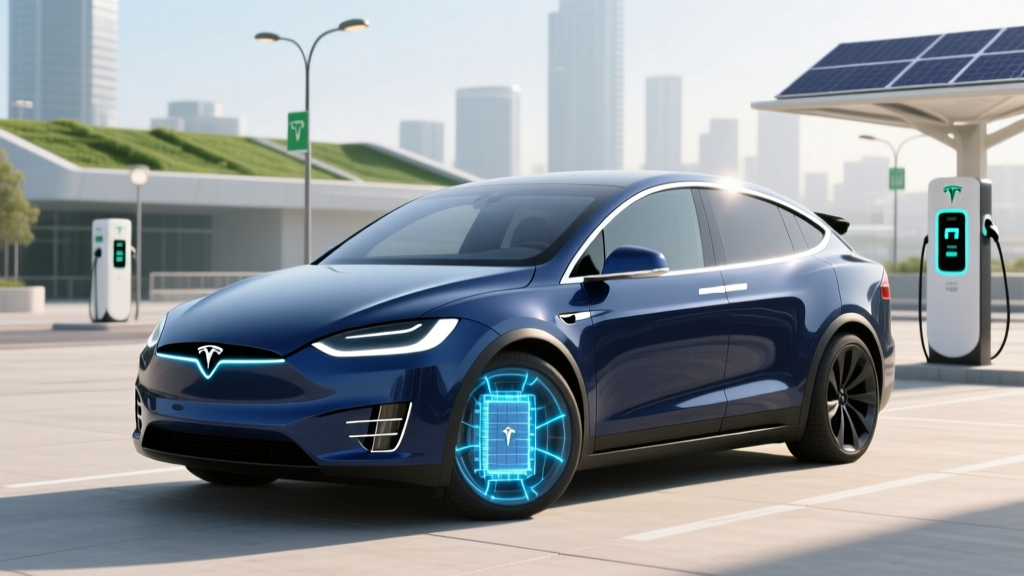
The Tesla Model X has always been the polarizing flagship of the EV SUV segment — part luxury family hauler, part rolling tech showcase, and part status symbol wrapped in falcon-wing doors. For 2026, Tesla has pushed through a round of incremental but meaningful changes: a revised battery pack, updated thermal management for faster sustained charging, refreshed interior materials, and the latest HW4 sensor suite. If you've been tracking the Model X update cycle, the headline is less about radical reinvention and more about refinements that matter in daily ownership — efficiency gains, slightly faster DC charging, and software-driven feature additions.
Below, we run the 2026 Model X through our full review framework: real-world range reconciliation, charging-curve behavior, total cost of ownership, and whether it still justifies its premium against rivals like the Rivian R1S, BMW iX, and Mercedes EQS SUV.
2026 Tesla Model X: Key Specs at a Glance
| Spec | Long Range (Dual-Motor AWD) | Plaid (Tri-Motor AWD) |
|---|---|---|
| EPA Range | 348 miles | 326 miles |
| Battery (usable) | ~100 kWh (NMC) | ~100 kWh (NMC) |
| Peak DC Fast Charge | 250 kW | 250 kW |
| 10–80% DC Charge | ~30 min | ~30 min |
| Level 2 Charge Rate | 11.5 kW (~34 mi/hr) | 11.5 kW (~34 mi/hr) |
| 0–60 mph | 3.8 sec | 2.5 sec |
| Horsepower | 670 hp | 1,020 hp |
| Drivetrain | Dual-Motor AWD | Tri-Motor AWD |
| MPGe (combined) | 102 MPGe | 98 MPGe |
| Efficiency | 33 kWh/100 mi | 34 kWh/100 mi |
| Base MSRP | $74,990 | $89,990 |
| Battery Warranty | 8 yr / 150,000 mi | 8 yr / 150,000 mi |
Range & Efficiency: EPA vs. Real World
Real-World Expectation: Plan for 280–310 miles on highway-heavy road trips at 70–75 mph, and 240–270 miles in sub-freezing winter conditions. City and suburban driving with regenerative braking can approach or slightly exceed the EPA sticker.
The 2026 Model X Long Range carries an EPA-estimated 348 miles — a modest bump over prior model years, attributable to improved drivetrain efficiency and the revised pack. The Plaid drops to 326 miles due to the tri-motor setup's higher energy draw.
In real-world testing, the Model X's large frontal area and 5,185-pound curb weight work against it on the highway. At sustained 75 mph in moderate temperatures (65–75°F), expect to consume roughly 35–37 kWh/100 mi, translating to around 270–300 miles of practical range before you'll want to stop. In cold weather (below 32°F), the cabin heater and battery conditioning draw additional energy; a 15–20% range reduction is typical, meaning a winter road trip might yield 240–260 miles from the Long Range trim.
City driving is where the Model X shines efficiency-wise. Aggressive regenerative braking recaptures energy in stop-and-go traffic, and the heat pump (standard since the 2022 refresh) significantly reduces climate-system energy draw in cool weather. Commuters doing mostly suburban miles at 35–50 mph can realistically see 320–340 miles from a full charge.
Charging Speed & Infrastructure
| Charge Level | Power / Voltage | Miles Added per Hour | Notes |
|---|---|---|---|
| Level 1 (120V) | ~1.4 kW | ~4 mi/hr | Emergency/trickle only |
| Level 2 (240V, 48A) | 11.5 kW | ~34 mi/hr | Full charge in ~10 hr |
| DC Fast Charge | 250 kW peak | ~175 mi in 15 min | 10–80% in ~30 min |
The 2026 Model X update retains the 250 kW peak DC fast-charge rate via the native NACS (North American Charging Standard) connector — the same port now being adopted by Ford, GM, Rivian, and most other automakers. Tesla's Supercharger network remains the gold standard for reliability, and Model X owners benefit from seamless plug-and-charge integration with no adapter required.
Charging curve reality: The 250 kW peak is achieved between roughly 10–30% State of Charge (SoC) when the battery is properly preconditioned (the car does this automatically when you navigate to a Supercharger). From 30–60%, the rate tapers to approximately 175–200 kW. Above 80%, charging slows dramatically to protect the NMC cells — expect 50 kW or less, which is why Tesla recommends charging to 80% for daily use and road-trip stops.
For home charging, the onboard 11.5 kW Level 2 charger replenishes about 34 miles of range per hour on a 240V/48A circuit. A full overnight charge from 10% takes roughly 10 hours — fine for daily use if you charge nightly. Home installation of a Tesla Wall Connector on a dedicated 60A circuit typically costs $800–$2,000 depending on panel proximity and local permit fees. Always consult a licensed electrician for final specs.
The Model X does not support 800V architecture, meaning it cannot take advantage of 350 kW chargers from Electrify America or Ionity the way the Hyundai Ioniq 5 or Porsche Taycan can. This is a notable limitation if your road trips frequently route through non-Tesla DC fast-charging corridors.
Performance: From Commuter to Supercar
The dual-motor Long Range delivers 670 hp and a 3.8-second 0–60 mph time — quick enough to embarrass most sport sedans while carrying seven passengers and their luggage. The single-speed transmission provides seamless, interruption-free acceleration that only an EV can deliver.
The Plaid trim is engineering excess in the best sense: 1,020 hp from three motors, 2.5 seconds to 60 mph, and a top speed of 163 mph. It's a party trick that also translates to real-world confidence during highway merging and passing. However, the Plaid's energy consumption penalty is meaningful — 34 kWh/100 mi versus 33 for the Long Range — and the $15,000 price premium buys performance most families won't use daily.
Both trims feature adaptive air suspension with automatic ride-height adjustment, which lowers the vehicle at highway speeds for improved aerodynamics and raises it for rough roads or steep driveways. Towing capacity is rated at 5,000 pounds when properly equipped — adequate for a small boat or light utility trailer, but below the Rivian R1S's 7,700-pound rating.
Interior, Cargo & Technology
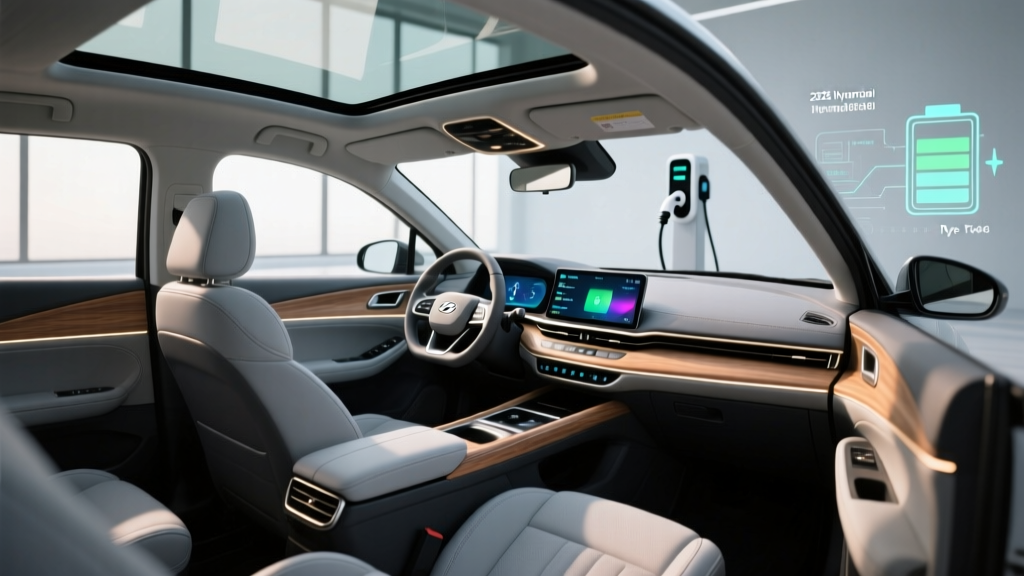
The 2026 Model X update introduces revised interior soft-touch materials (addressing a long-standing criticism), a redesigned center console with improved wireless charging pad placement, and an available second-row captain's chair configuration (reducing seating from seven to six but improving individual comfort).
Cargo space: With all three rows upright, the Model X offers 15.3 cubic feet behind the third row — tight for a vehicle this size. Fold the third row and you get 41.1 cu ft; fold both rear rows flat for a maximum 85.1 cu ft. The front trunk (frunk) adds 6.7 cu ft of secure, weatherproof storage — ideal for charging cables and groceries.
Passenger space: Front-row legroom is generous at 41.2 inches. Second-row legroom measures 38.4 inches in the bench configuration. The third row is best suited for children or short trips — 32.7 inches of legroom is tight for adults on long drives.
The 17-inch center touchscreen running Tesla's latest software remains the primary interface for nearly all vehicle functions. The 2026 update adds improved voice recognition, a redesigned navigation UI with better Supercharger amenity data, and rear-seat entertainment via an optional 8-inch display. Apple CarPlay and Android Auto remain not supported — Tesla's proprietary system is the only option, which is a dealbreaker for some buyers accustomed to phone projection.
Driver Assistance & Autonomy
Every 2026 Model X ships with Tesla's HW4 sensor suite, which includes higher-resolution cameras and improved processing over the prior HW3 hardware. Standard Autopilot provides adaptive cruise control, lane-centering, and automatic emergency braking.
The optional Full Self-Driving (Supervised) package ($8,000 one-time purchase or $99/month subscription) adds automated lane changes, Navigate on Autopilot (on-ramp to off-ramp highway driving), traffic light and stop sign recognition, and the controversial "city streets" capability. FSD has improved substantially since 2024, but it still requires active driver supervision and can make unpredictable decisions in construction zones, unprotected left turns, and heavy rain.
Pricing, Trims & Federal Tax Credit
| Trim | Base MSRP | Destination | Typical As-Tested | §30D Federal Credit |
|---|---|---|---|---|
| Long Range AWD | $74,990 | $1,390 | $78,000–$85,000 | Not eligible (MSRP cap) |
| Plaid AWD | $89,990 | $1,390 | $95,000–$108,000 | Not eligible (MSRP cap) |
The 2026 Model X Long Range starts at $74,990 before destination, placing it firmly in the luxury EV SUV tier. The Plaid commands $89,990. Popular options include the six-seat interior ($6,500), FSD ($8,000), and premium paint colors ($1,500–$2,500), which push as-tested prices well above $85,000 for the Long Range and past $100,000 for the Plaid.
Federal tax credit status: Under current IRS §30D rules, the Model X does not qualify for the $7,500 federal EV tax credit. The reason is the MSRP cap: §30D limits eligibility to SUVs with a base MSRP of $80,000 or less. While the Long Range's base price of $74,990 technically sits under this cap, adding the mandatory destination charge and any options pushes the vehicle above the threshold. Additionally, buyers must meet income caps ($300,000 joint / $150,000 individual modified AGI) and the vehicle's battery components and critical minerals must meet domestic-sourcing requirements that shift annually. Always consult a tax professional and check the latest fueleconomy.gov credit listings before assuming eligibility.
Some state-level incentives may still apply — check your state's energy or DMV website for current rebate programs, as these vary by jurisdiction and change frequently.
Pros, Cons & Ownership Verdict
Pros
- Class-leading Supercharger network access (NACS native)
- 150,000-mile battery warranty exceeds most competitors
- Falcon-wing doors ease third-row access in tight parking
- Strong real-world range for a 3-row luxury SUV
- Over-the-air updates continuously add features
- 5,000-lb towing capacity
Cons
- No Apple CarPlay or Android Auto support
- Does not qualify for $7,500 federal tax credit (MSRP cap)
- 250 kW peak DC charge — no 800V architecture
- Third-row legroom tight for adults (32.7 in)
- Panel gaps and build quality inconsistent vs. German rivals
- FSD requires subscription or $8,000 upfront for Level 2 assist
Who Should Buy the 2026 Model X?
Choose the Model X Long Range if: You need a three-row family EV with reliable DC fast-charging access via Tesla's Supercharger network, you regularly take road trips over 250 miles, and you value continuous software improvements and the strongest battery warranty in the segment.
Choose the Model X Plaid if: Performance is a priority and budget is flexible — but understand that the Plaid's range and efficiency penalties are meaningful for daily driving.
Look at the Rivian R1S instead if: You need serious off-road capability, higher towing capacity (7,700 lb), or a more traditional SUV interior with better third-row space and standard CarPlay-like phone integration via Rivian's app ecosystem.
Look at the BMW iX xDrive50 instead if: You prioritize interior build quality, ride refinement, and don't need a third row — the iX offers comparable range (324 mi EPA) with a more luxurious cabin at a similar price point.
Frequently Asked Questions
What is the real-world range of the 2026 Tesla Model X?
The EPA rates the Long Range at 348 miles and the Plaid at 326 miles. In real-world highway driving at 70–75 mph, expect 280–310 miles. In cold weather below freezing, plan for 240–260 miles. City driving with regen braking can approach the EPA sticker.
How fast does the Model X charge at home and on the road?
On a Level 2 home charger (240V/48A), the Model X charges at 11.5 kW, adding about 34 miles of range per hour — a full charge takes roughly 10 hours. On DC fast chargers, it peaks at 250 kW, achieving a 10–80% charge in approximately 30 minutes. Above 80%, charging slows significantly to protect the battery.
Does the 2026 Model X qualify for the federal EV tax credit?
No. Under current IRS §30D rules, the Model X does not qualify for the $7,500 federal tax credit. Although the Long Range's base MSRP of $74,990 is under the $80,000 SUV cap, the vehicle's total price with destination and options exceeds the threshold, and battery-sourcing requirements add further complexity. Consult a tax professional and check fueleconomy.gov for the latest eligibility data.
Is the Model X worth buying over the Rivian R1S or BMW iX?
The Model X wins on Supercharger network access, battery warranty (8 yr/150,000 mi), and over-the-air feature updates. The Rivian R1S is better for off-road use and towing. The BMW iX offers superior interior quality and ride comfort but lacks a third row. Your choice depends on whether charging infrastructure, capability, or luxury refinement is your top priority.
How long will the Model X battery last?
Tesla warrants the Model X battery for 8 years or 150,000 miles, whichever comes first, against degradation below 70% of original capacity. Real-world data from high-mileage Tesla owners suggests NMC packs in the Model X typically retain 85–90% capacity at 100,000 miles when charged primarily on Level 2 and kept between 20–80% SoC for daily use. Battery replacement, if ever needed, currently costs between $15,000 and $22,000 depending on the service center.
What battery chemistry does the 2026 Model X use?
The 2026 Model X uses an NMC (nickel-manganese-cobalt) lithium-ion battery pack with approximately 100 kWh of usable capacity. NMC offers higher energy density than LFP (lithium iron phosphate), which is important for a heavy, large SUV — but it requires more careful charge management. Tesla recommends setting the daily charge limit to 80% and only charging to 100% for long trips.