Quick Answer: Are Smart Cars Electric?
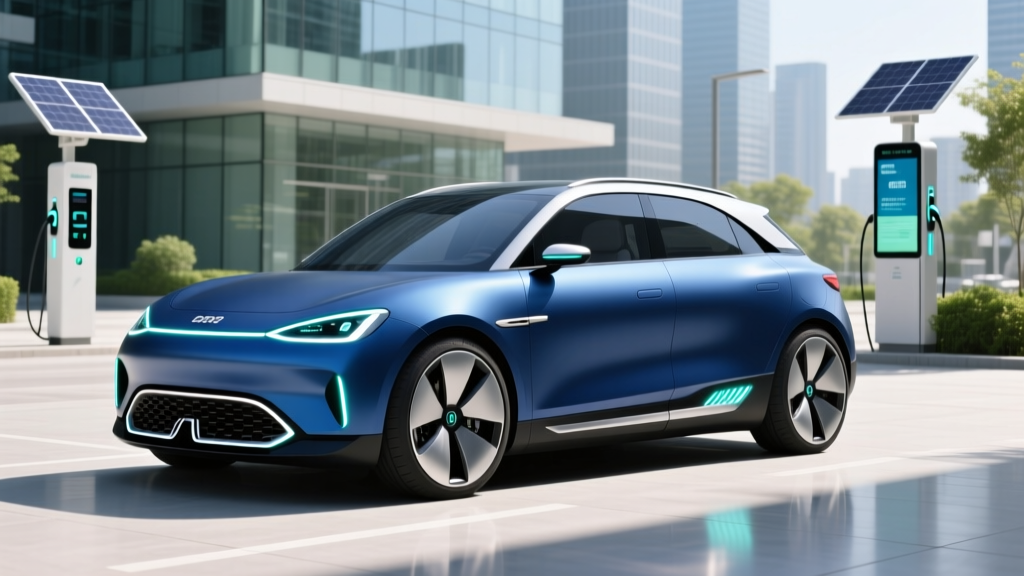
Yes — but not in the way most Americans remember. The Smart brand you knew for tiny two-seat city cars (the Fortwo) was discontinued in the US after 2019. Smart has since reinvented itself as a joint venture between Mercedes-Benz and Geely, producing fully electric compact crossovers: the Smart #1 and Smart #3. Both are battery electric vehicles (BEVs) with no gas engine option. However, as of early 2026, Smart does not officially sell vehicles in the United States. These models are available in Europe, China, and select other markets.
If you're asking whether the classic Smart Fortwo was electric: a short-lived Smart Fortwo Electric Drive (later called EQ) existed from 2008–2019 but offered only ~58–76 miles of range and was discontinued. Today's Smart lineup is 100% electric — just not sold stateside.
The Current Smart EV Lineup: #1 and #3
Smart's modern vehicles share a platform called SEA (Sustainable Experience Architecture), developed by Geely and also underpinning vehicles like the Volvo EX30. Here's what the current lineup looks like globally:
| Spec | Smart #1 | Smart #3 |
|---|---|---|
| Body Style | Compact crossover SUV | Coupe-style crossover |
| Battery (usable) | 66 kWh (NMC) | 66 kWh (NMC) |
| EPA-equivalent Range (WLTP) | ~260–273 mi (WLTP) | ~248–265 mi (WLTP) |
| Estimated US EPA Range | ~220–240 mi (projected) | ~210–230 mi (projected) |
| Motor Output | 268 hp (RWD) / 422 hp (AWD Brabus) | 268 hp (RWD) / 422 hp (AWD Brabus) |
| 0–62 mph | 6.7s (RWD) / 4.5s (Brabus) | 5.8s (RWD) / 3.6s (Brabus) |
| DC Fast Charge (peak) | 150 kW | 150 kW |
| 10–80% DC Charge | ~30 minutes | ~30 minutes |
| Level 2 AC Charge | 22 kW (3-phase) | 22 kW (3-phase) |
| Starting Price (Europe) | ~€42,000 | ~€44,000 |
Important note on range: Smart publishes WLTP figures, which run 10–15% higher than US EPA estimates. The ~273-mile WLTP range for the Smart #1 likely translates to roughly 220–240 EPA miles if the car were certified for the US. In real-world highway driving at 70 mph, expect closer to 190–210 miles, and potentially 160–180 miles in freezing temperatures — consistent with NMC battery behavior in cold climates.
Why Smart Left the US — and Will They Return?
The original Smart Fortwo struggled in America for clear reasons: a rough automated manual transmission, a tiny 22-gallon-equivalent fuel tank, poor crash-test perception, and a starting price near $15,000 when a Honda Fit offered far more utility for similar money. The electric EQ variant's 58-mile real-world range sealed its fate.
The modern Smart #1 and #3 are fundamentally different vehicles — legitimate compact crossovers with competitive range, modern ADAS suites, and premium interiors. However, several barriers keep them out of the US market as of 2026:
- Regulatory homologation: Meeting FMVSS (Federal Motor Vehicle Safety Standards) requires significant engineering changes from ECE-regulated European models.
- Dealer/service network: Smart's previous US infrastructure was dismantled after 2019.
- Tariff exposure: Vehicles manufactured in China (where Smart #1 and #3 are built at Geely's Xi'an plant) face substantial US import tariffs as of 2025–2026, making pricing uncompetitive.
- Market competition: The US compact EV crossover segment is already crowded with the Hyundai Kona Electric, Volvo EX30, Nissan Ariya, and Tesla Model Y.
Smart executives have hinted at a potential US return, but no official timeline or commitment exists. If it happens, the Smart #3 — with its sportier profile — would likely lead.
What US Buyers Can Get Instead: Smart Alternatives Compared
Since you can't buy a new Smart in America, here's how comparable electric crossovers stack up against the Smart #1's global specs:
| Vehicle | EPA Range | Battery | Peak DC kW | 10–80% Time | 0–60 mph | Base MSRP |
|---|---|---|---|---|---|---|
| Smart #1 (global, projected EPA) | ~220–240 mi | 66 kWh NMC | 150 kW | ~30 min | ~6.2s | Not sold in US |
| Volvo EX30 (2026, Extended Range) | 265 mi | 69 kWh NMC | 153 kW | ~26 min | 5.1s | $36,345 |
| Hyundai Kona Electric (2026 SEL) | 261 mi | 64.8 kWh NMC | 100+ kW | ~43 min | 7.2s | $33,975 |
| Nissan Ariya (2026 Engage FWD) | 289 mi | 87 kWh NMC | 130 kW | ~35 min | 7.5s | $39,590 |
| Tesla Model Y (2026 Long Range RWD) | 320 mi | ~75 kWh (LFP/NMC) | 250 kW | ~22 min | 5.8s | $44,990 |
The Volvo EX30 is the closest spiritual successor to what a US-spec Smart #1 would be — it shares the same SEA platform, has similar dimensions, and offers competitive range. The Kona Electric wins on value, while the Model Y dominates on charging speed and Supercharger network access.
Real Costs: What Ownership Actually Looks Like
Even though Smart isn't available in the US, understanding EV ownership economics helps you evaluate any compact electric crossover. Here's a realistic five-year cost projection based on the Volvo EX30 (the closest Smart #1 equivalent you can actually buy):
| Category | Volvo EX30 (EV) | Honda HR-V (Gas AWD) |
|---|---|---|
| Purchase Price (base) | $36,345 | $26,400 |
| Federal Tax Credit (§30D) | $0–$3,750* | $0 |
| Fuel/Energy (5 yr / 75,000 mi) | $3,200–$5,100** | $8,400–$9,800 |
| Maintenance (5 yr) | $1,200–$1,800 | $3,500–$4,500 |
| Insurance (5 yr avg) | $7,500–$9,500 | $5,800–$7,200 |
| Estimated Depreciation | $14,000–$17,000 | $10,000–$12,000 |
| Total 5-Year Cost | $46,000–$60,000 | $44,000–$50,000 |
* The EX30 is assembled in China; as of 2026, it does not qualify for the full $7,500 §30D credit due to battery-sourcing and foreign-entity-of-concern (FEOC) rules. A partial $3,750 credit may apply depending on critical-mineral sourcing — verify at IRS.gov or consult a tax professional.
** EV energy cost assumes $0.14/kWh home charging and occasional DC fast charging at $0.40/kWh. Gas cost assumes $3.40/gal and 28 MPG combined.
The EV's fuel savings ($4,000–$6,000 over five years) and lower maintenance costs ($1,800–$2,700 saved) partially offset the higher purchase price and insurance premiums. The break-even point typically arrives around year 4–5 for drivers with reliable home charging.
Common Misconceptions About Smart and EVs
| Myth | Fact |
|---|---|
| "Smart cars are all tiny two-seaters" | The current Smart #1 and #3 are compact crossovers seating five, comparable to a Volvo XC40 in size. |
| "Electric Smart cars only go 60 miles" | The discontinued Fortwo EQ had ~58–76 miles of range. The modern Smart #1 targets ~220+ EPA-equivalent miles. |
| "I can buy a new Smart in the US" | Smart has not sold new vehicles in the US since 2019. No 2026 models are available stateside. |
| "All small EVs charge slowly" | The Smart #1 peaks at 150 kW DC — competitive with many larger EVs. The Volvo EX30 on the same platform hits 153 kW. |
| "EV batteries need replacing every few years" | Modern NMC batteries typically retain 70–80% capacity after 100,000+ miles. Smart/Volvo warrant batteries for 8 years/100,000 miles. |
| "Smart cars aren't safe" | The old Fortwo had mixed results, but the SEA-platform Smart #1 earned a 5-star Euro NCAP rating in 2023. US-spec equivalents like the EX30 are expected to perform well in IIHS testing. |
First-Time EV Buyer? Here's Your Decision Framework
Should You Buy a Compact Electric Crossover?
Choose an EV like the EX30, Kona Electric, or Ariya if:
- You have access to home Level 2 charging (a 240V outlet or installed charger) — this covers 80%+ of your charging needs and costs $0.04–$0.06/mile vs. $0.12–$0.15/mile for gas.
- Your daily commute is under 60 miles round-trip (well within any modern EV's range).
- You live in a moderate or warm climate, or you're willing to accept 15–25% range loss in sub-freezing winters.
- You want lower per-mile operating costs and reduced maintenance (no oil changes, fewer brake replacements due to regenerative braking).
- You can absorb a higher upfront purchase price for long-term savings.
Stick with a gas car or consider a PHEV (plug-in hybrid) if:
- You live in an apartment or street-park with no charging access — public-only charging erodes both cost savings and convenience.
- You regularly drive 300+ miles in a single day through areas with sparse DC fast-charging infrastructure.
- You need maximum cargo/towing capacity on a tight budget (gas crossovers still lead here at lower price points).
- You live in extreme cold (-20°F or below) and cannot charge in a garage.
Consider a PHEV (like the Toyota RAV4 Prime or Hyundai Tucson PHEV) if:
- You want electric commuting (25–42 miles EV-only) but need gas flexibility for road trips.
- You have home charging but frequently drive beyond EV range.
What Smart's EV Pivot Tells Us About the Industry
Smart's transformation from a maker of quirky microcars to a producer of credible electric crossovers mirrors a broader industry trend: electrification is pushing small-car brands upmarket. The economics of EV development favor larger, higher-margin vehicles, which is why even Smart abandoned its city-car identity.
For US buyers, the practical takeaway is clear: the compact electric crossover segment is mature, competitive, and growing. Whether you choose a Volvo EX30, Hyundai Kona Electric, or wait to see if Smart ever returns, you're getting a fundamentally better electric vehicle than anything available even three years ago — with faster charging, longer range, and more refined thermal management systems.
Was the Smart Fortwo ever sold as an electric car in the US?
Yes. The Smart Fortwo Electric Drive (later renamed Smart EQ Fortwo) was available in the US from approximately 2011 through 2019. The final US model offered an EPA-rated 58 miles of range from a 17.6 kWh battery and charged at just 7.2 kW on Level 2. It was discontinued when Smart exited the US market.
Can I import a Smart #1 or #3 to the United States?
Not legally for road use, unless it qualifies under the 25-year import rule (which won't apply for decades). The vehicle must meet FMVSS standards, and Smart has not homologated these models for US sale. Grey-market imports are essentially impossible for modern vehicles.
Will Smart ever come back to America?
Smart's parent companies (Mercedes-Benz and Geely) have expressed interest in expanding to additional markets, but no US return has been announced as of early 2026. Tariffs on Chinese-manufactured vehicles and the cost of building a new dealer network remain significant hurdles.
What's the closest thing to a Smart EV I can buy in the US?
The Volvo EX30 is the closest equivalent — it shares the same Geely SEA platform, has similar dimensions, and offers 265 miles of EPA range starting at $36,345. The Hyundai Kona Electric (261 mi, $33,975) is the best value alternative.
Do Smart EVs qualify for the US federal tax credit?
Since Smart vehicles are not sold in the US, the question is moot. However, comparable vehicles on the same platform (like the Volvo EX30) face §30D credit limitations due to Chinese manufacturing and battery-sourcing rules. Always verify current eligibility at IRS.gov.
How long do Smart EV batteries last?
Smart warrants its high-voltage battery for 8 years or 100,000 miles (whichever comes first) with a minimum 70% state-of-health retention threshold. Based on NMC chemistry degradation data from similar Geely-platform vehicles, most owners can expect 80–85% capacity retention at 100,000 miles under normal use. Avoid frequent 100% charges and DC fast-charging in extreme heat to maximize longevity.