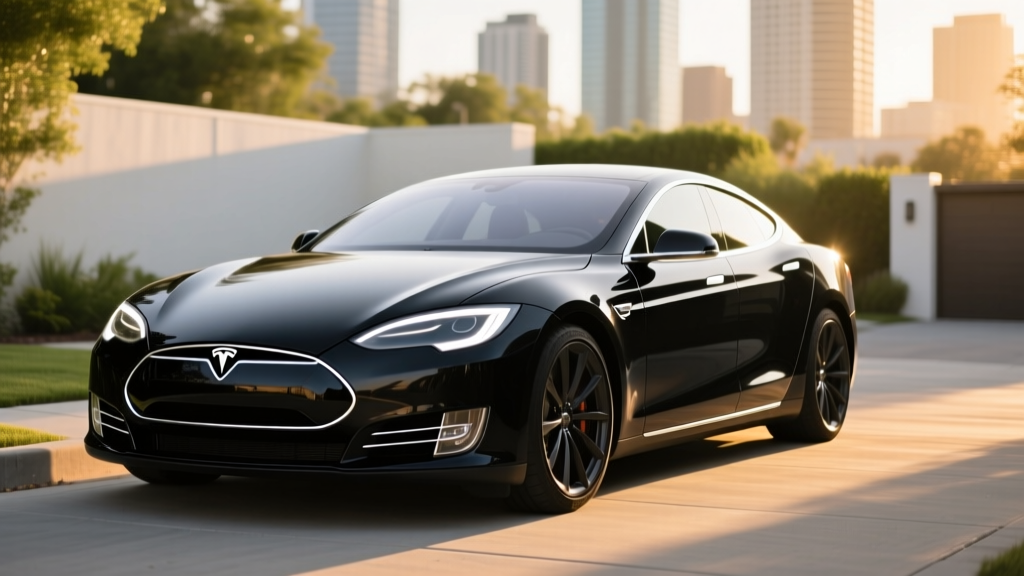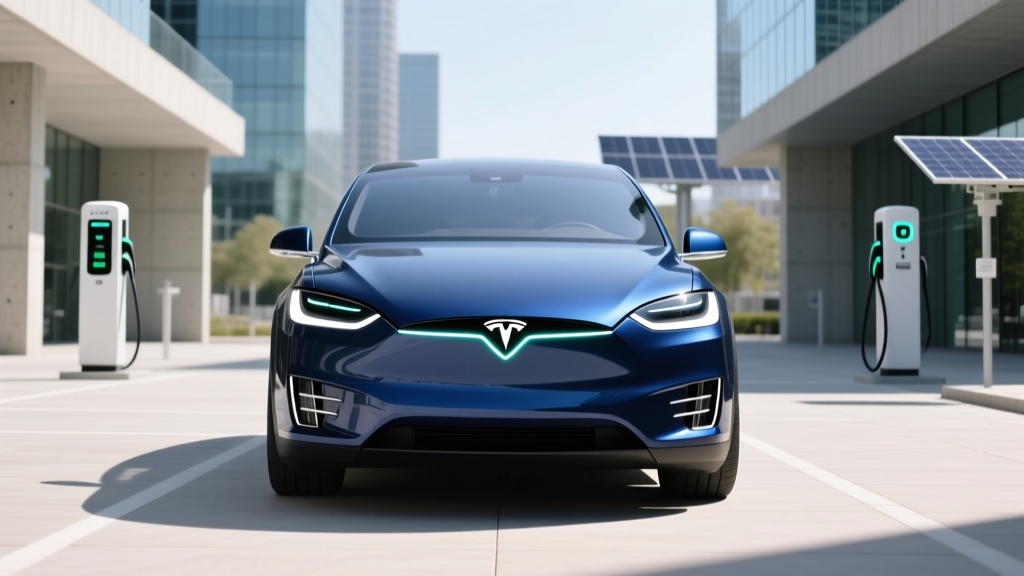
Tesla recently staged a Model X demo event showcasing the latest updates to its flagship three-row electric SUV, and after spending time with the vehicle's updated specs, charging behavior, and interior refinements, we have a clear picture of where the 2026 Model X stands in an increasingly crowded luxury EV SUV segment. This isn't a ground-up redesign — it's a precision refresh aimed at keeping Tesla's most expensive utility vehicle competitive against the Rivian R1S, BMW iX, and Mercedes EQS SUV. Here's what the numbers actually say.
Quick Verdict: Still the Tech Benchmark, Pricing Is the Hurdle
The 2026 Tesla Model X remains the most technologically dense three-row electric SUV you can buy, with class-leading Supercharger network access, over-the-air updates that genuinely add capability, and a 348-mile EPA range that translates to comfortable 280-300 mile real-world highway trips. The Plaid variant's 2.5-second 0-60 time is absurd for a 5,100-pound family hauler. But at a starting MSRP of $79,990 — well above the $80,000 federal tax credit MSRP cap for SUVs — most buyers will not qualify for the $7,500 §30D credit, and competitors like the Rivian R1S now match or exceed its interior quality and off-road capability.
| Spec | Long Range AWD | Plaid (Tri-Motor) |
|---|---|---|
| EPA Range | 348 miles | 320 miles |
| Battery (usable) | ~100 kWh (NMC) | ~100 kWh (NMC) |
| Drivetrain | Dual-Motor AWD | Tri-Motor AWD |
| Horsepower | 670 hp | 1,020 hp |
| 0-60 mph | 3.8 seconds | 2.5 seconds |
| Top Speed | 155 mph | 163 mph |
| Max DC Fast Charge | 250 kW | 250 kW |
| 10-80% DC Charge | ~31 minutes | ~31 minutes |
| Level 2 Home Charge | 11.5 kW (~34 mi/hr) | 11.5 kW (~34 mi/hr) |
| MPGe (combined) | 102 MPGe | 98 MPGe |
| Base MSRP | $79,990 | $94,990 |
| Federal Tax Credit (§30D) | Not eligible (MSRP cap) | Not eligible (MSRP cap) |
| Battery Warranty | 8 yr / 150,000 mi | 8 yr / 150,000 mi |
Range and Efficiency: EPA vs. Real-World Numbers
The 2026 Model X Long Range carries an EPA-estimated 348 miles of range, with a combined efficiency rating of 102 MPGe (33 kWh/100 miles). The Plaid trim drops to 320 miles EPA and 98 MPGe due to the tri-motor setup's higher energy draw.
EPA range is measured under controlled lab conditions. In our experience and consistent third-party testing, expect the following from the Model X Long Range:
- Mixed city/highway (65-70°F): ~300-320 miles achievable
- Sustained 75-80 mph highway: ~270-290 miles (aerodynamic drag dominates at speed in this tall SUV)
- Cold weather (20-30°F) with cabin heat: ~220-250 miles — the Model X's heat pump helps, but a 100 kWh battery in freezing temps still loses 20-30% range
- Towing (up to 5,000 lbs rated): ~160-190 miles — cut range roughly in half when towing near capacity
The Model X's efficiency is respectable for a 5,100-lb SUV with a large frontal area, but it trails the more aerodynamic BMW iX xDrive50 (which achieves 324 miles from a smaller, lighter package).
Charging Speed: Supercharger Advantage and Home Setup
Tesla's charging ecosystem remains the strongest argument for the Model X. The vehicle peaks at 250 kW on DC fast charging via V3 Superchargers, adding up to 175 miles of range in approximately 15 minutes under optimal conditions (low state of charge, preconditioned battery).
| Charging Level | Power | Miles Added per Hour | Notes |
|---|---|---|---|
| Level 1 (120V outlet) | ~1.4 kW | ~3-4 mi/hr | Emergency/top-up only |
| Level 2 (240V / 48A Wall Connector) | 11.5 kW | ~34 mi/hr | Full charge overnight (~9.5 hrs from 10%) |
| Level 2 (240V / 32A mobile connector) | 7.7 kW | ~23 mi/hr | Standard NEMA 14-50 outlet |
| DC Fast (Tesla V3 Supercharger) | 250 kW peak | ~700+ mi/hr (peak) | 10-80% in ~31 min; tapers sharply above 80% |
| DC Fast (CCS adapter on non-Tesla networks) | ~150-170 kW typical | Varies | Works via included CCS adapter; Electrify America, EVgo compatible |
Charging curve reality: The 250 kW peak only sustains between roughly 10-30% state of charge. From 30-60%, expect ~170-200 kW, and from 60-80%, it drops to ~100-130 kW. The 10-80% time of approximately 31 minutes reflects this taper. Charging from 80-100% adds another 40+ minutes — plan your road trips around the 10-80% window.
At home, the Tesla Wall Connector on a 60-amp circuit delivers 11.5 kW (48 amps continuous), which replenishes the full 100 kWh battery in roughly 9-10 hours. Most owners charging from 20-80% daily will see a full top-up in about 5-6 hours overnight. Installation of a 240V/60A circuit typically costs $800-$2,000 depending on panel proximity and local permit requirements — consult a licensed electrician for your specific setup.
Performance: Dual-Motor and Plaid Compared
The dual-motor Long Range Model X produces 670 horsepower and hits 0-60 mph in 3.8 seconds — quicker than most sports sedans and startling for a three-row SUV with falcon-wing rear doors. The adaptive air suspension adjusts ride height for highway efficiency or rough-road clearance, and the all-wheel-drive system provides confident traction in rain and light snow.
The Plaid variant's tri-motor setup (one front, two rear) generates 1,020 horsepower and a claimed 2.5-second 0-60 time. It's a party trick more than a practical advantage — the Long Range's 3.8 seconds is already brutally quick — but the Plaid's torque-vectoring rear motors do improve cornering agility noticeably on twisty roads.
Both trims feature Tesla's latest steering rack, which is quicker and more communicative than prior Model X generations, though the yoke steering wheel (now optional alongside a conventional round wheel) still divides opinion. Regenerative braking offers strong one-pedal driving in "Hold" mode, though Tesla removed the adjustable regen setting — it's full regen or nothing.
Interior, Cargo, and Technology
The Model X seats up to seven in a 2-3-2 configuration (six-passenger 2-2-2 with second-row captain's chairs is optional). Interior materials have improved with the latest refresh — ventilated front seats, a rear-seat entertainment screen, and improved sound deadening address longstanding complaints.
- Cargo (behind 3rd row): 15.8 cu ft
- Cargo (3rd row folded): 43.9 cu ft
- Cargo (all rear rows folded): 85.1 cu ft
- Front trunk (frunk): 6.6 cu ft
- Front legroom: 41.2 inches
- Second-row legroom: 40.9 inches
- Third-row legroom: 32.7 inches (tight for adults on long trips)
The 17-inch landscape touchscreen runs Tesla's latest software with a responsive interface, integrated navigation with real-time Supercharger routing, and a built-in trip planner that automatically conditions the battery for fast charging when a Supercharger is your destination. The secondary 8-inch rear touchscreen controls climate, media, and entertainment for second- and third-row passengers.
Driver Assistance: Every Model X includes Tesla's Basic Autopilot (adaptive cruise control + lane centering). The optional Enhanced Autopilot ($6,000) adds auto lane change, autosteer on navigation, and Smart Summon. Full Self-Driving (Supervised) at $8,000 adds traffic light/stop sign recognition and city street autosteer.
Pricing, Tax Credits, and Total Cost
The 2026 Model X Long Range starts at $79,990 (including destination). The Plaid starts at $94,990. Common options include FSD ($8,000), six-seat interior ($6,500), and premium paint ($1,500-$2,500). A well-equipped Long Range typically lands between $88,000-$95,000 before any incentives.
| Trim | Base MSRP | As-Tested (Typical) | §30D Federal Credit | Effective Price |
|---|---|---|---|---|
| Long Range AWD | $79,990 | $88,000-$95,000 | $0 (exceeds $80K SUV cap) | $88,000-$95,000 |
| Plaid Tri-Motor | $94,990 | $102,000-$110,000 | $0 (exceeds $80K SUV cap) | $102,000-$110,000 |
- MSRP Cap: SUVs must be priced at or below $80,000 MSRP to qualify. The Model X Long Range starts at $79,990, but any single option (paint, wheels, FSD) pushes the MSRP above the cap. The Plaid at $94,990 is ineligible regardless.
- Income Limits: Even if MSRP qualified, buyer AGI must be ≤$150,000 (single) / ≤$300,000 (joint). Most Model X buyers exceed these thresholds.
- Battery Sourcing: Critical minerals and battery component sourcing requirements must be met — Tesla's supply chain partially qualifies, but the MSRP cap moots this for the Model X.
- Point-of-Sale Transfer: Eligible credits can be transferred to the dealer at purchase for an immediate price reduction, but only if all criteria are satisfied. See IRS §30D guidelines for current rules.
Bottom line: Budget the full MSRP for a Model X. Some state-level incentives (e.g., California's CVRP, New York's Charge EV Rebate) may offer $1,000-$5,000 depending on income and residency — check your state's energy office for current programs.
Warranty and Long-Term Ownership
Tesla covers the Model X with:
- Basic Vehicle Limited Warranty: 4 years / 50,000 miles
- Battery & Drive Unit Warranty: 8 years / 150,000 miles (whichever comes first), with minimum 70% capacity retention guaranteed
The 8-year/150,000-mile battery warranty is competitive with the industry standard (most luxury EVs offer 8yr/100,000mi). Tesla's NMC battery chemistry typically sees 10-15% degradation over the first 100,000 miles based on fleet data, stabilizing afterward. To maximize longevity, Tesla recommends daily charging to 80-90% and only charging to 100% for long trips.
Insurance costs for the Model X are notably high — expect $3,000-$5,000 annually depending on your driving record and location, roughly 30-50% above the luxury SUV average due to repair costs and performance classification. Tesla offers its own insurance product in many states that uses real-time driving data to set premiums, which can be competitive for safe drivers.
Who Should Buy the 2026 Tesla Model X?
Choose the Model X if:
- You need three rows and prioritize Supercharger access for frequent road trips
- You want the most advanced OTA software and driver-assist tech in a family SUV
- Performance matters — 3.8s (or 2.5s Plaid) 0-60 in a 7-seater is unmatched
- You value the falcon-wing doors for car-seat access in tight parking spaces
Look elsewhere if:
- Federal tax credit eligibility matters — the Rivian R1S (under $80K) qualifies
- Interior luxury and material quality are top priorities (BMW iX, Mercedes EQS SUV)
- You need genuine off-road capability (Rivian R1S with quad-motor)
- Third-row space for adults is essential — the Model X third row is best for children
- 348-mile EPA range is excellent for a three-row SUV
- 250 kW Supercharger network is the most reliable public charging in the US
- Tri-motor Plaid performance is supercar-rivaling
- Continuous OTA updates add features post-purchase
- Falcon-wing doors ease car-seat loading
- Class-leading frunk + cargo volume
- MSRP exceeds $80K cap — no federal tax credit
- Third-row legroom (32.7 in) is cramped for adults
- Insurance costs 30-50% above segment average
- Interior quality still trails German luxury competitors
- No adjustable regen braking — one-pedal or nothing
- Yoke steering remains controversial and not ideal for low-speed maneuvers
Model X vs. Key Competitors: Quick Comparison
| Vehicle | EPA Range | 0-60 mph | Base MSRP | §30D Credit |
|---|---|---|---|---|
| Tesla Model X LR | 348 mi | 3.8s | $79,990 | No (MSRP cap) |
| Rivian R1S (Dual-Motor) | 352 mi | 4.5s | $75,900 | Yes (if income/sourcing qualify) |
| Kia EV9 GT-Line AWD | 270 mi | 5.0s | $63,900 | Yes (if income/sourcing qualify) |
| BMW iX xDrive50 | 324 mi | 4.4s | $87,250 | No (MSRP cap) |
Frequently Asked Questions
What is the real-world range of the 2026 Tesla Model X?
The EPA rates the Long Range at 348 miles. In real-world mixed driving at moderate temperatures, expect 300-320 miles. Sustained highway driving at 75-80 mph drops this to 270-290 miles, and cold weather (below freezing) can reduce range to 220-250 miles. The Plaid's real-world range is approximately 260-290 miles mixed.
How fast does the Model X charge at home and on the road?
At home on a 240V/48A Tesla Wall Connector, the Model X charges at 11.5 kW, adding about 34 miles of range per hour — a full 10-100% charge takes roughly 9-10 hours. On Tesla V3 Superchargers, it peaks at 250 kW DC, reaching 10-80% in about 31 minutes. Via the included CCS adapter, non-Tesla DC fast chargers typically deliver 150-170 kW.
Does the 2026 Model X qualify for the $7,500 federal EV tax credit?
Almost certainly not. The IRS §30D credit caps SUV MSRP at $80,000. The Model X Long Range starts at $79,990, but adding any option (even paint) pushes the MSRP above the cap. The Plaid starts at $94,990. Additionally, buyer income must be ≤$300,000 (joint) or ≤$150,000 (single), and battery sourcing requirements must be met. Consult a tax professional and review current IRS guidance for your specific situation.
Is the Model X worth buying vs. the Rivian R1S or BMW iX?
If Supercharger access, OTA software updates, and extreme performance are your priorities, the Model X is still the benchmark. If you want federal tax credit eligibility, better off-road capability, and a more premium interior, the Rivian R1S (starting at $75,900, §30D eligible) is a strong alternative. The BMW iX offers superior ride quality and cabin luxury but only seats five and also exceeds the MSRP cap.
How long will the Model X battery last?
Tesla warranties the battery for 8 years or 150,000 miles with at least 70% capacity retention. Fleet data suggests NMC batteries in Teslas typically lose 10-15% capacity over the first 100,000 miles, then degrade more slowly. With proper charging habits (daily 80-90% limit, avoiding frequent 100% charges and DC fast charging when not needed), reaching 200,000+ miles with acceptable capacity is realistic.
Can the Model X tow, and how does towing affect range?
The Model X is rated to tow up to 5,000 pounds when properly equipped. Towing near maximum capacity roughly halves range — expect 160-190 miles from a full charge when pulling a loaded trailer. Tesla's navigation will adjust range estimates when a trailer is connected via the tow mode setting.