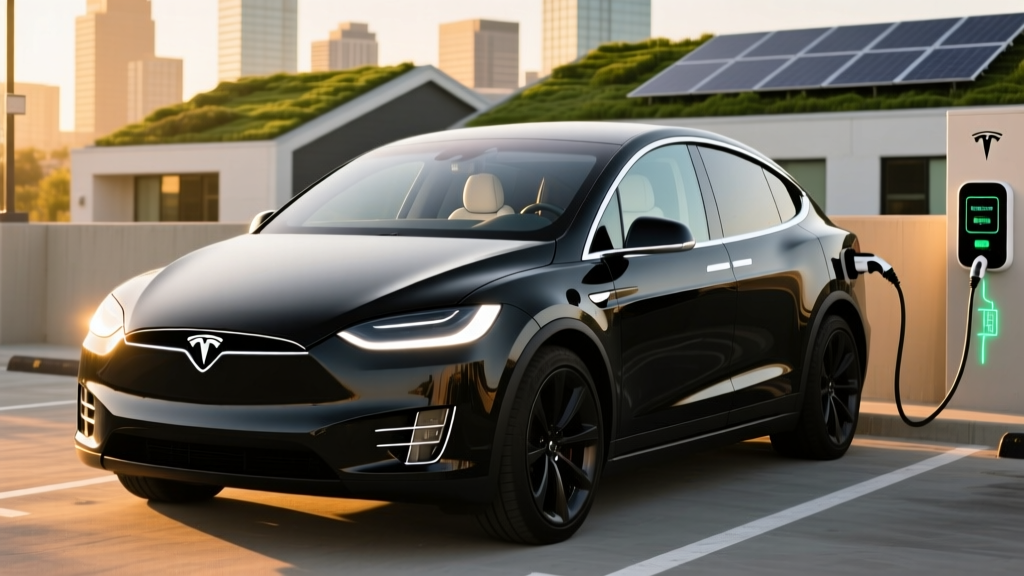
The 2020 Tesla Model X occupies a strange place in the used EV market. It's the last model year before Tesla's "Palladium" refresh brought the Plaid powertrain, horizontal touchscreen, and yoke steering to the crossover SUV. That makes the 2020 version a value proposition: you get a 100 kWh battery, up to 328 miles of EPA-estimated range, and access to the Supercharger network — at a used price that undercuts the refreshed Model X by tens of thousands of dollars. But it also means inheriting the older interior, the portrait screen, and pre-refresh build-quality quirks. Here's everything a 2026 buyer needs to know before signing on a 2020 Model X.
2020 Tesla Model X: Trims and Core Specifications
For the 2020 model year, Tesla simplified the Model X lineup mid-year. Early 2020 production included the Standard Range variant, but by mid-2020 Tesla consolidated to two main trims. Both use a dual-motor all-wheel-drive configuration and a ~100 kWh battery pack (NMC chemistry).
| Specification | Long Range Plus | Performance |
|---|---|---|
| EPA Range | 328 miles | 305 miles |
| Usable Battery Capacity | ~100 kWh (NMC) | ~100 kWh (NMC) |
| Drivetrain | Dual-Motor AWD | Dual-Motor AWD |
| Horsepower | ~422 hp | ~534 hp (w/ Ludicrous) |
| 0–60 mph | 4.4 seconds | 2.7 seconds (Ludicrous) |
| MPGe (combined) | 101 MPGe | 96 MPGe |
| Efficiency | 33 kWh/100 mi | 35 kWh/100 mi |
| Max DC Fast Charge | 250 kW (V3 Supercharger) | 250 kW (V3 Supercharger) |
| 10–80% DC Fast Charge | ~30 minutes | ~30 minutes |
| Level 2 Home Charge Rate | 11.5 kW (48A) | 11.5 kW (48A) |
| Seating | 5, 6, or 7 passengers | 5, 6, or 7 passengers |
| Cargo (behind 2nd row) | ~25.7 cu ft | ~25.7 cu ft |
| Cargo (max, seats folded) | ~88.1 cu ft | ~88.1 cu ft |
| Towing Capacity | 5,000 lbs | 5,000 lbs |
| Original MSRP (approx.) | $84,990 | $104,990 |
| Battery/Drive Unit Warranty | 8 years / 150,000 miles | 8 years / 150,000 miles |
Sources: EPA Fuel Economy, Tesla 2020 archive specifications.
Real-World Range: What the EPA Sticker Doesn't Tell You
The Model X's large frontal area and tall profile create more aerodynamic drag than the Model S or Model 3, and that penalty shows up most at highway speeds. Efficiency drops to roughly 38–42 kWh/100 mi at 75 mph, compared to the EPA combined figure of 33 kWh/100 mi. City driving with frequent regenerative braking opportunities actually gets you closer to — or sometimes above — the EPA estimate.
For a 2020 vehicle purchased in 2026, battery degradation is a real variable. Tesla's NMC packs from this era typically show 8–12% degradation after 5–6 years or 60,000–80,000 miles. A 2020 Model X with 70,000 miles might realistically deliver 250–270 miles of usable range in mixed driving. Always check the car's battery health screen (Settings → Software → Battery Health on newer firmware, or use third-party tools like Tessie or TeslaFi to pull State of Health data) before purchasing.
Charging Speed and Infrastructure
The 2020 Model X supports Tesla's V3 Supercharger architecture at a peak rate of 250 kW. However — and this is critical for used buyers to understand — that peak rate is only sustained briefly at a low state of charge (typically 10–25% SoC). The charge curve tapers significantly:
| Charging Method | Power / Rate | Practical Speed |
|---|---|---|
| V3 Supercharger (DC Fast) | Peak 250 kW | ~170 miles in 15 min (10–45% SoC); 10–80% in ~30 min |
| V2 Supercharger (DC Fast) | Peak 150 kW | 10–80% in ~40 min |
| Level 2 Home (Tesla Wall Connector, 48A/240V) | 11.5 kW | ~34 miles of range per hour; full charge in ~10 hours |
| Level 2 Public (J1772 w/ Tesla adapter) | 6.6–11.5 kW | ~20–34 miles per hour depending on station output |
| Level 1 (120V household outlet) | ~1.4 kW | ~4 miles per hour (emergency/trickle only) |
The 2020 Model X uses Tesla's proprietary connector (now called NACS). In 2026, this is an advantage: the NACS standard has been adopted by Ford, GM, Rivian, Volvo, and most major automakers, meaning the Supercharger network is the largest and most reliable DC fast-charging ecosystem in North America. You also have access to third-party CCS stations using a Tesla CCS adapter (sold separately, ~$175), though speeds may be limited to 150–180 kW depending on the station.
Preconditioning matters. The Model X will warm its battery when you navigate to a Supercharger, which is essential for achieving peak charge speeds. If you pull up to a charger with a cold battery, expect peak rates of 50–90 kW until the pack warms up. Always navigate to the charger via the car's built-in routing to trigger preconditioning automatically.
Interior, Cargo, and Technology
The 2020 Model X interior is the pre-refresh design: a 17-inch portrait-oriented touchscreen dominates the dash, with physical HVAC vents but no separate instrument cluster. Build quality on 2020 models is improved over early Model X years (2016–2018) but still falls short of what you'd find in a similarly priced BMW X5 or Mercedes GLE of the era. Panel gaps, creaking trim, and falcon-wing door seal issues are documented complaints.
Seating configurations:
- 5-seat: Bench second row, maximum cargo flexibility
- 6-seat: Individual captain's chairs in row two with a center pass-through to row three
- 7-seat: Bench second row plus a small third row (best for children; tight for adults on long trips)
Second-row legroom is generous at ~38.4 inches, but the third row is cramped at ~32.7 inches — usable for kids or short trips only. The falcon-wing rear doors are a signature feature: they open vertically, making it easy to load children into car seats in tight parking spaces, but they're slower to operate than conventional doors and can be problematic in low-clearance garages or heavy rain (earlier models had leak issues; 2020 is largely resolved but not perfect).
Frunk + trunk: The front trunk (frunk) offers ~6.6 cu ft of storage. Combined cargo behind the second row is 25.7 cu ft, expanding to 88.1 cu ft with both rear rows folded — competitive with midsize SUVs like the Audi Q7.
Infotainment and driver assist: The 2020 Model X runs Tesla's software, which receives over-the-air updates. In 2026, that means the interface is still modern — Tesla's UI ages better than most legacy automaker systems. Standard Autopilot includes Traffic-Aware Cruise Control and Autosteer (lane centering). Full Self-Driving (FSD) Capability was an optional $7,000–$10,000 add-on; if the used car you're evaluating has FSD, verify it transfers with the vehicle (Tesla's policy on FSD transfer has varied — confirm with Tesla directly before purchase).
Pricing, Used Market Value, and Tax Credits in 2026
The 2020 Model X is only available on the used market in 2026. Pricing varies significantly by mileage, condition, and trim:
| Trim | Mileage Range | Estimated Used Price |
|---|---|---|
| Long Range Plus | 40,000–60,000 mi | $38,000–$48,000 |
| Long Range Plus | 60,000–90,000 mi | $32,000–$40,000 |
| Performance | 40,000–60,000 mi | $45,000–$55,000 |
| Performance | 60,000–90,000 mi | $38,000–$48,000 |
Prices are estimates based on 2026 market trends. Check current listings on Tesla's used inventory, CarGurus, and Autotrader for real-time data.
Does a Used 2020 Model X Qualify for the Federal EV Tax Credit?
Yes — under the IRS §25E Used Clean Vehicle Credit, you may be eligible for up to $4,000 (or 30% of the sale price, whichever is less) when purchasing a qualifying used EV from a licensed dealer. Key requirements for 2026:
- Price cap: The dealer sale price must be $25,000 or less. Given 2020 Model X used pricing ($32,000–$55,000), most examples will NOT qualify — only high-mileage or cosmetically challenged units might fall under the cap.
- Buyer income limits: Adjusted gross income must not exceed $75,000 (single), $112,500 (head of household), or $150,000 (joint filers).
- Dealer requirement: Must be purchased from a licensed dealer (private-party sales do not qualify).
- Vehicle age: Must be at least 2 model years old (a 2020 model qualifies in 2026).
- One-time use: You can only claim this credit once every 3 years.
Bottom line: The §25E used credit is unlikely to apply to a 2020 Model X at current market prices. The new-vehicle §30D credit ($7,500) does not apply to used purchases. Check with a tax professional for your specific situation.
Warranty Coverage and Long-Term Ownership Costs
The 2020 Model X came with Tesla's standard warranty package:
- Basic Vehicle: 4 years / 50,000 miles (expired on all 2020 models by 2026)
- Battery & Drive Unit: 8 years / 150,000 miles, whichever comes first, with minimum 70% capacity retention
As of 2026, a 2020 Model X is 6 years old, meaning the battery/drive unit warranty has approximately 2 years or ~70,000+ miles remaining (depending on odometer). This is meaningful protection: if the battery degrades below 70% of its original capacity or a drive unit fails, Tesla covers the repair or replacement. Out-of-warranty battery replacement for a 100 kWh Model X pack runs $15,000–$22,000 at current Tesla service pricing — a worst-case scenario, but one worth budgeting for on a 6-year-old EV.
Other ownership cost considerations:
- Insurance: Model X insurance premiums are among the highest in the EV segment. Expect $2,500–$4,000/year depending on your state, driving record, and coverage level. Get quotes before buying.
- Maintenance: No oil changes, no spark plugs. Expect cabin air filter replacement (~$150–$250), tire rotation, brake fluid checks, and occasional suspension work (air suspension on the Model X can require strut replacement at 80,000–120,000 miles — $1,500–$2,500 per corner).
- Charging costs: Home charging at $0.13/kWh and 33 kWh/100 mi works out to roughly $0.043/mile. Supercharging at $0.28–$0.36/kWh averages $0.09–$0.12/mile. Compare to a gas SUV at 22 mpg and $3.50/gallon: ~$0.16/mile.
Pros, Cons, and the Verdict
Pros
- Class-leading EPA range (328 mi Long Range Plus)
- Access to the Supercharger network (NACS standard)
- Spacious cargo area (88.1 cu ft max) and flexible seating
- Strong performance even in Long Range trim (4.4s 0–60)
- OTA software updates keep the car current
- Falcon-wing doors genuinely useful for child-seat loading
- Battery warranty still partially active in 2026
Cons
- Pre-refresh interior feels dated vs. 2022+ Model X
- Build quality inconsistent (panel gaps, trim creaks)
- Air suspension repairs are expensive out of warranty
- Insurance costs are high for the segment
- Third-row seating is cramped for adults
- Falcon-wing doors slower than conventional; garage-clearance issues
- Used prices may exceed the $25,000 §25E credit cap
- Real-world highway range ~20% below EPA sticker
Who Should Buy the 2020 Model X?
The 2020 Model X Long Range Plus is best suited for families who need three rows of seating, regular road-trip capability, and Supercharger access — but who want to avoid the $80,000+ price of a new Model X. It's a strong pick for suburban commuters with home charging who occasionally tow (5,000-lb capacity covers most small trailers and boats). It's less ideal for buyers who prioritize interior luxury (look at a used BMW iX or Rivian R1S), who need a usable adult-sized third row (consider the Rivian R1S or a used Cadillac Escalade IQ), or who want the latest Tesla hardware (wait for a used 2022+ refresh Model X).
Frequently Asked Questions
What is the real-world range of the 2020 Tesla Model X?
The EPA rates the Long Range Plus at 328 miles and the Performance at 305 miles. In real-world highway driving at 70–75 mph, expect 260–285 miles (Long Range) and 240–260 miles (Performance). In freezing weather, subtract another 15–25%, bringing usable range down to 210–240 miles for the Long Range Plus. Battery degradation on a 2026-purchased 2020 model will further reduce these figures by roughly 8–12%.
How fast does the 2020 Model X charge at home and on the road?
On a V3 Supercharger, it peaks at 250 kW and reaches 10–80% in approximately 30 minutes, though the charge curve tapers substantially above 50% SoC. At home on a Level 2 Tesla Wall Connector (48 amps, 240V), it charges at 11.5 kW, adding about 34 miles of range per hour — a full overnight charge takes roughly 10 hours from empty. On a standard 120V outlet (Level 1), expect only about 4 miles per hour of charging.
How much does a used 2020 Tesla Model X cost in 2026?
Used 2020 Model X pricing ranges from approximately $32,000 for a high-mileage Long Range Plus to $55,000 for a low-mileage Performance trim. Most examples cluster in the $38,000–$48,000 range. At these prices, the vehicle generally exceeds the $25,000 cap for the §25E used-EV tax credit.
Is the 2020 Model X worth buying over competitors like the Audi e-tron or Jaguar I-PACE?
It depends on your priorities. The 2020 Model X wins on range (328 mi vs. the e-tron's ~222 mi or the I-PACE's ~234 mi), Supercharger network access, cargo space, and third-row availability. The Audi e-tron (now sold as the Q8 e-tron) wins on interior quality, ride comfort, and build consistency. The Jaguar I-PACE offers sportier handling but less range and no third row. For road-tripping families, the Model X's range and charging infrastructure advantage is hard to beat.
Does the 2020 Tesla Model X qualify for any federal tax credit?
The §30D new-vehicle credit does not apply to used purchases. The §25E used-EV credit offers up to $4,000, but only if the dealer sale price is $25,000 or less and the buyer meets income caps ($75K single / $150K joint). Since most used 2020 Model X vehicles sell above $25,000, the majority will not qualify. Consult IRS guidelines and a tax professional for your specific eligibility.
What should I check before buying a used 2020 Model X?
Prioritize these inspections: (1) Battery State of Health — request Tesla service records or use a third-party app to check degradation percentage; (2) Drive unit history — listen for whining or grinding noises from the motors; (3) Air suspension — test raise/lower function and look for leaking struts; (4) Falcon-wing door operation — ensure smooth open/close and check for water ingress around seals; (5) Title and warranty status — confirm the 8-year/150,000-mile battery warranty is still active and check for any salvage or rebuilt titles.