The Tesla Model S Yoke Steering Wheel: Innovation or Compromise?
The Tesla Model S steering wheel — specifically the airplane-style yoke — has been one of the most debated design choices in the EV world since its introduction. For 2026, Tesla continues to offer the yoke as the default steering interface on the Model S, with a conventional round wheel available as a no-cost option at order time. But the yoke isn't just a cosmetic talking point. It fundamentally shapes the driving experience, visibility of the 12.3-inch instrument cluster, and interaction with Tesla's Autopilot and Full Self-Driving (Supervised) systems.
This review goes well beyond the steering debate. We cover the 2026 Model S Long Range and Plaid in full: EPA range, real-world efficiency, DC fast-charging speeds, battery chemistry, cargo practicality, pricing, and whether this luxury sedan still earns its place against rivals like the Lucid Air, BMW i5, and Mercedes-Benz EQS. If you're researching the Tesla Model S steering wheel options or evaluating the car as a whole, this is the data-driven breakdown you need.
Range, Efficiency, and Real-World Expectations
The 2026 Tesla Model S Long Range carries an EPA-estimated range of 405 miles on its dual-motor all-wheel-drive powertrain. The Plaid variant, with its tri-motor setup producing 1,020 horsepower, drops to an EPA-estimated 396 miles. Both figures place the Model S near the top of the luxury EV sedan segment, though the Lucid Air Grand Touring still leads at 516 miles EPA.
EPA estimates assume a mix of city and highway driving at moderate temperatures. In our experience and consistent with third-party highway tests:
• Highway (70-75 mph, mild weather): Expect ~330-360 miles from the Long Range; ~310-340 from the Plaid.
• Cold weather (below 32°F / 0°C): Range can drop 20-30%, yielding roughly 280-320 miles for the Long Range depending on cabin heat usage and whether the heat pump is active.
• City / stop-and-go: Regenerative braking recovers energy efficiently — you may match or slightly exceed EPA figures in warm-weather urban driving.
Efficiency ratings from fueleconomy.gov list the Model S Long Range at approximately 124 MPGe combined (roughly 27 kWh per 100 miles). The Plaid's additional motor and performance tuning reduce efficiency to around 116 MPGe combined (~29 kWh/100 mi). These numbers are competitive for a 4,500+ lb luxury sedan but trail lighter rivals like the BMW i5 eDrive40.
Battery, Chemistry, and Longevity
The 2026 Model S uses a ~100 kWh battery pack (approximately 95 kWh usable, with the remainder serving as a top/bottom buffer to protect cell longevity). Tesla has historically used NMC (nickel manganese cobalt) chemistry in the Model S, prioritizing energy density over the LFP (lithium iron phosphate) chemistry found in the standard-range Model 3 and Model Y.
| Attribute | NMC (Model S) | LFP (Model 3 RWD) |
|---|---|---|
| Energy density | Higher (~250 Wh/kg) | Lower (~160 Wh/kg) |
| Cycle life | ~1,000-1,500 cycles | ~3,000+ cycles |
| Recommended daily charge | 80% (to reduce degradation) | 100% OK |
| Cold-weather performance | Better low-temp output | More range loss in cold |
| Cost | Higher | Lower |
For Model S owners, the NMC chemistry means you should set your daily charge limit to 80% and only charge to 100% before long road trips. Tesla's battery management system (BMS) and liquid thermal management keep degradation modest — industry data suggests roughly 10-12% capacity loss over 150,000 miles for NMC packs under typical use. The battery and drive unit warranty covers 8 years or 150,000 miles (whichever comes first) with a minimum 70% capacity retention guarantee.
Charging Speed: DC Fast, Level 2, and the Supercharger Advantage
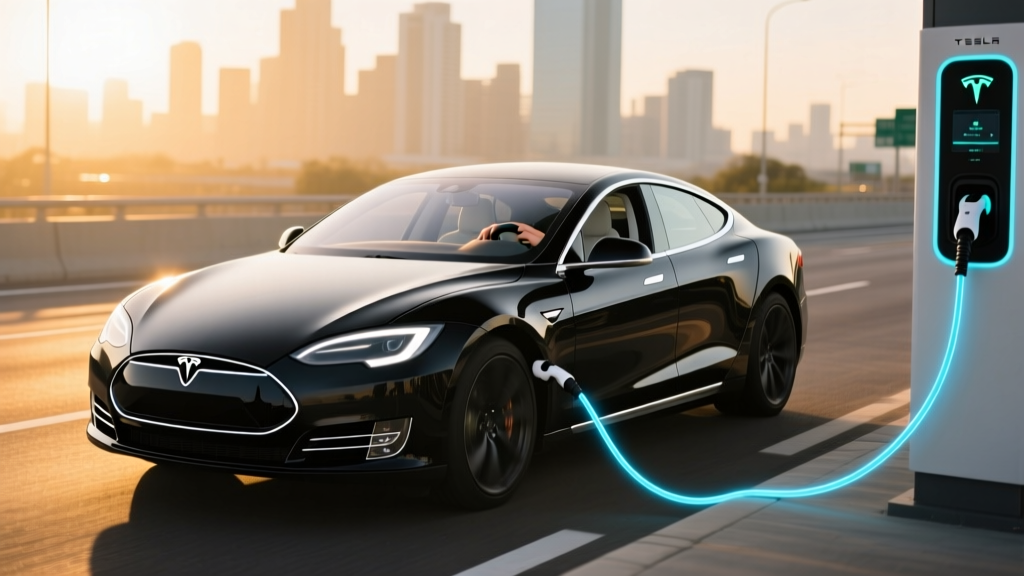
The Model S supports a peak DC fast-charge rate of 250 kW on V3 Superchargers and compatible third-party CCS stations (via the NACS-to-CCS adapter, or natively at NACS-equipped stations). On a preconditioned battery, a 10-80% session takes approximately 25-28 minutes at a V3 Supercharger.
| Charging Level | Power | Speed (approx.) | Use Case |
|---|---|---|---|
| Level 1 (120V household) | ~1.4 kW | ~3-4 mi/hr | Emergency / trickle only |
| Level 2 (240V, 48A Wall Connector) | 11.5 kW | ~34 mi/hr | Daily home charging |
| DC Fast (V3 Supercharger) | Up to 250 kW | ~200 mi in 15 min (peak) | Road trips |
Charging curve reality: The 250 kW peak is not sustained across the entire session. Like all EVs, the Model S charge rate tapers significantly above 50-60% state of charge. You'll see 250 kW only in the 10-30% SoC window if the battery is properly preconditioned (navigate to a Supercharger using the car's built-in routing, and it will warm the battery automatically). Above 80%, charging slows dramatically — expect 40-50 kW or less. This is why Tesla and most EV analysts recommend planning road-trip stops around 10-80% sessions rather than attempting full charges.
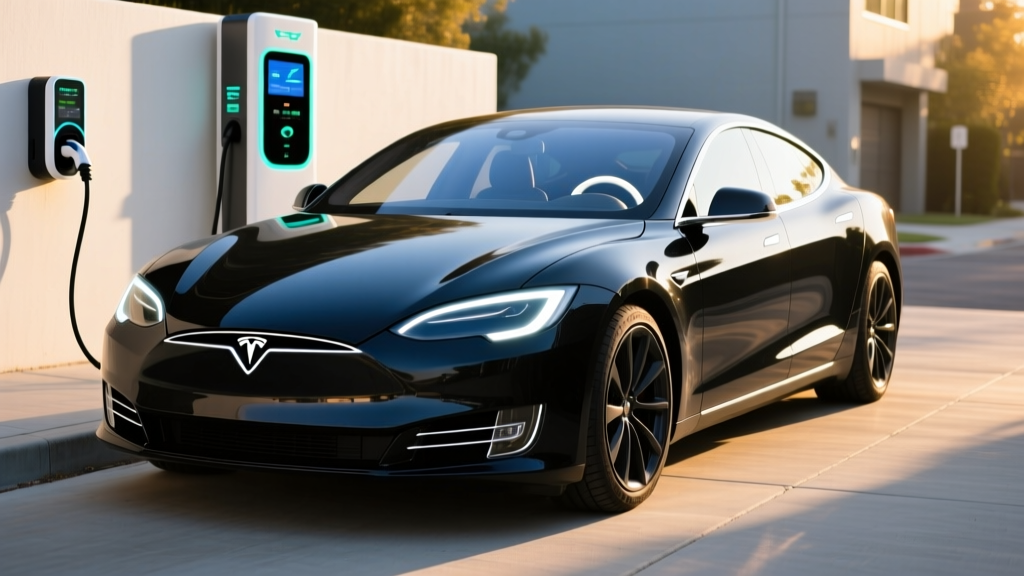
For home charging, the Tesla Wall Connector at 48 amps on a 60-amp circuit delivers 11.5 kW, adding roughly 34 miles of range per hour. An overnight session (8-10 hours) fully replenishes the pack. Installation typically requires a NEMA 14-60 outlet or hardwired connection; budget $500-$2,000 for electrician labor depending on panel proximity and local permit costs. Always consult a licensed electrician for your specific setup.
Performance: Long Range vs. Plaid
The Model S lineup offers two distinct performance tiers:
| Spec | Long Range | Plaid |
|---|---|---|
| Drivetrain | Dual-motor AWD | Tri-motor AWD |
| Horsepower | 670 hp | 1,020 hp |
| 0-60 mph | 3.1 seconds | 1.99 seconds |
| Top Speed | 155 mph | 200 mph |
| EPA Range | 405 miles | 396 miles |
| MPGe (combined) | ~124 MPGe | ~116 MPGe |
| Battery | ~100 kWh (NMC) | ~100 kWh (NMC) |
| Base MSRP (2026) | $79,990 | $94,990 |
The Plaid's 1.99-second 0-60 time (with rollout subtracted, per Tesla's methodology) makes it one of the quickest production cars ever sold. But the Long Range's 3.1-second sprint is already supercar territory from a decade ago, and it comes with lower pricing and slightly better range. For most buyers, the Long Range delivers more than enough performance.
The Yoke vs. Round Steering Wheel: What You Need to Know
The Tesla Model S steering wheel comes in two configurations:
- Yoke (default): A flat-top, flat-bottom rectangular steering control. Tesla designed it to improve visibility of the instrument cluster and give the cabin a futuristic feel. It works well on highways and in Autopilot/FSD Supervised driving where large steering inputs are rare.
- Round wheel (optional at no cost): A conventional circular steering wheel. Better for low-speed maneuvering, parking lots, and three-point turns where hand-over-hand steering is natural.
The yoke's core trade-off: Without the top half of a round wheel, you can't simply grab the wheel at any position during quick maneuvers. Tesla has not implemented steer-by-wire (which would reduce the number of turns lock-to-lock) on the Model S as of 2026 — the steering ratio remains the same as the round-wheel version. This means parking and tight turns require shuffling your hands or using a "grab-and-slide" technique that takes 1-2 weeks of adaptation for most drivers.
Tesla's Autopilot and Full Self-Driving (Supervised) are SAE Level 2 driver-assistance systems. They do NOT make the Model S self-driving. You must keep your hands on the yoke or wheel and remain fully attentive at all times. The system monitors steering torque to confirm engagement — the yoke's flat sections can make torque application slightly less intuitive during monitoring prompts compared to a round wheel.
For buyers who prioritize track driving, tight urban parking, or simply prefer a familiar feel, the round wheel is the pragmatic choice. The yoke appeals to those who value the unobstructed cluster view and predominantly drive on highways or in Autopilot-heavy commutes.
Interior, Cargo, and Tech
The Model S cabin centers on a 17-inch landscape touchscreen running Tesla's latest software, with a secondary 8-inch rear touchscreen for passengers. The instrument cluster ahead of the driver is a compact 12.3-inch display — the yoke's open top is designed specifically so this screen remains fully visible.
Cargo and space:
- Rear trunk: 26.3 cu ft (hatchback-style liftback opening makes loading easy)
- Front trunk (frunk): 3.1 cu ft (smaller than Model 3's — the Model S uses that space for HVAC and electronics)
- Total cargo: ~29.4 cu ft behind the rear seats; fold the 60/40 rear seats for up to ~55 cu ft
- Rear legroom: ~35.4 inches — adequate for adults but tighter than the Lucid Air or Mercedes EQS
- Seating: 5 passengers standard; no third-row option on current Model S
Standout tech features:
- Over-the-air (OTA) software updates that regularly add features
- Tesla Supercharger network access (17,000+ stalls in North America)
- Gaming-capable infotainment (AMD Ryzen processor) with Steam integration
- HEPA air filtration with Bioweapon Defense Mode
- Adaptive air suspension with automatic ride-height adjustment
- Sentry Mode dashcam recording and remote app monitoring
Notable drawbacks:
- No Apple CarPlay or Android Auto — Tesla's proprietary system only
- Build quality has improved but still draws occasional complaints about panel gaps and interior material quality versus German rivals
- Rear-seat comfort and amenities lag behind the BMW i7 and Mercedes EQS
- Turn signals are on the yoke (not a stalk), which some drivers find unintuitive during roundabouts or lane changes
Pricing, Tax Credits, and Ownership Costs
| Trim | Base MSRP | As-Tested (typical options) | §30D Federal Credit |
|---|---|---|---|
| Long Range | $79,990 | ~$84,000-$88,000 | See eligibility note below |
| Plaid | $94,990 | ~$99,000-$105,000 | See eligibility note below |
Federal tax credit (§30D) eligibility: Under current IRS rules, the new clean vehicle credit offers up to $7,500, but several constraints apply to the Model S:
- MSRP cap: Sedars are capped at $55,000 MSRP under §30D. Both the Model S Long Range ($79,990) and Plaid ($94,990) exceed this cap and do NOT qualify for the new-vehicle federal tax credit.
- Buyer income cap: Even for eligible vehicles, AGI limits apply ($150K single / $300K joint). This is moot for the Model S given the MSRP cap.
- Battery sourcing: Critical mineral and battery component requirements further restrict credit availability across the industry.
- Used EV credit: If you purchase a pre-owned Model S (model year at least 2 years old) for $25,000 or less from a dealer, you may qualify for up to $4,000 under the used clean vehicle credit — subject to income caps. See IRS.gov for current rules.
5-year ownership cost estimate (Long Range, 15,000 mi/yr):
- Electricity (home charging at $0.14/kWh avg): ~$4,700
- Equivalent gas car (25 MPG, $3.50/gal): ~$10,500
- Maintenance: Minimal — no oil changes, reduced brake wear from regen. Budget ~$500-$800 over 5 years for cabin air filters, wipers, tire rotation.
- Insurance: Typically 15-25% higher than comparable gas sedans. Get quotes before purchasing.
- Depreciation: The Model S has historically depreciated more steeply than the Model 3/Y. Expect roughly 45-55% value retention at 5 years.
Warranty Coverage
- Basic vehicle: 4 years / 50,000 miles
- Battery and drive unit: 8 years / 150,000 miles (minimum 70% capacity retention)
- Rust-through (corrosion): Not separately specified by Tesla — body panel coverage falls under the basic warranty
Tesla's battery warranty is competitive with the industry standard. The 70% retention threshold means that if your 100 kWh pack drops below 70 kWh usable capacity within 8 years or 150,000 miles, Tesla will repair or replace it. Out-of-warranty battery replacement for the Model S has been reported in the $13,000-$22,000 range depending on the pack configuration — a factor to consider for long-term ownership beyond the warranty period.
Model S vs. Key Competitors: Is It Worth Buying?
| Category | Tesla Model S LR | Lucid Air Pure | BMW i5 eDrive40 |
|---|---|---|---|
| EPA Range | 405 mi | 420 mi | 295 mi |
| 0-60 mph | 3.1 sec | 5.2 sec | 5.7 sec |
| Peak DC Charge | 250 kW | 200 kW+ | 205 kW |
| Starting MSRP | $79,990 | $69,900 | $57,900 |
| Charging Network | Supercharger (native) | NACS / Supercharger access | CCS / EA / Supercharger (adapter) |
| CarPlay / Android Auto | No | No | Yes |
Choose the Tesla Model S if:
• You want 400+ mile range with Supercharger network convenience
• Straight-line performance matters (3.1s Long Range or 1.99s Plaid)
• You prefer Tesla's software ecosystem and OTA update cadence
• You value the hatchback liftback cargo design
Choose a competitor if:
• Rear-seat luxury and ride quality are priorities (Mercedes EQS, BMW i7)
• You want Apple CarPlay (BMW i5, most non-Tesla EVs)
• You need a sub-$60,000 price point with tax credit eligibility (BMW i5, Tesla Model 3)
• Maximum range is paramount (Lucid Air Grand Touring at 516 mi)
- Class-leading acceleration (especially Plaid)
- 405-mile EPA range (Long Range)
- Supercharger network access
- Hatchback cargo versatility
- Continuous OTA improvements
- Strong Supercharger charging speeds (250 kW peak)
- No federal tax credit (exceeds $55K sedan MSRP cap)
- Yoke steering takes adaptation; round wheel optional but not default
- No Apple CarPlay / Android Auto
- Rear seat comfort trails German competitors
- Higher insurance premiums than gas equivalents
- Build quality still inconsistent at times
Frequently Asked Questions
What is the real-world range of the 2026 Tesla Model S?
The EPA rates the Long Range at 405 miles and the Plaid at 396 miles. Real-world highway driving at 70-75 mph in moderate temperatures yields approximately 330-360 miles for the Long Range. In cold weather (below freezing), expect a 20-30% reduction, bringing it to roughly 280-320 miles. City driving with regenerative braking can match or slightly exceed EPA estimates in warm conditions.
How fast does the Model S charge at home and on the road?
At home on a Level 2 Tesla Wall Connector (48A / 11.5 kW), the Model S gains about 34 miles of range per hour, fully charging overnight. On a V3 Supercharger (250 kW peak), a 10-80% session takes roughly 25-28 minutes with a preconditioned battery. Charge speed tapers significantly above 80% SoC — plan road-trip stops around partial charges for efficiency.
Does the 2026 Tesla Model S qualify for the federal EV tax credit?
No. Under IRS §30D rules, the new clean vehicle credit for sedans requires an MSRP of $55,000 or less. The Model S Long Range starts at $79,990 and the Plaid at $94,990 — both well above the cap. State-level incentives may still apply depending on your jurisdiction; check your local DMV or energy office for details. A used Model S may qualify for the up-to-$4,000 used EV credit if purchased at $25,000 or less from a dealer.
Is the yoke steering wheel safe and practical?
The yoke is legal and functional, but it requires adaptation. Without the upper half of a conventional wheel, quick maneuvers (parking, U-turns) require hand repositioning since the Model S does not use steer-by-wire. Many owners adapt within 1-2 weeks. For those uncomfortable with the learning curve, Tesla offers a round wheel at no extra charge at the time of order.
How does the Model S compare to the Lucid Air and BMW i5?
The Model S offers more range than the BMW i5 (405 vs. 295 mi) and faster acceleration than both rivals. The Lucid Air Pure matches or beats it on range (420 mi) at a lower starting price ($69,900). The BMW i5 wins on price, CarPlay support, and traditional luxury build. The Model S's key advantage remains the Supercharger network and Tesla's software ecosystem.
What is the battery warranty and replacement cost?
Tesla covers the Model S battery and drive unit for 8 years or 150,000 miles, guaranteeing at least 70% capacity retention. Out-of-warranty replacement has been reported between $13,000 and $22,000. NMC chemistry degrades roughly 10-12% over 150,000 miles under typical use — most owners will never need a replacement within the warranty period.
Is the Model S a good family car?
It works for smaller families (2 adults + 2 children). Rear legroom of ~35.4 inches is adequate for child seats and younger passengers but tighter than full-size luxury sedans. The 26.3 cu ft hatchback trunk plus frunk provide good cargo space for strollers and groceries. However, there's no third-row option, and families needing maximum rear-seat space should test-drive the Lucid Air or BMW i7.
Sources: EPA Fuel Economy, IRS Clean Vehicle Credits, Tesla official specifications. Pricing and tax credit rules reflect 2026 model year data and are subject to change. Consult a tax professional for personal credit eligibility.