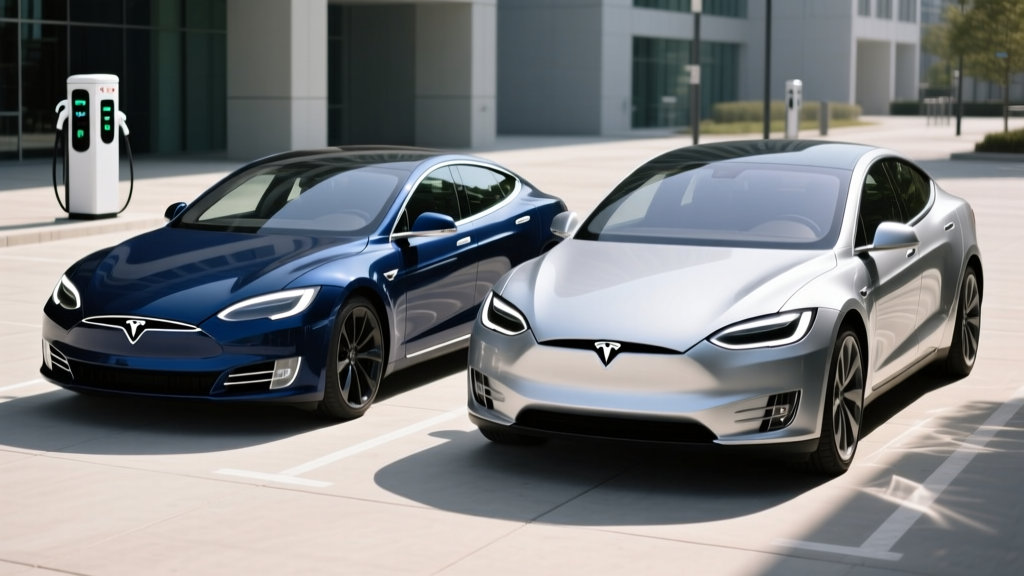
Tesla's flagship sedan and SUV have occupied a unique space in the EV market for over a decade. But as the 2026 model year unfolds, buyers and current owners are asking a different question than they did in 2020: what are the real Tesla Model S and X resale rules and value trajectories now that the broader EV market has matured, price cuts have reshuffled depreciation curves, and competitors from Lucid, BMW, and Rivian have closed the gap?
This guide breaks down the 2026 Tesla Model S and Model X from a resale-value perspective — covering the specs that drive retained value, the market forces depressing it, the tax-credit landscape, and whether buying new, buying used, or selling now makes financial sense.
2026 Tesla Model S & X: Core Specs at a Glance
| Spec | Model S Long Range | Model S Plaid | Model X Long Range | Model X Plaid |
|---|---|---|---|---|
| EPA Range | 402 mi | 359 mi | 335 mi | 311 mi |
| Battery (usable) | ~95 kWh (NMC) | ~95 kWh (NMC) | ~95 kWh (NMC) | ~95 kWh (NMC) |
| Drivetrain | Dual-Motor AWD | Tri-Motor AWD | Dual-Motor AWD | Tri-Motor AWD |
| Horsepower | 670 hp | 1,020 hp | 670 hp | 1,020 hp |
| 0–60 mph | 3.1 sec | 1.99 sec | 3.8 sec | 2.5 sec |
| Max DC Fast Charge | 250 kW | 250 kW | 250 kW | 250 kW |
| 10–80% DCFC Time | ~27 min | ~27 min | ~28 min | ~28 min |
| Level 2 (11.5 kW) | ~44 mi/hr | ~44 mi/hr | ~36 mi/hr | ~36 mi/hr |
| MPGe (combined) | 120 MPGe | 116 MPGe | 109 MPGe | 103 MPGe |
| kWh/100 mi | 28 | 29 | 31 | 33 |
| Base MSRP | $74,990 | $89,990 | $79,990 | $94,990 |
| Battery Warranty | 8 yr / 150,000 mi | 8 yr / 150,000 mi | 8 yr / 150,000 mi | 8 yr / 150,000 mi |
Source: EPA / fueleconomy.gov and Tesla.com (2026 model year). Specs reflect current production; Tesla periodically adjusts range and pricing mid-year.
Real-World Range: What the EPA Sticker Doesn't Tell You
Model S Long Range: EPA 402 mi — expect ~320–350 mi highway at 75 mph, and ~260–290 mi in freezing temperatures (below 32°F) with cabin heating. The heat pump helps, but cold still exacts a 15–25% penalty.
Model X Long Range: EPA 335 mi — expect ~265–290 mi highway and ~215–245 mi in cold weather. The X's larger frontal area and heavier curb weight (~5,185 lb) reduce efficiency vs. the sedan.
Model S Plaid: EPA 359 mi — tri-motor energy draw is higher. Highway real-world: ~280–310 mi. Cold: ~230–260 mi.
Model X Plaid: EPA 311 mi — the lowest-range variant. Highway: ~245–270 mi. Cold: ~200–230 mi.
These figures matter for resale because perceived range drives used-EV demand. A Model S LR that realistically delivers 330 miles on a summer road trip still leads the market, but a Model X Plaid dropping below 250 miles highway in winter may disappoint second owners who didn't research before buying.
Charging Speed & Infrastructure: Still a Resale Advantage
| Charging Level | Power | Model S (mi/hr added) | Model X (mi/hr added) |
|---|---|---|---|
| Level 1 (120V) | ~1.4 kW | ~3–4 mi/hr | ~3 mi/hr |
| Level 2 (240V / 48A) | 11.5 kW | ~44 mi/hr | ~36 mi/hr |
| DC Fast Charge | Peak 250 kW | ~180 mi in 15 min (peak) | ~155 mi in 15 min (peak) |
Charging-curve reality check: Both the Model S and X peak at 250 kW on V3 Superchargers but only sustain that rate briefly (roughly 10–25% SoC). The curve tapers progressively — by 60% SoC you're closer to 100 kW, and above 80% it drops below 50 kW. The 10–80% time of ~27–28 minutes assumes a preconditioned battery and an available V3 or V4 Supercharger stall.
For resale, Tesla's Supercharger network remains a tangible value-add. Even as the network opens to NACS-equipped Fords, Rivians, and GMs, Tesla owners still enjoy the most seamless plug-and-charge experience. That said, the advantage is narrowing — which affects how much premium a used Tesla commands over a used BMW iX or Lucid Air.
Resale Value & Depreciation: The Numbers Behind the Trend
The phrase "Tesla Model S X resale rules" reflects a market where the old assumptions no longer hold. Here's what the data shows for 2026:
- 3-year depreciation (Model S): ~45–52% from original MSRP, depending on trim and mileage. A 2023 Model S LR bought at ~$88,000 (before price cuts) now trades in the $42,000–$48,000 range on the used market.
- 3-year depreciation (Model X): ~48–55%. The X has historically depreciated faster than the S due to higher original prices, more complex hardware (falcon-wing doors, air suspension), and a narrower buyer pool.
- 5-year depreciation: Both models typically retain 30–38% of original MSRP. Plaid trims depreciate faster in percentage terms because their premium (~$15,000 over LR) isn't fully recaptured in the used market.
- Price-cut overhang: Tesla's aggressive new-vehicle price reductions in 2023–2025 crushed resale values for earlier buyers. A 2022 Model S that cost $105,000+ new competes against a 2026 Model S LR at $74,990 — making the used car's value proposition difficult.
Key resale rules for owners and buyers:
- Warranty transferability matters. The 8-year/150,000-mile battery and drive-unit warranty transfers to subsequent owners, which supports used values for vehicles still within coverage.
- High mileage hurts Teslas less than gas cars — but only if the battery State of Health (SoH) is documented. Buyers increasingly request battery health screenshots before purchasing.
- FSD (Supervised) transfer is a wildcard. Tesla has historically restricted FSD transfers to new owners, occasionally offering promotional transfers. A used Model S with "FSD included" commands a ~$2,000–$4,000 premium, but this depends on Tesla's current policy at time of sale.
- Falcon-wing doors (Model X) are a resale risk. Repair costs for the complex hinge and sensor systems are high, and out-of-warranty X models with door issues trade at significant discounts.
Federal Tax Credit & Pricing: What You'll Actually Pay
| Trim | Base MSRP | §30D Credit Eligible? | Effective Price (if eligible) |
|---|---|---|---|
| Model S Long Range | $74,990 | No (MSRP exceeds $55,000 sedan cap) | $74,990 |
| Model S Plaid | $89,990 | No | $89,990 |
| Model X Long Range | $79,990 | No (MSRP exceeds $80,000 SUV cap) | $79,990 |
| Model X Plaid | $94,990 | No | $94,990 |
Under current IRS §30D rules, the federal EV tax credit has an MSRP cap of $55,000 for sedans and $80,000 for SUVs/vans/pickups. Every 2026 Model S and Model X trim exceeds these caps, making them ineligible for the $7,500 federal credit. Additionally, buyer income caps ($150K single / $300K joint AGI) and critical-mineral/battery-sourcing requirements further limit credit availability across the EV market.
This ineligibility is a resale factor: buyers cross-shopping a new Model S against a credit-eligible BMW i5 or Hyundai Ioniq 6 face a $7,500 effective price gap that Tesla must overcome on brand, Supercharger access, and performance alone.
Tech, Interior & Practicality: What Holds Value (and What Doesn't)
What supports resale:
- 17" center touchscreen with full entertainment suite, including gaming (Steam integration)
- Over-the-air updates that add features post-purchase
- Autopilot standard; FSD (Supervised) available as a $8,000 add-on or $99/month subscription — a Level 2 driver-assist system requiring full driver engagement
- Yoke or round steering wheel options; minimalist interior with premium materials
- Model S: 28 cu ft cargo (rear hatch + frunk); Model X: up to 81.5 cu ft with seats folded, plus seating for up to 7
What hurts resale:
- Interior quality, while improved, still trails BMW, Mercedes, and Lucid at this price point
- Panel gaps and build consistency remain a talking point in used-vehicle inspections
- No Apple CarPlay or Android Auto — a dealbreaker for some used buyers
- Model X falcon-wing doors are polarizing: impressive in tight parking spots, expensive to repair
Pros
- Class-leading EPA range (Model S LR at 402 mi)
- Supercharger network access with seamless plug-and-charge
- Tri-motor Plaid performance (1,020 hp, sub-2-sec 0–60)
- OTA updates keep the vehicle current
- 8-yr/150,000-mi battery warranty transfers to used buyers
- Low running costs: ~$0.04–$0.06/mi on home charging
Cons
- No federal tax credit eligibility (MSRP cap)
- Steep depreciation — 45–55% over 3 years
- Interior refinement lags luxury competitors
- No Apple CarPlay / Android Auto
- Model X falcon-wing doors = expensive out-of-warranty repairs
- 250 kW peak DCFC trails 350 kW competitors (Porsche Taycan, Lucid Air)
Who Should Buy the Model S or X in 2026?
Buy the Model S Long Range if: You want maximum range in a sedan, rely on the Supercharger network for frequent road trips, and plan to keep the car 5+ years (absorbing the depreciation hit). It's ideal for high-mileage commuters who charge at home and value low per-mile energy costs.
Buy the Model X if: You need three-row EV seating for a family, want falcon-wing door practicality in tight garages, and accept the efficiency trade-off vs. the sedan. Best for families who prioritize space and Tesla's ecosystem over luxury interior.
Buy used (2022–2024) instead of new if: You want to let the original owner absorb the steepest depreciation. Target CPO or low-mileage examples still within the 8-year battery warranty. Verify battery SoH and confirm FSD transfer eligibility before purchase.
Look elsewhere if: You want a luxury interior (consider Lucid Air, BMW i7), need a federal tax credit (consider Model 3, Model Y, Ioniq 5, or Equinox EV), or want the fastest possible DC charging (Porsche Taycan at 320 kW, Lucid Air at 300+ kW).
Frequently Asked Questions
What is the real-world range of the 2026 Tesla Model S and X?
The Model S Long Range delivers an EPA-estimated 402 miles, but real-world highway driving at 75 mph typically yields 320–350 miles. In freezing weather, expect 260–290 miles. The Model X Long Range (EPA 335 mi) delivers roughly 265–290 miles highway and 215–245 miles in cold conditions. Plaid variants trade range for power, with the Model X Plaid the lowest at ~200–230 miles in winter.
How fast do the Model S and X charge at home and on the road?
On DC fast charging (V3 Supercharger), both peak at 250 kW and charge 10–80% in approximately 27–28 minutes with a preconditioned battery. At home on a Level 2 (240V/48A) Wall Connector, the Model S adds ~44 miles per hour and the Model X adds ~36 miles per hour. An overnight 8-hour charge fully replenishes either vehicle.
Does the Tesla Model S or X qualify for the $7,500 federal EV tax credit?
No. Under current IRS §30D rules, the credit is capped at $55,000 MSRP for sedans and $80,000 for SUVs. All 2026 Model S and Model X trims exceed these caps. State-level incentives may still apply — check your local DMV or energy office for details.
How does Tesla Model S and X resale value compare to competitors?
Both models depreciate 45–55% over three years, which is steeper than the Porsche Taycan (~35–42%) but comparable to the Lucid Air and better than the Mercedes EQS (~55–60%). The Model S retains value better than the X due to lower complexity and broader buyer appeal. Tesla's price-cut history remains a headwind — used values can shift when Tesla adjusts new-car pricing.
Is it better to buy a new or used Model S/X in 2026?
Financially, buying a 2–3 year old Model S or X lets the original owner absorb the steepest depreciation (~50%). Target vehicles within the 8-year/150,000-mile battery warranty window and request a battery health report. Buying new makes sense only if you want the latest hardware, plan to keep the car 7+ years, or value the full warranty from day one.
What are the biggest risks of owning a used Model X?
The falcon-wing door system is the primary concern: hydraulic actuators, proximity sensors, and complex hinges are expensive to repair out of warranty ($2,000–$5,000+ per door incident). Air suspension is another wear item. Verify service history and remaining warranty coverage before purchasing.
Resale data reflects market observations from major used-EV platforms and industry depreciation trackers as of early 2026. Individual vehicle values depend on mileage, condition, region, and Tesla's current pricing policies. Federal tax credit rules are subject to change — always verify eligibility at IRS.gov before purchasing.