The End of an Era: Tesla Model S and X Production Ending
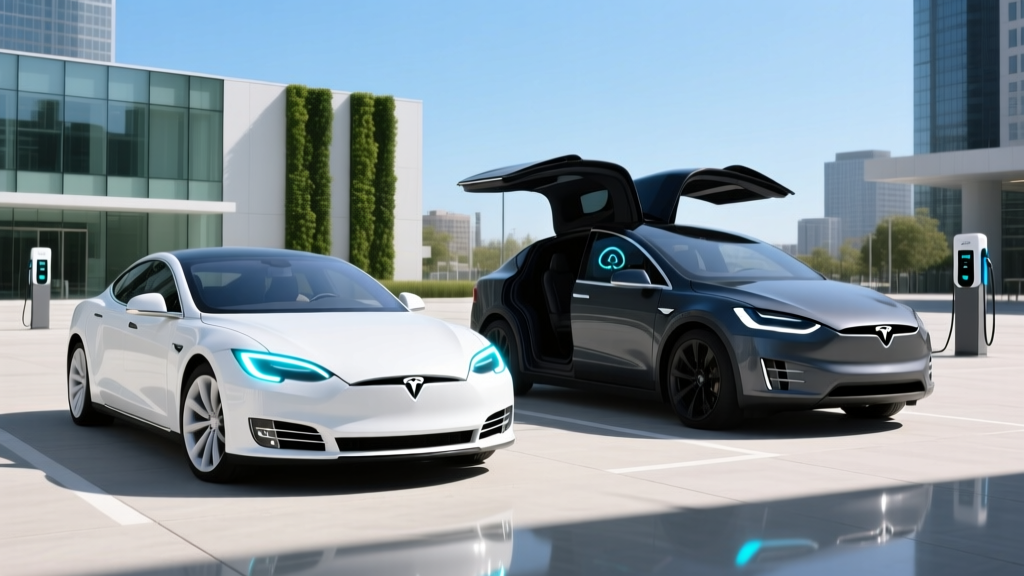
After more than a decade of defining the premium electric sedan and SUV segments, Tesla has confirmed that Model S and X production is ending in Q2 2026 at the Fremont factory. The announcement, made during Tesla's Q4 2025 earnings call, clears production capacity for the next-generation robotaxi platform and Optimus humanoid robot manufacturing. For buyers, this creates a narrow window to purchase one of the longest-range, most proven luxury EVs ever built — but also raises questions about long-term support, resale value, and whether these legacy platforms still compete against newer rivals.
This final review covers the 2026 Model S and Model X as they stand today: their real-world range, charging performance, pricing after federal tax credits, and how they stack up against the Lucid Air, BMW i7, Mercedes EQS, and Rivian R1S in their twilight year.
2026 Tesla Model S & Model X — Key Specifications at a Glance
| Spec | Model S Long Range | Model S Plaid | Model X Long Range | Model X Plaid |
|---|---|---|---|---|
| EPA Range | 402 mi | 359 mi | 335 mi | 311 mi |
| Battery (usable) | ~95 kWh (NMC) | ~95 kWh (NMC) | ~95 kWh (NMC) | ~95 kWh (NMC) |
| Drivetrain | Dual-Motor AWD | Tri-Motor AWD | Dual-Motor AWD | Tri-Motor AWD |
| Horsepower | 670 hp | 1,020 hp | 670 hp | 1,020 hp |
| 0–60 mph | 3.1 sec | 1.99 sec | 3.8 sec | 2.5 sec |
| Peak DC Charge | 250 kW | 250 kW | 250 kW | 250 kW |
| 10–80% DC Time | ~30 min | ~30 min | ~32 min | ~32 min |
| Level 2 Rate | 11.5 kW (~44 mi/hr) | 11.5 kW (~44 mi/hr) | 11.5 kW (~36 mi/hr) | 11.5 kW (~36 mi/hr) |
| MPGe (combined) | 120 MPGe | 116 MPGe | 102 MPGe | 98 MPGe |
| Base MSRP | $74,990 | $89,990 | $79,990 | $94,990 |
| Cargo (rear seats up) | 28 cu ft | 28 cu ft | 85.1 cu ft | 85.1 cu ft |
| Battery Warranty | 8 yr / 150,000 mi | 8 yr / 150,000 mi | 8 yr / 150,000 mi | 8 yr / 150,000 mi |
Range and Efficiency: Still Among the Best, With Caveats
The Model S Long Range retains its crown as one of the longest-range production EVs sold in the U.S., with an EPA-estimated 402 miles on a full charge. The Model X Long Range delivers 335 miles — impressive for a three-row SUV with a drag coefficient of 0.24. Both use Tesla's latest 4680-adjacent NMC (nickel-manganese-cobalt) cells in a structural pack configuration with approximately 95 kWh of usable capacity.
Real-World Range Expectations
EPA Sticker: 402 mi (Model S LR) / 335 mi (Model X LR)
Highway (70–75 mph, 70°F): Expect ~330–350 mi for Model S; ~270–290 mi for Model X. Aerodynamic drag dominates at speed, and these large sedans/SUVs consume more energy than the EPA's mixed cycle suggests.
Cold Weather (20–30°F, cabin heat): Plan for a 20–30% reduction — roughly 280–320 mi for Model S and 235–270 mi for Model X. Tesla's heat pump helps, but NMC chemistry loses more to cold than LFP alternatives.
City/Commuter: You'll meet or slightly exceed EPA figures thanks to aggressive regenerative braking and low-speed efficiency.
Efficiency figures remain competitive: the Model S Long Range achieves 120 MPGe combined (roughly 28 kWh/100 mi), while the heavier Model X drops to 102 MPGe combined (~33 kWh/100 mi). For context, the Lucid Air Grand Touring edges ahead at 131 MPGe, but the Model S still outperforms the Mercedes EQS 580 (97 MPGe) and BMW i7 xDrive60 (82 MPGe).
Charging Speed: The 250 kW Ceiling
Both the Model S and Model X max out at 250 kW on DC fast chargers — specifically Tesla's V3 Superchargers. This was class-leading in 2020, but newer 800-volt architectures from Hyundai/Kia (E-GMP), Porsche (Taycan), and Lucid have pushed past 300 kW. Tesla's next-generation vehicles will likely adopt higher charge rates, but these legacy platforms will retire without that upgrade.
Charging Speeds Across Levels
| Level | Power | Model S (mi/hr) | Model X (mi/hr) | Notes |
|---|---|---|---|---|
| Level 1 (120V) | ~1.4 kW | ~5 mi/hr | ~4 mi/hr | Emergency only; 80+ hr for full charge |
| Level 2 (240V, 48A) | 11.5 kW | ~44 mi/hr | ~36 mi/hr | Full charge overnight (~9–10 hours) |
| DC Fast (V3 Supercharger) | 250 kW peak | ~200 mi in 15 min | ~175 mi in 15 min | 10–80% in ~30 min; tapers above 80% |
| DC Fast (CCS adapter, non-Tesla) | Up to 250 kW | Varies by station | Varies by station | Requires Tesla CCS adapter (included with new vehicles since 2024) |
Charge curve reality: The Model S/X hits peak 250 kW only between approximately 10–30% State of Charge (SoC). From 30–60%, rates drop to ~170 kW. From 60–80%, expect ~100–120 kW. Above 80%, charging slows dramatically to protect the NMC cells — often below 50 kW. This is why Tesla recommends daily charging to 80% and only charging to 100% when you need full range for a trip.
At home on a Level 2 Wall Connector (11.5 kW), the Model S adds roughly 44 miles of range per hour of charging, meaning a full overnight session (10 hours) replenishes the entire battery. Model X owners should expect ~36 miles per hour due to lower efficiency.
Performance: Plaid Still Defines Absurdity
The Model S Plaid's 1.99-second 0–60 mph time remains one of the quickest production-car sprints ever recorded, courtesy of three independent motors producing 1,020 horsepower. The Long Range dual-motor variant is hardly slow at 3.1 seconds and 670 hp. Both versions feature Tesla's adaptive air suspension, which adjusts ride height based on speed and GPS-remembered locations (like your driveway).
The Model X Plaid delivers 1,020 hp and a 2.5-second 0–60 time — staggering for a 5,185-lb three-row SUV. The Long Range model hits 60 mph in 3.8 seconds. Towing capacity for the Model X is rated at 5,000 lbs, adequate for a small boat or utility trailer, though range drops significantly when towing (expect 50–60% of normal range at highway speeds with a loaded trailer).
Pricing, Tax Credits, and the End-of-Production Discount Question
The 2026 Model S Long Range starts at $74,990, with the Plaid at $89,990. The Model X Long Range begins at $79,990, and the Plaid at $94,990. Adding Full Self-Driving (Supervised) costs $8,000; premium interior colors and 21-inch wheels add $2,000–$4,500.
Federal Tax Credit Eligibility (§30D)
| Requirement | Model S | Model X | Status |
|---|---|---|---|
| MSRP Cap (sedans: $55,000; SUVs: $80,000) | $74,990 — EXCEEDS sedan cap | $79,990 — Under SUV cap (LR only) | Model S: ❌ Ineligible Model X LR: ✅ Eligible (if other criteria met) |
| Buyer Income Cap (AGI) | $150K single / $225K HoH / $300K joint | Varies by buyer | |
| Battery Sourcing (critical minerals + components) | Must meet 2026 thresholds per IRS §30D rules | Verify at point of sale | |
| Assembly | Fremont, CA (North America) | ✅ Qualifies | |
Critical nuance: The Model S, classified as a sedan, exceeds the $55,000 MSRP cap and does not qualify for the $7,500 federal tax credit regardless of buyer income. The Model X, classified as an SUV, qualifies at the Long Range trim ($79,990, under the $80,000 SUV cap) — but only if the buyer meets income limits and the battery sourcing requirements are satisfied at the time of purchase. Tesla dealers can verify sourcing compliance at point of sale, and the credit can be transferred to the dealer for an immediate price reduction. Always confirm with your tax professional before relying on credit eligibility.
End-of-production pricing: Historically, automakers offer incentives to clear remaining inventory as a model sunsets. Expect Tesla to offer reduced pricing or promotional financing on Model S/X in early-to-mid 2026 as Fremont transitions production lines. However, Tesla rarely offers traditional dealer discounts — watch for temporary price cuts on the configurator rather than negotiated deals.
Interior, Cargo, and Daily Livability
The Model S interior is defined by its 17-inch center touchscreen (tilting, with 22-speaker audio), a yoke-style steering wheel (conventional round wheel available at no cost), and a secondary 8-inch rear passenger display. Build quality on 2024–2026 models has improved substantially over earlier years, with tighter panel gaps and higher-grade materials, though it still doesn't match the Mercedes EQS or Lucid Air for luxury material quality.
Passenger space:
- Front legroom: 42.7 in (Model S) / 41.2 in (Model X)
- Rear legroom: 35.4 in (Model S) / 37.1 in (Model X)
- Model X offers optional third-row seating (seats two children; 30.0 in legroom)
Cargo capacity:
- Model S: 28 cu ft rear trunk + 3.1 cu ft frunk = 31.1 cu ft total (with rear seats up; ~65 cu ft folded)
- Model X: 85.1 cu ft behind front seats (two-row config) + 3.1 cu ft frunk; ~37 cu ft behind second row in three-row config
The Model X's falcon-wing rear doors remain a polarizing feature: they open upward in tight parking spaces (requiring only ~12 inches of side clearance) but add mechanical complexity. Owners report fewer issues on 2023+ models, but they remain a potential maintenance liability as these vehicles age.
Tech, Driver Assistance, and What's Missing
Every Model S and X ships with Basic Autopilot (adaptive cruise control + lane centering), which operates at SAE Level 2 — meaning the driver must remain fully engaged and hands must stay on the wheel. The optional Full Self-Driving (Supervised) package ($8,000) adds automated lane changes, traffic light/stop sign recognition, and Navigate on Autopilot for highway interchanges, but remains SAE Level 2. Tesla's FSD is not autonomous driving — it is an advanced driver-assist system that requires constant supervision.
⚠️ SAE Level 2 — Not Self-Driving
Both Autopilot and FSD (Supervised) are SAE Level 2 driver-assistance systems. The driver is legally and practically responsible for all vehicle operation at all times. Hands-on-wheel monitoring is enforced. True Level 4 autonomous driving (no driver needed) is currently available only in geofixed robotaxi services like Waymo, not in consumer vehicles.
Infotainment: Tesla's interface remains the industry benchmark for responsiveness and over-the-air update frequency. Netflix, YouTube, and gaming (including Cyberpunk 2077) run on the center screen while parked. However, Apple CarPlay and Android Auto remain absent — a dealbreaker for some luxury buyers accustomed to phone-mirroring in the BMW i7 and Mercedes EQS.
Notable drawbacks:
- No Apple CarPlay / Android Auto
- Yoke steering controversial for low-speed maneuvering (round wheel available)
- Model X falcon-wing doors add weight and potential long-term maintenance cost
- 250 kW peak charging now trails 800V competitors (Lucid Air: 300+ kW; Porsche Taycan: 320 kW)
- Rear visibility in Model S is compromised by the sloping roofline; no rear wiper on Model S
✅ Pros
- Class-leading 402-mi EPA range (Model S LR)
- Access to Tesla Supercharger network (17,000+ stalls in North America)
- Best-in-class OTA update cadence and software experience
- Model X offers three-row seating with EV-only efficiency
- Plaid performance remains unmatched at its price point
- 8 yr / 150,000 mi battery warranty (70% retention threshold)
❌ Cons
- Model S does not qualify for $7,500 federal tax credit (exceeds MSRP cap)
- 250 kW charging peak now trails 800V competitors
- No Apple CarPlay / Android Auto
- Production ending — uncertain long-term parts and service priority
- Model X falcon-wing doors are a reliability wildcard
- Interior luxury still falls short of Mercedes/BMW/Lucid at this price
Competitor Comparison: Should You Buy Model S/X or Look Elsewhere?
With Model S and X production ending, buyers should weigh whether to lock in a legacy platform with proven reliability and Supercharger access, or pivot to a competitor with a longer product lifecycle ahead.
| Category | Model S LR | Lucid Air Grand Touring | BMW i7 xDrive60 | Mercedes EQS 580 |
|---|---|---|---|---|
| Base MSRP | $74,990 | $125,600 | $119,300 | $128,350 |
| EPA Range | 402 mi | 516 mi | 318 mi | 371 mi |
| Peak DC Charge | 250 kW | 300+ kW | 195 kW | 200 kW |
| 0–60 mph | 3.1 sec | 3.0 sec | 4.5 sec | 4.1 sec |
| Tax Credit | ❌ (MSRP cap) | ❌ (MSRP cap) | ❌ (MSRP cap) | ❌ (MSRP cap) |
| CarPlay/AA | ❌ | ❌ | ✅ | ✅ |
Choose the Model S if: You prioritize range-per-dollar (402 mi at $74,990 is unmatched), rely on the Supercharger network for road trips, and want proven hardware with years of OTA refinement. The Model S remains the best value in 400+ mile EVs.
Choose the Model X if: You need three-row electric SUV seating with reasonable range (335 mi) and don't want to wait for the next-generation Tesla SUV or pay Rivian R1S pricing ($82,700+). The Model X occupies a niche that few competitors address directly.
Look elsewhere if: You want the latest 800V charging architecture, traditional luxury materials, CarPlay integration, or a vehicle with a full decade of production support ahead. The Lucid Air, BMW i7, and Mercedes EQS all offer longer product runways, though at significantly higher prices.
Ownership Considerations: What Happens After Production Ends?
Tesla has committed to supporting Model S and X with parts and service for a minimum of 10 years after the last vehicle rolls off the line, per standard automotive industry practice. However, Tesla's parts supply chain has historically been tighter than legacy automakers, and discontinued models may see longer wait times for body panels, suspension components, and falcon-wing door mechanisms (Model X) as the years progress.
Battery replacement: Out-of-warranty battery pack replacement currently costs approximately $12,000–$18,000 depending on configuration. NMC degradation on Tesla's 4680-adjacent cells averages roughly 10–12% over the first 100,000 miles based on fleet data, with the 8-year/150,000-mile warranty guaranteeing 70% capacity retention.
Resale value: Discontinued models face depreciation uncertainty. The Model S has already experienced steeper depreciation than the Model 3/Y; production ending may accelerate this in the short term (oversupply of final-year inventory) before stabilizing as the used fleet ages. Buyers who plan to own for 8+ years should be less concerned; those planning a 3-year ownership cycle should factor in potentially 50–60% depreciation.
What is the real-world range of the 2026 Model S?
The EPA rates the Model S Long Range at 402 miles. In real-world highway driving at 70–75 mph in moderate temperatures, expect 330–350 miles. In cold weather (below 30°F), plan for 280–320 miles. The Plaid variant drops to 359 EPA miles, with real-world highway figures around 290–310 miles.
How fast does the Model S charge on DC fast chargers and at home?
On a Tesla V3 Supercharger (250 kW peak), the Model S charges from 10–80% in approximately 30 minutes, adding up to 200 miles of range in 15 minutes under ideal conditions. At home on a Level 2 Wall Connector (11.5 kW / 48 amps), the Model S adds about 44 miles of range per hour, fully recharging overnight in roughly 9–10 hours.
Does the Model S or Model X qualify for the $7,500 federal EV tax credit?
The Model S does not qualify — its $74,990 base price exceeds the $55,000 MSRP cap for sedans under IRS §30D. The Model X Long Range ($79,990) falls under the $80,000 SUV cap and may qualify, provided the buyer's adjusted gross income is within limits ($150K single / $300K joint) and battery sourcing requirements are met. Always verify eligibility at point of sale and consult a tax professional.
Is it worth buying a Model S or X knowing production is ending?
If the specs and price fit your needs, yes — Tesla has committed to 10+ years of parts and service support, and the Supercharger network access remains a significant advantage. However, if you prioritize long-term resale value, the latest charging technology, or a vehicle with ongoing development, competitors like the Lucid Air or BMW i7 may be better choices despite higher pricing.
What happens to Supercharger access after Model S/X production ends?
Supercharger access is tied to the vehicle, not to production status. All Model S and X vehicles will retain full Supercharger access indefinitely. Tesla has also opened the network to non-Tesla EVs via NACS, so the network itself will continue to expand regardless of Model S/X production.
Should I wait for end-of-production discounts?
Tesla rarely offers traditional dealer negotiations, but the company has historically reduced MSRPs temporarily to clear inventory during production transitions. If you're flexible on color and configuration, monitoring Tesla's configurator for price adjustments in Q1–Q2 2026 could yield savings of $2,000–$5,000. However, selection will be limited as production winds down.