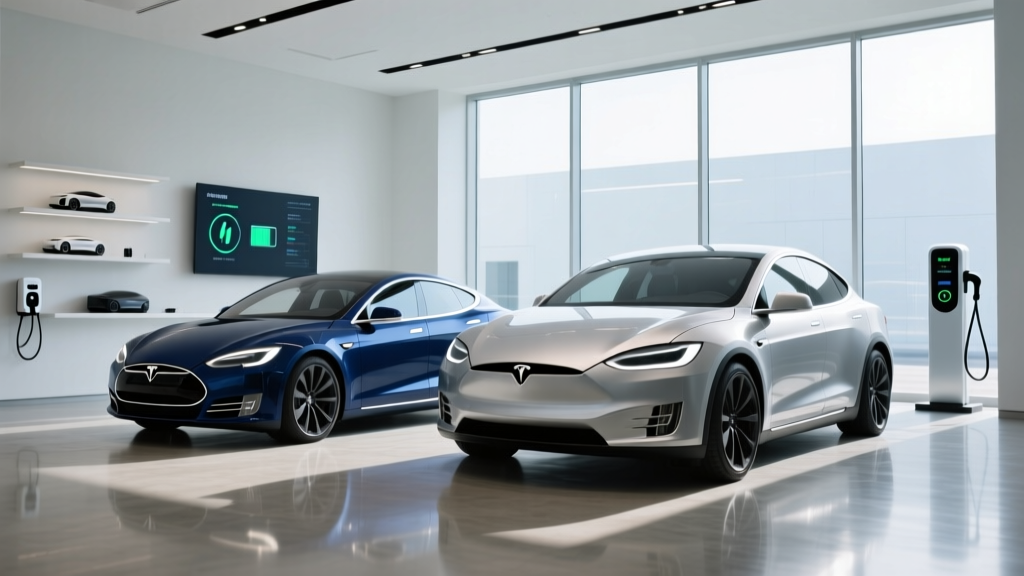
For over a decade, the Tesla Model S and Model X defined what a premium electric vehicle could be. The Model S proved that long-range, high-performance EVs were viable; the Model X brought falcon-wing doors and three-row seating to the electric luxury segment. But in early 2026, Tesla confirmed Model S and X production has officially ended, closing the chapter on the brand's original flagship lineup.
Whether you're a prospective buyer eyeing remaining dealer or direct inventory, a current owner wondering about parts and support, or an EV shopper recalibrating your shortlist, this guide covers everything you need to know about the end of Model S and X production — and what to drive instead.
Why Tesla Ended Model S and X Production
The decision didn't come out of nowhere. By late 2025, the Model S and X accounted for a small fraction of Tesla's total deliveries — the vast majority of volume came from the Model 3, Model Y, and the newer, more affordable platforms built on Tesla's next-generation architecture. Several factors converged:
- Aging platform: The Model S architecture dates to 2012, with a major refresh in 2021 (Plaid powertrain, horizontal touchscreen, yoke steering). The Model X shares the same underpinnings. Neither received a ground-up redesign comparable to what competitors like the Lucid Air, BMW i7, and Mercedes EQS offer.
- Manufacturing consolidation: Tesla's Fremont factory capacity is being reallocated to higher-volume models and new product lines. Maintaining a low-volume production line for two aging platforms became difficult to justify.
- Regulatory and safety standards: Updating the S/X platform to meet evolving 2026 crash-test and ADAS requirements would have required significant re-engineering investment for diminishing returns.
- Market shift: Luxury EV buyers increasingly gravitate toward newer platforms with 800V architectures, faster charging, and more refined interiors — areas where the refreshed S/X fell behind rivals.
Tesla has stated it will continue to service and support existing Model S and X vehicles, including software updates and warranty fulfillment, for the foreseeable future.
Final Production Specs: What the Last Model S and X Offer
For buyers still considering remaining new inventory (direct from Tesla or certified channels), here are the specifications of the final 2025/early-2026 production run.
| Spec | Model S Long Range | Model S Plaid | Model X Long Range | Model X Plaid |
|---|---|---|---|---|
| EPA Range | 402 mi | 359 mi | 335 mi | 311 mi |
| Battery (usable) | ~100 kWh, NMC | ~100 kWh, NMC | ~100 kWh, NMC | ~100 kWh, NMC |
| Drivetrain | Dual-Motor AWD | Tri-Motor AWD | Dual-Motor AWD | Tri-Motor AWD |
| Horsepower | 670 hp | 1,020 hp | 670 hp | 1,020 hp |
| 0–60 mph | 3.1 sec | 1.99 sec | 3.8 sec | 2.5 sec |
| Peak DC Fast Charge | 250 kW | 250 kW | 250 kW | 250 kW |
| 10–80% DCFC Time | ~27 min | ~27 min | ~31 min | ~31 min |
| Level 2 Charge Rate | 11.5 kW (44 mi/hr) | 11.5 kW (44 mi/hr) | 11.5 kW (36 mi/hr) | 11.5 kW (36 mi/hr) |
| MPGe (combined) | 120 MPGe | 116 MPGe | 102 MPGe | 98 MPGe |
| Efficiency | 28 kWh/100 mi | 29 kWh/100 mi | 33 kWh/100 mi | 34 kWh/100 mi |
| Cargo (rear seats up) | 28 cu ft | 28 cu ft | 37.1 cu ft | 37.1 cu ft |
| Cargo (rear seats folded) | 79 cu ft | 79 cu ft | 85.7 cu ft | 85.7 cu ft |
| Seating | 5 passengers | 5 passengers | 5, 6, or 7 passengers | 5, 6, or 7 passengers |
| Base MSRP (final) | $74,990 | $89,990 | $79,990 | $94,990 |
| Battery Warranty | 8 yr / 150,000 mi | 8 yr / 150,000 mi | 8 yr / 150,000 mi | 8 yr / 150,000 mi |
Source: fueleconomy.gov and Tesla's final published specifications.
The Model S Long Range carries an EPA estimate of 402 miles — still among the highest of any production EV ever sold. But real-world results depend heavily on conditions:
- Highway driving (70–80 mph): Expect ~310–340 miles. Aerodynamic drag hits all EVs hard at sustained speed.
- Cold weather (below 32°F): Range drops 20–30%, putting realistic winter range around 280–320 miles for the Long Range and 220–250 for the Plaid. The S/X heat pump helps but cannot fully offset chemistry losses.
- City/commute driving: You'll approach or occasionally exceed the EPA number thanks to regenerative braking in stop-and-go traffic.
The Model X, heavier and less aerodynamic, sees more pronounced real-world shortfalls — plan for ~260–280 highway miles in the Long Range, and ~230–250 in the Plaid.
Charging: Still Capable, but No Longer Class-Leading
The Model S and X charge on Tesla's proprietary NACS connector (now the North American standard adopted by most automakers for 2025+ models). They access the full Supercharger network natively — a significant practical advantage.
| Charging Level | Power | Miles Added per Hour | Notes |
|---|---|---|---|
| Level 1 (120V) | ~1.4 kW | ~3–4 mi/hr | Emergency/trickle only |
| Level 2 (240V home) | 11.5 kW | 36–44 mi/hr | Full charge in ~9–10 hours |
| DC Fast (Supercharger V3) | Peak 250 kW | ~1,000 mi/hr at peak | 10–80% in ~27–31 min |
| DC Fast (above 80%) | Tapers to ~40 kW | — | 80–100% adds ~25+ min; avoid unless needed |
Charging curve reality: The Model S/X peak at 250 kW but cannot sustain it. The charge curve begins tapering around 50% SoC and drops sharply past 80%. A 10–80% session takes roughly 27 minutes (Model S) or 31 minutes (Model X) at a V3 Supercharger. This is competitive but trails 800V-architecture rivals like the Hyundai Ioniq 5 (350 kW peak, 10–80% in ~18 minutes) and the Lucid Air (300+ kW sustained).
Preconditioning matters: Always navigate to a Supercharger using the car's built-in navigation — this triggers battery preconditioning, warming the pack for faster charging. Arriving without preconditioning in cold weather can add 10–15 minutes to your session.
Does the Model S or X Qualify for the Federal EV Tax Credit?
This is where the news gets complicated for remaining new inventory buyers. Under IRS §30D rules, the federal clean vehicle credit has several eligibility gates:
- MSRP cap: Sedans must be under $55,000; SUVs/vans/pickups under $80,000. The Model S (sedan) at $74,990+ far exceeds the $55,000 cap — it does not qualify. The Model X, classified as an SUV, starts at $79,990, which falls under the $80,000 cap — but only in the base Long Range trim with no options that push MSRP above $80,000.
- Buyer income cap: Modified adjusted gross income (MAGI) must not exceed $150,000 (single), $225,000 (head of household), or $300,000 (married filing jointly).
- Battery sourcing requirements: A percentage of critical minerals and battery components must be sourced from the U.S. or free-trade-agreement countries. Tesla's supply chain has evolved significantly, but eligibility varies by production batch — verify the specific VIN's eligibility at fueleconomy.gov.
- Point-of-sale transfer: If eligible, the up-to-$7,500 credit can be transferred to the dealer at purchase, reducing your out-of-pocket cost immediately.
The Model S is categorically ineligible for the §30D credit due to its sedan MSRP exceeding $55,000. The Model X Long Range may qualify for up to $7,500 if your income is within limits, the specific VIN passes battery-sourcing requirements, and MSRP stays at or below $80,000 (no options packages that push it over). The Plaid trim at $94,990 is ineligible regardless. Always confirm eligibility with your tax professional and the IRS VIN-lookup tool before purchasing.
Tech, Interior, and Driver Assistance
The 2021-refreshed Model S and X brought a modernized interior with a 17-inch horizontal touchscreen, a rear-seat entertainment display, ventilated front seats, and a yoke-style steering wheel (a conventional round wheel became available again by request in 2023).
Infotainment: Tesla's proprietary OS remains one of the most responsive in the industry, with built-in navigation, streaming (Netflix, YouTube, Spotify), and over-the-air updates. However, there is no Apple CarPlay or Android Auto — a dealbreaker for some luxury buyers accustomed to phone projection.
Driver assistance: All Model S and X vehicles come with Tesla's Basic Autopilot (adaptive cruise control, lane-keeping). Full Self-Driving (Supervised) is available as a $8,000 add-on or $99/month subscription.
Despite the "Full Self-Driving" name, Tesla's FSD (Supervised) is an SAE Level 2 driver-assistance system. The driver must remain fully engaged — eyes on the road, hands ready to take over — at all times. It is not autonomous driving. Level 4 driverless operation (no human required) is currently only available in geofenced commercial robotaxi services like Waymo. Do not treat FSD as a substitute for an attentive driver.
Notable drawbacks:
- No Apple CarPlay / Android Auto
- Yoke steering remains polarizing and can be cumbersome for low-speed maneuvers
- Panel gaps and interior material quality, while improved, still lag German luxury competitors at this price point
- Model X falcon-wing doors are prone to sensor-related issues and can be slow to operate in tight spaces
- Rear visibility in the Model S is limited; the Model X relies heavily on cameras
Should You Buy Remaining Inventory or Look Elsewhere?
With production ended, new Model S and X units are finite. Tesla may offer remaining stock at adjusted pricing, but the fundamental question remains: is a discontinued platform the right buy?
Pros
- Class-leading EPA range (402 mi, Model S LR)
- Tri-motor Plaid performance is extraordinary (1,020 hp, sub-2-sec 0–60)
- Native Supercharger access with 20,000+ stations in North America
- Spacious Model X with available 7-seat configuration
- Strong OTA update history; Tesla supports older vehicles for years
- Frunk + large rear cargo area; Model S offers 79 cu ft total
Cons
- Production ended — long-term parts availability is a question mark
- 250 kW peak charging trails 800V rivals (Ioniq 5, Taycan, Lucid Air)
- No Apple CarPlay or Android Auto
- Model S ineligible for federal tax credit; Model X eligibility is narrow
- Interior quality doesn't match BMW, Mercedes, or Lucid at this price
- Depreciation risk increases as platform ages without successor
- FSD remains Level 2 despite its name and price
Best Alternatives to the Model S and X in 2026
If the end of Model S/X production has you reconsidering, these are the strongest competitors in the premium electric sedan and SUV segments:
| Vehicle | Segment | EPA Range | Peak DCFC | 0–60 mph | Starting MSRP |
|---|---|---|---|---|---|
| Lucid Air Pure | Luxury Sedan | 419 mi | 200+ kW | 3.8 sec | $69,900 |
| Lucid Air Grand Touring | Luxury Sedan | 516 mi | 300+ kW | 3.0 sec | $125,600 |
| BMW i7 xDrive60 | Luxury Sedan | 318 mi | 195 kW | 4.5 sec | $105,700 |
| Mercedes EQS 450+ | Luxury Sedan | 390 mi | 200 kW | 5.9 sec | $104,400 |
| Tesla Model Y (AWD LR) | SUV/Crossover | 320 mi | 250 kW | 4.8 sec | $47,990 |
| BMW iX xDrive50 | Luxury SUV | 324 mi | 195 kW | 4.4 sec | $87,100 |
| Kia EV9 GT-Line AWD | 3-Row SUV | 270 mi | 236 kW | 4.9 sec | $63,900 |
| Hyundai Ioniq 9 (est.) | 3-Row SUV | ~300 mi | 350 kW | ~5.0 sec | ~$55,000 |
Decision Framework
Choose the Lucid Air if: You want the longest range of any production EV (516 mi Grand Touring), a more luxurious interior, and 800V-class charging — and don't need the Supercharger network.
Choose the BMW i7 or Mercedes EQS if: Interior refinement, ride comfort, and dealer service infrastructure matter more than maximum range or performance.
Choose the Model Y Long Range if: You want to stay in the Tesla ecosystem with Supercharger access, OTA updates, and similar tech — in a more affordable, still-in-production package.
Choose the Kia EV9 if: You need three rows of seating (the Model X's primary advantage) at a significantly lower price point, with strong DC fast charging.
What End of Production Means for Current Owners
If you already own a Model S or X, the production end raises legitimate questions about long-term support. Here's what we know:
- Warranty coverage remains intact: Tesla is obligated to honor all existing warranties — 8 years/150,000 miles on the battery and drive units, 4 years/50,000 miles on the basic vehicle. This doesn't change because production stopped.
- Software updates will continue: Tesla has a strong track record of supporting older vehicles. The 2012 Model S received OTA updates well into 2024. Expect continued security patches and feature updates, though major new features will likely prioritize newer platforms.
- Parts availability: Tesla maintains a parts supply chain for discontinued models, but lead times for body panels, drive units, and model-specific components may increase over the next 3–5 years. Third-party suppliers and the enthusiast community will partially fill gaps.
- Resale value: Discontinuation typically accelerates depreciation in the short term. However, low-production Plaid variants and well-maintained examples may hold value among collectors. Expect a 10–15% depreciation bump in the first year post-announcement, stabilizing afterward.
- Service centers: Tesla's service network will continue to support S/X. Mobile service for common issues (12V battery, cabin filters, brake fluid) remains available.
Frequently Asked Questions
What is the real-world range of the Tesla Model S and X?
The Model S Long Range carries a 402-mile EPA estimate. In real-world highway driving at 70–80 mph, expect 310–340 miles. In cold weather (below freezing), plan for 280–320 miles. The Model X Long Range (335 EPA) delivers roughly 260–280 highway miles and 220–250 in winter. Plaid variants lose 10–15% more due to higher energy consumption.
How fast does the Model S/X charge at home and on the road?
At home on a Level 2 (240V) charger at 11.5 kW, the Model S gains about 44 miles of range per hour — a full charge takes roughly 9 hours. On DC fast charging (Supercharger V3), both models peak at 250 kW with a 10–80% session taking 27–31 minutes. Charging above 80% slows dramatically due to the charge curve taper.
How much does a remaining Model S or X cost after tax credits?
The Model S starts at $74,990 and is ineligible for the §30D federal credit (sedan MSRP cap is $55,000). The Model X Long Range at $79,990 may qualify for up to $7,500, bringing it to ~$72,490 — but only if buyer income is under $300,000 (joint), the VIN passes battery-sourcing rules, and options don't push MSRP above $80,000. The Plaid trims are ineligible. Check fueleconomy.gov for VIN-specific eligibility.
Is the Model S or X still worth buying vs. competitors?
It depends on priorities. The Model S Long Range's 402-mile range and Supercharger access remain compelling for road-trippers. The Plaid's performance is unmatched at its price. But the Lucid Air offers more range and a better interior, the BMW i7 delivers superior luxury, and the Kia EV9 provides three-row practicality at half the Model X price. If Supercharger access and Tesla's software ecosystem are non-negotiable, a remaining S/X may still be the right call — just know you're buying a discontinued platform.
Does the Tesla Model X qualify for the $7,500 federal EV tax credit?
Possibly, but narrowly. The Model X is classified as an SUV, so the MSRP cap is $80,000. The base Long Range at $79,990 squeaks under — but adding any options (paint color, wheels, FSD) pushes it over. Buyer income limits ($300,000 joint / $150,000 single) and battery critical-mineral sourcing requirements also apply. Verify your exact build's eligibility before committing. The Model S does not qualify under any configuration.
Will Tesla still provide service and parts for the Model S and X?
Yes. Tesla has committed to continuing warranty service, software updates, and parts supply for existing vehicles. The 8-year/150,000-mile battery warranty remains fully in force. However, parts lead times may increase over time as the supply chain winds down, and third-party options will become more important for cosmetic and non-critical repairs.
Always verify current tax credit eligibility at irs.gov and range/efficiency figures at fueleconomy.gov. Specifications and incentive rules are subject to change.