What the Rolls-Royce Electric SUV Spy Photos Tell Us
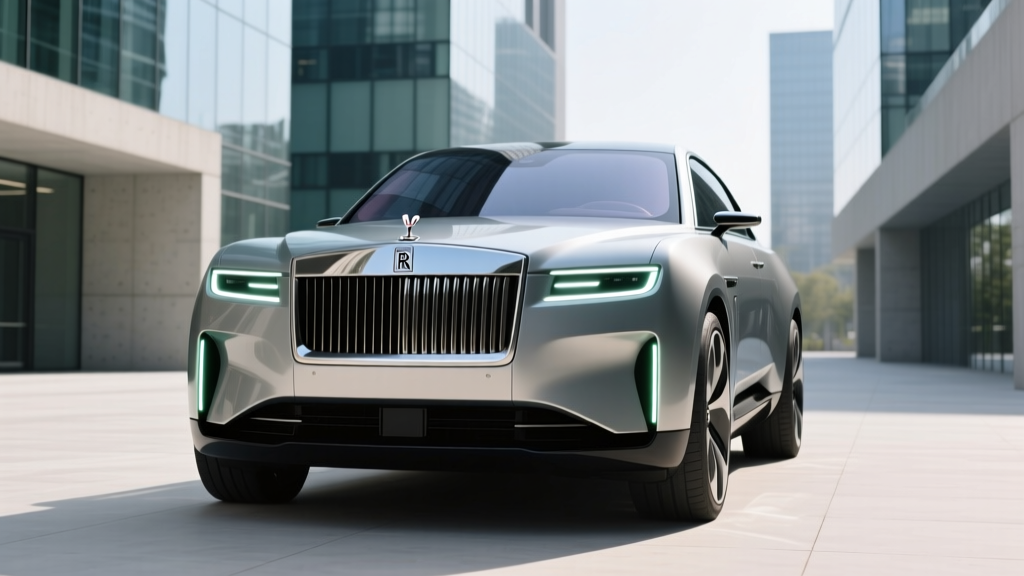
Quick Answer: Recent Rolls-Royce electric SUV prototype spy photos reveal a unique front design that departs from the brand's traditional Pantheon grille, replacing it with a smoother, more aerodynamic fascia with narrow LED lighting signatures. This unreleased, all-electric SUV is expected to sit on BMW's Neue Klasse-derived architecture, likely featuring a 100+ kWh battery pack, targeted EPA range of 300–350 miles, and a starting MSRP above $400,000. As of early 2026, Rolls-Royce has not confirmed final specifications, pricing, or an on-sale date — all figures below are preliminary estimates based on platform data and industry analysis.
The spy shots circulating in early 2026 show a heavily camouflaged prototype testing in northern Scandinavia. What's visible beneath the wrap is a tall, upright SUV silhouette — think Cullinan proportions — but with a noticeably sealed-off front end. The absence of a large grille opening confirms a fully electric powertrain with reduced cooling demands compared to the twin-turbo V12 in the current Cullinan. The lighting elements appear split-level, with thin daytime running lamps up top and main beam units positioned lower, a layout increasingly common among luxury EVs prioritizing pedestrian-safety compliance and aerodynamic efficiency.
For prospective buyers and EV enthusiasts tracking ultra-luxury electrification, the bigger questions go well beyond styling. What battery chemistry will Rolls-Royce use? How fast will it charge? What does ownership actually cost at this price tier? Let's break down everything we can reasonably project from available platform data and the broader BMW Group EV strategy.
Projected Specs: Battery, Range, and Charging
Rolls-Royce's parent company, BMW Group, is rolling out its Neue Klasse platform across brands. The electric SUV is expected to share core architecture with the upcoming electric 7 Series and iX next-generation models, adapted for the weight and luxury isolation requirements of a Rolls-Royce product.
| Specification | Estimated Figure | Notes |
|---|---|---|
| Battery Capacity (usable) | ~105–120 kWh | Likely NMC chemistry for energy density |
| EPA Range (est.) | 300–350 miles | Heavy curb weight (~6,500+ lbs) will reduce efficiency |
| Real-World Highway Range | ~250–290 miles | Expect 15–20% loss at sustained 75+ mph speeds |
| Cold-Weather Range | ~220–260 miles | Based on typical 25–30% loss at 20°F without preconditioning |
| Peak DC Fast Charge Rate | ~250–300 kW | Neue Klasse platform supports 800V architecture |
| 10–80% DC Charge Time | ~22–28 minutes | Heavy battery mass may slow sustained charge curve |
| Level 2 AC Charge Rate | ~11–22 kW | Full charge in 6–11 hours depending on onboard charger |
| Powertrain | Dual-motor AWD | Estimated 580–700 hp |
| 0–60 mph | ~4.0–4.8 seconds | Rolls-Royce prioritizes smoothness over acceleration |
| Estimated Starting MSRP | $400,000–$500,000+ | Above current Cullinan pricing; Bespoke options unlimited |
| Battery Warranty | 8 years / 100,000 miles (est.) | BMW Group standard; may be extended for Rolls-Royce |
Real-World Range Reality: The EPA sticker may say 330 miles, but a 6,500-pound luxury SUV with the aerodynamic profile of a Cullinan will consume energy rapidly at highway speeds. Plan for 250–290 real-world highway miles in moderate temperatures, and 220–260 miles in sub-freezing conditions. Rolls-Royce's standard air suspension and extensive sound deadening add mass that directly reduces efficiency — expect roughly 2.0–2.4 kWh/mile (50–42 MPGe), far below sleeker EVs like the Lucid Air (4.0+ mi/kWh).
The battery chemistry choice matters here. NMC (nickel manganese cobalt) cells offer the energy density needed to push a heavy SUV past 300 miles, but they degrade faster than LFP (lithium iron phosphate) cells if routinely charged to 100%. At this price point, Rolls-Royce will likely implement a generous top and bottom buffer — perhaps 8–10 kWh of unusable capacity — to protect long-term battery health. This is a common practice; the U.S. Department of Energy notes that most EV manufacturers reserve 5–15% of gross battery capacity as a degradation buffer.
Cost Breakdown: What Ownership Actually Looks Like
At a projected $400,000+ starting price, the Rolls-Royce electric SUV occupies a segment where total cost of ownership (TCO) calculations look fundamentally different than a mainstream EV. Buyers in this tier aren't cross-shopping a Tesla Model Y. But the numbers still matter — especially when comparing against the gasoline Cullinan.
| Cost Category | Electric SUV (Est.) | Cullinan V12 (Gas) | Notes |
|---|---|---|---|
| Purchase Price | $450,000 | $390,000 | EV premium reflects battery cost and new platform |
| Fuel / Energy (5 yrs, 60k mi) | $6,000–$9,000 | $22,000–$28,000 | Based on $0.15/kWh home vs. $4.50/gal premium; Cullinan ~14 MPG combined |
| Maintenance (5 yrs) | $8,000–$12,000 | $18,000–$25,000 | No oil changes, fewer moving parts; tires still expensive |
| Insurance (5 yrs) | $45,000–$60,000 | $40,000–$55,000 | EV insurance premiums typically 10–20% higher |
| Depreciation (5 yrs) | $180,000–$225,000 | $150,000–$195,000 | Luxury EVs face steeper depreciation uncertainty |
| Federal Tax Credit | $0 | $0 | Exceeds §30D MSRP cap ($80,000 for SUVs); IRS rules exclude this vehicle |
| Estimated 5-Year Total | $689,000–$756,000 | $620,000–$698,000 |
A few critical points emerge from this comparison:
- Energy savings are real but proportionally small. Charging at home saves roughly $15,000–$20,000 over five years versus premium gasoline. That's meaningful in absolute terms but represents only 2–3% of total ownership cost at this price point.
- Maintenance savings are more significant. A V12 twin-turbo engine requires costly scheduled service — oil, filters, spark plugs, coolant flushes, transmission fluid. An electric powertrain eliminates most of these, saving $8,000–$15,000 over five years.
- Depreciation is the wildcard. Ultra-luxury EVs have limited resale history. The Spectre (Rolls-Royce's first EV, a coupe starting around $420,000) hasn't established a long-term depreciation curve yet. Early luxury EV adopters should plan for 40–50% depreciation over five years.
- No federal tax credit applies. The IRS §30D credit caps eligible SUVs at $80,000 MSRP and buyer AGI at $300,000 (joint). This vehicle exceeds both thresholds by an enormous margin.
EV vs. Gas Cullinan: The Real Comparison
| Attribute | Electric SUV (Est.) | Cullinan 6.75L V12 |
|---|---|---|
| Powertrain | Dual-motor AWD, ~650 hp | 6.75L twin-turbo V12, 563 hp |
| 0–60 mph | ~4.0–4.8 sec | 4.8 sec (manufacturer) |
| Range / Tank | ~300–350 mi (EPA est.) | ~330 mi (23.7-gal tank, ~14 MPG) |
| Refuel / Recharge Time | 22–28 min (10–80% DC) | ~5 min (full tank) |
| Noise, Vibration, Harshness | Near-silent; no engine vibration | Remarkably quiet V12, but audible at load |
| Instant Torque | Full torque from 0 RPM | Torque builds with RPM; peak at 1,600 RPM |
| Home "Refueling" | Plug in overnight; full by morning | Must visit gas station |
| Long Road-Trip Convenience | Plan DC fast-charge stops every 250 mi | Stops every ~300 mi, faster refueling |
| Cold-Weather Performance | Range drops 25–30%; preconditioning helps | Minimal range impact; engine heat warms cabin |
| Emissions | Zero tailpipe; upstream depends on grid | ~400+ g CO₂/mile |
The electric powertrain offers a compelling advantage for a brand built on silence and smoothness. The Cullinan's V12 is already one of the quietest engines in production, but electric motors eliminate combustion vibration entirely. Rolls-Royce's "magic carpet ride" philosophy aligns naturally with EV powertrain characteristics — linear, silent, effortless torque delivery.
Where the gasoline Cullinan still wins is long-distance convenience. A five-minute fill-up versus a 25-minute DC fast charge adds up on cross-country drives, especially given that ultra-luxury EV owners may not want to stop at typical highway charging stations. Rolls-Royce will likely address this with exclusive charging partnerships or concierge-style charging services, but the infrastructure reality remains: DC fast charging is slower than pumping gas, and peak kW rates are rarely sustained for the full session due to charge-curve tapering above 80% State of Charge.
Home Charging and Real-World Ownership Considerations
At this price tier, home charging is virtually guaranteed — Rolls-Royce buyers typically own properties with garages and the ability to install dedicated charging circuits. But the specifics matter.
Level 2 home charging setup: A 48-amp Level 2 charger on a 60-amp dedicated circuit (240V) delivers roughly 11.5 kW, adding about 30–38 miles of range per hour to a heavy SUV consuming ~2.2 kWh/mile. A full charge from 10% to 100% would take approximately 10–12 hours — perfectly suited for overnight charging.
Electrical panel considerations: Most luxury homes have 200-amp or 400-amp electrical service, so adding a 60-amp circuit is typically straightforward. If the panel is already near capacity (common in homes with pools, HVAC systems, and existing EV chargers), a panel upgrade to 400 amps can cost $2,000–$5,000. Always consult a licensed electrician for final specifications.
Climate impact: If you live in a region with harsh winters (sustained temperatures below 30°F), battery preconditioning is essential. This feature warms the battery pack before DC fast charging, preventing the sluggish charge rates that cold lithium-ion cells experience. BMW Group's EV platforms include active thermal management with heat pumps, and the Rolls-Royce SUV will almost certainly feature an advanced version. Still, expect 25–30% range loss in sustained cold weather — a 330-mile EPA estimate becomes roughly 230–250 miles in January in Minnesota.
Driving patterns: Ultra-luxury SUV owners typically drive 8,000–12,000 miles per year, mostly in urban and suburban settings. This is ideal EV territory — regenerative braking recaptures energy in stop-and-go traffic, and most daily drives fall well within the battery's range. The electric SUV will rarely need DC fast charging for daily use; overnight Level 2 charging handles 95%+ of typical driving.
Common Misconceptions About Ultra-Luxury EVs
| Myth | Fact |
|---|---|
| "EV batteries need replacing every few years" | Modern NMC batteries with proper thermal management typically retain 85–90% capacity after 100,000 miles. BMW Group warranties cover 8 years/100,000 miles with a 70% capacity retention threshold. Full replacement, if ever needed, would likely cost $25,000–$40,000 at this battery size — a fraction of the vehicle's price. |
| "A heavy SUV can't be efficient as an EV" | True — a 6,500-lb SUV will consume ~2.0–2.4 kWh/mile, far more than a 4,000-lb sedan. But electricity at $0.15/kWh still costs roughly $0.33/mile versus $0.35–$0.45/mile for a V12 on premium gasoline. The EV is still cheaper to "fuel" per mile, even when heavy. |
| "Public charging is unreliable" | This has improved significantly by 2026. Tesla's Supercharger network (now open to NACS-equipped non-Tesla vehicles) maintains 95%+ uptime. Electrify America and other networks have upgraded hardware. However, rural charging deserts still exist, and a Rolls-Royce owner road-tripping through remote areas should plan routes carefully. |
| "You'll save a fortune vs. gas" | At this price point, percentage savings are small. You'll save $15,000–$20,000 on fuel over five years, but the EV may cost $50,000–$60,000 more upfront. The financial case for a luxury EV isn't about savings — it's about the driving experience: silence, instant torque, and home charging convenience. |
| "It qualifies for the $7,500 federal tax credit" | It does not. The IRS §30D credit caps SUV MSRP at $80,000 and buyer AGI at $300,000 (joint filers). A $400,000+ Rolls-Royce exceeds both limits by orders of magnitude. |
Decision Framework: Should You Wait, or Buy a Spectre/Cullinan Now?
If you want a silent, ultra-luxury EV today → The Rolls-Royce Spectre (coupe, ~$420,000, EPA 291 miles, 102 kWh battery) is available now. It delivers the silent, effortless EV experience in a grand-touring package, but it's a two-door coupe, not an SUV.
If you need SUV practicality and want gas power → The current Cullinan (~$390,000, 6.75L V12, ~14 MPG combined) offers unmatched luxury SUV capability. You'll pay more for fuel and maintenance, but you get proven reliability and no range considerations.
If you want an electric luxury SUV now → Consider the BMW iX M60 (~$115,000, EPA 296 miles, 111.5 kWh battery, 610 hp) or the Mercedes EQS SUV 580 (~$125,000, EPA 305 miles, 108.4 kWh battery). Neither matches Rolls-Royce exclusivity, but both offer excellent electric luxury with available inventory.
If you can wait 12–24 months and want the ultimate electric SUV → Place a deposit on the Rolls-Royce electric SUV when reservations open. Expect a base price above $400,000, Bespoke customization pushing well past $500,000, and delivery likely in late 2027 or 2028 based on typical Rolls-Royce development timelines.
What the Unique Front Design Signals About the Platform
The sealed front fascia visible in the spy photos isn't just an aesthetic choice — it's an engineering statement. Traditional internal-combustion vehicles need large grille openings for radiator airflow. EVs generate far less waste heat, so the cooling requirement drops substantially. The smooth front end reduces the coefficient of drag (Cd), which directly improves highway range.
For a vehicle this large, every hundredth of Cd matters. The current Cullinan's boxy profile gives it an estimated Cd of around 0.36–0.38, which is poor by EV standards (the Tesla Model X achieves ~0.24). If Rolls-Royce can bring the electric SUV's Cd down to ~0.30–0.32 through design refinements like the sealed grille, flush door handles, and an active air suspension that lowers the ride height at speed, that alone could add 15–25 miles of EPA range.
The split-lighting design also suggests the hood line sits higher than on current Rolls-Royce models, potentially accommodating a front trunk (frunk) — a feature the Cullinan lacks. Even a modest 3–5 cubic-foot frunk adds practical cargo separation for an SUV buyer.
Frequently Asked Questions
When will the Rolls-Royce electric SUV be available for purchase?
Rolls-Royce has not announced an official on-sale date. Based on the prototype testing timeline visible in 2026 spy photos and typical BMW Group development cycles, a production reveal is likely in late 2027 with first deliveries in 2028. Reservations may open 6–12 months before production begins.
Will the electric SUV replace the Cullinan?
Not immediately. Rolls-Royce is likely to sell the electric SUV alongside the Cullinan for a transition period, similar to how the Spectre (electric coupe) coexists with the Wraith's legacy. However, Rolls-Royce has committed to becoming fully electric by 2030, so the V12 Cullinan will eventually be phased out.
What connector will it use — NACS or CCS?
BMW Group has confirmed adoption of the NACS (North American Charging Standard) connector for its Neue Klasse vehicles in North America. The Rolls-Royce electric SUV is expected to use NACS, granting native access to Tesla's Supercharger network — currently the most reliable DC fast-charging infrastructure in the U.S.
How much will insurance cost compared to the gas Cullinan?
Expect insurance premiums 10–20% higher than the gasoline Cullinan, driven by higher repair costs for EV-specific components (battery pack, power electronics) and the general trend of elevated EV insurance rates. At this vehicle value, annual premiums typically range from $8,000–$12,000 depending on coverage levels, driver history, and location.
Is the battery covered under warranty?
Based on BMW Group's existing EV warranty structure, expect coverage of 8 years or 100,000 miles (whichever comes first) with a capacity retention threshold of 70%. Rolls-Royce may offer an extended or enhanced warranty given the brand's positioning, but this has not been confirmed. Always verify warranty terms with the dealer at the time of purchase.
What should a first-time EV buyer at this price tier know?
Three things: (1) Home Level 2 charging will handle nearly all your daily needs — install a 48-amp charger before the car arrives. (2) Plan road trips around DC fast-charger locations; at 250+ kW, a 25-minute stop adds ~200 miles. (3) Battery care is simple — charge to 80% for daily use, 100% only for long trips, and avoid letting the battery sit below 10% for extended periods. The vehicle's thermal management system handles most of the complexity automatically.