Quick Verdict: Are the Model S and X Worth the Hunt?
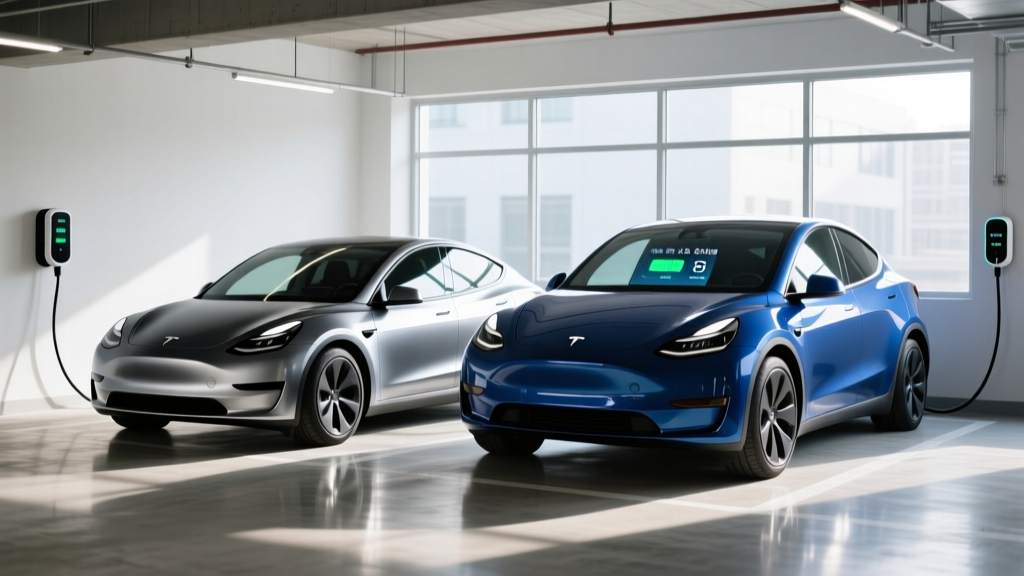
If you've been tracking Tesla's flagship sedans and SUVs, you've likely noticed a trend: Tesla Model S and X inventory nearly sold out across most U.S. markets heading into mid-2026. Whether driven by production reallocation toward higher-volume models like the refreshed Model Y, aggressive pricing on remaining stock, or simple supply-chain tightening, finding a new Long Range or Plaid on a dealer lot—or even through Tesla's direct order system—now requires patience and flexibility.
This review covers the 2026 Tesla Model S and Model X in depth: real-world range, charging performance, ownership economics, tax-credit eligibility, and how they stack up against rivals like the Lucid Air, BMW i7, and Mercedes EQS. If you're considering placing an order or snapping up remaining inventory, here's everything you need to decide.
Range, Battery, and Efficiency: The Numbers That Matter
Both the Model S and Model X ride on Tesla's mature 100-class battery architecture. For 2026, Tesla continues to use NMC (nickel-manganese-cobalt) chemistry in its Long Range and Plaid variants, prioritizing energy density over the LFP cells found in the base Model 3 and Model Y RWD trims. This matters: NMC delivers more range per kilogram but is more sensitive to sustained 100% State of Charge (SoC), so daily charging to 80% is recommended for longevity.
| Spec | Model S Long Range | Model S Plaid | Model X Long Range | Model X Plaid |
|---|---|---|---|---|
| EPA Range | 402 mi | 359 mi | 348 mi | 326 mi |
| Battery (usable) | ~95 kWh (NMC) | ~95 kWh (NMC) | ~95 kWh (NMC) | ~95 kWh (NMC) |
| Drivetrain | Dual-Motor AWD | Tri-Motor AWD | Dual-Motor AWD | Tri-Motor AWD |
| Horsepower | 670 hp | 1,020 hp | 670 hp | 1,020 hp |
| 0-60 mph | 3.1 sec | 1.99 sec | 3.8 sec | 2.5 sec |
| Efficiency (MPGe) | 120 MPGe | 116 MPGe | 109 MPGe | 101 MPGe |
| kWh/100 mi | 28 | 29 | 31 | 33 |
| Cargo (behind 2nd row) | 28 cu ft | 28 cu ft | 88 cu ft (5-seat) | 88 cu ft (5-seat) |
| Rear Legroom | 40.5 in | 40.5 in | 41.0 in | 41.0 in |
| Base MSRP | $74,990 | $89,990 | $79,990 | $94,990 |
Charging Performance: DC Fast, Level 2, and the Supercharger Advantage
Charging speed remains a Tesla stronghold, though the gap has narrowed as competitors adopt 800V architectures. The 2026 Model S and X support up to 250 kW peak DC fast charging on V3 Superchargers and compatible third-party CCS stations (via Tesla's included CCS adapter or native NACS port on newer builds).
| Charging Level | Power | Speed / Time | Notes |
|---|---|---|---|
| Level 1 (120V) | ~1.4 kW | ~4 mi/hr | Emergency trickle only |
| Level 2 (240V / 48A) | 11.5 kW | ~34 mi/hr | Tesla Wall Connector at home |
| DC Fast (V3 Supercharger) | Peak 250 kW | 10-80% in ~27 min | Curve tapers sharply above 60% |
| DC Fast (V4 Supercharger) | Up to 250 kW | 10-80% in ~25 min | Available at select new stations |
Charging curve reality: The 250 kW peak is only sustained between roughly 10-30% SoC. Above 50%, expect the rate to drop to ~120 kW, and above 80% it falls to under 50 kW. On a typical road-trip stop from 10-80%, you'll average closer to 150 kW, not the headline 250 kW number. Always precondition the battery via the car's navigation-routed Supercharger prep to achieve peak rates.
For home charging, the Tesla Wall Connector (48A on a 60A circuit) delivers 11.5 kW, replenishing roughly 34 miles of range per hour. A full charge from 10% takes about 9 hours—ideal for overnight top-ups. Installation typically costs $500-$1,500 depending on panel proximity, plus potential panel upgrade costs for older homes.
Pricing, Trims, and Federal Tax Credit Eligibility
This is where the conversation gets nuanced. Both the Model S and Model X are priced well above the IRS §30D MSRP cap for the new-vehicle federal tax credit, which limits eligibility to sedans priced at or below $55,000 and SUVs/pickups at or below $80,000. Here's how that plays out:
| Trim | Base MSRP | Federal §30D Credit | Effective Price | Key Income Caps |
|---|---|---|---|---|
| Model S Long Range | $74,990 | $0 (exceeds $55K sedan cap) | $74,990 | N/A |
| Model S Plaid | $89,990 | $0 | $89,990 | N/A |
| Model X Long Range | $79,990 | Potentially $7,500* | ~$72,490* | $150K single / $300K joint |
| Model X Plaid | $94,990 | $0 (exceeds $80K SUV cap) | $94,990 | N/A |
*Model X Long Range credit caveat: The Model X Long Range at $79,990 falls under the $80,000 SUV cap and may qualify for the full $7,500 credit—but only if the buyer meets adjusted gross income limits ($150,000 single, $225,000 head of household, $300,000 joint filers) and the vehicle's battery satisfies critical-mineral and battery-component sourcing requirements under §30D. These sourcing rules tighten annually. Tesla has periodically confirmed partial eligibility for the Model X; always verify current status at irs.gov before purchasing. The point-of-sale transfer option lets you hand the credit directly to Tesla at checkout for an instant price reduction—if eligible.
Performance, Tech, and Daily Livability
The Model S Plaid's 1.99-second 0-60 time remains among the quickest of any production car, period. But the more relevant daily proposition is the Long Range's blend of 670 hp, dual-motor torque vectoring, and adaptive air suspension that smooths out rough pavement while lowering at highway speeds for efficiency.
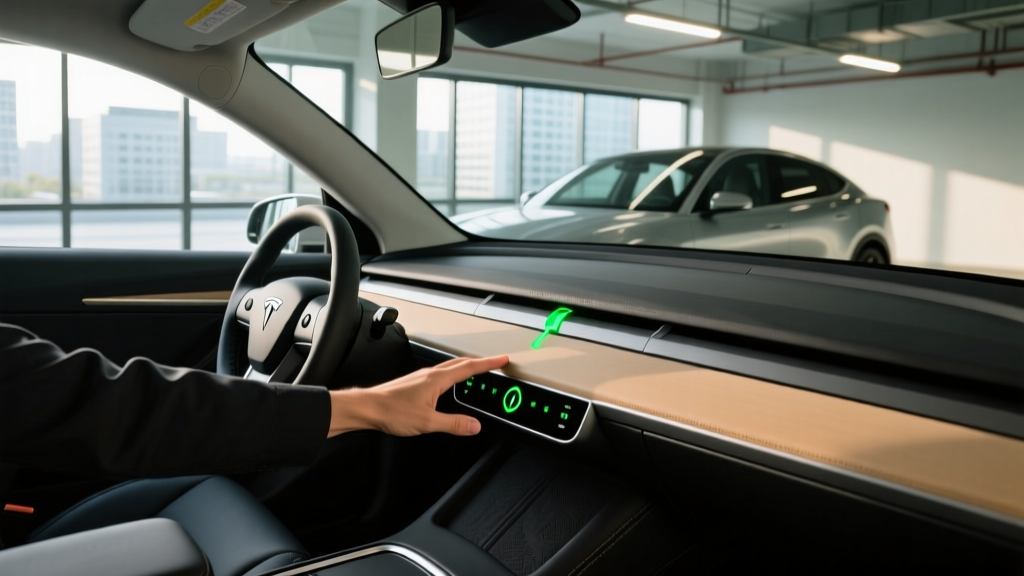
Interior and tech: The 17-inch center touchscreen runs Tesla's latest UI with native navigation, streaming, and gaming (the yoke or round steering wheel both give adequate screen access). A rear 8-inch screen handles climate and entertainment for passengers. The 22-speaker audio system is genuinely impressive. Wireless phone charging, HEPA air filtration (Bioweapon Defense Mode), and ventilated front seats are standard.
Autopilot and FSD (Supervised): Tesla includes basic Autopilot (traffic-aware cruise + lane centering). The $8,000 FSD (Supervised) upgrade adds automated lane changes, traffic-light recognition, and city-street navigation. However, this remains an SAE Level 2 system—the driver must stay engaged, hands on wheel, eyes on road, at all times. It is not autonomous driving.
Tesla Autopilot and FSD (Supervised) are driver-assistance systems, not self-driving. The driver is legally and practically responsible for all vehicle operation. Only Level 4 robotaxi services like Waymo operate without a driver in the loop. Never treat FSD as a substitute for attentive driving.
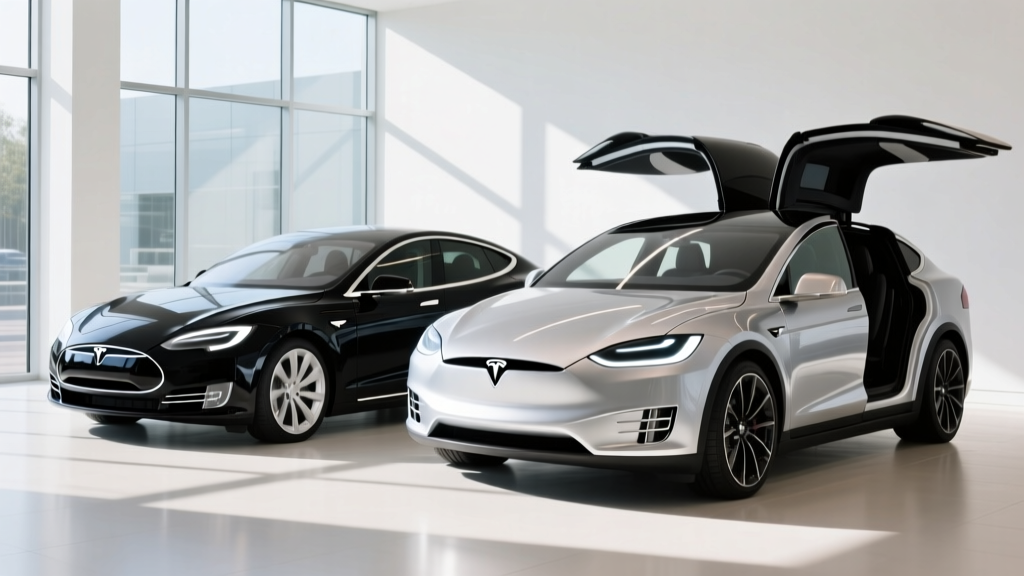
Cargo and space: The Model S offers 28 cu ft behind the rear seats and a useful front trunk (frunk) for groceries or a carry-on. The Model X, with its available 6- or 7-seat configuration and power-folding rear rows, opens up to 88 cu ft—genuine SUV utility. Falcon Wing rear doors make car-seat loading easier in tight parking spots, though they add mechanical complexity.
Pros, Cons, and Ownership Costs
Pros
- Class-leading range on Model S LR (402 mi EPA)
- Access to Tesla Supercharger network (17,000+ U.S. stalls)
- Tri-Motor Plaid performance is unmatched at any price
- Over-the-air updates continuously add features
- Model X offers genuine 3-row SUV space with EV efficiency
- Low center of gravity, excellent handling for the class
Cons
- Most trims ineligible for federal tax credit (MSRP caps)
- Panel gaps and interior finish still trail BMW/Mercedes at this price
- 250 kW peak charge rate now outpaced by 800V rivals (Hyundai, Porsche)
- Insurance premiums run 20-40% above comparable gas vehicles
- FSD purchase is expensive and still requires full driver attention
- Falcon Wing doors prone to sensor issues in heavy rain/snow
Warranty: Tesla covers the battery and drive unit for 8 years / 150,000 miles (whichever comes first) with a minimum 70% capacity retention threshold. The basic vehicle warranty is 4 years / 50,000 miles. This battery warranty is competitive with Lucid (8/100K) and slightly better than Mercedes EQS (8/100K), though Hyundai's 10-year/100,000-mile coverage remains the segment benchmark.
Who Should Buy, and Is It Worth It vs. Competitors?
Choose the Tesla Model S if:
- You need maximum range (402 mi EPA) for frequent long-distance driving
- Supercharger network access is a priority for road trips
- You want hypercar acceleration (Plaid) in a practical sedan
- You value OTA software updates and Tesla's ecosystem integration
Choose the Tesla Model X if:
- You need 3-row seating with electric efficiency and the Long Range trim may qualify for the $7,500 credit
- Falcon Wing doors ease car-seat loading in your daily routine
- You tow occasionally (up to 5,000 lbs rated)
Look elsewhere if:
- Luxury interior finish is a top priority → consider BMW i7 or Mercedes EQS
- Maximum charging speed matters → Lucid Air (300+ kW capable) or Porsche Taycan (800V)
- You need the federal tax credit and can't meet Model X eligibility → look at sub-$55K sedans or sub-$80K SUVs
Against the Lucid Air Grand Touring (516 mi EPA, $125,600), the Model S gives up range and charge speed but wins on Supercharger access and lower entry price. Against the BMW i7 xDrive50 (~$120K, 318 mi EPA), the Tesla is quicker and more efficient but less opulent inside. The Model X's closest rival, the Mercedes EQS SUV (305 mi EPA, ~$105K), is quieter and more refined but can't match Tesla's range or charging infrastructure.
Frequently Asked Questions
What is the real-world range of the 2026 Model S and Model X?
The Model S Long Range EPA-estimates 402 miles, but expect 340-360 miles at highway speeds and 280-320 miles in sub-freezing temperatures. The Model X Long Range delivers roughly 295-315 real-world highway miles and 240-280 in cold conditions. Preconditioning and moderate speeds narrow the gap.
How fast does the Model S/X charge at home and on the road?
On a DC fast charger (V3 Supercharger), both models peak at 250 kW and charge from 10-80% in approximately 25-27 minutes, though the curve tapers significantly above 60% SoC. At home on a Level 2 Tesla Wall Connector (11.5 kW), you gain about 34 miles per hour, fully replenishing overnight.
Does the Tesla Model S or Model X qualify for the $7,500 federal EV tax credit?
The Model S does not qualify—it exceeds the $55,000 sedan MSRP cap under IRS §30D. The Model X Long Range at $79,990 may qualify if the buyer meets income limits and the vehicle satisfies battery-sourcing requirements, which tighten each year. The Model X Plaid at $94,990 exceeds the $80,000 SUV cap. Always verify at irs.gov before ordering. Consult a tax professional for your specific situation.
Is it worth buying a Model S/X vs. key competitors in 2026?
For range, Supercharger access, and straight-line performance, the Model S remains compelling. For families needing 3-row electric SUV space, the Model X is one of few options with real range. However, if luxury interior quality, 800V charging architecture, or federal tax credit eligibility are higher priorities, the Lucid Air, BMW i7, or Mercedes EQS deserve serious comparison. The nearly-sold-out inventory may actually work in your favor: Tesla occasionally offers discounts or incentives on remaining stock to clear allocations.
What are the biggest ownership costs beyond the purchase price?
Insurance averages $2,400-$3,600 annually depending on trim and state (Plaid variants cost significantly more). Home Level 2 charger installation runs $500-$1,500. Electricity costs roughly $0.13-$0.17/kWh nationally, making a full Model S charge approximately $12-$16 at home versus $25-$40 on Superchargers. Maintenance is minimal—no oil changes, brake pads last 80,000+ miles thanks to regen—but tire replacement on Plaid models (high-performance rubber) can run $1,200-$1,800 per set every 15,000-20,000 miles.
Why is Tesla Model S and X inventory nearly sold out?
Multiple factors converge in 2026: Tesla has shifted production emphasis toward the higher-volume Model Y refresh and next-generation platform vehicles. The Model S and X are lower-volume, Fremont-built products, and Tesla appears to be managing allocations tightly rather than scaling up. Some analysts also point to upcoming powertrain or platform revisions that may be prompting a controlled wind-down of current-generation inventory. If you want one, ordering directly through Tesla's website with flexible delivery timing gives you the best shot at securing an allocation.