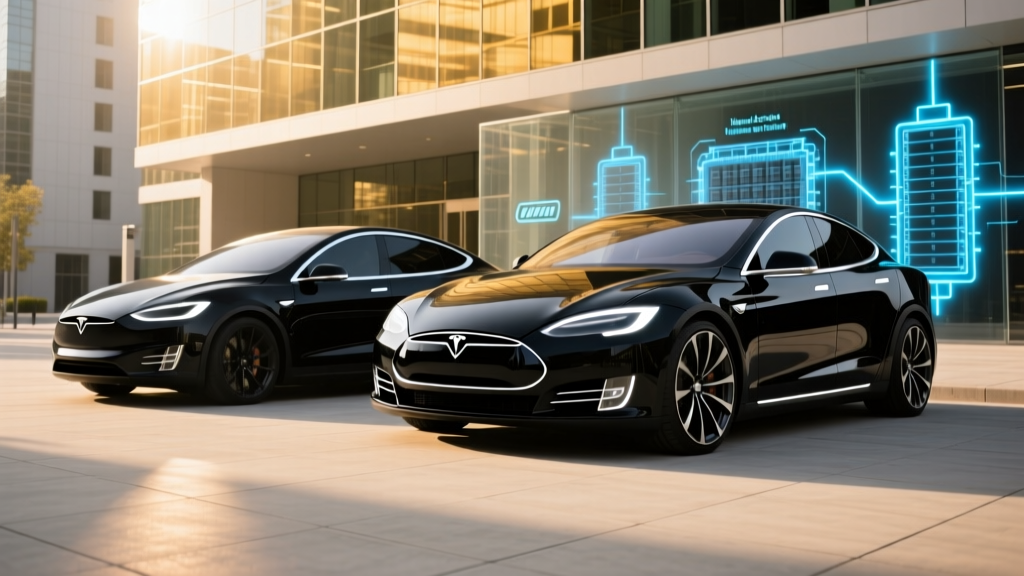
Tesla is closing the book on its flagship sedans and SUVs — and doing it the only way Elon Musk's company knows how: with exclusivity, excess, and a price tag that demands attention. The automaker has begun quietly extending invitations to select existing owners and high-tier referral-program members for the Tesla Model S Final Edition and Tesla Model X Final Edition, both priced near or above $160,000 before options. These are not concept teasers or future promises; Tesla has confirmed production slots for the first half of 2026, with deliveries expected to begin Q2.
For buyers who receive an invitation — or who are weighing whether to chase one through Tesla's referral and loyalty channels — the critical questions are practical: What do you actually get for $160K? How do range, charging, and performance hold up against 2026's best from Lucid, BMW, and Mercedes? And does a six-figure Tesla still qualify for any federal tax incentives?
We've compiled the full specification sheet, real-world ownership data, and a decision framework for anyone considering what may be the last new Model S or Model X you can buy.
Why Tesla Is Building Final Editions at $160,000
The Model S entered production in 2012; the Model X followed in 2015. After more than a decade on the market, both vehicles ride on architecture that predates Tesla's current 4680-cell structural battery pack and the manufacturing efficiencies of the Giga Texas unboxed process. Rather than engineer a full next-generation successor, Tesla is treating these Final Editions as a low-volume send-off — similar in philosophy to Porsche's 911 Speedster or Ferrari's limited-run V12 tributes.
Production numbers have not been officially capped in a public filing, but invite-only allocation suggests volumes in the low thousands globally. The pricing strategy also positions these cars outside Tesla's volume-oriented federal tax-credit battles and into the ultra-premium segment where buyers prioritize exclusivity over incentive optimization.
Model S Final Edition vs Model X Final Edition: Spec Table
| Specification | Model S Final Edition | Model X Final Edition |
|---|---|---|
| Base MSRP | $159,990 | $164,990 |
| Drivetrain | Tri-Motor AWD (Plaid) | Tri-Motor AWD (Plaid) |
| Horsepower | 1,020 hp | 1,020 hp |
| 0–60 mph | 1.99 sec | 2.5 sec |
| Battery (usable) | ~95 kWh, NMC | ~95 kWh, NMC |
| EPA Range | 396 mi (est.) | 348 mi (est.) |
| MPGe (combined) | 120 MPGe | 105 MPGe |
| Efficiency | 28 kWh/100 mi | 32 kWh/100 mi |
| Max DC Fast Charge | 250 kW | 250 kW |
| 10–80% DC Time | ~28 min | ~30 min |
| Level 2 Home Charge | 11.5 kW (~41 mi/hr) | 11.5 kW (~36 mi/hr) |
| Cargo (rear seats up) | 28 cu ft | 37.1 cu ft |
| Cargo (seats folded) | 79.3 cu ft | 85.1 cu ft |
| Seating | 5 passengers | 5, 6, or 7 passengers |
| Battery Warranty | 8 yr / 150,000 mi | 8 yr / 150,000 mi |
| Basic Warranty | 4 yr / 50,000 mi | 4 yr / 50,000 mi |
Sources: Tesla Model S specs, Tesla Model X specs, EPA fueleconomy.gov. Final Edition EPA figures are estimates based on current Plaid powertrain data; official certification pending.
Real-World Range: What the EPA Sticker Doesn't Tell You
Model S Final Edition — EPA est. 396 mi. Expect ~310–340 mi on sustained highway driving at 70–80 mph. In freezing temperatures (below 32°F), plan for 260–290 mi before needing a charge stop.
Model X Final Edition — EPA est. 348 mi. Highway real-world: ~270–300 mi. Cold weather: ~230–260 mi. The X's larger frontal area and heavier curb weight (~5,100 lb) hit efficiency harder at speed.
The tri-motor Plaid powertrain prioritizes performance over efficiency. While the single-motor or dual-motor variants of previous Model S generations achieved higher EPA numbers, the Plaid's third motor and aggressive power delivery consume energy faster — particularly above 65 mph where aerodynamic drag dominates. The Model S Final Edition's 28 kWh/100 mi combined figure is respectable for a 1,020-hp vehicle, but it trails the Lucid Air Grand Touring's 131 MPGe by a significant margin.
For road-trippers, the practical implication is that a Los Angeles–to–Las Vegas run (270 mi) is achievable in the Model S without a charge stop in mild weather, but the Model X will likely need a 15-minute Supercharger pause near Barstow. In winter mountain driving, both vehicles will require strategic charge planning.
Charging Speed: 250 kW Peak, But Mind the Curve
| Charging Level | Power / Rate | What You Get |
|---|---|---|
| Level 1 (120V outlet) | ~1.4 kW | ~4–5 mi/hr (emergency trickle) |
| Level 2 (240V, 48A home) | 11.5 kW | ~36–41 mi/hr (overnight full charge in ~9 hr) |
| DC Fast (Tesla Supercharger V3/V4) | Peak 250 kW | 10–80% in ~28–30 min; ~170 mi in 15 min |
| DC Fast (CCS adapter, non-Tesla) | Up to ~175 kW typical | 10–80% in ~38 min (adapter throttles peak) |
The Model S and X Final Editions use Tesla's NACS connector natively, granting full access to the Supercharger network — which remains the most reliable DC fast-charging ecosystem in North America based on uptime and plug-and-charge simplicity. At a V3 or V4 Supercharger, the ~95 kWh NMC battery will accept a peak of 250 kW, but as with all lithium-ion packs, the charge curve tapers significantly above 50% State of Charge (SoC).
Here's what that taper looks like in practice: you'll see 250 kW between roughly 10–30% SoC, dropping to ~180 kW by 50%, ~100 kW by 70%, and ~50 kW by 85%. This is why the 10–80% metric (~28 minutes) is more useful than the peak kW figure. Charging from 80–100% at a DC fast charger is painfully slow and generates excess heat — Tesla's navigation system will typically route you to exit at 80% for battery longevity.
Home charging setup: These vehicles support 11.5 kW Level 2 charging via the onboard charger. That requires a 60-amp dedicated circuit (48 amps continuous draw) and a Tesla Wall Connector or equivalent NACS-equipped Level 2 unit. Most Final Edition buyers will already have this infrastructure, but if you're upgrading from a non-Tesla EV, budget $500–$1,500 for the Wall Connector and $800–$2,500 for electrician installation, depending on panel capacity and run length.
Performance and Driving Dynamics
The tri-motor Plaid powertrain is carried over with no mechanical changes for the Final Edition. The numbers remain staggering: 1,020 horsepower, torque vectoring across all three motors, and a 1.99-second 0–60 mph time for the Model S (with rollout subtracted, on a prepped surface). The Model X, burdened by an additional ~600 pounds and a taller, less aerodynamic profile, manages 2.5 seconds — still quicker than nearly every production SUV ever built.
What sets the Plaid apart from the dual-motor variants isn't just straight-line speed. The rear-axle dual-motor setup enables genuine torque vectoring, shuffling power between the left and right rear wheels through corners. On a canyon road or track, this translates to sharper turn-in and more neutral handling than a 4,800-pound sedan has any right to deliver. The carbon-sleeved rotors (standard on Plaid since 2022) resist fade during repeated hard stops, though they generate noticeable noise at low speeds — a known trade-off owners learn to accept.
Adaptive air suspension is standard, offering a 3.0-inch ride-height range. In Low mode at highway speeds, the Model S drops to minimize drag; in High mode, the Model X clears steep driveways and light off-road obstacles. The ride quality is firm but controlled — Tesla's damping calibration has improved markedly since the 2021 refresh, though it still transmits more road imperfection than a Mercedes EQS or BMW i7.
Interior, Tech, and Final Edition Exclusives
The Final Edition's cabin builds on the 2021-refreshed interior: a 17-inch center touchscreen (6K resolution, AMD Ryzen processor), a 12.3-inch instrument cluster, a rear-seat 8-inch entertainment display, and a 22-speaker audio system with active noise cancellation. Build quality on the 2024–2026 Model S/X has reached its highest point in the vehicle's history, with tighter panel gaps, genuine aluminum trim, and ventilated front seats that actually work.
Final Edition-exclusive features include:
- Unique "Final Edition" badging on the B-pillars and illuminated door sills
- Exclusive exterior paint options (deep metallic green and matte gray, per early owner reports)
- Alcantara headliner and contrast-stitched leather in a colorway unavailable on standard trims
- Serialized production plaque on the center console
- Complimentary FSD (Supervised) capability for the life of the vehicle (a $8,000 value)
- 4-year / 50,000-mi prepaid maintenance package
- Priority Supercharger stall reservation at select high-traffic corridors (details TBD)
Autopilot and FSD (Supervised): Both Final Editions ship with Tesla's Hardware 4.0 (AI4) compute platform and the full FSD (Supervised) software suite. This is a SAE Level 2 driver-assistance system — not self-driving. The driver must remain attentive, keep hands on the wheel (or demonstrate engagement via the cabin camera), and be prepared to take over at any moment. FSD (Supervised) handles highway lane changes, on/off-ramp navigation, and some city-street scenarios, but its performance in construction zones, unmapped areas, and adverse weather remains inconsistent. Tesla's own vehicle safety reports show lower crash rates with Autopilot engaged, but the system's limitations are real and well-documented by NHTSA's ongoing investigations.
FSD (Supervised) is SAE Level 2. You are the driver at all times. It does not operate in all weather, on all roads, or in all traffic scenarios. Treat it as an advanced cruise-control and lane-keeping aid — not a replacement for your attention.
Pricing, Tax Credits, and Total Cost of Ownership
| Item | Model S Final Edition | Model X Final Edition |
|---|---|---|
| Base MSRP | $159,990 | $164,990 |
| Destination Fee | $1,990 | $1,990 |
| As-Tested (with typical options) | ~$165,000 | ~$170,000 |
| Federal §30D Tax Credit | $0 — Exceeds MSRP cap | $0 — Exceeds MSRP cap |
| Estimated Total (pre-incentive) | ~$165,000 | ~$170,000 |
The federal EV tax credit (IRS §30D) does not apply to either Final Edition. Under current IRS rules, new clean vehicle credits are capped at an MSRP of $55,000 for sedans and $80,000 for SUVs, vans, and pickup trucks. At $159,990 and $164,990 respectively, both Final Editions exceed these limits by a wide margin. Additionally, buyer income caps ($150K single / $300K joint for modified AGI) and battery critical-mineral sourcing requirements further restrict eligibility for any vehicle — but the MSRP cap alone disqualifies these cars outright.
Some states offer their own EV incentives that may not carry MSRP caps (California's CVRP was discontinued, but certain utility rebates and HOV-lane access programs still apply). Check your state's energy office or DMV for current local incentives.
5-year ownership cost estimate (Model S Final Edition, 15,000 mi/yr):
- Purchase price: ~$165,000
- Depreciation (est. 45% over 5 yr): ~$74,250
- Electricity (home + Supercharging, $0.18/kWh avg): ~$5,900
- Insurance (luxury EV avg): ~$18,000–$24,000
- Maintenance (prepaid 4 yr, then standard): ~$2,500
- Estimated 5-yr total cost: ~$265,650–$271,650
For context, a similarly equipped Lucid Air Grand Touring (~$138,000) will depreciate less aggressively due to lower starting price and higher range, while a BMW i7 xDrive60 (~$120,000) offers comparable luxury with stronger dealer-service infrastructure. The Final Edition's value proposition rests on exclusivity and Tesla's Supercharger network — not on financial optimization.
Who Should Buy the Final Edition — and Who Shouldn't
- You're a current Tesla owner with invitation access and want a collectible send-off
- You prioritize 0–60 performance and Supercharger network access above all else
- You drive in regions with dense Supercharger coverage (West Coast, Northeast corridor, Texas)
- You value OTA software updates and Tesla's tech ecosystem over traditional luxury dealer service
- You need 6- or 7-seat capacity with electric powertrain and genuine 300+ mi range
- The falcon-wing doors are a non-negotiable feature for your use case (tight garage access, child-seat loading)
- You want the fastest production SUV ever built and accept the efficiency trade-offs
- You need federal tax-credit savings — these cars don't qualify
- You prioritize ride comfort and cabin quietness over performance (consider BMW i7, Mercedes EQS)
- You want maximum real-world range — the Lucid Air Grand Touring delivers 400+ mi highway with better efficiency
- You live in a region with sparse Supercharger coverage and no reliable CCS alternatives
Pros and Cons at a Glance
- Class-leading 1.99-sec 0–60 (Model S) and 2.5-sec (Model X)
- Full Supercharger network access — best public charging reliability in the US
- Complimentary FSD (Supervised) included ($8K value)
- Serialized, limited-production collectibility
- 8-yr/150,000-mi battery warranty (best in luxury EV segment)
- OTA updates continue to add features post-purchase
- Model X offers 6/7-seat EV option with no direct competitor at this price
- No federal tax credit — MSRP exceeds §30D cap by ~$80K+
- Real-world highway range falls 15–22% below EPA estimate
- 250 kW peak DC charging trails 800V competitors (Hyundai Ioniq 5 N: 350 kW capable)
- Firm ride quality vs. Mercedes EQS / BMW i7 comfort benchmark
- FSD (Supervised) remains Level 2 — not autonomous despite the branding
- Invite-only allocation limits access; secondary-market markups likely
- No 800V architecture — charging speeds unlikely to improve with future Supercharger upgrades
Frequently Asked Questions
What is the real-world range of the Model S and Model X Final Editions?
The Model S Final Edition's EPA estimate is approximately 396 miles, but sustained highway driving at 70–80 mph yields 310–340 miles in mild weather and 260–290 miles in freezing conditions. The Model X's EPA estimate of ~348 miles translates to roughly 270–300 miles highway and 230–260 miles in cold weather. Both figures reflect the tri-motor Plaid powertrain's higher energy consumption versus dual-motor variants.
How fast do the Final Editions charge at home and on the road?
On a 250 kW Tesla Supercharger (V3/V4), both vehicles charge from 10–80% in approximately 28–30 minutes. At home on an 11.5 kW Level 2 Wall Connector (48A, 240V), a full charge from near-empty takes about 9 hours, adding roughly 36–41 miles of range per hour. Using a CCS adapter at non-Tesla DC fast chargers typically limits peak power to ~175 kW, extending 10–80% time to ~38 minutes.
Do the Model S and X Final Editions qualify for the $7,500 federal EV tax credit?
No. Under current IRS §30D rules, the new clean vehicle credit caps MSRP at $55,000 for sedans and $80,000 for SUVs. At $159,990 (Model S) and $164,990 (Model X), both Final Editions exceed these limits and are ineligible regardless of buyer income or battery sourcing. Some state-level incentives may still apply — check your local energy office.
Is the Final Edition worth buying versus a Lucid Air or BMW i7?
If your priority is exclusivity, tri-motor performance, and Tesla's Supercharger ecosystem, the Final Edition has no direct substitute. If you value real-world range and efficiency, the Lucid Air Grand Touring (516 mi EPA, 131 MPGe) is objectively superior. If cabin luxury, ride comfort, and dealer service matter more, the BMW i7 xDrive60 or Mercedes EQS 580 are more refined daily drivers — though neither offers a 6/7-seat option like the Model X.
How do I get an invitation to purchase a Final Edition?
Tesla has not published a formal application process. Based on early reports from owners who have received invitations, priority appears to go to long-term Tesla owners (multiple vehicle purchases), high-tier referral-program members, and select Tesla investor/employee pools. Contacting your local Tesla delivery center or regional manager may help express interest, but allocation is entirely at Tesla's discretion.
What battery chemistry do the Final Editions use, and how long will it last?
Both vehicles use an NMC (nickel-manganese-cobalt) lithium-ion pack of approximately 95 kWh usable capacity. NMC offers higher energy density than LFP (lithium iron phosphate), which is why it's used in performance-oriented trims. Tesla's battery warranty guarantees 70% capacity retention for 8 years or 150,000 miles, whichever comes first. Historical data from Tesla's fleet suggests NMC packs in the Model S/X lose approximately 8–12% capacity over the first 100,000 miles, with degradation slowing significantly thereafter. Replacing an out-of-warranty pack would cost approximately $18,000–$25,000 based on current service-center pricing.