The Tesla Model S and X Ending: What Buyers Need to Know in 2026
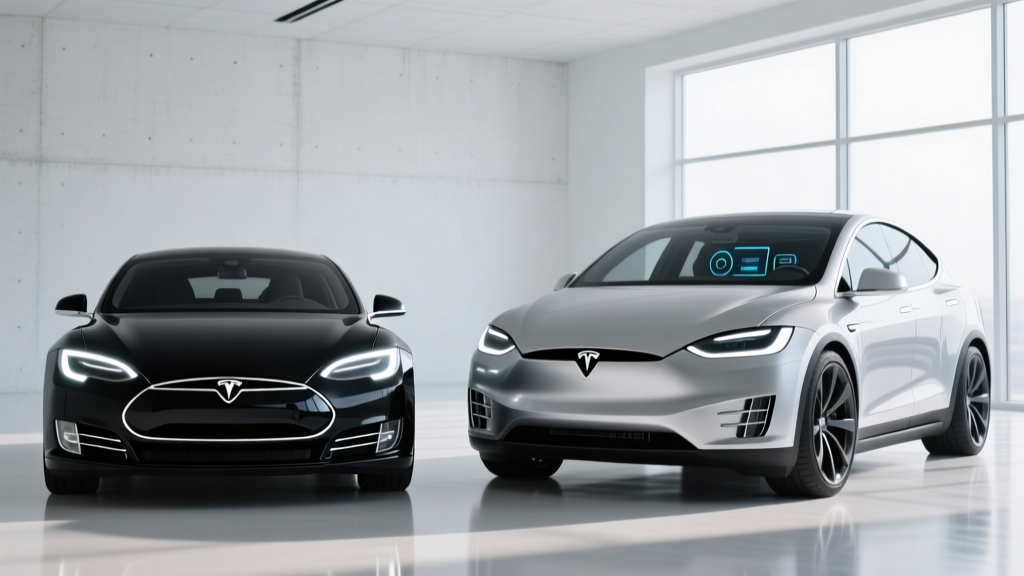
Reports have swirled for years about the Model S and X ending production, and as of 2026, Tesla's original flagship sedan and SUV remain on sale — but likely on borrowed time. With the Fremont factory increasingly retooled for next-generation platforms and Optimus robotics, these legacy vehicles occupy a shrinking slice of Tesla's lineup. For buyers eyeing a luxury EV with serious range and Supercharger access, the question is no longer just "Is it good?" but "Is it worth buying something that may be discontinued?"
This review covers the 2026 Tesla Model S and Model X with exact specs, real-world range expectations, charging performance, pricing after federal tax credits, and whether these aging flagships still compete against the Lucid Air, BMW i7, Mercedes EQS, and Rivian R1S.
| Spec | Model S Long Range | Model S Plaid | Model X Long Range | Model X Plaid |
|---|---|---|---|---|
| EPA Range | 402 mi | 359 mi | 335 mi | 320 mi |
| Battery (usable) | ~95 kWh (NMC) | ~95 kWh (NMC) | ~95 kWh (NMC) | ~95 kWh (NMC) |
| Drivetrain | Dual-Motor AWD | Tri-Motor AWD | Dual-Motor AWD | Tri-Motor AWD |
| Horsepower | 670 hp | 1,020 hp | 670 hp | 1,020 hp |
| 0–60 mph | 3.1 sec | 1.99 sec | 3.8 sec | 2.5 sec |
| Peak DC Charge | 250 kW | 250 kW | 250 kW | 250 kW |
| 10–80% DC Time | ~30 min | ~30 min | ~30 min | ~30 min |
| Level 2 Rate | 11.5 kW (~34 mi/hr) | 11.5 kW (~34 mi/hr) | 11.5 kW (~30 mi/hr) | 11.5 kW (~30 mi/hr) |
| MPGe (combined) | 120 MPGe | 116 MPGe | 102 MPGe | 98 MPGe |
| Base MSRP | $79,990 | $94,990 | $84,990 | $99,990 |
| Battery Warranty | 8 yr / 150,000 mi | 8 yr / 150,000 mi | 8 yr / 150,000 mi | 8 yr / 150,000 mi |
Real-World Range: What the EPA Numbers Don't Tell You
The Model S Long Range carries a 402-mile EPA estimate — among the highest of any production EV sold in the U.S. But as with every EV, your actual mileage depends heavily on driving conditions, speed, and temperature.
Real-World Range Expectations
EPA Sticker: 402 mi (Model S LR) / 335 mi (Model X LR)
Highway (70–75 mph, 65°F): Expect ~340–360 mi (Model S) and ~280–300 mi (Model X). Aerodynamic drag at sustained highway speeds reduces efficiency by roughly 10–15% versus the EPA combined cycle.
Cold Weather (30°F, highway): Plan for ~260–290 mi (Model S) and ~220–250 mi (Model X). NMC batteries lose 15–25% of usable capacity in freezing temperatures, even with Tesla's heat pump and battery preconditioning.
City / Commute (mixed, moderate climate): 380–400+ mi is achievable thanks to regenerative braking and lower average speeds.
The Model S benefits from one of the lowest drag coefficients in production (Cd 0.208), which is why its highway range holds up better than the boxier Model X (Cd 0.25). If your commute is mostly suburban or city driving in a temperate climate, the Model S Long Range will routinely approach its sticker range. Cross-country road trippers should plan charging stops around 280–300 miles apart in the Model S and 220–250 miles in the Model X for a comfortable buffer.
Charging Speed: Still Fast, No Longer Class-Leading
Tesla's Supercharger network remains the gold standard for reliability and coverage, but the Model S and X are limited to a peak 250 kW on V3 Superchargers. That was impressive in 2020; in 2026, competitors like the Lucid Air (300+ kW), Hyundai Ioniq 5 (up to 350 kW on 800V architecture), and Porsche Taycan (up to 320 kW) charge noticeably faster.
| Charging Level | Power / Rate | Miles Added per Hour | Notes |
|---|---|---|---|
| Level 1 (120V) | ~1.4 kW | ~3–4 mi/hr | Emergency/trickle only |
| Level 2 (240V, 48A) | 11.5 kW | ~34 mi/hr (S) / ~30 mi/hr (X) | Full charge overnight (~9–10 hrs) |
| DC Fast (V3 Supercharger) | Peak 250 kW | ~200 mi in 15 min (peak) | 10–80% in ~30 min |
| DC Fast (V4 Supercharger) | Up to 250 kW (S/X limited) | Same as V3 for S/X | V4 capable of 350 kW, but S/X architecture caps at 250 kW |
Charge-curve reality: The Model S and X hit peak 250 kW only between roughly 10–30% state of charge. Above 50%, the rate tapers to ~120 kW, and above 80% it drops to ~50 kW or less. That 10–80% session takes approximately 30 minutes at a V3 Supercharger with preconditioning active. Always precondition the battery via navigation routing to a Supercharger — skipping this step in cold weather can add 10–15 minutes to your charge time.
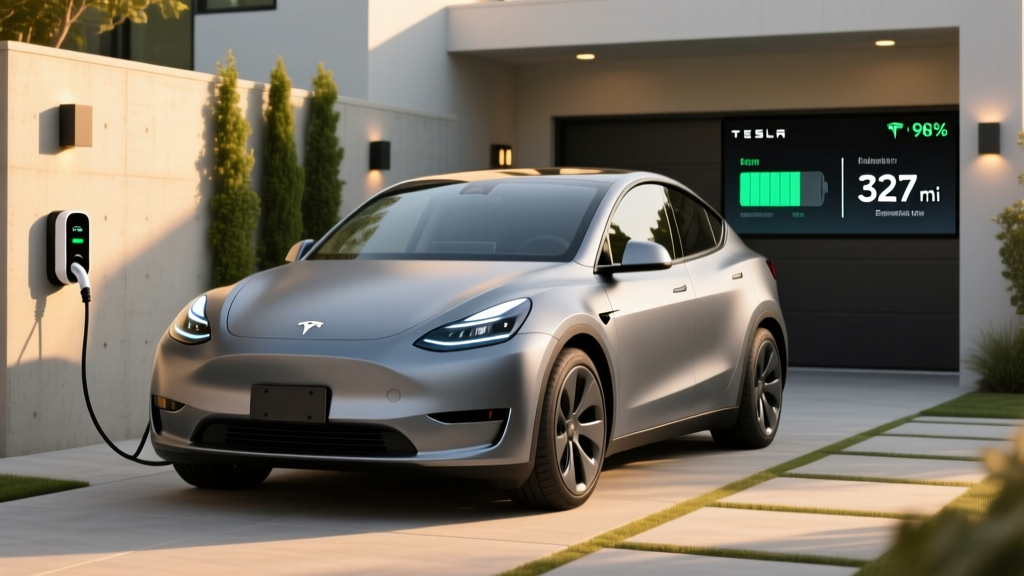
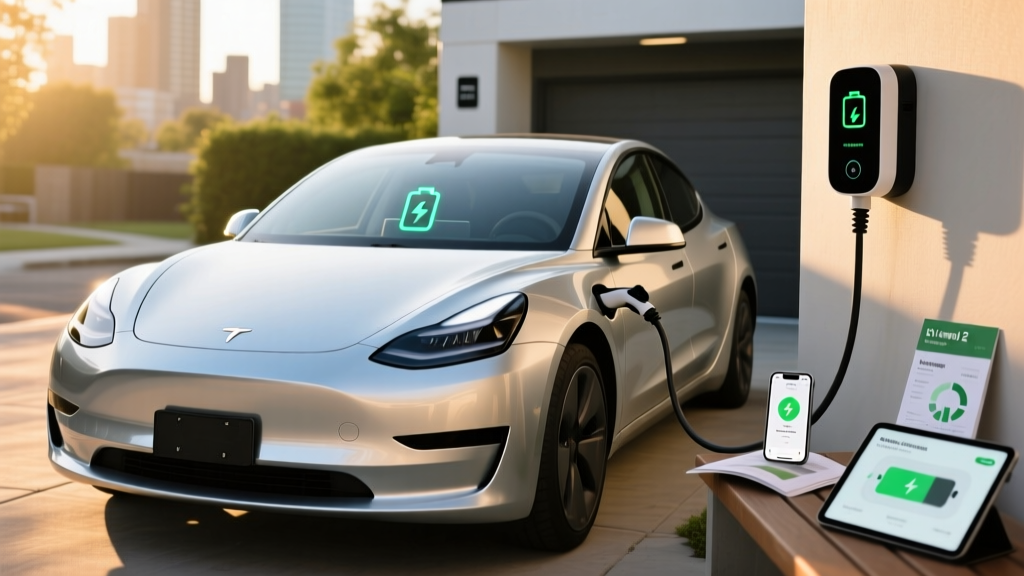
Home charging on a Wall Connector at 48 amps delivers 11.5 kW, adding roughly 34 miles of range per hour in the Model S. A full 0–100% charge takes about 9–10 hours, easily achievable overnight. Note: the Model S and X still use the proprietary Tesla connector (NACS), which as of 2026 has become the North American standard adopted by most major automakers. You'll have no shortage of compatible public chargers.
Performance: Plaid Is Absurd, Long Range Is Plenty
The Model S Plaid's 1.99-second 0–60 mph claim remains one of the fastest production-car times ever recorded, tri-motor AWD generating 1,020 horsepower. In independent testing, consistent 2.1–2.3 second runs are achievable on a prepped surface. But let's be honest: the Long Range's 3.1-second 0–60 with 670 hp is already faster than nearly every SUV and most sports cars on the road.
The Model X Plaid manages 2.5 seconds to 60 mph despite weighing over 5,100 pounds — physics-defying for a three-row family SUV. The Long Range X at 3.8 seconds is hardly slow.
Where the age shows is in ride refinement. The adaptive air suspension is competent, but competitors like the BMW i7 and Lucid Air deliver a noticeably more composed, quieter ride over broken pavement. The Model S and X were engineered on a platform dating to 2012 (S) and 2015 (X), and despite multiple refreshes, the fundamental architecture shows its years in NVH (noise, vibration, harshness) isolation.
Interior, Cargo, and Technology
The 2021 refresh brought a horizontal 17-inch touchscreen, yoke steering option (conventional wheel now standard again), ventilated front seats, and a rear-seat entertainment display. Build quality improved substantially over pre-2021 cars, though panel gaps and interior material quality still lag behind Mercedes, BMW, and Lucid at this price point.
| Dimension | Model S | Model X |
|---|---|---|
| Front Legroom | 42.7 in | 41.2 in |
| Rear Legroom | 35.4 in | 35.5 in |
| Cargo (rear seats up) | 28.0 cu ft | 37.1 cu ft (5-seat) / 12.6 cu ft (6/7-seat) |
| Cargo (rear seats folded) | 64.9 cu ft | 85.7 cu ft (5-seat) |
| Frunk | 3.1 cu ft | 6.6 cu ft |
| Towing Capacity | N/A | 5,000 lbs |
The Model X offers optional six- or seven-seat configurations with second-row captain's chairs or a bench, plus falcon-wing rear doors that are genuinely useful in tight parking spaces — though they add mechanical complexity and can be slow to operate. The Model S is strictly a five-seat sedan with a hatchback-style liftback trunk and a usable frunk.
Tech highlights:
- 17-inch center touchscreen with excellent responsiveness and integrated navigation
- Over-the-air updates continue, though major feature additions for S/X have slowed
- HEPA air filtration with Bioweapon Defense Mode (genuinely effective)
- 1,000-watt 22-speaker audio system
- Gaming-capable rear display (Steam integration)
Tech drawbacks:
- No Apple CarPlay or Android Auto — Tesla's ecosystem only
- Turn-signal stalks were removed in favor of yoke-mounted buttons (now partially restored on 2025+ models)
- Camera-only vision system (no radar or ultrasonic sensors) — parking assist relies entirely on cameras, which some owners find less reliable than legacy ultrasonic sensors
Autopilot and FSD: Level 2 Driver Assist, Not Self-Driving
SAE Automation Level: Level 2
Tesla Autopilot and Full Self-Driving (Supervised) are SAE Level 2 driver-assistance systems. The driver must remain fully engaged, hands on the wheel, and eyes on the road at all times. These systems do NOT make the vehicle autonomous. Only Level 4 services like Waymo operate without a human driver in defined geographic areas.
As of 2026, Tesla's FSD (Supervised) has improved substantially in urban environments but remains a driver-assist feature, not a chauffeur. It handles highway lane-keeping, on-ramp merging, and many city intersections competently, but can still make unexpected errors at construction zones, unmapped intersections, and adverse weather. The $8,000 one-time purchase or $99/month subscription remains a hard sell for buyers who want guaranteed point-A-to-B autonomy — that's Level 4, and it's not here yet on consumer Teslas.
Standard Autopilot (included) provides solid adaptive cruise control and lane-centering for highway use and is sufficient for most buyers.
⚠️ Driver-Assist Limitations
Autopilot and FSD (Supervised) cannot handle all driving scenarios. Expect disengagements in heavy rain, snow, construction zones, and faded lane markings. You are legally and practically responsible for the vehicle at all times. Review NHTSA's guidance on automated driving systems for context.
Pricing, Tax Credits, and Ownership Costs
The 2026 Tesla Model S starts at $79,990 (Long Range) and $94,990 (Plaid). The Model X starts at $84,990 (Long Range) and $99,990 (Plaid). These prices place both vehicles firmly in the luxury segment, competing with the Lucid Air ($87,400+), BMW i7 ($120,000+), and Mercedes EQS ($105,000+).
| Trim | Base MSRP | §30D Credit Eligible? | Est. Price After Credit |
|---|---|---|---|
| Model S Long Range | $79,990 | No — MSRP exceeds $55,000 sedan cap | $79,990 |
| Model S Plaid | $94,990 | No — MSRP exceeds $55,000 sedan cap | $94,990 |
| Model X Long Range | $84,990 | No — MSRP exceeds $80,000 SUV cap | $84,990 |
| Model X Plaid | $99,990 | No — MSRP exceeds $80,000 SUV cap | $99,990 |
Federal tax credit reality: Under IRS §30D rules, new clean vehicle credits are capped at $55,000 MSRP for sedans and $80,000 for SUVs/vans/pickups, with additional buyer income limits ($150,000 single / $300,000 joint AGI) and battery critical-mineral sourcing requirements. Neither the Model S nor Model X qualifies for the $7,500 federal EV tax credit in any 2026 trim because their MSRPs exceed the applicable caps. If a federal credit is a dealbreaker, look at the Tesla Model Y, Model 3, or competitors like the Hyundai Ioniq 5 and BMW iX (xDrive50 base).
Five-year ownership cost considerations:
- Electricity vs. gas: At $0.15/kWh national average, charging a Model S LR costs roughly $0.045/mile. A comparable BMW 5 Series at 27 MPG combined costs ~$0.13/mile at $3.50/gal — saving ~$4,250 over 5 years / 50,000 miles.
- Insurance: Model S and X premiums run 20–40% higher than comparable gas luxury cars due to repair costs and parts pricing. Expect $2,500–$4,000/year depending on location and driving record.
- Maintenance: Minimal — no oil changes, no transmission fluid. Budget for cabin air filters, wiper fluid, tire rotations, and brake fluid checks. ~$300–$500/year.
- Depreciation: Tesla's luxury models have historically depreciated 40–50% over 5 years, steeper than the Model 3/Y. Factor this into your total cost calculation.
Warranty and Long-Term Battery Outlook
Tesla covers the Model S and X battery and drive unit for 8 years or 150,000 miles (whichever comes first), with a minimum 70% capacity retention threshold. The limited vehicle warranty is 4 years / 50,000 miles.
The NMC (nickel manganese cobalt) battery chemistry in both models offers high energy density but is more sensitive to prolonged high state-of-charge storage and extreme heat than LFP chemistry. Best practices for longevity:
- Set daily charge limit to 80–90% (Tesla's software allows this)
- Avoid leaving the car at 100% SoC for extended periods
- Use preconditioning before DC fast charging
- Minimize frequent 250 kW Supercharging — mix in Level 2 home charging when possible
Real-world data from high-mileage Tesla owners suggests 10–15% degradation over 100,000 miles is typical for NMC packs, meaning a 402-mile Model S might deliver ~340–360 miles of range at that milestone. Battery replacement, if needed out of warranty, runs $15,000–$22,000 based on current Tesla service pricing — a significant cost to factor into long-term ownership.
Is the Model S and X Ending Soon? What That Means for Buyers
Tesla has not officially announced a discontinuation date for the Model S or Model X as of early 2026, but multiple signals suggest the end is approaching:
- Fremont factory capacity is being reallocated toward next-generation vehicle platforms and Tesla's Optimus humanoid robot program
- No significant platform update since the 2021 refresh — unusual for a vehicle this expensive
- Sales volume for S/X has declined to a small fraction of Tesla's total deliveries
- Tesla's public roadmap focuses on more affordable, higher-volume vehicles
If Tesla does discontinue these models, parts availability and service support should continue for at least a decade (federal requirement for safety-related parts, and Tesla's OTA update infrastructure is software-based). However, resale values could soften further once discontinuation is confirmed, and long-term software update priority may shift to newer platforms.
How It Stacks Up Against the Competition
| Spec | Tesla Model S LR | Lucid Air Pure | BMW i7 xDrive60 | Mercedes EQS 580 |
|---|---|---|---|---|
| EPA Range | 402 mi | 419 mi | 318 mi | 371 mi |
| Base MSRP | $79,990 | $87,400 | $120,295 | $105,550 |
| Peak DC Charge | 250 kW | 300+ kW | 195 kW | 200 kW |
| 0–60 mph | 3.1 sec | 5.2 sec | 4.5 sec | 4.1 sec |
| Ride Quality | Good | Excellent | Excellent | Excellent |
| Charging Network | Supercharger (best) | EA + NACS adapters | EA + NACS adapters | EA + NACS adapters |
| §30D Credit | No | No (sedan cap) | No (sedan cap) | No (sedan cap) |
Choose the Model S if: You prioritize Supercharger network access, want the longest range at the lowest luxury-sedan price, and value Tesla's software ecosystem and OTA updates.
Choose the Lucid Air if: You want more range (419 mi), faster charging, and a more refined interior — and are willing to pay ~$7,400 more and rely on Electrify America with a NACS adapter for road trips.
Choose the BMW i7 or Mercedes EQS if: Build quality, ride comfort, and traditional luxury dealership service are top priorities — and budget is less of a concern.
For the Model X, the closest competitor is the Rivian R1S, which offers superior off-road capability, a more modern platform, and a starting price around $79,900 — though with less range (~340 mi) and no Supercharger access (Rivian uses NACS adapters for Tesla network access).
Pros and Cons
✅ Pros
- Class-leading EPA range (Model S LR: 402 mi)
- Access to the Tesla Supercharger network — still the most reliable DC fast-charging ecosystem
- Exceptional performance across all trims (3.1 sec to 1.99 sec 0–60)
- Strong over-the-air update track record
- Excellent HEPA air filtration system
- Hatchback/liftback cargo versatility (Model S)
- Falcon-wing doors genuinely useful in tight spaces (Model X)
- 8-year / 150,000-mile battery warranty
❌ Cons
- No federal tax credit eligibility (MSRP exceeds §30D caps)
- Platform is aging — last major refresh was 2021
- 250 kW peak DC charging is outpaced by 800V competitors
- Interior material quality lags BMW, Mercedes, and Lucid at this price
- No Apple CarPlay or Android Auto
- Camera-only parking assist (no ultrasonic sensors) frustrates some owners
- Insurance premiums significantly above segment average
- Discontinuation risk may impact resale value
- High depreciation relative to Model 3/Y
Who Should Buy the Model S or X in 2026?
The Verdict
Buy the Model S Long Range if: You want a 400-mile luxury sedan with Supercharger access for frequent road trips, you prioritize range and performance over traditional luxury feel, and you accept the risk of potential discontinuation and steeper depreciation.
Buy the Model X if: You need a three-row electric SUV with falcon-wing doors for tight garages, 5,000-lb towing, and Supercharger convenience — and the Rivian R1S's shorter range or the Kia EV9's lower performance don't meet your needs.
Look elsewhere if: You want the federal tax credit, the latest platform technology, traditional luxury build quality, or maximum DC fast-charging speed. The Lucid Air, BMW iX, Hyundai Ioniq 5, or even Tesla's own refreshed Model 3/Y may serve you better.
Frequently Asked Questions
What is the real-world range of the 2026 Tesla Model S?
The EPA rates the Model S Long Range at 402 miles. In real-world highway driving at 70–75 mph in moderate temperatures, expect 340–360 miles. In freezing weather, plan for 260–290 miles. The Plaid trim drops to 359 EPA / ~300 highway / ~240 cold-weather.
How fast does the Model S and X charge?
Both peak at 250 kW on V3 Superchargers, achieving a 10–80% charge in approximately 30 minutes with battery preconditioning. At home on a Level 2 Wall Connector (11.5 kW), a full charge takes ~9–10 hours. This is slower than 800V competitors like the Hyundai Ioniq 5 (10–80% in ~18 minutes at 350 kW chargers).
Does the Model S or X qualify for the federal EV tax credit?
No. Under IRS §30D, sedans are capped at $55,000 MSRP and SUVs at $80,000. Every 2026 Model S and X trim exceeds these thresholds. There is also no eligibility through the used-EV credit (§25E) for new purchases. Consult a tax professional for your specific situation.
Is it worth buying a Model S or X if they might be discontinued?
If you love the car and plan to keep it 7–10 years, discontinuation matters less — Tesla will continue OTA updates and parts support. If you plan to sell or trade in 3–4 years, resale values could decline once discontinuation is confirmed. Weigh this against the Model S's unmatched range-per-dollar in the luxury sedan segment.
How does the Model X compare to the Rivian R1S?
The Model X offers more range (335 vs ~340 mi for R1S Dual-Motor), faster acceleration, and Supercharger access. The R1S has a more modern platform, genuine off-road capability, better third-row space, and a more competitive price. Both are strong family EVs; the R1S is the better adventure vehicle, the Model X is the better highway cruiser.
What battery chemistry do the Model S and X use?
Both use NMC (nickel manganese cobalt) lithium-ion cells with approximately 95 kWh of usable capacity. NMC offers high energy density for maximum range but is more sensitive to heat degradation and high-SoC storage than LFP chemistry. Set your daily charge limit to 80–90% for optimal longevity.
How much does insurance cost for a Model S or X?
Expect $2,500–$4,000 per year depending on your location, age, and driving record — roughly 20–40% more than a comparable gas-powered luxury sedan or SUV. Tesla's own insurance product (available in select states) uses real-time driving data and can be competitive for safe drivers.
Sources: EPA Fuel Economy — Tesla Model S, IRS §30D Clean Vehicle Credit, Tesla Warranty Information.