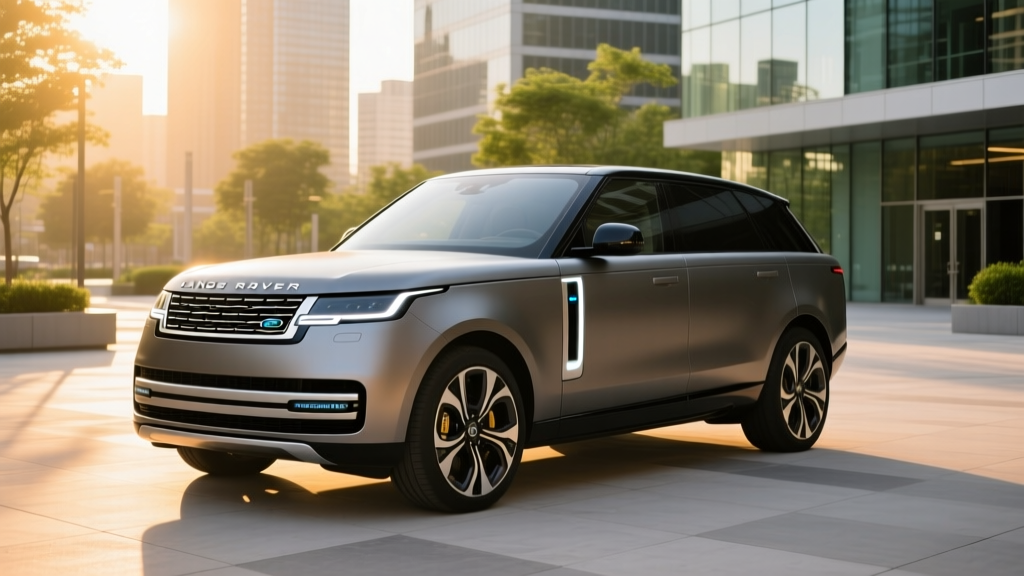
The short answer: The first all-electric Land Rover — the Range Rover Electric — is an announced model built on JLR's MLA-Flex platform with an 800-volt architecture, targeting over 300 miles of EPA range and DC fast-charging speeds rivaling the Porsche Taycan. As of early 2026, JLR has confirmed the vehicle is in final development with customer deliveries expected later in the year. Exact EPA range, battery capacity, and MSRP have not been officially published. Buyers should expect a starting price above $120,000, which places it outside the federal §30D tax credit MSRP cap for SUVs ($80,000), meaning the $7,500 credit will almost certainly not apply.
What We Know About the Land Rover EV So Far
JLR (formerly Jaguar Land Rover) has been deliberate — some would say slow — in bringing a battery-electric flagship to market. The Range Rover Electric was first teased in 2022, with a reservation waitlist that drew over 40,000 sign-ups before the company paused it. Now, entering 2026, the production vehicle is undergoing final validation testing, and JLR has confirmed several engineering details that let us piece together a credible ownership picture.
The Range Rover Electric will ride on the MLA-Flex (Modular Longitudinal Architecture) platform, which already underpins the current Range Rover (P400 mild-hybrid, P440e and P460e plug-in hybrids). JLR has confirmed the EV variant will use an 800-volt electrical architecture — the same voltage class used by the Hyundai Ioniq 5, Kia EV6, Porsche Taycan, and Lucid Air — enabling significantly faster DC charging than the 400V systems found in many legacy-brand EVs.
Here is what JLR has confirmed versus what remains preliminary or estimated:
| Specification | Status | Known / Estimated Value |
|---|---|---|
| Platform | Confirmed | MLA-Flex (800V architecture) |
| Battery chemistry | Unconfirmed | Likely NMC (nickel manganese cobalt) given luxury/performance targets |
| Usable battery capacity | Estimated | ~100–117 kWh (based on platform packaging and competitor benchmarks) |
| EPA-estimated range | Preliminary target | 300+ miles (JLR has stated "competitive with rivals") |
| Peak DC fast-charge rate | Estimated | ~250–350 kW (800V architecture supports this class) |
| 10–80% DC charge time | Estimated | ~18–25 minutes (depending on sustained charge curve) |
| Drivetrain | Confirmed | Dual-motor AWD with terrain-focused torque vectoring |
| Wading depth | Target | Up to ~33.5 inches (matching ICE Range Rover) |
| Towing capacity | Estimated | ~7,700 lbs (matching PHEV Range Rover) |
| Starting MSRP | Estimated | $120,000–$140,000+ |
| Federal §30D tax credit | Very unlikely | Exceeds $80,000 SUV MSRP cap |
| Production start | Confirmed | Solihull, UK plant — 2026 |
Sources: JLR Newsroom, Land Rover USA. Specifications listed as "estimated" are analyst projections based on platform capability and competitor benchmarks. Final EPA figures will be published closer to on-sale date.
Range, Charging, and the 800V Advantage
The single biggest ownership variable for any EV is how quickly and conveniently you can recharge. The Range Rover Electric's 800V architecture is its most consequential technical decision, and it deserves unpacking.
Why 800V matters: Higher voltage allows the same power (kW) to flow at lower current (amps), which reduces heat buildup in the battery and cables. This means the vehicle can sustain a higher charge rate for a longer portion of the charging session before the battery management system tapers the curve to protect cell health. In practical terms, an 800V vehicle charging at a 350 kW station will typically hold peak power from roughly 10% to 50–60% State of Charge (SoC) before tapering, whereas a 400V vehicle may taper much earlier.
Here's what the charging experience should look like for the Range Rover Electric compared to 400V competitors in the luxury SUV segment:
| Vehicle | Architecture | Peak DC kW | 10–80% Time (est.) |
|---|---|---|---|
| Range Rover Electric (2026) | 800V | ~250–350 kW | ~18–25 min |
| BMW iX xDrive50 | 400V | 200 kW | ~31 min |
| Mercedes EQS SUV 580 | 400V | 200 kW | ~31 min |
| Cadillac Lyriq | 400V | 190 kW | ~34 min |
| Porsche Macan EV | 800V | 270 kW | ~21 min |
Real-world charging caveat: Peak kW ratings only matter if the DC fast-charging station can deliver them. As of 2026, Electrify America and Tesla Supercharger V4 stations in major US metro areas can deliver 350 kW, but many older EA stations cap at 150 kW, and rural charging corridors may only offer 50–150 kW. On a 150 kW station, the Range Rover Electric will charge at the station's maximum — roughly 150 kW — regardless of its 800V capability. Always check station ratings in apps like PlugShare or ChargePoint before relying on peak-speed claims.
Connector note: JLR has committed to adopting the NACS (North American Charging Standard) connector across its lineup, consistent with the industry-wide shift. The Range Rover Electric should ship with a native NACS port, granting direct access to Tesla's Supercharger network (now open to non-Tesla EVs via the NACS standard) without an adapter. This is a significant practical advantage over vehicles still shipping with CCS1 ports that require a CCS-to-NACS adapter for Supercharger access.
Land Rover EV vs. Gas Range Rover: Cost and Ownership Comparison
For buyers cross-shopping the Range Rover Electric against the current gas-powered Range Rover (P400, 395 hp mild-hybrid inline-six) or the P460e plug-in hybrid, the financial picture is nuanced. Let's break it down over a 5-year / 75,000-mile ownership period.
| Cost Factor | Range Rover Electric (est.) | Range Rover P400 (Gas MHEV) | Range Rover P460e (PHEV) |
|---|---|---|---|
| Base MSRP | $125,000 | $109,500 | $117,500 |
| Federal §30D credit | $0 (exceeds MSRP cap) | $0 (not a BEV) | $0 (exceeds MSRP cap) |
| Fuel / energy (5 yr) | $4,200–$6,000 | $13,500–$15,800 | $7,000–$9,500 |
| Maintenance (5 yr) | $2,500–$3,500 | $5,500–$7,500 | $5,000–$7,000 |
| Insurance (5 yr, avg.) | $14,000–$18,000 | $12,000–$15,000 | $12,500–$16,000 |
| Estimated 5-yr depreciation | $50,000–$62,000 | $45,000–$55,000 | $48,000–$58,000 |
| Est. 5-year total cost | $195,700–$230,500 | $185,500–$220,300 | $189,500–$227,500 |
Key takeaways from this comparison:
- Fuel savings are real but modest at this price point. At $0.14/kWh (national average home electricity) and 2.5 miles/kWh efficiency, the EV costs roughly $0.056/mile to "fuel" at home. The gas Range Rover at 19 MPG combined and $3.50/gallon costs $0.184/mile. That's a ~$9,750 advantage for the EV over 75,000 miles — significant, but not enough to offset the higher purchase price and potentially steeper depreciation.
- Maintenance savings favor the EV. No oil changes, no transmission fluid, no spark plugs, fewer brake replacements (regenerative braking extends pad life 2–3x). Expect roughly 40–50% lower scheduled maintenance costs.
- Insurance will likely be higher. Luxury EVs carry elevated premiums due to higher repair costs, specialized parts, and limited collision-repair networks. Expect 10–20% higher annual premiums vs. the gas Range Rover.
- Depreciation is the wildcard. Luxury EVs have shown volatile depreciation curves. The BMW iX and Mercedes EQS have depreciated 50–60% in their first three years. The Range Rover brand carries strong residual value in the ICE market, but EV residuals remain uncertain.
- No federal tax credit. The §30D credit has an $80,000 MSRP cap for SUVs/vans/pickups (per IRS guidelines). At an estimated $120,000+, the Range Rover Electric will not qualify. Some state-level incentives may apply — check your state's energy office.
Real-World Ownership: What to Actually Expect
Spec sheets tell one story; daily ownership tells another. Here are the practical realities that will shape your experience with the Range Rover Electric.
Home Charging Is Essential at This Price Point
With a ~100+ kWh battery, Level 1 charging (120V household outlet at ~1.3 kW) would take over 75 hours for a full charge — completely impractical. A Level 2 home charger is mandatory for convenient ownership.
| Charging Level | Power (kW) | Miles Added/Hour (est.) | Full Charge Time |
|---|---|---|---|
| Level 1 (120V) | ~1.3 kW | ~3–4 mi/hr | ~80+ hours |
| Level 2 (240V, 48A) | ~11.5 kW | ~28–35 mi/hr | ~9–11 hours |
| DC Fast Charge | ~250–350 kW | N/A (session-based) | 10–80% in ~18–25 min |
Home installation reality: A 48-amp Level 2 charger (like the ChargePoint Home Flex or Emporia Vue) costs $500–$700 for the unit. Professional installation by a licensed electrician typically runs $800–$2,500 depending on panel proximity, conduit length, and whether your electrical panel needs a 200-amp service upgrade ($1,500–$3,500 additional). Total home charging setup: $1,300–$6,700.
Cold Weather Range Loss
Every EV loses range in cold weather due to battery chemistry limitations and cabin heating demand. Testing across the luxury EV segment shows 15–30% range reduction at 20°F compared to EPA estimates. For a Range Rover Electric targeting 300+ miles EPA, expect 210–255 real-world miles in sustained sub-freezing highway driving. JLR has confirmed the vehicle will include a heat pump (standard on most 800V EVs), which recovers waste heat from the powertrain to warm the cabin more efficiently than resistive heating — this mitigates but does not eliminate cold-weather losses.
Preconditioning matters: If you schedule departure times and precondition the battery while still plugged in at home, you'll start with a warm battery and full range. This is a significant advantage of home charging that public-only charging users miss.
Off-Road Capability: The Range Rover Question
Range Rover buyers expect genuine off-road competence — wading, rock crawling, terrain response. The EV variant presents both advantages and concerns:
- Advantage: Electric motors deliver instant torque at zero RPM, which is ideal for low-speed rock crawling. The sealed battery pack (no air intake to flood) enables deep wading. JLR has targeted the same ~33.5-inch wading depth as the ICE model.
- Concern: Sustained high-load off-road driving (sand, steep climbs) generates significant battery heat and energy consumption. Range can drop 40–60% during intense off-road use. If you plan regular off-pavement excursions far from charging, the gas or PHEV Range Rover remains the more practical choice.
Common Misconceptions About the Land Rover EV
| Myth | Fact |
|---|---|
| "The Land Rover EV qualifies for the $7,500 federal tax credit." | The §30D credit caps SUV MSRP at $80,000. At an estimated $120,000+, the Range Rover Electric will not qualify. Verify current rules at irs.gov. |
| "800V means it charges twice as fast as 400V cars." | 800V enables higher peak charge rates and better sustained curves, but actual speed depends on the station's output. At a 150 kW station, all vehicles charge at ~150 kW regardless of architecture. |
| "It will have the same range as a gas Range Rover." | A gas Range Rover gets ~420 miles on a 23.8-gallon tank. The EV is targeting 300+ miles EPA — competitive with other luxury EVs but significantly less than the gas model's total range. |
| "I can charge it at any Tesla Supercharger." | With a native NACS port (expected), yes — but only at Superchargers that support non-Tesla vehicles, which is expanding but not yet universal. Check the Tesla app for station compatibility. |
| "EVs don't need maintenance." | EVs need less maintenance (no oil, no plugs), but still require tire rotations, cabin air filters, brake fluid checks, coolant service, and software updates. Budget $500–$700/year. |
Decision Framework: Should You Buy the Land Rover EV?
Buy the Range Rover Electric if:
- You have reliable Level 2 home charging (garage or driveway with 240V access)
- Your daily driving is under 150 miles round-trip, with occasional longer road trips
- You value silent, instant-torque performance and a luxury cabin with minimal drivetrain vibration
- You want access to HOV lanes and zero tailpipe emissions in urban driving
- You're comfortable with a $120,000+ purchase price and understand you won't receive the federal tax credit
- You primarily drive in moderate climates or can precondition at home in cold weather
Stick with the gas Range Rover or P460e PHEV if:
- You regularly drive in remote areas with limited DC fast-charging infrastructure (rural West, mountain corridors)
- You need maximum total range for long overland or towing trips without charging stops
- You plan intensive off-road use where battery energy consumption spikes unpredictably
- You want proven long-term residual value data (the EV's depreciation curve is unknown)
- Your home electrical panel cannot support a 240V/48A circuit without a costly upgrade
- Budget is a primary concern — the P400 gas model starts ~$15,000 lower
Consider the Range Rover P460e PHEV as a bridge if:
- You want electric-only driving for short daily commutes (the P460e offers ~48 miles of EPA electric range)
- You need the flexibility of a gas engine for long trips without route-planning around chargers
- You're not ready to commit to full EV ownership but want reduced fuel consumption
What First-Time EV Buyers Should Know Before Reserving
If the Range Rover Electric would be your first battery-electric vehicle, here are the ownership realities that no brochure will emphasize:
- Your "fuel" cost depends entirely on how you charge. Home charging at $0.14/kWh yields ~$0.056/mile. Public DC fast charging at $0.40–$0.60/kWh yields $0.16–$0.24/mile — approaching or exceeding gas costs. If you cannot charge at home, the economic case for the EV weakens significantly.
- Charging takes planning on road trips. Even with 300+ miles of range and 20-minute fast charges, a 600-mile trip that takes 9 hours in the gas Range Rover will take roughly 10.5–11 hours in the EV, including 2–3 charging stops of 20–30 minutes each.
- Tire costs are higher. EVs are heavier (expect 6,000+ lbs for the Range Rover Electric) and deliver instant torque, which accelerates tire wear. Budget for premium tire replacement every 25,000–35,000 miles at $1,200–$2,000 per set.
- Software updates can change the car. JLR will deliver over-the-air updates that may alter range estimates, charging behavior, and feature availability — sometimes improving the vehicle, sometimes introducing bugs. This is normal for modern EVs but differs from the static nature of ICE vehicles.
- Resale value is uncertain. Luxury EV depreciation has been steep. If you plan to sell or trade within 3–4 years, you may face a larger financial loss than with the gas Range Rover, which has more predictable residuals.
Frequently Asked Questions
When will the Land Rover EV (Range Rover Electric) be available to buy?
JLR has confirmed production will begin at its Solihull plant in 2026, with customer deliveries expected later in the year. Exact on-sale dates for the US market have not been announced. A reservation process may open closer to launch.
Will the Range Rover Electric qualify for any tax incentives?
The federal §30D clean vehicle credit has an $80,000 MSRP cap for SUVs. At an estimated starting price above $120,000, the Range Rover Electric will almost certainly not qualify. Some states offer additional incentives that may not have MSRP caps — check your state's energy department or the AFDC state incentive database.
How does the Range Rover Electric compare to the BMW iX or Mercedes EQS SUV?
The Range Rover Electric will likely offer more off-road capability and brand prestige, with competitive (or superior) DC charging speeds thanks to its 800V architecture. The BMW iX starts around $87,000 and offers 324 miles EPA — likely undercutting the Range Rover on price. The Mercedes EQS SUV offers 305 miles EPA and starts around $105,000. The Range Rover will command a price premium for its brand positioning and terrain capability.
Can the Range Rover Electric tow a trailer or boat?
JLR has targeted towing capacity comparable to the current Range Rover PHEV (~7,700 lbs). However, towing significantly reduces EV range — expect a 30–50% range reduction when towing at highway speeds. A 300-mile EV becomes a 150–210-mile EV under tow. For frequent heavy towing, the gas or PHEV Range Rover remains more practical.
What is the battery warranty on the Range Rover Electric?
JLR has not yet published battery warranty terms for the EV. Industry standard for luxury EVs is 8 years / 100,000 miles with a capacity retention threshold of 70% (BMW, Mercedes, Porsche). JLR is expected to match or exceed this benchmark. Final terms will be confirmed at launch.
Is the Range Rover Electric self-driving?
No. The Range Rover Electric will feature JLR's advanced driver-assistance suite (adaptive cruise, lane centering, automated parking), which operates at SAE Level 2 — meaning the driver must remain fully attentive and hands-on or eyes-on at all times. No production consumer vehicle sold in the US is self-driving (Level 4/5). Only dedicated robotaxi services like Waymo operate at Level 4, and only in geofenced areas.
Note: This article reflects information available as of early 2026. Final EPA range, pricing, and specifications will be confirmed by JLR prior to the vehicle's on-sale date. Always verify tax credit eligibility with a tax professional and consult irs.gov for current §30D rules.