Tesla Model S and X: Discontinued or Just Overshadowed?
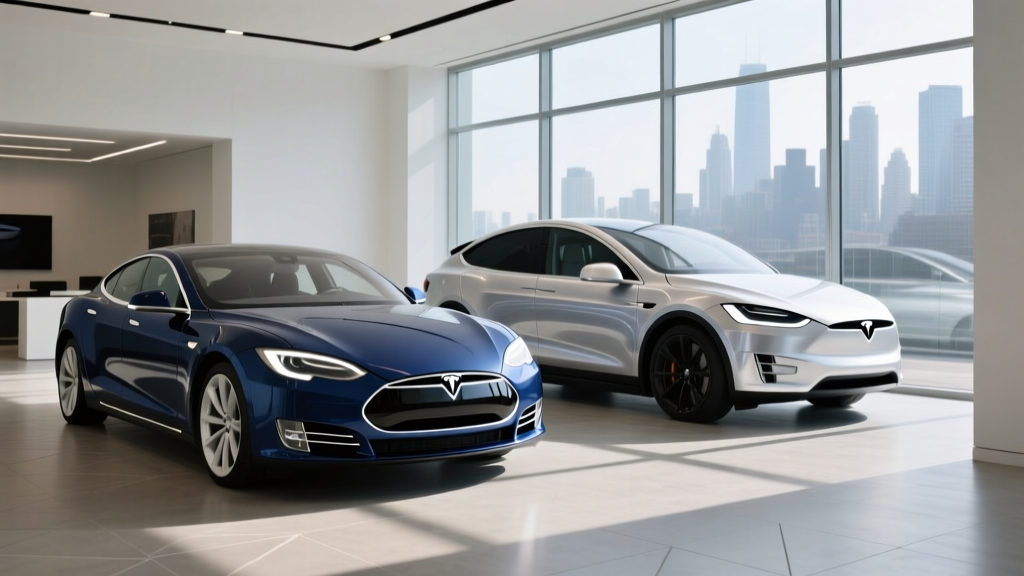
Search forums and EV subreddits long enough and you'll encounter the question: Are the Tesla Model S and X discontinued? The short answer entering the 2026 model year is no — both vehicles remain in production and available for order on Tesla's website. But the longer answer is more nuanced. Tesla has dramatically de-emphasized its original luxury sedans and SUVs in favor of the Model Y, the Cybertruck, and the next-generation Robotaxi platform. Production volumes at the Fremont factory have shifted heavily toward higher-margin, higher-volume products, and Tesla no longer breaks out Model S/X deliveries separately in its quarterly reports — lumping them into "other models."
That opacity fuels the discontinuation rumors. But if you're considering a 2026 Model S or Model X, the vehicles are very much real, with updated battery packs, refreshed interiors, and access to the expanding Supercharger network now open to NACS-equipped competitors. The question isn't whether they exist — it's whether they still make sense at their price point against increasingly capable rivals like the Lucid Air, BMW iX, Rivian R1S, and Mercedes EQS.
This review covers the current state of the Model S and Model X lineup: real-world range, charging performance, pricing after federal tax credits, and an honest assessment of who should (and shouldn't) buy one in 2026.
2026 Tesla Model S and Model X: Core Specifications
| Specification | Model S Long Range | Model X Long Range |
|---|---|---|
| EPA Range | 402 miles | 348 miles |
| Battery (usable) | ~100 kWh (NMC) | ~100 kWh (NMC) |
| Drivetrain | Dual-Motor AWD | Dual-Motor AWD |
| Horsepower | 670 hp | 670 hp |
| 0-60 mph | 3.1 seconds | 3.8 seconds |
| Peak DC Fast Charge | 250 kW | 250 kW |
| 10-80% DC Charge Time | ~30 minutes | ~30 minutes |
| Level 2 Home Charge Rate | 11.5 kW (~41 mi/hr) | 11.5 kW (~35 mi/hr) |
| MPGe (combined) | 120 MPGe | 102 MPGe |
| Efficiency | 28 kWh/100 mi | 33 kWh/100 mi |
| Cargo Volume | 28 cu ft (rear) / 79 cu ft max | 88 cu ft (behind 2nd row) / 92 cu ft max |
| Seating | 5 passengers | 5, 6, or 7 passengers |
| Base MSRP | $74,990 | $79,990 |
| Battery Warranty | 8 yr / 150,000 mi | 8 yr / 150,000 mi |
Note: Plaid variants (1,020 hp, tri-motor) remain available for both models at higher price points. Specs reflect Long Range AWD trims, which represent the volume sellers. Source: Tesla official specifications and fueleconomy.gov.
Real-World Range: What the EPA Sticker Doesn't Tell You
- EPA Sticker: 402 miles
- Highway (70-80 mph, moderate temps): ~330-350 miles
- Mixed city/highway (spring/fall): ~360-380 miles
- Cold weather (below 32°F, highway): ~270-300 miles
- EPA Sticker: 348 miles
- Highway (70-80 mph, moderate temps): ~280-300 miles
- Mixed city/highway (spring/fall): ~310-330 miles
- Cold weather (below 32°F, highway): ~230-260 miles
The Model S's 402-mile EPA rating remains one of the highest of any production EV sold in the United States, trailing only the Lucid Air Grand Touring (516 miles EPA). Tesla's NMC (nickel manganese cobalt) battery chemistry in the ~100 kWh pack prioritizes energy density over the LFP (lithium iron phosphate) chemistry used in the Standard Range Model 3 and Model Y. The trade-off: NMC packs degrade slightly faster over thousands of cycles, though Tesla's 8-year/150,000-mile battery warranty (with a 70% minimum capacity retention threshold) provides a meaningful backstop.
Real-world range loss follows predictable EV physics. Highway driving at 75+ mph increases aerodynamic drag exponentially, cutting range by 12-18% versus the EPA combined cycle. Cold weather compounds this: battery internal resistance increases, cabin heating draws significant power (Tesla uses a heat pump, which mitigates but doesn't eliminate the hit), and regenerative braking is limited at low battery temperatures. Expect a 25-35% range reduction in sustained sub-freezing highway conditions.
The Model X, being heavier and less aerodynamic (its drag coefficient is higher despite the refresh), sacrifices roughly 50 miles of EPA range versus the Model S on the same battery pack. For families regularly loading the X with passengers and cargo, real-world highway range of 260-280 miles in mild weather is typical — adequate for most trips but requiring planning on routes longer than 250 miles between chargers.
Charging Performance: DC Fast Charging and Home Setup
| Charging Level | Power / Rate | Miles Added per Hour | Notes |
|---|---|---|---|
| Level 1 (120V household) | ~1.4 kW | ~3-4 mi/hr | Emergency/trickle only |
| Level 2 (240V, 48A Wall Connector) | 11.5 kW | ~41 mi/hr (S) / ~35 mi/hr (X) | Full charge overnight (~10 hrs) |
| Level 2 (240V, 32A Mobile Connector) | 7.7 kW | ~27 mi/hr (S) / ~23 mi/hr (X) | NEMA 14-50 outlet |
| DC Fast Charge (V3 Supercharger) | Peak 250 kW | ~200 mi in 15 min | 10-80% in ~30 min |
| DC Fast Charge (V4 Supercharger) | Peak 250 kW (S/X limited) | Similar to V3 | V4 hardware supports higher kW but S/X architecture caps at 250 kW |
Both the Model S and Model X use Tesla's proprietary NACS (North American Charging Standard) connector natively — no adapter needed for the 20,000+ Supercharger stalls across North America. With the industry-wide shift to NACS through 2025-2026, these vehicles are now compatible with a growing number of third-party networks (Electrify America, EVgo) that have added NACS cables.
The critical nuance: kW is power (charge rate), kWh is energy (battery capacity). The 250 kW peak rate is just that — a peak. The actual charging curve tapers significantly as state of charge (SoC) increases. You'll see 250 kW only between roughly 10-30% SoC under ideal battery temperature conditions. By 50% SoC, the rate drops to ~150 kW, and above 80%, it falls below 50 kW. This is why Tesla and most EV makers quote 10-80% times rather than 0-100%.
For home charging, Tesla's Wall Connector at 48 amps on a 60-amp circuit delivers 11.5 kW — enough to fully replenish a depleted Model S in roughly 10 hours. Most owners who charge nightly from 30-40% remaining to 80-90% will see a full top-up in 4-5 hours. Installation of a dedicated 240V/60A circuit typically costs $800-$2,000 depending on panel proximity and local permitting, with a potential panel upgrade ($1,500-$3,000) if your home's electrical service is at capacity. Consult a licensed electrician for your specific situation.
One practical advantage of Tesla ownership in 2026: Supercharger reliability remains the industry benchmark. Tesla's network uptime consistently exceeds 95%, and the in-car navigation system automatically preconditions the battery when routing to a Supercharger — warming the pack to optimize charge acceptance and reduce your wait time at the stall.
Performance and Driving Dynamics
The Model S Long Range's 670 horsepower and 3.1-second 0-60 mph time place it firmly in supercar territory by acceleration metrics, though its ~4,800-pound curb weight is apparent in cornering dynamics. The dual-motor all-wheel-drive system provides exceptional traction in rain and snow, and the adaptive air suspension (standard on both S and X) offers adjustable ride height — useful for speed bumps, steep driveways, and light off-road clearance on the Model X.
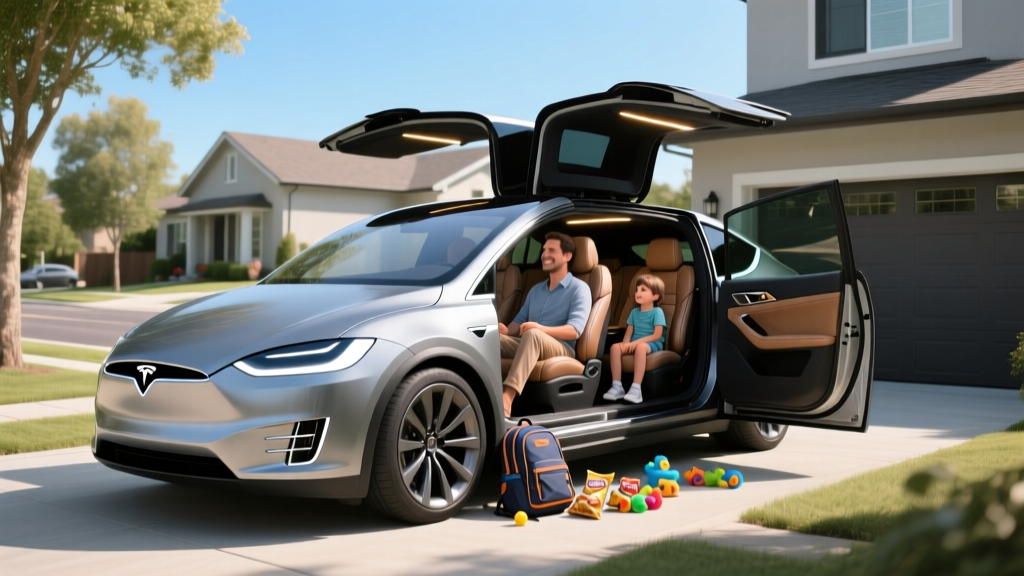
The Model X's 3.8-second 0-60 time is remarkable for a three-row SUV weighing over 5,100 pounds. Its falcon-wing rear doors remain a polarizing feature: they provide excellent access to the second and third rows in tight parking spaces but add mechanical complexity and have been a historical source of seal and sensor issues, though Tesla has improved reliability in recent model years.
Both vehicles feature Tesla's SAE Level 2 Autopilot standard, with Full Self-Driving (Supervised) available as a $8,000 option or $99/month subscription. It is critical to understand that FSD (Supervised) is not autonomous driving — it is a Level 2 driver-assistance system requiring continuous driver supervision, hands on or near the wheel, and full attention to the road. Tesla's naming convention has drawn scrutiny from NHTSA and consumer advocates. For true driverless operation, only Level 4 services like Waymo (currently operating in Phoenix, San Francisco, and Los Angeles) qualify.
Pricing, Tax Credits, and Ownership Economics
| Trim | Base MSRP | Federal §30D Credit | Effective Price (if eligible) |
|---|---|---|---|
| Model S Long Range | $74,990 | $0 (exceeds sedan MSRP cap) | $74,990 |
| Model S Plaid | $89,990 | $0 (exceeds sedan MSRP cap) | $89,990 |
| Model X Long Range | $79,990 | $0 (exceeds SUV MSRP cap) | $79,990 |
| Model X Plaid | $94,990 | $0 (exceeds SUV MSRP cap) | $94,990 |
Here is where the ownership math becomes challenging. Under current IRS §30D rules, the federal EV tax credit is subject to MSRP caps: $55,000 for sedans (Model S) and $80,000 for SUVs, vans, and trucks (Model X). The Model S at $74,990 far exceeds the sedan cap, making it ineligible for the federal credit regardless of buyer income or battery sourcing.
The Model X at $79,990 sits just under the $80,000 SUV cap, which means it could qualify for up to $7,500 — but only if the buyer also meets all other §30D requirements:
- Income caps: Modified AGI must not exceed $300,000 (married filing jointly), $225,000 (head of household), or $150,000 (single filers)
- Battery sourcing: A percentage of critical minerals and battery components must be sourced from the U.S. or free-trade-agreement countries (thresholds increase annually; verify current-year requirements at IRS.gov)
- Point-of-sale transfer: As of 2024, eligible buyers can transfer the credit to the dealer at purchase, reducing the out-of-pocket price immediately rather than waiting for tax filing
- Final assembly: Vehicle must undergo final assembly in North America (both Model S and X are assembled in Fremont, California — this requirement is met)
In practice, the Model X's eligibility hinges on the battery-sourcing requirements, which have tightened significantly. Tesla's battery supply chain has diversified, but specific eligibility can change by production batch. Always verify the specific VIN's eligibility on the IRS qualified vehicles list before purchase. Consult a tax professional for your personal situation.
For the Model S, no federal credit is available. Some states offer additional incentives (California's CVRP, for example, or utility-company rebates), but these vary by jurisdiction and are typically $1,000-$5,000 — helpful but not transformative at this price point.
Interior, Technology, and Practicality
The Model S interior received a significant refresh with the "Palladium" platform update, replacing the old vertical touchscreen with a 17-inch horizontal display, a rear-seat entertainment screen, ventilated front seats, and a yoke-style steering wheel (a conventional round wheel is now available at no extra charge after significant customer feedback). Build quality has improved markedly over pre-2022 examples, though panel gaps and interior material quality still lag behind rivals like the Lucid Air and Mercedes EQS at this price tier.
The Model X offers configurable seating for five, six, or seven passengers. With all rows folded, cargo capacity reaches 92 cubic feet — competitive with mid-size luxury SUVs. The frunk (front trunk) adds additional storage, though it's smaller than the Model S's due to the X's more complex front HVAC and air-suspension hardware.
Technology highlights include:
- 17-inch center touchscreen with AMD Ryzen processor (gaming-capable)
- 22-speaker, 960-watt audio system
- Over-the-air (OTA) software updates adding features post-purchase
- Sentry Mode (surround-camera security recording)
- Dog Mode and Camp Mode (climate control presets)
- HEPA air filtration with "Bioweapon Defense Mode"
Notable drawbacks: The absence of Apple CarPlay and Android Auto remains a dealbreaker for some buyers accustomed to phone-mirrored infotainment. Tesla's native navigation and media apps are functional but lack the ecosystem integration of CarPlay. Additionally, the minimalist interior (no physical buttons for climate, mirrors, or glovebox — all controlled via touchscreen) requires an adjustment period and can be distracting while driving.
Competitive Landscape: Is It Worth Buying vs. Rivals?
The Model S competes directly with the Lucid Air (starting ~$69,900, up to 516 miles EPA), the BMW i7 (starting ~$120,000), and the Mercedes EQS (starting ~$105,000). The Model X faces the BMW iX, Rivian R1S, and Kia EV9 in the three-row electric SUV segment, though those competitors occupy different price tiers.
- You want 400+ miles of EPA range without paying Lucid Air Grand Touring pricing
- Supercharger network access and reliability are top priorities for road trips
- You value OTA updates and Tesla's software ecosystem
- Acceleration performance (3.1s 0-60) matters to you
- Interior luxury and material quality are paramount (Lucid Air, Mercedes EQS)
- You need Apple CarPlay / Android Auto
- You want federal tax credit eligibility at a lower MSRP
- You prefer traditional dealer service networks over Tesla's mobile-ranger model
- You need three-row seating with EV powertrain and want the Supercharger network
- Falcon-wing doors genuinely help your use case (tight garages, child-seat access)
- You want a 3.8-second 0-60 SUV with air suspension
- Third-row space and cargo volume are critical (Rivian R1S and Kia EV9 offer more usable space)
- Budget is under $70,000 (Kia EV9 starts significantly lower)
- You want guaranteed federal tax credit eligibility
Pros and Cons at a Glance
- 402-mile EPA range — among the best of any EV
- Supercharger network reliability and coverage
- 3.1-second 0-60 mph (Long Range)
- Strong OTA update track record
- Heat pump standard (better cold-weather efficiency)
- 8-year/150,000-mile battery warranty
- $74,990+ with no federal tax credit eligibility
- Interior quality trails Lucid Air and German rivals
- No Apple CarPlay or Android Auto
- 250 kW peak DC charge rate trails 800V competitors (Hyundai Ioniq 5, Porsche Taycan at 350 kW)
- Service center wait times in some metro areas
- Aging platform (introduced 2012, refreshed 2021)
- Three-row EV with 348-mile range
- Falcon-wing doors for tight-space access
- 670 hp, 3.8-second 0-60 in a family SUV
- Air suspension with adjustable ride height
- Configurable 5/6/7-passenger seating
- May qualify for §30D credit (under $80K SUV cap)
- Falcon-wing door complexity and historical reliability concerns
- $79,990+ base; Plaid pushes past $94,000
- Third row is cramped for adults
- Real-world range drops to ~260-280 mi highway
- No CarPlay/Android Auto
- Heavier and less efficient than Model S (33 kWh/100 mi)
So — Are the Tesla Model S and X Discontinued?
No. As of the 2026 model year, both the Model S and Model X remain available for order, in production at Tesla's Fremont factory, and receiving ongoing software and minor hardware updates. But their strategic importance to Tesla has clearly diminished. The company's future volume rests on the Model Y, Cybertruck, and the forthcoming next-generation platform. The S and X serve as brand halo vehicles and proof-of-concept platforms for Tesla's highest-performance powertrains.
For buyers who value range, acceleration, and Supercharger infrastructure above all else — and who can absorb the premium pricing without federal tax-credit assistance — both vehicles remain compelling. For those prioritizing interior luxury, tax-credit savings, or the latest 800V charging architecture, the competitive landscape offers strong alternatives worth cross-shopping.
Frequently Asked Questions
What is the real-world range of the 2026 Tesla Model S?
The EPA rates the Model S Long Range at 402 miles. In real-world highway driving at 70-80 mph in moderate temperatures, expect approximately 330-350 miles. In cold weather (below 32°F) on the highway, plan for 270-300 miles. City driving with regenerative braking recovers more energy and can approach or slightly exceed the EPA rating.
How fast does the Tesla Model S and X charge at home and on the road?
On a Level 2 home charger (Tesla Wall Connector, 11.5 kW), the Model S gains roughly 41 miles of range per hour; a full charge takes about 10 hours. On a V3 Supercharger (250 kW DC fast charge), both vehicles charge from 10-80% in approximately 30 minutes, adding up to 200 miles in 15 minutes under ideal conditions. Note that charge speed tapers significantly above 80% SoC.
Does the Tesla Model S qualify for the $7,500 federal EV tax credit?
No. The Model S is classified as a sedan, and the IRS §30D credit imposes a $55,000 MSRP cap on sedans. At $74,990, the Model S is ineligible regardless of buyer income. The Model X, classified as an SUV with an $80,000 cap, may qualify if the buyer meets income limits and the vehicle's battery meets critical-mineral and component-sourcing requirements. Always verify at IRS.gov.
Is it worth buying a Tesla Model S vs. the Lucid Air in 2026?
It depends on priorities. The Lucid Air Grand Touring offers 516 miles EPA and a more luxurious interior but starts above $100,000 and lacks Supercharger network access (though it has NACS compatibility for third-party chargers). The Model S at $74,990 offers excellent range, proven Supercharger reliability, and stronger software features at a lower entry price. For road-trip-heavy owners, Tesla's charging network remains a decisive advantage.
What is the battery warranty on the Model S and Model X?
Both vehicles carry an 8-year or 150,000-mile battery and drive unit warranty (whichever comes first), with a guaranteed minimum of 70% battery capacity retention over that period. This is among the stronger battery warranties in the luxury EV segment. Tesla's NMC chemistry typically sees 8-12% degradation over the first 100,000 miles based on fleet data, though individual results vary with charging habits and climate.
Will Tesla discontinue the Model S and X after 2026?
Tesla has not announced a discontinuation date for either vehicle. However, the company's strategic focus has shifted to the Model Y, Cybertruck, and next-generation platforms. Production volumes for S/X are low relative to the rest of the lineup, and Tesla no longer reports their deliveries separately. While they remain available today, buyers should consider the long-term parts and service implications of owning a low-volume Tesla product versus the higher-volume Model 3/Y.