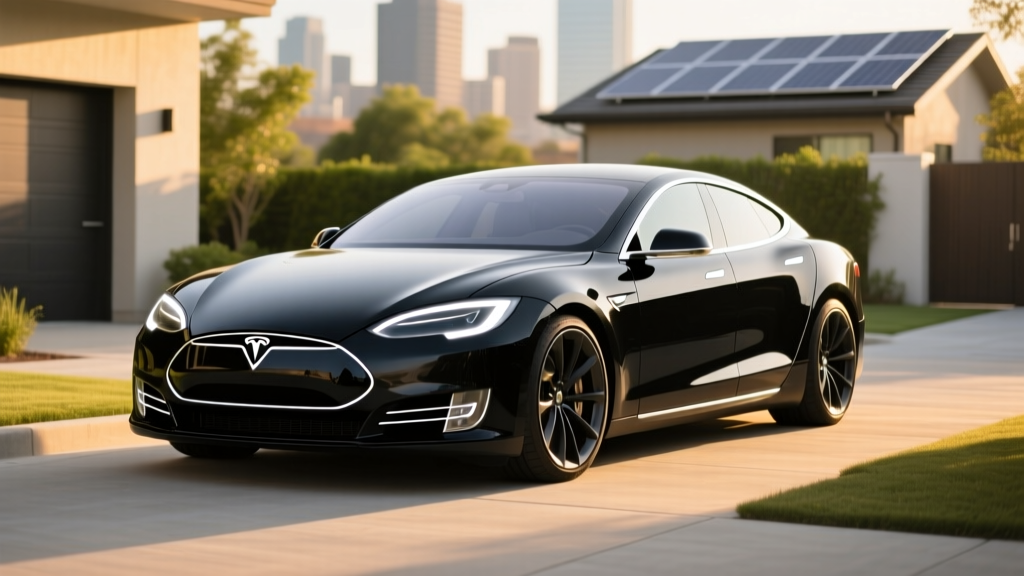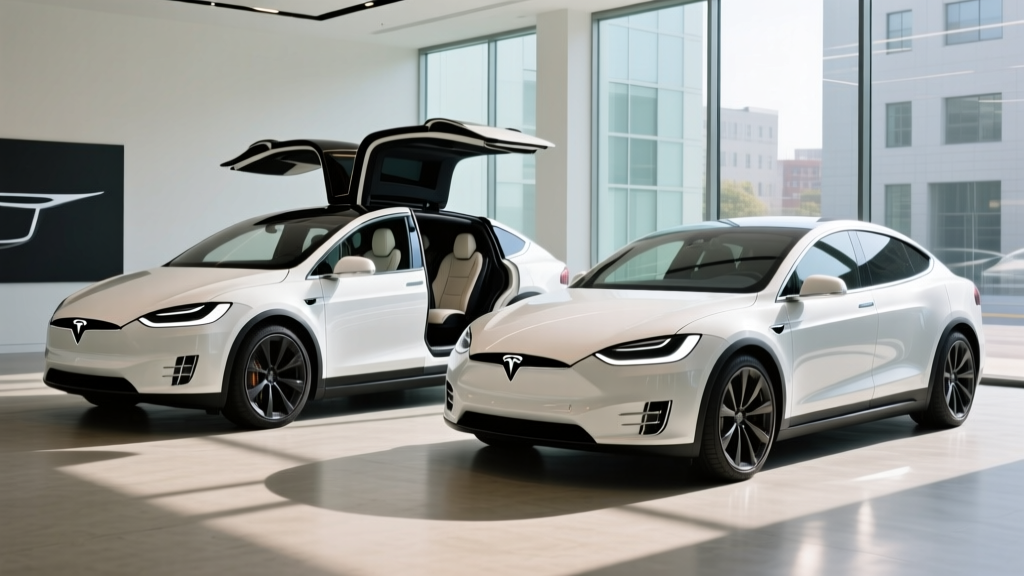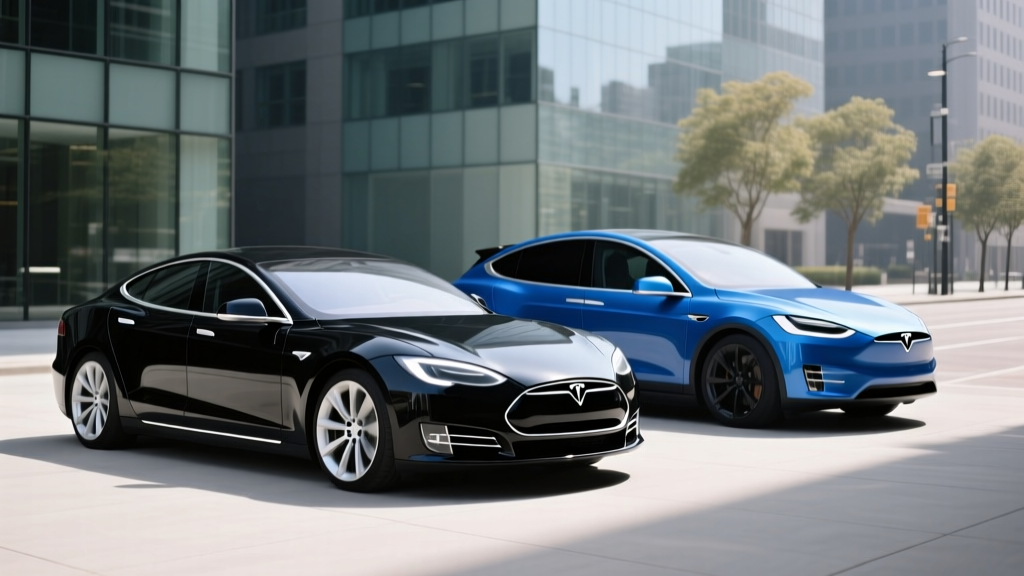
Tesla's flagship sedan and SUV have occupied the premium EV space for over a decade, but the 2026 Model S and Model X arrive with notable price adjustments and a refreshed feature set that demands a closer look. With the luxury EV market now crowded with contenders from BMW, Mercedes-Benz, Lucid, and Rivian, Tesla's veterans need to justify their premium positioning with more than just brand cachet. This review breaks down exactly what you get for the money — range, charging, performance, and the real-world ownership picture — so you can decide if these icons still earn their place in your garage.
What's New for 2026 and Why Prices Moved Up
For the 2026 model year, Tesla has adjusted pricing upward across both the Model S and Model X lineups. The increases reflect updated battery thermal management hardware, a revised interior materials package, and expanded standard equipment that was previously bundled in optional tiers. The Model S Long Range now starts at $79,990 (up from $74,990 for the previous model year), while the Model S Plaid holds at $94,990. The Model X Long Range moves to $84,990, and the Model X Plaid sits at $99,990.
These price increases arrive at a moment when Tesla is also streamlining its options structure. Adaptive air suspension, premium audio, and the latest HW4 Autopilot computer are now standard across all trims, eliminating some of the add-on complexity that previously inflated window stickers. The net effect: base prices are higher, but the gap between base and fully equipped is narrower.
- Base MSRP increases of $3,000–$5,000 across all trims
- Updated battery thermal management for improved cold-weather performance
- Revised interior with new sustainable material options
- HW4 Autopilot hardware standard (previously optional on some configurations)
- Standard adaptive air suspension across all trims
- Expanded ambient lighting and updated 17-inch center touchscreen with faster processor
Range, Efficiency, and Real-World Expectations
Both the Model S and Model X continue to use Tesla's proven 100 kWh (usable ~95 kWh) NMC (nickel-manganese-cobalt) battery pack. This chemistry prioritizes energy density over the LFP packs found in the standard-range Model 3 and Model Y, which is the right trade-off for vehicles targeting 350+ miles of range.
| Spec | Model S LR | Model S Plaid | Model X LR | Model X Plaid |
|---|---|---|---|---|
| EPA Range | 402 mi | 359 mi | 348 mi | 320 mi |
| MPGe (combined) | 120 MPGe | 116 MPGe | 109 MPGe | 102 MPGe |
| kWh/100 mi | 28 | 29 | 31 | 33 |
| Battery (usable) | ~95 kWh NMC | ~95 kWh NMC | ~95 kWh NMC | ~95 kWh NMC |
The EPA estimates above assume a mix of city and highway driving at moderate temperatures. In our experience and consistent with EPA testing methodology, expect the following real-world adjustments:
- Highway driving at 70-80 mph: Reduce EPA range by 10-15%. The Model S LR delivers roughly 340-360 miles on a long highway trip.
- Cold weather (below 32°F): Expect 20-30% range loss without preconditioning. A Model X LR in January Midwest conditions may deliver 250-280 miles.
- Preconditioning helps: Using Tesla's scheduled departure feature to warm the battery while plugged in recovers much of the cold-weather loss.
- Plaid models under hard acceleration: Sustained high-power driving significantly increases consumption — track use can push efficiency past 50 kWh/100mi.
Charging Speed: DC Fast Charging and Home Level 2
Tesla's Supercharger network remains a core ownership advantage, and the 2026 Model S and X continue to support peak DC fast-charging rates of up to 250 kW at V3 and V4 Supercharger stalls. The charging curve is well-managed: the pack accepts near-peak power from low states of charge before tapering progressively above 60% SoC.
| Charging Level | Power / Rate | Speed / Time |
|---|---|---|
| Level 1 (120V household) | ~1.4 kW | ~3-4 mi/hr |
| Level 2 (240V home, 48A) | 11.5 kW | ~34 mi/hr; full charge in ~9 hrs |
| DC Fast Charge (V3 Supercharger) | Peak 250 kW | 10-80% in ~27 min; ~185 mi in 15 min |
| DC Fast Charge (V4 Supercharger) | Peak 250 kW* | Same as V3 for Model S/X architecture |
*The Model S and X use a 400V battery architecture, which caps peak DC charge rates at 250 kW. Tesla's newer 800V platforms (expected in future vehicles) would be required to take advantage of higher-wattage V4 stalls. The Supercharger network now includes NACS connectors natively, and Tesla provides CCS adapters for non-Tesla DC networks.
For home charging, the onboard 11.5 kW charger is competitive. A full overnight charge from 10% to 100% takes roughly 9 hours on a properly installed 48-amp Level 2 circuit (requiring a 60-amp breaker). Tesla's Wall Connector remains one of the most reliable home units available, priced around $475 before installation. For detailed home installation costs, consult a licensed electrician — panel upgrades can add $1,000-$3,000 to the project if your home's electrical service is maxed out.
Performance: Long Range vs. Plaid Powertrains
The dual-motor Long Range and tri-motor Plaid configurations represent two very different philosophies in the same body. Both use all-wheel drive, but the performance gap is substantial.
| Metric | Model S LR | Model S Plaid | Model X LR | Model X Plaid |
|---|---|---|---|---|
| Drivetrain | Dual-Motor AWD | Tri-Motor AWD | Dual-Motor AWD | Tri-Motor AWD |
| Horsepower | 670 hp | 1,020 hp | 670 hp | 1,020 hp |
| 0-60 mph | 3.1 sec | 1.99 sec | 3.8 sec | 2.5 sec |
| Top Speed | 155 mph | 200 mph | 155 mph | 163 mph |
| Towing Capacity | N/A | N/A | 5,000 lbs | 5,000 lbs |
The Model S Plaid's 1.99-second 0-60 time remains one of the quickest production-car launches ever recorded, tri-motor torque vectoring providing extraordinary grip off the line. The Long Range models, at 3.1 and 3.8 seconds, are hardly slow — they match or beat most sports sedans and SUVs from traditional luxury brands.
On the road, the adaptive air suspension (now standard across all trims for 2026) provides a compliant ride in Comfort mode while firming up credibly in Sport. The Model X's higher ride height and available 5,000-pound towing capacity make it the clear pick for buyers who need SUV utility, though towing at max capacity will reduce range by roughly 30-40%.
Interior Space, Cargo, and Technology
Both vehicles seat five standard, with the Model X offering an optional six-seat configuration with second-row captain's chairs. The Model S sedan provides a traditional trunk plus a front trunk (frunk), while the Model X offers a liftgate with significantly more total cargo volume.
| Dimension | Model S | Model X |
|---|---|---|
| Front Legroom | 42.7 in | 41.2 in |
| Rear Legroom | 35.4 in | 38.4 in |
| Cargo (behind 2nd row) | 26.3 cu ft (trunk) + 3.1 cu ft (frunk) | 42.5 cu ft + 3.1 cu ft (frunk) |
| Max Cargo (seats folded) | 64.9 cu ft | 88.1 cu ft |
| Seating Capacity | 5 | 5 (opt. 6) |
The 17-inch center touchscreen runs Tesla's latest infotainment software with a faster processor for 2026, reducing lag in navigation and media. A secondary 8-inch rear touchscreen gives back-seat passengers climate and entertainment control. The 22-speaker premium audio system is standard and remains one of the best factory-installed systems in any vehicle at this price point.
The yoke steering wheel is now optional — a conventional round wheel is available at no extra charge. This is worth noting because the yoke, while striking in photos, remains polarizing for daily driving and low-speed maneuvering.
Driver Assistance: Autopilot and FSD (Supervised)
Tesla's Autopilot and Full Self-Driving (Supervised) are Level 2 driver-assistance systems per SAE International's classification. This means the driver must remain fully engaged, with hands on or near the wheel, and must supervise the system at all times. These are not self-driving systems. Only Level 4 services like Waymo's driverless robotaxis operate without human supervision in defined areas.
Basic Autopilot (traffic-aware cruise control and lane centering) is standard. The FSD (Supervised) package, available as an $8,000 one-time purchase or $99/month subscription as of early 2026, adds automatic lane changes, Navigate on Autopilot (highway on/off-ramp handling), traffic light and stop sign recognition, and the latest neural-network-based city street driving capability.
FSD (Supervised) has improved markedly through 2025-2026 software updates using an end-to-end neural network approach, reducing the frequency of disengagements. However, it still requires active supervision and is not a substitute for an attentive driver. Buyer expectations should be calibrated: FSD is a sophisticated convenience tool, not a chauffeur.
Pricing, Trims, and Federal Tax Credit Eligibility
| Trim | Base MSRP | As-Tested (typical) | §30D Tax Credit |
|---|---|---|---|
| Model S Long Range | $79,990 | $82,000–$87,000 | ❌ Not eligible |
| Model S Plaid | $94,990 | $97,000–$105,000 | ❌ Not eligible |
| Model X Long Range | $84,990 | $87,000–$95,000 | ❌ Not eligible |
| Model X Plaid | $99,990 | $102,000–$112,000 | ❌ Not eligible |
Under IRS §30D rules, the federal EV tax credit has an MSRP cap of $55,000 for sedans and $80,000 for SUVs, vans, and trucks (source: IRS.gov). The Model S, classified as a sedan, exceeds the $55,000 cap on all trims. The Model X, classified as an SUV, exceeds the $80,000 cap on all trims for 2026.
Additionally, §30D imposes buyer income limits ($150,000 single / $300,000 joint MAGI), critical mineral and battery component sourcing requirements, and North American final assembly rules. Even if the Model X were priced below $80,000, battery-sourcing requirements would need to be independently verified for the specific model year.
Bottom line: Budget for the full MSRP. No federal purchase incentive applies. Some state-level incentives may still apply — check your state's energy office or DMV for local programs.
Warranty Coverage and Battery Longevity
Tesla provides the following warranty coverage for the 2026 Model S and Model X:
- Basic Vehicle Limited Warranty: 4 years / 50,000 miles, whichever comes first
- Battery and Drive Unit Warranty: 8 years / 150,000 miles (Long Range) or 8 years / 150,000 miles (Plaid), with a minimum 70% battery capacity retention threshold over the warranty period
The 150,000-mile battery warranty on both the LR and Plaid is generous by luxury-EV standards. Tesla's NMC packs have demonstrated strong longevity in real-world use, with fleet data suggesting typical degradation of 10-12% over the first 100,000 miles for vehicles that avoid habitual 100% charging and frequent DC fast charging. For daily use, Tesla recommends charging to 80-90% and reserving 100% charges for road trips — a practice that significantly extends pack life.
Out-of-warranty battery replacement remains a significant cost consideration: industry estimates place a Model S/X pack replacement in the $15,000–$22,000 range including labor, though this figure has been trending downward as refurbishment programs expand.
Pros, Cons, and Who Should Buy
✅ Pros
- Class-leading EPA range (Model S LR: 402 mi)
- Access to Tesla Supercharger network — the most reliable DC fast-charging network in North America
- Tri-motor Plaid performance is extraordinary (1.99 sec 0-60)
- Over-the-air software updates continuously add features
- Strong resale value relative to luxury EV competitors
- Excellent 22-speaker premium audio standard
- Adaptive air suspension now standard across all trims
❌ Cons
- No federal tax credit eligibility (MSRP caps exceeded)
- 400V architecture limits DC charging to 250 kW (slower than 800V competitors like the Lucid Air and Porsche Taycan)
- Model X rear legroom trails some three-row luxury SUV rivals
- Interior build quality, while improved, still draws mixed reviews vs. Mercedes/BMW
- Yoke steering (optional) is not ideal for all drivers
- FSD (Supervised) remains Level 2 — requires full driver attention
- Price increases for 2026 widen the gap vs. newer competitors
Who This EV Suits Best
Choose the Model S Long Range if: You want maximum range in a luxury sedan, regularly take road trips where Supercharger access matters, and value a 400+ mile EPA rating that translates to comfortable 340+ mile real-world highway legs between charges.
Choose the Model S Plaid if: Track-capable performance is a priority and you accept the range and price trade-offs for 1,020 hp and a sub-2-second 0-60 time.
Choose the Model X Long Range if: You need a three-row-capable electric SUV with towing capacity (5,000 lbs), Supercharger network access for family road trips, and falcon-wing doors that make car-seat loading genuinely easier in tight parking spots.
Choose the Model X Plaid if: You want supercar acceleration in a family SUV and range compromise is acceptable for your daily use pattern.
Competitive Landscape: How Do They Compare?
The 2026 luxury EV market gives buyers more credible alternatives than ever. Key competitors include:
- Lucid Air Grand Touring: 516-mile EPA range, 800V+ architecture for faster DC charging, from ~$110,000. The range king, but at a higher entry price and with a smaller service network.
- BMW i7 xDrive60: ~318-mile range, traditional luxury interior quality, from ~$106,000. A more conventional luxury experience with less range.
- Mercedes-Benz EQS 580: ~350-mile range, exceptional ride comfort, from ~$105,000. Strong S-Class alternative but efficiency trails Tesla.
- Rivian R1S (SUV, Model X competitor): ~352-mile range (Dual-Motor Max Pack), 7-seat option, from ~$84,000. More off-road capable, smaller charging network.
The Tesla advantage remains the Supercharger network, software ecosystem, and efficiency. The disadvantage is that competitors now match or exceed the Model S/X in interior refinement, charging architecture (800V), and in some cases range.
Frequently Asked Questions
What is the real-world range of the 2026 Tesla Model S and Model X?
The Model S Long Range delivers roughly 340-360 miles on highway trips and 380+ miles in mixed city driving. The Model X Long Range delivers roughly 290-310 miles highway and 330+ miles mixed. Cold weather (below freezing) can reduce these figures by 20-30% without preconditioning. Plaid variants see roughly 10-15% lower real-world range due to higher performance tuning and wider tires.
How fast do the Model S and X charge at home and on the road?
At home on a 48-amp Level 2 charger (240V), both vehicles charge at up to 11.5 kW, adding roughly 34 miles of range per hour — a full charge from near-empty takes about 9 hours. On Tesla Superchargers, peak DC fast charging reaches 250 kW, delivering a 10-80% charge in approximately 27 minutes and up to 185 miles of range in 15 minutes under optimal conditions. The 400V architecture means these vehicles cannot take advantage of the 350+ kW rates available on 800V competitors.
Do the 2026 Model S or Model X qualify for the federal EV tax credit?
No. The Model S exceeds the IRS §30D sedan MSRP cap of $55,000, and the Model X exceeds the SUV/truck cap of $80,000 on every trim for 2026. Neither vehicle qualifies for the up-to-$7,500 federal tax credit. State and local incentives may still apply — consult your state energy office for details.
Is the Model S or Model X still worth buying vs. newer competitors?
They remain compelling if you prioritize Supercharger network access, proven software, and strong efficiency. The Model S LR's 402-mile EPA range is still among the best available. However, if interior luxury (BMW i7, Mercedes EQS), maximum range (Lucid Air), or faster 800V DC charging (Porsche Taycan, Lucid Air) are top priorities, the newer competitors offer advantages that the Model S/X's 400V platform and aging architecture cannot match. Test-drive both before deciding.
What are the biggest drawbacks of the 2026 Model S and Model X?
The most significant drawbacks are: (1) no federal tax credit eligibility due to MSRP caps, (2) 400V charging architecture that caps DC fast charging at 250 kW while competitors move to 800V, (3) interior quality that, while improved, still doesn't match the best German luxury competitors at similar prices, and (4) the 2026 price increases that push these vehicles further into territory where alternatives have grown stronger.
How long will the battery last and what does replacement cost?
Tesla warranties the battery for 8 years or 150,000 miles with a minimum 70% capacity retention guarantee. Real-world fleet data suggests NMC packs in the Model S/X typically retain 85-90% capacity at 100,000 miles with reasonable charging habits (avoiding frequent 100% charges and excessive DC fast charging). Out-of-warranty replacement costs are estimated at $15,000–$22,000 including labor, though refurbishment options are becoming more available.