The Tesla Model S Glass Roof: What Buyers Actually Want to Know
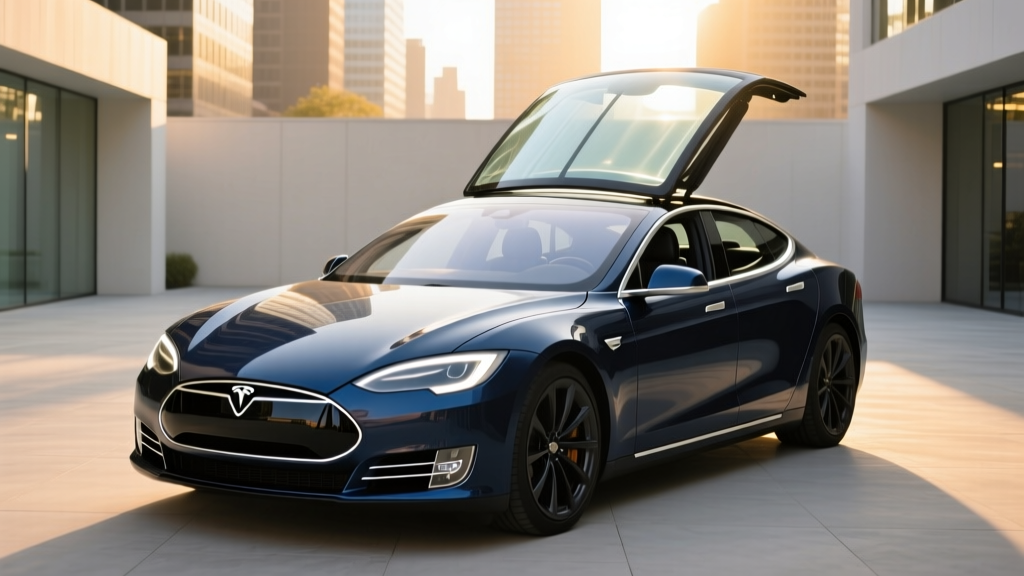
If you've landed here searching for the Model S sunroof, let's clear up the single most common misconception right away: the Tesla Model S does not have a traditional operable sunroof. What it has is a massive, fixed all-glass panoramic roof that stretches from the windshield header to the rear window. It doesn't tilt, slide, or pop open. For some buyers, that's a dealbreaker. For others, the flood of natural light and the sense of openness it creates is the whole point.
This distinction matters because Tesla's approach to the roof is inseparable from the car's structural engineering, thermal management, and overall ownership experience. The glass roof on the 2026 Model S is a single, continuous panel of laminated, UV-treated glass that contributes to the vehicle's rigidity and houses antenna elements. It also shapes the cabin's thermal profile in ways that affect real-world range — something we'll quantify below.
Beyond the roof, the 2026 Model S remains Tesla's flagship sedan: a dual-motor or tri-motor luxury EV with class-leading range, blistering acceleration, and access to the Supercharger network. But at a starting price north of $74,000, it competes against formidable rivals like the Lucid Air, BMW i7, and Mercedes-Benz EQS. This review breaks down everything you need to decide if it's the right EV for you.
2026 Tesla Model S: Core Specifications at a Glance
| Specification | Model S Long Range | Model S Plaid |
|---|---|---|
| EPA Estimated Range | 402 miles | 359 miles |
| Battery Capacity (usable) | ~95 kWh (NMC) | ~95 kWh (NMC) |
| Drivetrain | Dual-Motor AWD | Tri-Motor AWD |
| Horsepower | 670 hp | 1,020 hp |
| 0–60 mph | 3.1 seconds | 1.99 seconds |
| Top Speed | 155 mph | 200 mph |
| Max DC Fast-Charge Rate | 250 kW (peak) | 250 kW (peak) |
| 10–80% DC Fast Charge | ~27 minutes | ~27 minutes |
| Level 2 Home Charging | 11.5 kW (~41 mi/hr) | 11.5 kW (~41 mi/hr) |
| MPGe (combined) | 120 MPGe | 116 MPGe |
| Energy Consumption | 28 kWh/100 mi | 29 kWh/100 mi |
| Cargo Volume (rear + frunk) | 28.0 cu ft (rear) + 3.1 cu ft (frunk) | 28.0 cu ft (rear) + 3.1 cu ft (frunk) |
| Rear Legroom | 35.4 inches | 35.4 inches |
| Base MSRP | $74,990 | $89,990 |
| Battery & Drive Unit Warranty | 8 years / 150,000 miles | 8 years / 150,000 miles |
Source: fueleconomy.gov and Tesla official specifications. Prices exclude destination fee. Real-world results vary with conditions.
Range Reality Check: EPA Sticker vs. the Real World
EPA Estimate: 402 miles (Long Range) / 359 miles (Plaid)
Real-World Highway Expectation: ~330–360 miles (Long Range) at 70–75 mph
Cold-Weather (below 32°F): Expect a 20–30% reduction — roughly 280–320 miles (Long Range)
Mixed Commuting (city + suburban): Closer to EPA, ~370–400 miles thanks to regenerative braking
The Model S Long Range's 402-mile EPA figure remains one of the highest of any production EV sold in the U.S. But EPA range is measured on a standardized dynamometer cycle that doesn't fully replicate sustained highway driving or extreme temperatures. In independent real-world highway tests at 70 mph in moderate temperatures (65–75°F), the Long Range typically delivers between 330 and 360 miles before needing a charge — roughly 10–18% below the sticker number.
The glass roof plays a role here. While Tesla applies a UV-reflective coating, the large glass surface area increases solar heat gain in summer and heat loss in winter. The Model S uses a heat pump for cabin climate control, which mitigates cold-weather range loss compared to older resistive-heater systems, but in sub-freezing conditions, you should still budget for a 20–30% range reduction. Preconditioning the battery and cabin while still plugged in is essential in cold weather to preserve range.
For the Plaid, the 359-mile EPA figure reflects the energy demands of its tri-motor setup and stickier tires. Highway real-world numbers hover around 290–320 miles in moderate weather. If maximum range is your priority, the Long Range is the clear pick.
Charging Speed: DC Fast Charging and Home Level 2
Charging speed is where the Model S shows its age relative to newer 800-volt competitors. The Model S runs on a 400-volt architecture, which caps its peak DC fast-charge rate at 250 kW on Tesla's V3 Superchargers. That's respectable but no longer class-leading — the Lucid Air and Hyundai Ioniq 5 can pull 350 kW on compatible chargers thanks to their 800V/900V architectures.
| Charging Level | Power (kW) | Speed / Time | Notes |
|---|---|---|---|
| Level 1 (120V household) | ~1.4 kW | ~4–5 miles per hour | Emergency/trickle only |
| Level 2 (240V, 48A Wall Connector) | 11.5 kW | ~41 miles per hour | Full charge in ~9 hours |
| DC Fast (V3 Supercharger) | 250 kW peak | 10–80% in ~27 min | Tapers significantly above 80% |
| DC Fast (CCS adapter, non-Tesla) | Up to 250 kW | Varies by station | CCS adapter included with newer deliveries |
The charge curve matters as much as the peak number. The Model S hits its 250 kW peak between roughly 10–25% state of charge (SoC), then tapers progressively. By 50% SoC, you're seeing around 150–170 kW; by 80%, it drops to approximately 60–80 kW. This is why Tesla (and all knowledgeable EV owners) quote 10–80% times rather than 0–100%. Charging from 80% to 100% at a DC fast charger is painfully slow and should be avoided on road trips — let the car handle that last 20% overnight on Level 2 at home.
At home, the Tesla Wall Connector at 48 amps delivers 11.5 kW, adding roughly 41 miles of range per hour of charging. A full 10–100% charge takes about 9 hours, which means you'll wake up to a full battery every morning with a standard overnight session. Home charging installation costs typically range from $800 to $2,500 depending on your electrical panel's capacity and the distance from panel to charger location. If your home has a 200-amp panel with available capacity, expect the lower end. A panel upgrade to support a dedicated 60-amp circuit can push costs to $3,000–$5,000.
One significant advantage: the Model S uses the NACS (North American Charging Standard) connector natively, meaning seamless plug-and-charge access to the entire Tesla Supercharger network — over 25,000 stalls in North America. No adapter needed. For non-Tesla DC fast chargers using CCS, Tesla includes a CCS adapter.
Performance and Driving Dynamics
The Model S Long Range's dual-motor all-wheel-drive system produces 670 horsepower and delivers a 3.1-second 0–60 mph time. That's supercar territory from just a few years ago, delivered silently and with zero drama. The instant torque from the electric motors means passing power is always available, and the all-wheel-drive system provides confident traction in rain and light snow.
The Plaid escalates to absurd levels: 1,020 horsepower from three motors, with a claimed 1.99-second 0–60 mph time (on a prepped surface with rollout subtracted, as Tesla notes). In real-world testing on public roads, expect 2.1–2.3 seconds. The Plaid also features torque vectoring across the rear axle, carbon-ceramic brake availability, and a track mode that adjusts suspension, cooling, and stability control for circuit use.
Ride quality on the refreshed Model S (2021+) improved significantly over earlier versions. The adaptive air suspension provides a compliant highway cruise while firming up when you want it. The yoke steering wheel remains optional — a conventional round wheel is standard and, frankly, preferable for most drivers, especially at low speeds and during parking maneuvers where the yoke requires hand-over-hand inputs.
The Glass Roof: Design, Thermal Impact, and Practical Considerations
Let's return to the feature that brought you here. The Model S's all-glass panoramic roof is one of the largest single pieces of automotive glass in production. It is fixed — it does not open, tilt, or ventilate. There is no retractable shade, though Tesla applies a dark tint and UV-blocking treatment to the glass from the factory.
What owners love about it:
- The cabin feels dramatically more spacious and airy, especially compared to sedans with conventional steel roofs
- Excellent outward visibility upward — great for stargazing on camping trips
- No mechanical components to break or leak (unlike traditional sunroof mechanisms)
- Contributes to the car's structural rigidity as a bonded panel
What owners commonly criticize:
- No way to open it for fresh air — you're reliant on the HVAC system for ventilation
- Solar heat gain in summer, particularly in southern states, can make the cabin warm if parked in direct sun (preconditioning helps)
- Some owners report the glass feels hot to the touch overhead on very hot days, though the cabin temperature is managed by the heat pump
- Aftermarket ceramic tint films are a popular $300–$600 upgrade to further reduce infrared heat transmission
If an operable sunroof is a must-have feature for you, the Model S won't meet that requirement. Competitors like the BMW i7 and Mercedes-Benz EQS offer traditional panoramic sunroofs that can open. The Lucid Air also uses a fixed glass canopy but with a more aggressive curvature that some find more visually compelling.
Interior, Technology, and Daily Usability
The Model S interior centers on a 17-inch landscape-oriented touchscreen that controls virtually every vehicle function — there are almost no physical buttons. A second screen behind the center console serves rear passengers for climate and entertainment. A third screen ahead of the driver (a small instrument display) shows speed, range, and navigation directions, though it is not a full digital instrument cluster in the traditional sense.
Standout tech features:
- Autopilot (standard): Adaptive cruise control, lane centering, automatic emergency braking, blind-spot monitoring. This is an SAE Level 2 driver-assistance system — you must keep your hands on the wheel and eyes on the road at all times.
- Full Self-Driving (Supervised) ($8,000 option or $99/month): Adds automatic lane changes, Navigate on Autopilot, traffic light and stop sign recognition, and Autopark. Despite the name, this is still SAE Level 2 and requires active driver supervision.
- Over-the-air updates: Tesla regularly pushes software updates that add features, improve efficiency, and refine the UI — no dealer visits required.
- Gaming and entertainment: The 17-inch screen supports gaming (with a connected controller), Netflix, YouTube, and Spotify while parked.
- Sentry Mode: Uses the car's cameras to record activity around the vehicle when parked, a feature competitors still haven't matched.
Cargo space is a Model S strength. The rear hatchback design (not a traditional sedan trunk) opens to reveal 28.0 cubic feet of cargo area — expandable to 79.3 cu ft with the rear seats folded. The front trunk (frunk) adds 3.1 cu ft. Combined, that's more usable space than most midsize SUVs. Rear legroom at 35.4 inches is adequate for adults but trails the BMW i7 (40.1 inches) and Lucid Air (37.2 inches).
Tesla Autopilot and FSD (Supervised) are SAE Level 2 systems. They do not make the car self-driving. The driver is legally and practically responsible for the vehicle at all times. NHTSA has investigated multiple incidents involving Autopilot misuse. Always maintain steering-wheel contact and visual attention on the road. See NHTSA.gov for safety guidance.
Pricing, Tax Credits, and Ownership Cost
| Trim | Base MSRP | As-Tested (typical options) | §30D Federal Tax Credit | Effective Price (if credit applies) |
|---|---|---|---|---|
| Long Range | $74,990 | $78,000–$82,000 | Up to $7,500* | ~$67,490–$74,500 |
| Plaid | $89,990 | $93,000–$98,000 | Up to $7,500* | ~$82,490–$90,500 |
*Federal EV tax credit eligibility under IRS §30D is subject to multiple requirements. See checklist below. Credit may be applied as a point-of-sale reduction at the time of purchase.
- Vehicle MSRP cap: Sedans must have an MSRP at or below $55,000 — the Model S exceeds this cap
- Buyer income cap: AGI must not exceed $150,000 (single), $225,000 (head of household), or $300,000 (joint)
- Battery sourcing: Critical minerals and battery components must meet phased-in domestic/free-trade sourcing requirements
- Final assembly: Must occur in North America (Tesla Fremont factory qualifies)
- Point-of-sale transfer: Eligible buyers can transfer the credit to the dealer for an upfront price reduction
Key takeaway: Because the Model S Long Range starts at $74,990 and the Plaid at $89,990, both exceed the $55,000 MSRP cap for sedans under current IRS §30D rules. The Model S does not qualify for the federal new-EV tax credit. Always verify current rules at IRS.gov, as legislation can change.
Without the federal credit, the Model S becomes harder to justify on pure economics versus competitors. The Lucid Air Pure starts around $69,900, offers 419 miles of EPA range, and — depending on trim and pricing — may fall under the $55,000 sedan MSRP cap for credit eligibility. The BMW i7 eDrive50 starts around $99,800 but offers a more traditional luxury experience with an opening panoramic roof.
5-year ownership cost considerations:
- Charging cost: At the national average electricity rate of ~$0.17/kWh, fully charging the 95 kWh battery costs roughly $16.15. For 12,000 miles/year (~3,360 kWh), that's about $571/year in electricity vs. ~$1,800/year in gasoline for a comparable 25 MPG sedan.
- Maintenance: No oil changes, minimal brake wear (regen braking), cabin air filter replacement every 2–3 years. Tesla recommends tire rotation every 6,250 miles.
- Insurance: Model S insurance premiums run 20–40% higher than average sedans. Expect $2,500–$4,000/year depending on location and driving record.
- Depreciation: The Model S has historically experienced steeper depreciation than the Model 3/Y, partly due to its higher price point and the rapid pace of Tesla's own technology updates.
Warranty Coverage
Tesla provides the following warranty coverage for the 2026 Model S:
- Basic Vehicle Limited Warranty: 4 years / 50,000 miles
- Battery and Drive Unit Warranty: 8 years / 150,000 miles, with a minimum 70% battery capacity retention guarantee over the warranty period
The 150,000-mile battery warranty is generous and reflects Tesla's confidence in its NMC cell chemistry and thermal management system. For context, most competitors offer 8 years / 100,000 miles on the battery. If you plan to keep the car beyond 150,000 miles, third-party extended warranty options exist but vary widely in coverage and cost.
Pros, Cons, and the Competition
✅ Pros
- Class-leading 402-mile EPA range (Long Range)
- Access to the Tesla Supercharger network (25,000+ stalls)
- Hatchback versatility with 28+ cu ft of cargo space
- Over-the-air updates continuously improve the car
- Strong 8-year/150,000-mile battery warranty
- Excellent real-world energy efficiency (28 kWh/100 mi)
- Sentry Mode and advanced camera-based security
❌ Cons
- Glass roof is fixed — does not open or ventilate
- Does not qualify for the $7,500 federal tax credit (MSRP cap)
- 400V architecture limits peak charging to 250 kW
- Rear legroom (35.4 in) trails luxury competitors
- Yoke steering is polarizing and impractical for some maneuvers
- Minimalist interior lacks physical buttons some buyers prefer
- Higher insurance premiums than comparable sedans
- Build quality inconsistencies still reported by some owners
Key competitors to cross-shop:
- Lucid Air Pure/Grand Touring: More range (419–516 mi EPA), more rear legroom, qualifies for tax credit on lower trims. Smaller service network.
- BMW i7 eDrive50: Traditional luxury with an opening panoramic roof, superior rear-seat comfort, but lower range (~318 mi EPA) and higher price.
- Mercedes-Benz EQS 450+: Plush interior, hyperscreen dash, but real-world range and efficiency trail the Model S significantly.
Who Should Buy the 2026 Tesla Model S?
- Choose the Model S Long Range if: You want the longest range of any mainstream EV, rely on road-trip charging infrastructure (Superchargers), and value hatchback cargo versatility over rear-seat limousine comfort.
- Choose the Model S Plaid if: Track-capable performance is a priority alongside daily usability, and you accept the range and price trade-offs.
- Look elsewhere if: An operable sunroof is non-negotiable, you need maximum rear-seat space for tall adults, you want the federal tax credit (consider the Lucid Air Pure or Model 3), or you prefer physical buttons and a more traditional luxury interior.
The Model S is best suited for tech-forward buyers who prioritize range, charging-network access, and performance above traditional luxury trappings. It's an outstanding road-trip EV — the Supercharger network makes long-distance travel genuinely easy. But if the fixed glass roof's lack of ventilation is a dealbreaker, or if the MSRP cap disqualifying it from the federal tax credit stretches your budget, the competition has compelling alternatives.
Frequently Asked Questions
Does the Tesla Model S sunroof open?
No. The Model S has a fixed all-glass panoramic roof that does not open, tilt, or slide. There is no retractable sunshade either. The glass is tinted and UV-treated from the factory. If you need fresh-air ventilation, you'll use the HVAC system or open a window.
What is the real-world range of the Tesla Model S?
The EPA rates the Long Range at 402 miles and the Plaid at 359 miles. In real-world highway driving at 70–75 mph in moderate temperatures, expect roughly 330–360 miles (Long Range) and 290–320 miles (Plaid). Cold weather below freezing can reduce range by 20–30%. City driving with regenerative braking gets you closer to the EPA sticker.
How fast does the Model S charge at home and on the road?
At home on a Level 2 Tesla Wall Connector (48A, 11.5 kW), the Model S gains about 41 miles of range per hour, with a full charge taking around 9 hours. On a V3 Supercharger, it peaks at 250 kW and charges from 10–80% in approximately 27 minutes. The 400V architecture means it can't match the 350 kW speeds of 800V competitors.
Does the Tesla Model S qualify for the federal EV tax credit?
No. Under current IRS §30D rules, new sedans must have an MSRP at or below $55,000 to qualify. The Model S starts at $74,990 (Long Range) and $89,990 (Plaid), exceeding this cap. Always verify current eligibility at IRS.gov, as rules may change with future legislation.
Is the Tesla Model S worth buying over the Lucid Air or BMW i7?
It depends on your priorities. The Model S wins on Supercharger network access, cargo versatility (hatchback), and proven over-the-air software updates. The Lucid Air offers more range and rear-seat space, and its lower trims may qualify for the tax credit. The BMW i7 provides a more traditional luxury experience with an opening panoramic roof and superior rear-seat comfort. Test-drive all three before deciding.
Can I add an aftermarket shade to the Model S glass roof?
Yes. Several third-party companies sell removable fabric or mesh sunshades designed specifically for the Model S glass roof. These typically cost $50–$150 and attach via clips or friction fit. They reduce solar heat gain noticeably on hot days. Some owners also opt for aftermarket ceramic window tint ($300–$600 professionally installed) for additional infrared heat rejection across all glass surfaces.
What is the battery warranty on the Model S?
Tesla covers the Model S battery and drive unit for 8 years or 150,000 miles, whichever comes first, with a guaranteed minimum 70% capacity retention over that period. If the battery degrades below 70% within the warranty window, Tesla will repair or replace it at no cost. This is one of the most generous battery warranties in the luxury EV segment.