Quick Verdict: The Leaf S Plus in 2026
The Nissan Leaf S Plus occupies a specific niche in the 2026 EV market: it remains one of the lowest-priced new electric vehicles you can buy with over 200 miles of EPA-rated range. At a starting MSRP around $30,000 before incentives, it undercuts rivals like the Chevrolet Bolt EV (discontinued and relaunched), Hyundai Kona Electric, and Kia Niro EV on base price. But the Leaf's age is showing — its CHAdeMO charging connector limits DC fast-charging infrastructure access, and its 100 kW peak charge rate trails modern competition. If your commute is predictable, you can charge at home, and you value a low entry price over cutting-edge tech, the Leaf S Plus still makes sense. If you road-trip frequently or rely on public fast charging, better options exist.
EPA Range: 212 miles | Battery: 62 kWh (NMC) | Peak DC Charge: 100 kW
0–60 mph: ~6.5 sec | HP: 214 | MSRP: ~$30,540
Range, Efficiency, and Real-World Expectations
The 2026 Nissan Leaf S Plus carries an EPA-estimated range of 212 miles from its 62 kWh usable lithium-ion battery pack (NMC chemistry). That figure is measured on a combined city/highway cycle, and the Leaf's efficiency is rated at 111 MPGe combined, which translates to roughly 30 kWh per 100 miles according to fueleconomy.gov.
EPA Sticker: 212 miles
Realistic highway (70 mph, moderate temps): ~175–190 miles
Cold weather (below 32°F, highway): ~145–165 miles
City/commuter driving (regenerative braking active): ~200–220 miles
The Leaf S Plus lacks a dedicated battery thermal management liquid cooling system — it uses passive air cooling. This means cold-weather range loss is more pronounced than in EVs with active thermal systems (like the Hyundai Ioniq 5 or Tesla Model 3). Expect 20–30% range reduction in sustained sub-freezing temperatures. On warm-weather highway drives at 70+ mph, aerodynamic drag and the absence of a heat pump reduce efficiency noticeably versus the EPA combined figure.
For context, the standard Leaf S (non-Plus) uses a smaller 40 kWh pack and is rated at 149 miles EPA. The S Plus's extra 62 miles of range come at a price premium of roughly $4,000, which works out to about $65 per additional mile of range — a reasonable trade-off if you need the buffer.
Charging: Speeds, Connectors, and the CHAdeMO Problem
Charging remains the Leaf S Plus's most debated attribute. Here are the hard numbers:
| Level | Power | Speed | Notes |
|---|---|---|---|
| Level 1 (120V household) | ~1.4 kW | ~4–5 mi/hr | Emergency/trickle only; full charge ~40+ hours |
| Level 2 (240V home/public) | 6.6 kW (onboard charger) | ~22–25 mi/hr | Full charge in ~9.5 hours; J1772 connector |
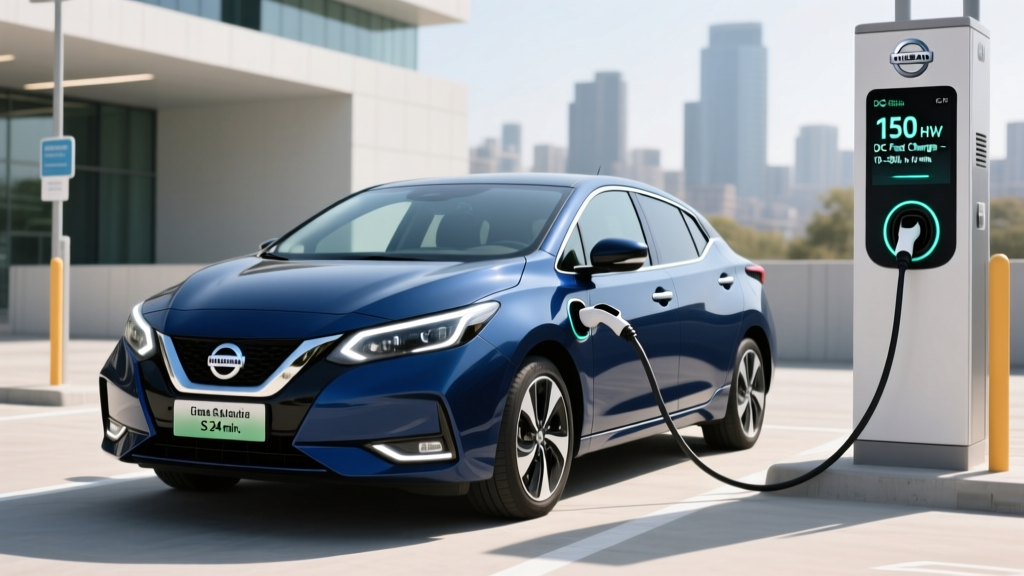
| DC Fast Charge | 100 kW peak (CHAdeMO) | ~10–80% in ~40–45 min | CHAdeMO connector; tapers significantly above 80% |
The CHAdeMO connector issue deserves honest discussion. In the U.S., the DC fast-charging landscape has consolidated heavily around CCS1 and Tesla's NACS (now opening to other brands). CHAdeMO stations still exist — Electrify America and some regional networks maintain them — but new installations overwhelmingly favor CCS and NACS. If you rely on DC fast charging for road trips, you will encounter fewer CHAdeMO stalls and may face longer detours to find compatible chargers.
The 100 kW peak charge rate also trails the competition. The Hyundai Kona Electric and Kia Niro EV both peak around 77–80 kW on CCS (similar or slightly lower peak, but on a more widely supported connector). Meanwhile, vehicles like the Chevrolet Equinox EV or Tesla Model 3 can sustain 150–250 kW on CCS/NACS networks. The Leaf's charge curve tapers noticeably above 60% state of charge, and the lack of active battery cooling means repeated fast-charge sessions in hot weather can trigger thermal throttling — the car reduces charge speed to protect the battery.
Home charging is where the Leaf excels. On a Level 2 home charger (240V, 32A circuit), the 6.6 kW onboard charger adds about 22–25 miles of range per hour. A full overnight charge from near-empty takes roughly 9.5 hours, which is perfectly practical for daily commuters who plug in each evening.
Performance and Drivetrain
The Leaf S Plus is powered by a single front-mounted electric motor producing 214 horsepower and 250 lb-ft of torque. It is front-wheel drive only — no AWD option is available.
Nissan quotes a 0–60 mph time of approximately 6.5 seconds. In practice, the Leaf's instant torque delivery makes it feel brisk around town and responsive at stoplights. Highway passing power is adequate but not thrilling. The single-speed reduction gear means acceleration above 60 mph feels more gradual than in multi-speed ICE vehicles.
Ride quality is comfortable and compliant — the Leaf was designed as a practical commuter, not a sport hatch. Steering is light and predictable. Regenerative braking is adjustable via the e-Pedal mode (which enables near one-pedal driving) or standard coasting mode. The e-Pedal setting provides strong regen but does not bring the car to a complete stop-and-hold in all conditions — you may still need the friction brake at very low speeds.
Interior, Cargo, and Technology
The Leaf's cabin reflects its platform age. Materials are durable but heavy on hard plastics. Seating is comfortable for four adults, though the rear seat is tighter than in crossover EVs.
| Measurement | Value |
|---|---|
| Cargo volume (rear seats up) | 23.6 cu ft |
| Cargo volume (rear seats folded) | ~50 cu ft (est.) |
| Front legroom | 42.1 in |
| Rear legroom | 33.5 in |
| Curb weight | ~3,700 lbs |
Infotainment: The S Plus trim includes an 8-inch touchscreen with wireless Apple CarPlay and wired Android Auto, a 6-speaker audio system, and NissanConnect services. A built-in navigation system is included on S Plus (not on the base S). The interface is functional but dated compared to the large vertical screens and faster processors in newer EVs.
Driver Assistance (Nissan ProPILOT Assist): The Leaf S Plus includes ProPILOT Assist, which is a SAE Level 2 driver-assistance system combining adaptive cruise control with lane-centering steering. It works well on divided highways but requires continuous driver supervision — hands must remain on the wheel and eyes on the road. It is not "self-driving" and does not perform automatic lane changes or navigate interchanges autonomously.
Additional standard safety features include automatic emergency braking with pedestrian detection, blind-spot warning, rear cross-traffic alert, lane departure warning, and a rear-view camera. The Leaf has historically earned strong ratings from the NHTSA, though you should verify the current model year's specific crash-test results.
Pricing, Trims, and Federal Tax Credit Eligibility
The 2026 Nissan Leaf is offered in two main configurations:
| Trim | Battery | EPA Range | MSRP (est.) |
|---|---|---|---|
| Leaf S | 40 kWh | 149 mi | ~$28,140 |
| Leaf S Plus | 62 kWh | 212 mi | ~$30,540 |
| Leaf SV Plus (if offered) | 62 kWh | ~212 mi | ~$35,000+ |
Destination charges add approximately $1,095. Options on the S Plus are limited — typically a cargo package, splash guards, and exterior colors.
Federal EV Tax Credit (§30D) — Does the Leaf Qualify?
This is where the Leaf S Plus has a significant advantage. The Nissan Leaf is assembled in the United States (Smyrna, Tennessee), and its battery sourcing has historically aligned with §30D critical-mineral and battery-component requirements. As of current IRS guidelines, the Leaf has qualified for the full $7,500 federal tax credit, and for 2026, eligible buyers can transfer this credit to the dealer as a point-of-sale reduction, lowering the effective purchase price directly.
- MSRP cap: Vehicle must be under $55,000 (sedans/hatchbacks) — Leaf S Plus qualifies ✓
- Buyer income cap: AGI ≤ $150,000 (single) / $300,000 (married filing jointly) — verify your tax situation
- Battery sourcing: Critical minerals and battery components must meet phased thresholds — Leaf has historically met requirements, but confirm with your dealer for the specific model year
- Point-of-sale transfer: Available for 2026 — reduces purchase price at the dealership rather than waiting for a tax refund
- Final authority: Check the IRS clean vehicle credit lookup tool and consult a tax professional before relying on credit eligibility
Effective price after full credit: ~$23,040 (S Plus MSRP $30,540 minus $7,500). This makes the Leaf S Plus one of the cheapest new EVs with 200+ miles of range available in the U.S. market. Note that state and local incentives may further reduce cost — check your jurisdiction's specific programs.
Battery Warranty, Longevity, and Degradation
Nissan covers the Leaf's lithium-ion battery with an 8-year/100,000-mile warranty against capacity loss below 9 bars out of 12 on the battery capacity gauge (approximately 66–70% of original capacity). The powertrain (motor, inverter, reduction gear) carries a 5-year/60,000-mile warranty, and the basic vehicle warranty is 3 years/36,000 miles.
The Leaf's battery uses NMC (nickel-manganese-cobalt) chemistry. NMC offers good energy density but is more sensitive to thermal stress than LFP (lithium iron phosphate). Because the Leaf uses passive air cooling rather than active liquid thermal management, battery degradation over time can be more pronounced — especially in hot climates or with frequent DC fast charging.
Real-world data from Leaf owners suggests typical degradation of 10–15% over 5 years / 60,000 miles in moderate climates. In hot climates (Arizona, Texas) with heavy fast-charge use, some owners have reported 15–20% loss over similar periods. This is a known trade-off versus EVs with active thermal management.
Battery replacement cost: A new 62 kWh Leaf battery pack replacement currently runs approximately $8,000–$12,000 (parts and labor), though prices may decline as the battery supply chain matures. Most owners will not need a replacement within the warranty period under normal use.
How the Leaf S Plus Compares
| Spec | Nissan Leaf S Plus | Hyundai Kona Electric | Kia Niro EV |
|---|---|---|---|
| EPA Range | 212 mi | ~261 mi | ~239 mi |
| Battery (kWh) | 62 (NMC) | ~65 (NMC) | ~64.8 (NMC) |
| DC Fast Charge Peak | 100 kW (CHAdeMO) | ~100 kW (CCS) | ~77 kW (CCS) |
| Connector | CHAdeMO | CCS/NACS adapter | CCS/NACS adapter |
| Horsepower | 214 hp | 201 hp | 201 hp |
| Base MSRP (est.) | ~$30,540 | ~$33,000 | ~$39,600 |
| Thermal Management | Passive (air) | Active (liquid) | Active (liquid) |
| §30D Tax Credit | Up to $7,500 | Up to $7,500 | Up to $7,500 |
The Kona Electric and Niro EV both offer more range, CCS/NACS connector compatibility (better public charging access), and active battery thermal management. However, they cost $2,500–$9,000 more before incentives. After the $7,500 credit, the Leaf S Plus at ~$23,000 is difficult to beat on pure price-per-mile-of-range.
Who Should Buy the Nissan Leaf S Plus?
Choose the Leaf S Plus if:
- You primarily drive a daily commute under 80 miles round-trip
- You can install a Level 2 home charger and rarely need public DC fast charging
- You want the lowest possible new-EV purchase price after the federal tax credit
- You live in a moderate climate (not extreme heat or sustained sub-zero winters)
- You value a hatchback form factor with decent cargo space
- You take frequent road trips and need reliable DC fast-charging access (CHAdeMO is limiting)
- You live in a very hot climate and plan to keep the car 8+ years (passive cooling accelerates degradation)
- You need more than 212 miles of real-world range for your lifestyle
- You want the latest infotainment tech, over-the-air updates, or advanced driver-assist features
- You need AWD for snow or towing capability
Pros and Cons
- One of the cheapest new EVs with 200+ mi range after $7,500 credit
- Comfortable ride and easy to drive in city traffic
- Proven, long-running platform with wide service network
- Good cargo space for a hatchback (23.6 cu ft)
- Standard ProPILOT Assist (Level 2) included
- U.S.-assembled; strong §30D tax credit eligibility
- CHAdeMO connector limits DC fast-charging station access
- Passive air cooling increases degradation risk in hot climates
- 212-mile EPA range is modest vs. newer competitors
- Dated interior materials and infotainment interface
- No AWD option; limited towing capability
- Rear legroom (33.5 in) is tight for taller passengers
Frequently Asked Questions
What is the real-world range of the Nissan Leaf S Plus?
The EPA rates the Leaf S Plus at 212 miles combined. In real-world highway driving at 70 mph in moderate temperatures, expect approximately 175–190 miles. In cold weather (below 32°F), range can drop to 145–165 miles due to the passive battery thermal management and lack of a heat pump. City driving with regenerative braking can approach or slightly exceed the EPA figure.
How fast does the Leaf S Plus charge at home and on DC fast chargers?
On a Level 2 home charger (240V), the Leaf S Plus charges at 6.6 kW, adding about 22–25 miles of range per hour for a full charge in roughly 9.5 hours. On a DC fast charger (CHAdeMO), it peaks at 100 kW and charges from 10–80% in approximately 40–45 minutes. Note that CHAdeMO chargers are becoming less common at public stations compared to CCS and NACS.
How much does the Leaf S Plus cost after the federal tax credit?
With an MSRP of approximately $30,540 and eligibility for the full $7,500 federal §30D tax credit (applied as a point-of-sale reduction in 2026), the effective price is around $23,040 before destination charges, taxes, and registration. Eligibility depends on buyer income (≤$150K single / ≤$300K joint) and battery sourcing requirements. Always verify current IRS rules and consult a tax professional.
Is the Nissan Leaf S Plus worth buying vs. the Kona Electric or Niro EV?
If minimizing purchase price is your priority and you charge at home, the Leaf S Plus at ~$23,000 after incentives is hard to beat. However, if you need longer range (261 mi for the Kona), better public charging infrastructure access (CCS/NACS), or active battery thermal management for long-term durability in hot climates, the Kona Electric or Niro EV justify their higher price. For road-trippers, the Leaf's CHAdeMO connector is a meaningful disadvantage.
Does the 2026 Leaf S Plus qualify for the $7,500 federal EV tax credit?
The Nissan Leaf has historically qualified for the full $7,500 §30D credit due to U.S. assembly and compliant battery sourcing. For the 2026 model year, confirm eligibility via the IRS clean vehicle credit tool at purchase time, as sourcing requirements phase in annually. The credit can be transferred to the dealer as a point-of-sale discount. Buyer income caps apply: $150,000 AGI for single filers, $300,000 for married filing jointly.
How long will the Leaf S Plus battery last?
Nissan warranties the battery for 8 years/100,000 miles against dropping below 9 of 12 capacity bars (~66–70% capacity). Real-world data suggests 10–15% degradation over 5 years in moderate climates. Hot-climate owners who frequently DC fast-charge may see 15–20% loss over the same period. The passive air-cooling system is the primary factor — if longevity in heat is critical, consider an EV with active liquid thermal management.