Tesla Model S Speed and Performance: The Numbers That Still Matter
More than a decade after its debut, the Tesla Model S remains a benchmark for electric sedan performance. Whether you're researching the dual-motor Long Range or the tri-motor Plaid, the Tesla Model S speed figures continue to anchor the luxury EV performance segment — even as rivals like the Lucid Air, Porsche Taycan, and Mercedes EQS close the gap. For 2026, Tesla offers the Model S in two trims: the Long Range (dual-motor AWD) and the Plaid (tri-motor AWD). Both share the same 100 kWh battery pack and 405-volt architecture, but the powertrain differences produce dramatically different driving experiences.
This review breaks down every number a prospective buyer needs: EPA range versus real-world expectations, DC fast-charging curves, home charging logistics, federal tax credit eligibility under current IRS §30D rules, and how the Model S stacks up against its closest competitors in 2026.
| Spec | Long Range (AWD) | Plaid (AWD) |
|---|---|---|
| 0–60 mph | 3.1 seconds | 1.99 seconds |
| Horsepower | 670 hp | 1,020 hp |
| Top Speed | 155 mph | 200 mph |
| EPA Range | 402 miles | 396 miles |
| Battery (usable) | ~100 kWh (NMC) | ~100 kWh (NMC) |
| Drivetrain | Dual-motor AWD | Tri-motor AWD |
| Efficiency (combined) | 124 MPGe / 27 kWh/100mi | 120 MPGe / 28 kWh/100mi |
| Max DC Fast Charge | 250 kW | 250 kW |
| 10–80% DC Charge | ~30 minutes | ~30 minutes |
| Level 2 Home Charge | 11.5 kW (~41 mi/hr) | 11.5 kW (~41 mi/hr) |
| Base MSRP | $79,990 | $94,990 |
| Battery Warranty | 8 yr / 150,000 mi | 8 yr / 150,000 mi |
Real-World Range: What the EPA Sticker Doesn't Tell You
The 2026 Tesla Model S Long Range carries an EPA-estimated 402 miles of range. The Plaid is rated at 396 miles. In real-world mixed driving at moderate temperatures (60–80°F), expect approximately 350–380 miles from the Long Range and 340–370 miles from the Plaid.
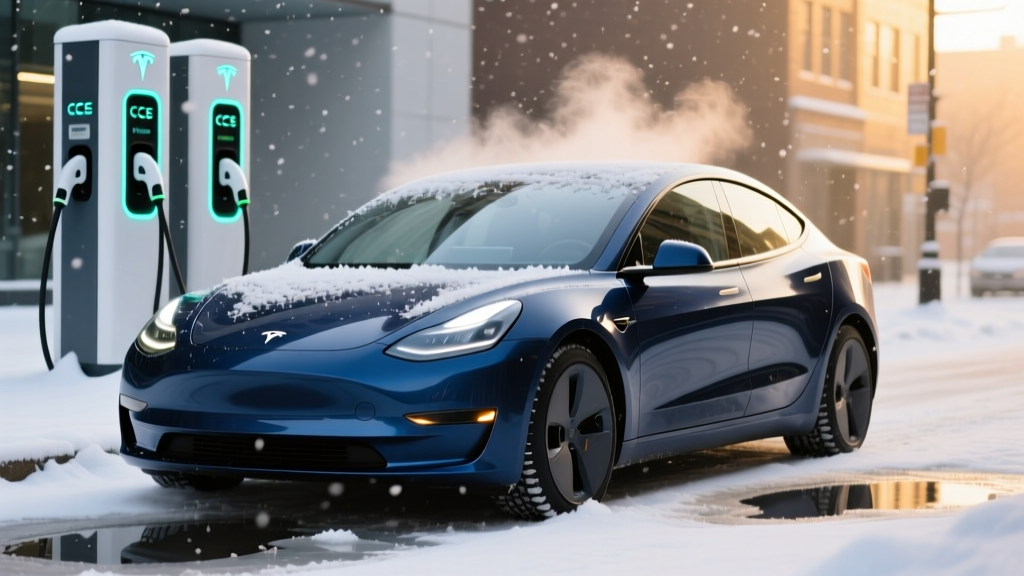
Highway driving at 75–80 mph reduces range by roughly 10–15%, yielding around 310–340 miles. In cold weather (below 32°F), battery chemistry limitations and cabin heating can cut range by 20–30%, dropping usable range to 260–310 miles depending on conditions. The Model S uses a resistive PTC heater rather than a heat pump, which increases energy draw in winter compared to heat-pump-equipped rivals like the Hyundai Ioniq 5 or BMW i7.
The 100 kWh NMC (nickel manganese cobalt) battery pack provides substantial energy reserves, but NMC chemistry is sensitive to extreme cold. Tesla's thermal management system actively warms the pack, but this preconditioning consumes energy from the pack itself unless the car is plugged in. For maximum winter range, precondition while connected to a Level 2 charger.
According to fueleconomy.gov, the Long Range achieves 124 MPGe combined (27 kWh per 100 miles), making it one of the more efficient large luxury sedans on the market — though the lighter Lucid Air Grand Touring edges it out at 131 MPGe combined.
Charging Speed: DC Fast Charging and Home Setup
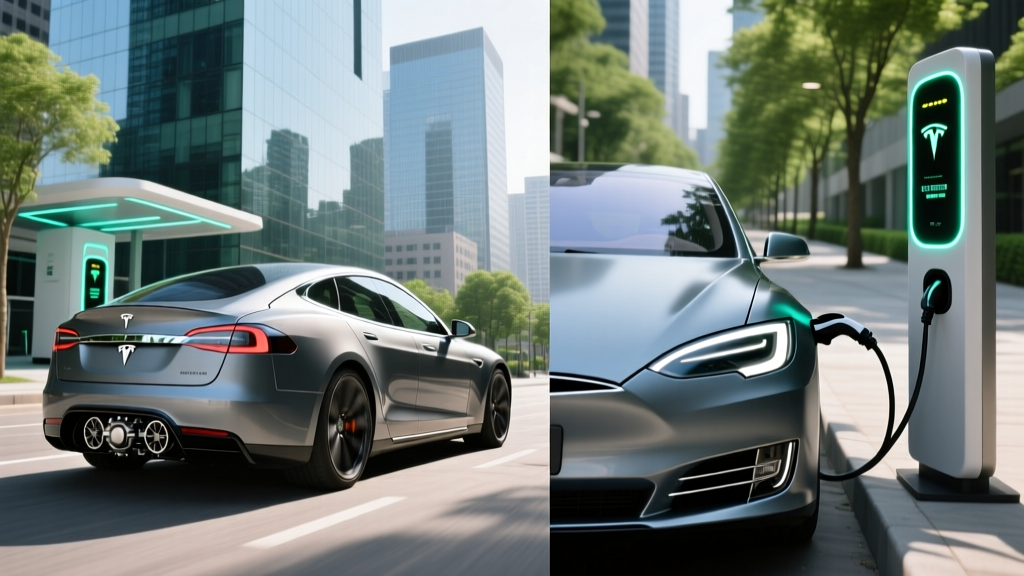
The Model S supports up to 250 kW peak DC fast charging on Tesla's V3 Supercharger network and compatible CCS stations (via the included NACS-to-CCS adapter or native NACS at Superchargers). However, peak rate is not sustained rate. The charging curve tapers significantly above 50% state of charge (SoC), and drops sharply past 80%.
| Charging Method | Power (kW) | Rate (miles of range per hour) | Notes |
|---|---|---|---|
| DC Fast (Supercharger V3/V4) | Up to 250 kW peak | ~200 mi in 15 min (initial) | Tapers above 50% SoC; 10–80% in ~30 min |
| DC Fast (CCS via adapter) | Up to 250 kW peak | Similar to Supercharger | Depends on station output; Electrify America, EVgo |
| Level 2 (Tesla Wall Connector, 48A) | 11.5 kW | ~41 mi/hr | Requires 60A circuit; full charge in ~10 hours |
| Level 2 (Generic J1772/NACS, 32A) | 7.7 kW | ~28 mi/hr | Common for ChargePoint Home Flex at 40A breaker |
| Level 1 (120V household) | ~1.4 kW | ~4 mi/hr | Emergency/trickle only; 100+ hours for full charge |
Charging curve reality: On a V3 Supercharger with a preconditioned battery, the Model S Plaid and Long Range hit 250 kW briefly between roughly 10–20% SoC, then taper to ~180 kW through 40%, ~120 kW through 60%, and ~60 kW by 80%. The published 10–80% time of approximately 30 minutes reflects this taper. If you arrive at a Supercharger without preconditioning (e.g., navigating to a non-Tesla DC charger without routing through the car's nav), initial charge rates may be 40–60% lower until the battery warms up.
Home charging setup: The Tesla Wall Connector at 48 amps (11.5 kW) adds roughly 41 miles of range per hour — enough to fully replenish a daily commute overnight. Installation typically requires a 60-amp dedicated circuit. If your electrical panel has capacity, expect $500–$1,500 for a licensed electrician to install a NEMA 14-50 outlet or hardwire the Wall Connector, plus $475 for the Wall Connector itself. A 200-amp panel upgrade, if needed, can add $1,500–$3,000.
Performance Deep Dive: What Tesla Model S Speed Actually Feels Like
The dual-motor Long Range delivers 670 horsepower and a 3.1-second 0–60 mph time — figures that would have defined a supercar a decade ago. The tri-motor Plaid pushes 1,020 horsepower and claims a 1.99-second 0–60 mph, though this figure requires a prepared surface, rollout subtracted, and specific launch conditions. In independent testing by outlets like MotorTrend and Car and Driver, the Plaid has returned 0–60 times between 2.1 and 2.3 seconds on standard asphalt — still blisteringly fast and among the quickest production cars ever measured.
Beyond straight-line speed, the Plaid's tri-motor torque vectoring provides exceptional cornering grip. The carbon-sleeved rotors in the Plaid's rear motors allow sustained high-RPM output without the power derating that affected earlier dual-motor Teslas during repeated hard launches. For track use, the Plaid includes a Track Mode that adjusts torque distribution, cooling, and stability control — though the car's ~4,800-lb curb weight is a physics limitation no software can fully overcome on a road course.
Both trims feature adaptive air suspension with automatic ride-height adjustment. The 2026 Model S continues to use Tesla's yoke-style steering wheel as standard, with a round wheel available at no extra charge. The yoke remains polarizing: it improves forward visibility of the instrument cluster but complicates low-speed maneuvering and three-point turns.
Interior, Tech, and Daily Usability
The Model S interior centers on a 17-inch landscape touchscreen running Tesla's proprietary infotainment OS. The system handles navigation, media, climate, vehicle settings, and gaming (Tesla includes a gaming computer capable of running titles like Cyberpunk 2077 while parked). A secondary 8-inch screen for rear passengers controls climate and media. Wireless Apple CarPlay and Android Auto are not supported — a notable omission versus the Lucid Air, BMW i7, and Mercedes EQS, all of which offer phone projection.
Passenger and cargo space:
- Front legroom: 42.7 inches
- Rear legroom: 35.4 inches
- Trunk (rear): 26.3 cu ft
- Frunk (front trunk): 3.1 cu ft
- Total cargo: 29.4 cu ft (rear seats up); ~58 cu ft (rear seats folded)
Rear seat comfort has improved with recent refreshes, but the floor-mounted battery still creates a somewhat flat, knees-up seating position for taller passengers. The Lucid Air offers noticeably more rear legroom (41.3 inches) thanks to its miniaturized motor packaging.
Driver assistance — Autopilot and FSD (Supervised):
Tesla's Autopilot (standard) and Full Self-Driving Supervised ($8,000 option or $99/month subscription) are SAE Level 2 driver-assistance systems. They provide adaptive cruise control, lane centering, automatic lane changes, and traffic-light recognition, but the driver must remain fully engaged, hands on the wheel (or torque-confirmed via the yoke), and eyes on the road at all times. FSD does not make the Model S autonomous. Only Level 4 services like Waymo operate without a human driver in geofenced areas.
In practice, FSD (Supervised) handles highway driving competently and has improved in urban scenarios, but it still makes occasional routing errors, struggles with construction zones, and can be overly cautious at unprotected left turns. It is a convenience feature, not a replacement for driver attention.
Pricing, Tax Credits, and Ownership Costs
| Trim | Base MSRP | Destination | Federal §30D Credit | Effective Price (if eligible) |
|---|---|---|---|---|
| Long Range | $79,990 | $1,390 | $0 (exceeds MSRP cap) | $81,380 |
| Plaid | $94,990 | $1,390 | $0 (exceeds MSRP cap) | $96,380 |
- MSRP Cap: The §30D credit limits eligible sedans to an MSRP of $55,000 or less. Both Model S trims far exceed this threshold. (SUVs and trucks have a higher $80,000 cap, but the Model S is classified as a sedan by the IRS.)
- Buyer Income Cap: Even if the MSRP qualified, the credit phases out for buyers with AGI above $150,000 (single), $225,000 (head of household), or $300,000 (married filing jointly).
- Battery Sourcing: Critical mineral and battery component sourcing requirements further restrict eligibility across the EV market. Per IRS.gov, these rules tighten annually through 2032.
- Point-of-Sale Transfer: For qualifying vehicles, buyers can transfer the credit to the dealer at purchase for an immediate price reduction. Since the Model S doesn't qualify, this option is unavailable.
State incentives may still apply. States like California, Colorado, and Massachusetts offer additional rebates or tax credits for EV purchases, though many also have MSRP or income caps. Check your state's energy office or DMV for current programs.
5-year estimated ownership cost: According to Edmunds and Kelley Blue Book data, a Model S Long Range costs approximately $68,000–$75,000 over five years when factoring depreciation (~55%), insurance (~$3,200/year), electricity (~$3,800 at $0.16/kWh national average), and maintenance (~$1,500 — no oil changes, minimal brake wear thanks to regen). Depreciation is the dominant cost; the Model S loses value faster than a Lucid Air but holds better than a Mercedes EQS.
How the Model S Compares to Key Rivals
The luxury electric sedan market in 2026 gives buyers legitimate alternatives the Model S didn't face five years ago:
| Vehicle | EPA Range | 0–60 mph | Max DC kW | Base MSRP | §30D Credit |
|---|---|---|---|---|---|
| Tesla Model S LR | 402 mi | 3.1s | 250 kW | $79,990 | No (MSRP cap) |
| Lucid Air Pure | 419 mi | 3.5s | 200 kW | $69,900 | No (MSRP cap) |
| Lucid Air Grand Touring | 516 mi | 3.0s | 300 kW | $125,600 | No (MSRP cap) |
| Porsche Taycan 4S | 283 mi | 3.8s | 270 kW | $92,700 | No (MSRP cap) |
| BMW i7 xDrive50 | 318 mi | 4.5s | 195 kW | $106,695 | No (MSRP cap) |
Where the Model S wins: Supercharger network access remains a tangible advantage. While NACS adoption has opened Tesla Superchargers to Ford, Rivian, and others, Tesla vehicles still benefit from the most seamless plug-and-charge experience, with over 20,000 Supercharger stalls in North America. The Model S also offers the best combination of range and acceleration in its price bracket.
Where the Model S falls short: The Lucid Air Pure delivers more range (419 miles) for $10,000 less. The Porsche Taycan offers superior build quality, a more engaging driving feel, and faster sustained charging (270 kW peak with an 800V architecture). The BMW i7 provides a dramatically more luxurious rear-seat experience. And none of these competitors omit Apple CarPlay/Android Auto.
Pros, Cons, and the Final Verdict
- Class-leading combination of range (402 mi) and acceleration (3.1s / 1.99s)
- Access to Tesla Supercharger network — most reliable DC fast-charging ecosystem
- Over-the-air updates continuously add features and refinements
- Spacious trunk and frunk for a sedan (29.4 cu ft total)
- Strong efficiency for its size (124 MPGe combined)
- 8-year / 150,000-mile battery and drive unit warranty
- No federal tax credit — MSRP exceeds §30D sedan cap of $55,000
- No Apple CarPlay or Android Auto
- Yoke steering wheel complicates low-speed maneuvers
- No heat pump — cold-weather range loss is significant
- Interior material quality trails Lucid, BMW, and Mercedes at this price
- Insurance premiums run high (~$3,000–$3,800/year nationally)
- FSD (Supervised) costs $8,000 extra and remains Level 2 only
Choose the Model S Long Range if: You want a 400-mile EV sedan with effortless passing power, frequent road-trip capability on the Supercharger network, and a tech-forward ownership experience — and you're willing to pay $80,000+ without a federal tax credit.
Choose the Model S Plaid if: Track-capable acceleration matters to you, you want the fastest sedan Tesla makes, and budget is secondary to performance.
Look elsewhere if: Rear-seat luxury is a priority (BMW i7), maximum range per dollar matters (Lucid Air Pure), you want Apple CarPlay, or you need a vehicle that qualifies for the $7,500 federal tax credit (consider the Tesla Model 3 Long Range at ~$47,740 MSRP, or the Hyundai Ioniq 6).
Frequently Asked Questions
What is the real-world range of the Tesla Model S?
The EPA rates the 2026 Model S Long Range at 402 miles and the Plaid at 396 miles. Real-world mixed driving typically yields 350–380 miles (Long Range) and 340–370 miles (Plaid). Sustained highway driving at 75+ mph drops range to roughly 310–340 miles, and sub-freezing temperatures can reduce range by 20–30%.
How fast does the Tesla Model S charge at home and on the road?
On a Tesla V3 Supercharger, the Model S peaks at 250 kW and charges from 10–80% in approximately 30 minutes. At home on a Tesla Wall Connector (48A / 11.5 kW), it adds about 41 miles of range per hour, fully charging overnight in roughly 10 hours.
Does the Tesla Model S qualify for the federal EV tax credit?
No. Under current IRS §30D rules, the Model S exceeds the $55,000 MSRP cap for sedans. Neither the Long Range ($79,990) nor the Plaid ($94,990) qualifies for the up-to-$7,500 federal credit, regardless of buyer income or battery sourcing. State incentives may still apply.
Is the Tesla Model S Plaid really a 1.99-second car?
Tesla's 1.99-second 0–60 mph claim uses a 1-foot rollout subtracted and requires a prepped surface. Independent tests on standard asphalt typically return 2.1–2.3 seconds — still among the quickest production cars ever sold. Sustained performance is excellent thanks to carbon-sleeved rotors that resist heat-induced power derating.
Is the Tesla Model S worth buying versus the Lucid Air or Porsche Taycan?
It depends on priorities. The Model S offers the best range-plus-acceleration combination in its price range and unmatched Supercharger convenience. The Lucid Air Pure provides more range at a lower price. The Porsche Taycan delivers better build quality and driving dynamics. If Supercharger access and Tesla's software ecosystem matter most, the Model S remains compelling. If interior luxury or CarPlay support are dealbreakers, the competition has caught up.
What is the battery warranty on the Tesla Model S?
Tesla covers the Model S battery and drive unit for 8 years or 150,000 miles, whichever comes first, with a minimum 70% capacity retention threshold. If the battery degrades below 70% State of Health (SoH) within the warranty period, Tesla will repair or replace it. Out-of-warranty battery replacement costs approximately $13,000–$20,000 depending on pack configuration and labor.