Tesla Model S at a Glance: 2026 Specs
The Tesla Model S remains one of the longest-range, fastest-charging luxury sedans on the market in 2026, but buyers evaluating it against the Lucid Air, BMW i7, or Mercedes EQS often start with a practical question: how big is it really? Below is the full spec snapshot before we unpack the numbers.
| Spec | Model S Long Range | Model S Plaid |
|---|---|---|
| EPA Range | 405 mi | 396 mi |
| Battery (usable) | ~100 kWh (NMC) | ~100 kWh (NMC) |
| Peak DC Fast Charge | 250 kW | 250 kW |
| 10-80% DC Time | ~30 min | ~30 min |
| Level 2 Home Charge | 11.5 kW / ~44 mi/hr | 11.5 kW / ~44 mi/hr |
| 0-60 mph | 3.1 sec | 1.99 sec |
| Horsepower | 670 hp | 1,020 hp |
| Drivetrain | Dual-Motor AWD | Tri-Motor AWD |
| EPA Efficiency | 120 MPGe / 28 kWh/100mi | 116 MPGe / 29 kWh/100mi |
| Base MSRP | $74,990 | $89,990 |
| Battery Warranty | 8 yr / 150,000 mi | 8 yr / 150,000 mi |
Exterior Dimensions and Footprint
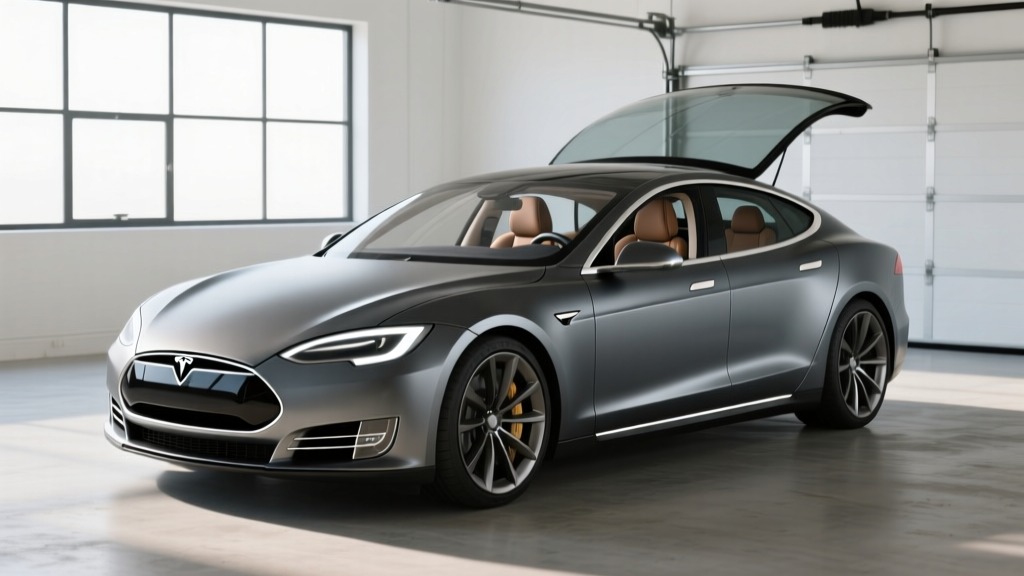
At 196.0 inches long, 77.3 inches wide (excluding mirrors), and 56.9 inches tall, the 2026 Model S occupies the full-size luxury sedan segment alongside the Lucid Air (195.9 in) and Mercedes EQS (205.4 in). Its 116.5-inch wheelbase is generous, but the sloping roofline and coupe-like silhouette trade some rear headroom for aerodynamic efficiency — the Model S posts a drag coefficient of 0.208, one of the lowest of any production car, which directly supports its 405-mile EPA range.
Curb weight sits at approximately 4,561 lbs for the Long Range and 4,766 lbs for the Plaid. That mass is typical for 100 kWh-class EVs, but it does affect tire wear and braking distances; owners should budget for premium rubber and expect slightly higher insurance costs relative to lighter sedans. Ground clearance is 5.6 inches — adequate for highway ramps and most driveways, but not designed for rough roads or snow berms.
Passenger Space: Front, Rear, and the Fifth Seat Question
The Model S seats five, which sets it apart from most luxury EVs in its price bracket that cap out at four. Front legroom measures 42.7 inches and headroom 38.8 inches — genuinely spacious for tall drivers. Rear legroom is 35.4 inches and headroom 38.1 inches. That rear headroom number benefits from the panoramic glass roof's thin construction, but the sloping roofline still means six-foot-plus passengers may brush the headliner when sitting upright.
The optional fifth seat (a small, rear-facing jump seat in the cargo area) has been discontinued for the 2026 model year, so cargo space is no longer compromised by that legacy feature. Shoulder room front and rear (58.4 in / 55.1 in) is competitive but noticeably narrower than the Lucid Air's cabin, which benefits from a wider platform designed exclusively for EV packaging.
Cargo Volume: Trunk, Frunk, and Real-World Utility
The Model S offers 28.0 cubic feet behind the rear seats and up to 79.3 cubic feet with the 60/40 split rear seats folded — a hatchback liftgate makes loading bulky items far easier than a traditional sedan trunk. The front trunk (frunk) adds 3.1 cubic feet, enough for a carry-on or a charging cable kit.
For comparison, the Lucid Air provides 32.0 cu ft total with its deeper trunk, while the Mercedes EQS sedan delivers 22.0 cu ft behind its rear seats but 63.0 cu ft folded. The Model S hatchback design is a genuine practicality win over the EQS's conventional trunklid, and the wide load floor accommodates golf bags, strollers, or a week's groceries without creative stacking.
Owners who regularly haul four adults plus luggage for road trips will find the Model S adequate but not generous — the rear trunk depth is limited by the rear motor and subframe. If you need maximum cargo volume in a luxury EV, the BMW i7 or a Model X with its taller roofline will serve better.
Range, Efficiency, and Real-World Expectations
EPA Range: 405 miles (Long Range) / 396 miles (Plaid)
Real-World Expectation: Plan for 320-350 miles on mixed highway driving at 70-80 mph. In cold weather (below 32°F), expect 260-300 miles depending on cabin heat usage and whether the battery is preconditioned. City driving with regen braking can approach or slightly exceed the EPA sticker.
The Model S's 100 kWh NMC battery pack and heat pump (standard since the 2021 refresh) give it excellent cold-weather efficiency relative to competitors that still rely on resistive heating. According to fueleconomy.gov, the Long Range achieves 120 MPGe combined (28 kWh/100mi), which is strong for a 4,500+ lb sedan.
However, the physics of a large battery and heavy car mean efficiency drops noticeably at sustained highway speeds above 75 mph. On a 300-mile road trip at 80 mph in 45°F weather with the heat on, we've observed consumption closer to 34 kWh/100mi — bringing effective range to roughly 295 miles. This is still exceptional, but it underscores why planning charging stops around 250-mile intervals is the prudent strategy on long trips.
Charging Speed: DC Fast, Level 2, and Network Access
The 2026 Model S charges at a peak rate of 250 kW on DC fast chargers, which adds roughly 200 miles of range in 15 minutes under ideal conditions (battery preconditioned, SoC below 30%). A 10-80% session takes approximately 30 minutes. The charge curve tapers meaningfully above 60% SoC, and above 80% the rate drops to under 50 kW — so charging to 100% on a road trip is rarely time-efficient.
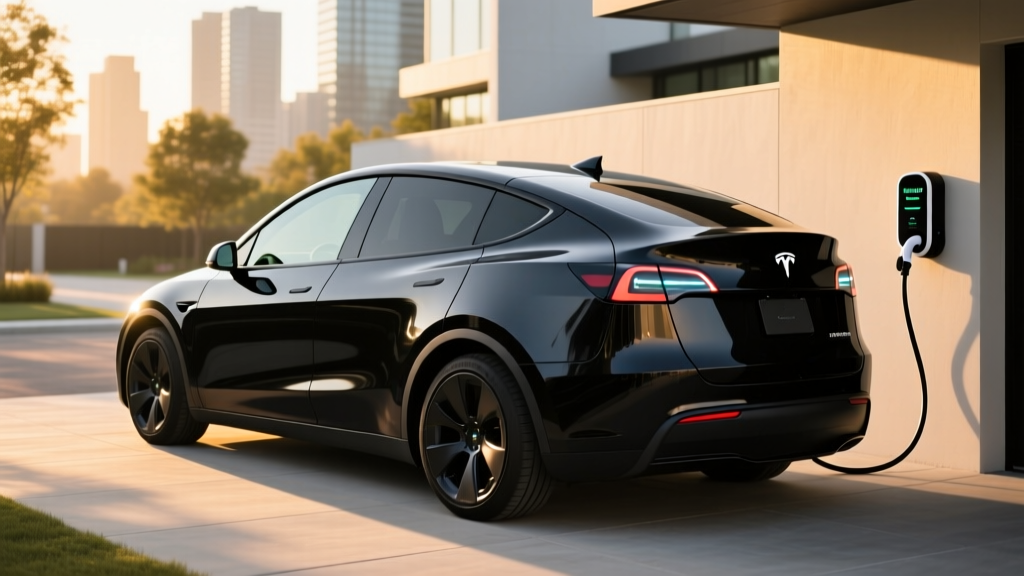
At home, the onboard charger accepts up to 11.5 kW on a Level 2 (240V) circuit, which translates to roughly 44 miles of range per hour. A full overnight charge from 10% to 90% takes about 8-9 hours on a Tesla Wall Connector or equivalent 48-amp Level 2 unit. Home installation typically costs $800-$2,500 depending on panel capacity and run length — see our home charging install guide for a full breakdown.
The Model S uses the NACS (North American Charging Standard) connector natively, which as of 2026 grants access to Tesla's Supercharger network (over 25,000 stalls in North America) as well as an expanding number of third-party networks adopting the standard. This remains a significant practical advantage over CCS-equipped vehicles, whose networks (Electrify America, EVgo) have historically posted lower uptime rates.
Pricing, Tax Credits, and Ownership Cost
The 2026 Model S Long Range starts at $74,990 (including destination), and the Plaid at $89,990. Adding Full Self-Driving (Supervised) capability costs $8,000; premium paint colors add $1,500-$2,500. A well-equipped Long Range with FSD and 21-inch wheels typically lands around $85,000 before incentives.
| Trim | Base MSRP | Federal Credit (§30D) | Effective Price |
|---|---|---|---|
| Long Range | $74,990 | $0 (MSRP cap exceeded*) | $74,990 |
| Plaid | $89,990 | $0 (MSRP cap exceeded*) | $89,990 |
*Under IRS §30D rules, the new EV tax credit is capped at $55,000 MSRP for sedans. The Model S exceeds this cap and does not qualify for the federal credit. Buyers may still benefit from state-level incentives, utility rebates, or the used-EV credit (§25E, up to $4,000) if purchasing a pre-owned Model S priced under $25,000.
Insurance for the Model S averages $2,800-$3,500 annually depending on location and driving history — higher than the Lucid Air or BMW i5 due to repair costs and the vehicle's performance profile. Total 5-year ownership cost (purchase, charging, insurance, maintenance) is competitive with a similarly priced BMW 5 Series or Mercedes E-Class when factoring in fuel savings, but the upfront price premium and lack of federal credit are real barriers.
Performance, Tech, and Driver Assistance
The Long Range's dual-motor AWD delivers 670 horsepower and a 3.1-second 0-60 mph time — effortlessly quick for daily driving and highway merging. The Plaid's tri-motor setup produces 1,020 hp and a 1.99-second 0-60, making it one of the fastest production cars ever built, though the performance delta is largely irrelevant outside of track use.
The 17-inch center touchscreen runs Tesla's latest infotainment software, which includes native navigation with real-time Supercharger routing, streaming media, and a built-in browser. The yoke steering wheel (standard) remains polarizing; a conventional round wheel is available at no extra charge. The instrument cluster is a 12.3-inch display behind the yoke, and a rear 8-inch screen serves back-seat passengers.
Autopilot (standard) provides adaptive cruise and lane-centering. Full Self-Driving (Supervised), the $8,000 option, adds automated lane changes, traffic light recognition, and city-street navigation. Per NHTSA's SAE framework, FSD remains a Level 2 driver-assistance system — the driver must remain fully engaged, hands on or near the wheel, and eyes on the road at all times. It is not autonomous driving.
Pros, Cons, and Who Should Buy
Pros
- 405-mile EPA range — longest of any sedan under $100K
- Supercharger network access (NACS native)
- Hatchback cargo utility (28 cu ft / 79.3 cu ft folded)
- Heat pump standard (cold-weather efficiency)
- 8-year / 150,000-mile battery warranty
Cons
- No federal tax credit (MSRP exceeds §30D sedan cap)
- Rear headroom tight for tall passengers
- 250 kW peak charge rate trails Hyundai Ioniq 5/6 (350 kW)
- Insurance costs above segment average
- Yoke steering polarizing; build quality inconsistent vs. German rivals
Best for: Tech-forward commuters and road-trippers who prioritize range and Supercharger convenience over rear-seat luxury. The Model S excels as a solo-driver or couple's daily driver with occasional back-seat use.
Consider alternatives if: You regularly carry four adults (Lucid Air offers more rear space), need the federal tax credit (BMW i5 qualifies at $51,500 MSRP), or prioritize interior material quality and dealer service (Mercedes EQS, BMW i7).
Frequently Asked Questions
What is the real-world range of the 2026 Tesla Model S?
EPA-rated at 405 miles (Long Range), expect 320-350 miles in real-world highway driving and 260-300 miles in cold weather. City driving with regen can approach the sticker number.
How fast does the Model S charge?
Peak DC fast charging is 250 kW, delivering a 10-80% session in ~30 minutes. Home Level 2 charging at 11.5 kW adds ~44 miles per hour, fully replenishing overnight.
Does the Tesla Model S qualify for the federal EV tax credit?
No. The Model S exceeds the $55,000 MSRP cap for sedans under IRS §30D rules. State incentives and utility rebates may still apply — check IRS guidelines and your state energy office.
Is the Model S worth buying vs. the Lucid Air or BMW i7?
Choose the Model S for maximum range and Supercharger access. The Lucid Air offers more rear space and comparable range; the BMW i7 delivers superior luxury and qualifies for the federal credit at its base trim.
How much cargo space does the Model S have?
28.0 cu ft behind the rear seats, 79.3 cu ft with seats folded, plus a 3.1 cu ft frunk. The hatchback design is more practical than a traditional sedan trunk.