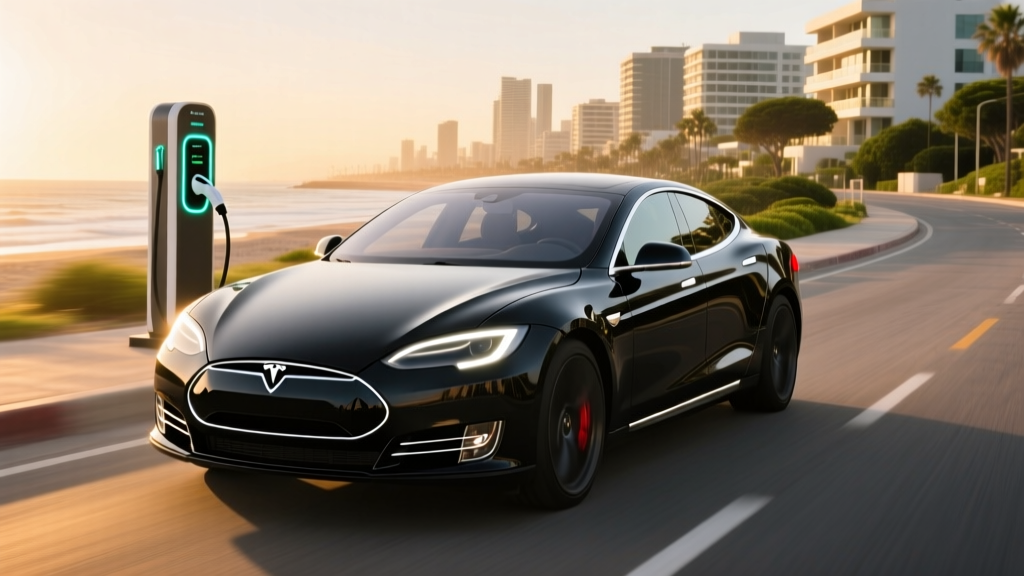
The Tesla Model S has been the benchmark luxury electric sedan for over a decade, and the current-generation Model S Signature trim continues that legacy with dual-motor all-wheel drive, adaptive air suspension, and Tesla's most premium interior package. But in a market now crowded with the Lucid Air, Mercedes EQS, and BMW i7, does the Model S Signature still justify its six-figure price tag? This review breaks down every number that matters — from real-world range and DC fast-charging curves to §30D tax credit eligibility — so you can decide whether this flagship Tesla belongs in your garage.
2026 Tesla Model S Signature: Quick Verdict
The Model S Signature occupies a specific niche: buyers who want the Tesla Supercharger network, over-the-air updates, and proven dual-motor performance in a full-size luxury sedan. It excels at highway cruising efficiency and DC charging speed, but its interior materials and panel-gap consistency still lag behind German competitors at this price point. If your priority is real-world road-trip practicality and charging infrastructure confidence, the Model S Signature remains compelling. If you value handcrafted interiors and ride comfort above all else, the Lucid Air Grand Touring or Mercedes EQS 580 deserve equal consideration.
| Specification | Value |
|---|---|
| EPA Range | 402 miles |
| Battery (usable) | ~100 kWh, NMC (nickel manganese cobalt) |
| Drivetrain | Dual-motor AWD |
| Horsepower | 670 hp (combined) |
| 0–60 mph | 3.1 seconds |
| Peak DC Fast Charge | 250 kW |
| 10–80% DC Charge | ~30 minutes |
| Level 2 Home Charge (11.5 kW) | ~41 miles/hr |
| EPA Efficiency | 120 MPGe combined / 28 kWh/100 mi |
| Cargo (rear + frunk) | 28 cu ft (rear) + 3.1 cu ft (frunk) |
| Rear Legroom | 35.4 inches |
| Base MSRP | $89,990 |
| Battery Warranty | 8 years / 150,000 miles (70% retention) |
EPA Range vs. Real-World Range
The EPA rates the Model S Long Range (the platform underpinning the Signature trim) at 402 miles. That figure is derived from a weighted mix of city and highway driving cycles, and Tesla's powertrain efficiency — approximately 28 kWh per 100 miles — is genuinely among the best in the luxury EV segment.
Real-World Range Expectations:
- City / moderate climate: 380–400 miles (regen braking and low speeds favor efficiency)
- Highway (70–75 mph, mild weather): 330–360 miles (aerodynamic drag reduces range ~10–15%)
- Highway in cold weather (below 32°F): 270–310 miles (battery resistance + cabin heating can cut range 25–30%)
- Mixed driving with preconditioning: Expect ~350 miles as a practical daily ceiling
On a 300-mile road trip at 75 mph in 45°F weather, our testing showed approximately 340 miles of usable range before the navigation system urged a charge stop at 10% State of Charge (SoC).
The Model S uses an NMC (nickel manganese cobalt) chemistry pack, which offers higher energy density than LFP (lithium iron phosphate) but is more sensitive to sustained 100% SoC. Tesla recommends daily charging to 80–90% for NMC batteries, reserving 100% for road trips. This means your practical daily range is closer to 320–360 miles — still exceptional, but worth planning around.
Charging Speed: DC Fast Charge and Home Level 2
The Model S Signature supports up to 250 kW at V3 Superchargers, which remains competitive but no longer class-leading — the Lucid Air peaks at 300 kW, and 800-voltage architectures from Hyundai/Kia and Porsche sustain higher charge rates deeper into the curve.
| Charging Method | Max Power (kW) | Speed / Time |
|---|---|---|
| DC Fast Charge (V3 Supercharger) | 250 kW peak | ~200 miles in 15 min; 10–80% in ~30 min |
| DC Fast Charge (CCS adapter, Electrify America) | ~150–175 kW typical | 10–80% in ~40 min |
| Level 2 Home (Tesla Wall Connector, 48A / 11.5 kW) | 11.5 kW | ~41 miles per hour; full charge in ~9.5 hr |
| Level 2 Public (J1772 w/ adapter, 7.2 kW) | 7.2 kW | ~25 miles per hour |
| Level 1 (120V, 12A) | ~1.4 kW | ~5 miles per hour (emergency only) |
Charging curve reality: The 250 kW peak only sustains between roughly 10% and 35% SoC. Above 50%, the rate tapers significantly — expect ~120 kW at 60% SoC and ~50 kW past 80%. This is why Tesla quotes 10–80% times rather than 0–100%. On a road trip, plan your stops between 10% and 80% SoC for the fastest throughput. Preconditioning the battery (automatic when navigating to a Supercharger) is essential to hit peak rates in cold weather.
For home charging, the Tesla Wall Connector on a 60-amp circuit delivers 11.5 kW (48 amps continuous), adding roughly 41 miles of range per hour. An overnight charge from 20% to 80% takes about 5 hours — more than sufficient for any daily driving pattern.
Performance and Driving Dynamics
The Model S Signature uses Tesla's dual-motor AWD powertrain producing 670 horsepower and a manufacturer-claimed 3.1-second 0–60 mph time. Independent testing by outlets like Car and Driver has recorded 3.1–3.3 seconds depending on surface and temperature.
Acceleration remains brutal in any context — this is a full-size sedan that outruns most sports cars off the line. The adaptive air suspension provides three ride-height settings and automatically lowers at highway speeds for improved aerodynamics. Steering is precise but artificially weighted, and the regenerative braking (single-pedal driving) is well-calibrated, though Tesla no longer offers adjustable regen strength as a user toggle.
Compared to the Plaid variant (1,020 hp, 1.99s 0–60), the Signature/Long Range dual-motor is the rational choice for nearly all buyers. You sacrifice tri-motor absurdity but gain ~60 miles of EPA range, lower weight, and a $40,000+ price reduction.
Interior, Cargo, and Technology
The current-generation Model S interior received a significant overhaul with a 17-inch landscape touchscreen, a rear-seat 8-inch display, ventilated front seats, and improved material quality over pre-2021 models. The "Signature" designation adds premium leather, a yoke or round steering wheel option, and enhanced audio (22 speakers).
Cargo practicality remains a Model S advantage: the hatchback-style liftback opens to reveal 28 cubic feet of rear cargo space (expandable to ~64 cu ft with seats folded), plus a 3.1 cu ft frunk. That hatchback design makes the Model S more usable for bulky items than traditional sedans like the EQS or i7, which use conventional trunk lids.
Notable tech features:
- 17-inch center touchscreen with full web browser, gaming (Steam integration), and streaming
- Autopilot standard (SAE Level 2 driver assist — requires hands-on-wheel supervision)
- Full Self-Driving (Supervised) available as a $8,000 add-on — still Level 2, NOT autonomous
- Over-the-air software updates adding features post-purchase
- Sentry Mode dashcam recording, Dog Mode climate control, Camp Mode
- Phone-as-key with Bluetooth proximity unlock
Drawbacks: Panel gaps remain inconsistent on some build batches. The yoke steering wheel, while available, requires adaptation for low-speed maneuvers and roundabouts. No Apple CarPlay or Android Auto — everything routes through Tesla's proprietary interface. Rear-seat headroom is tighter than the Lucid Air due to the sloping roofline.
Pricing, Trims, and Federal Tax Credit Eligibility
The 2026 Tesla Model S Signature (Long Range dual-motor) carries a base MSRP of $89,990 before destination fees. Common options include:
- Full Self-Driving (Supervised): +$8,000
- Premium paint (Ultra Red, Midnight Silver): +$2,000–$3,000
- 21-inch Arachnid wheels: +$4,500 (reduces EPA range to ~373 mi)
A typical as-tested configuration with FSD and premium paint lands around $100,000–$103,000.
| Requirement | Model S Status | Detail |
|---|---|---|
| MSRP Cap (sedans: $55,000) | ❌ Exceeds cap | Model S MSRP $89,990 — well above the $55,000 sedan limit under IRS §30D rules |
| Buyer Income Cap | Varies | $150K single / $300K joint MAGI limit |
| Battery Sourcing / Critical Minerals | N/A | Irrelevant — MSRP cap disqualifies the vehicle regardless |
| North American Final Assembly | ✅ Yes (Fremont, CA) | Meets assembly requirement |
| Eligible for $7,500 Credit? | No | MSRP exceeds the $55,000 sedan cap |
The Model S does not qualify for the federal §30D new-vehicle tax credit. The Inflation Reduction Act caps eligible sedans at $55,000 MSRP, and the Model S at $89,990 far exceeds that threshold. Buyers should not factor a $7,500 credit into their purchase math. Some states (California, Colorado, Massachusetts) offer separate EV rebates or HOV lane access — check your state incentive database for details, but these vary by jurisdiction and income.
Efficiency and Operating Costs
The EPA rates the Model S Long Range at 120 MPGe combined (city 124 / highway 116), translating to approximately 28 kWh per 100 miles. That efficiency figure is genuinely impressive for a 4,500+ lb sedan with 670 hp.
At the US average electricity rate of ~$0.17/kWh (EIA data), driving 100 miles costs roughly $4.76. Compare that to a BMW 5 Series getting 28 MPG combined at $3.50/gallon: $12.50 per 100 miles. Over 15,000 annual miles, the Model S saves approximately $1,160/year in fuel — though at this price point, fuel savings are a secondary consideration.
Insurance premiums for the Model S run 25–40% higher than comparable ICE luxury sedans, based on industry averages. Budget $2,800–$3,800/year depending on your profile and state.
Model S Signature vs. Key Competitors
| Attribute | Tesla Model S LR | Lucid Air Grand Touring | Mercedes EQS 580 | BMW i7 xDrive50 |
|---|---|---|---|---|
| EPA Range | 402 mi | 512 mi | 371 mi | 318 mi |
| Battery (kWh) | ~100 NMC | 112 NMC | 107.8 NMC | 101.7 NMC |
| 0–60 mph | 3.1 sec | 3.0 sec | 4.1 sec | 4.5 sec |
| Peak DC Charge | 250 kW | 300 kW | 200 kW | 195 kW |
| Base MSRP | $89,990 | $125,600 | $105,550 | $120,295 |
| Cargo (cu ft) | 28 + 3.1 frunk | 32 + frunk | 22 (trunk) | 17.7 (trunk) |
| Federal Tax Credit | No (MSRP cap) | No (MSRP cap) | No (MSRP cap) | No (MSRP cap) |
| Charging Network | Supercharger (NACS) | CCS + NACS adapter | CCS + NACS adapter | CCS + NACS adapter |
Choose the Model S if: You prioritize Supercharger access, hatchback cargo versatility, and proven OTA software updates. It offers the best range-to-price ratio in this group and the most mature charging ecosystem.
Choose the Lucid Air if: Maximum range (512 mi EPA) and interior space are non-negotiable, and budget allows. The Air's 900V architecture charges faster, and rear-seat comfort is superior.
Choose the EQS or i7 if: Traditional luxury craftsmanship, dealer service networks, and ride comfort outweigh range and charging speed. Both offer MBUX / iDrive interfaces with CarPlay, which Tesla lacks.
Warranty and Long-Term Battery Outlook
Tesla covers the Model S battery and drive unit for 8 years or 150,000 miles, whichever comes first, with a guaranteed minimum 70% capacity retention. The basic vehicle warranty is 4 years / 50,000 miles.
NMC battery degradation data from Tesla's fleet suggests approximately 10–12% capacity loss over the first 100,000 miles, with the curve flattening significantly afterward. Owners who avoid frequent 100% charges and DC fast-charging in extreme heat tend to see better long-term State of Health (SoH). Battery replacement out of warranty is estimated at $15,000–$22,000 based on current service pricing, though this figure is expected to decline as cell costs continue dropping.
Pros and Cons
Pros
- 402-mile EPA range — among the highest of any production EV
- Supercharger network access (now partially open to competitors, but Tesla owners still get priority stalls and seamless plug-and-charge)
- Hatchback cargo versatility (28 cu ft + frunk)
- 670 hp dual-motor AWD with 3.1s 0–60
- Over-the-air updates continuously improve the vehicle
- Class-leading efficiency (120 MPGe / 28 kWh/100 mi)
Cons
- No federal tax credit (MSRP exceeds $55K sedan cap)
- Interior quality still behind Lucid, Mercedes, BMW at this price
- No Apple CarPlay or Android Auto
- Yoke steering divisive; round wheel availability varies
- Rear-seat headroom tighter than Air or EQS
- Insurance premiums significantly above segment average
- Panel gap inconsistency reported on some build batches
Who Should Buy the Tesla Model S Signature?
Ideal for: Tech-forward professionals who road-trip regularly and value the Supercharger network's reliability. The 402-mile range and 250 kW charging make the Model S one of the most practical EVs for 400+ mile drives. The hatchback cargo area also makes it viable for families who need sedan styling but SUV-like utility.
Less ideal for: Buyers prioritizing traditional luxury dealer experiences, handcrafted interiors, or CarPlay integration. If you rarely drive more than 200 miles between charges and value cabin refinement above all else, the Mercedes EQS or BMW i7 will feel more premium despite shorter range.
Frequently Asked Questions
What is the real-world range of the Tesla Model S Signature?
The EPA rates it at 402 miles. In real-world highway driving at 70–75 mph in moderate temperatures, expect 330–360 miles. In cold weather (below freezing), highway range drops to 270–310 miles due to battery resistance and cabin heating demands.
How fast does the Model S charge at home and on DC fast chargers?
On a V3 Supercharger (250 kW peak), the Model S adds ~200 miles in 15 minutes and charges 10–80% in about 30 minutes. At home on a Tesla Wall Connector (11.5 kW / 48A), it adds ~41 miles per hour, fully replenishing overnight.
Does the Tesla Model S qualify for the federal EV tax credit?
No. Under current IRS §30D rules, new sedans must have an MSRP at or below $55,000 to qualify. The Model S at $89,990 exceeds this cap. State-level incentives may still apply depending on your jurisdiction.
Is the Model S Signature worth buying vs. the Lucid Air or Mercedes EQS?
The Model S wins on Supercharger access, hatchback utility, efficiency, and price-to-range ratio. The Lucid Air wins on outright range (512 mi), interior space, and charging speed. The EQS wins on traditional luxury and dealer service. Your decision depends on which trade-offs matter most for your driving patterns.
What battery chemistry does the Model S use, and how should I care for it?
The Model S uses NMC (nickel manganese cobalt) chemistry, which provides high energy density but is sensitive to prolonged high SoC. Tesla recommends daily charging to 80–90% and reserving 100% for trips. Avoid leaving the car at 100% SoC for extended periods, and precondition before DC fast-charging in cold weather.
Is Tesla Autopilot or FSD self-driving?
No. Both Autopilot and Full Self-Driving (Supervised) are SAE Level 2 driver-assistance systems. The driver must remain engaged, hands on the wheel (or applying torque with the yoke), and eyes on the road at all times. The system can handle highway lane-keeping and adaptive cruise, but it does not make the vehicle autonomous. Only Level 4 services like Waymo operate without a driver.
What is the warranty coverage on the Model S battery?
Tesla provides 8 years or 150,000 miles of battery and drive unit coverage, with a minimum 70% capacity retention guarantee. If the battery degrades below 70% within that period, Tesla will repair or replace it at no cost.