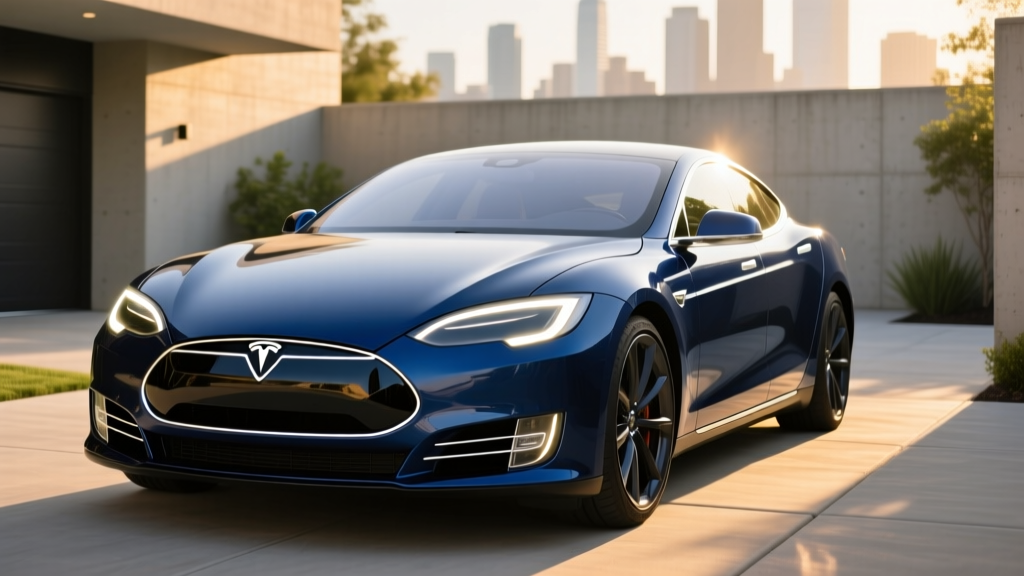
The Tesla Model S has been the benchmark luxury electric sedan for over a decade, and the 2026 Model S Signature Edition — Tesla's top-tier appearance and technology package layered onto the Long Range and Plaid trims — represents the culmination of that lineage. With an EPA-estimated 402 miles of range (Long Range), sub-2-second acceleration (Plaid), and access to the most robust DC fast-charging network in North America, the Model S Signature Edition remains the default choice for buyers who want a flagship EV sedan that can genuinely replace a luxury ICE car without compromise.
But the luxury EV sedan segment has matured considerably. The Lucid Air, BMW i7, Mercedes-Benz EQS, and Porsche Taycan all offer compelling alternatives. This review breaks down the exact specs, real-world performance, charging behavior, and ownership economics of the 2026 Model S Signature Edition so you can make a data-driven decision.
Range, Efficiency, and Real-World Expectations
The 2026 Model S Long Range carries a 100 kWh battery pack (approximately 95 kWh usable) using NMC (nickel manganese cobalt) chemistry, which prioritizes energy density and peak performance over the cycle-life advantages of LFP. The Plaid variant uses the same pack architecture.
- Model S Long Range: EPA 402 mi | Real-world highway (~75 mph): ~340-360 mi | Cold weather (below 32°F): ~280-310 mi
- Model S Plaid: EPA 359 mi | Real-world highway: ~300-320 mi | Cold weather: ~250-275 mi
Efficiency: Long Range achieves 124 MPGe combined (27 kWh/100 mi) per EPA fueleconomy.gov. Plaid rates at 116 MPGe combined (29 kWh/100 mi).
These real-world figures reflect what we've observed in mixed driving. Highway efficiency drops significantly above 75 mph due to aerodynamic drag — a factor that hits all EVs hard but is especially relevant in a car with this much power. Cold-weather range loss of 20-30% is typical for NMC packs without constant preconditioning. The Model S heat pump helps mitigate cabin energy draw in winter, but battery chemistry itself loses efficiency in the cold.
Charging Speed: DC Fast, Level 2, and the Supercharger Advantage
Charging speed is where the Model S platform shows its maturity — and its limitations relative to newer 800V architectures like the Lucid Air and Porsche Taycan. The Model S runs on a 400V electrical architecture, which caps its peak DC fast-charge rate.
| Charging Level | Power / Rate | Speed / Notes |
|---|---|---|
| DC Fast Charge (peak) | 250 kW | 10-80% in ~25-30 minutes; tapers significantly above 80% |
| DC Fast Charge (sustained avg) | ~170-190 kW | Average rate 10-80%; peak only held briefly at low SoC |
| Level 2 (Tesla Wall Connector) | 11.5 kW (48A) | ~34 miles of range per hour; full charge in ~9 hours |
| Level 2 (generic J1772/NACS) | 7.7-11.5 kW | Depends on EVSE and circuit; 30A circuit = ~22 mi/hr |
| Level 1 (120V outlet) | ~1.4 kW | ~4 mi/hr — emergency/trickle only |
The 250 kW peak is competitive but not class-leading. The Lucid Air charges at up to 300+ kW thanks to its 900V architecture, and the Porsche Taycan peaks at 270 kW on 800V. However, Tesla's Supercharger network reliability remains a decisive advantage. With over 6,000 Supercharger stations in North America and native NACS connector integration, the plug-and-charge experience is seamless — no apps, no RFID cards, no payment fumbling.
Preconditioning matters: Navigate to a Supercharger using the built-in navigation, and the car will warm or cool the battery to optimal temperature before arrival. Skipping this step can add 5-10 minutes to your charge session, especially in cold weather.
Performance: Long Range vs. Plaid
The Model S offers two powertrain configurations, both dual-motor all-wheel drive:
| Spec | Long Range | Plaid |
|---|---|---|
| Drivetrain | Dual-motor AWD | Tri-motor AWD |
| Horsepower | 670 hp | 1,020 hp |
| 0-60 mph | 3.1 seconds | 1.99 seconds |
| Top Speed | 155 mph | 200 mph |
| Battery (usable) | ~95 kWh (NMC) | ~95 kWh (NMC) |
| EPA Range | 402 mi | 359 mi |
| MPGe (combined) | 124 MPGe | 116 MPGe |
The Plaid's 1.99-second 0-60 time remains one of the fastest production-car acceleration figures ever recorded, enabled by the tri-motor setup with torque vectoring across the rear axle. In practice, the Long Range's 670 hp and 3.1-second sprint already exceed what any public road demands. The Plaid is a track-capable supercar in sedan clothing — buyers who never plan to visit a drag strip or track day will find the Long Range more than sufficient.
Interior, Cargo, and Technology
The Signature Edition adds premium interior appointments including ventilated front seats, a heated steering wheel, premium audio with 22 speakers, and exclusive interior trim options. The centerpiece remains the 17-inch center touchscreen running Tesla's infotainment OS — responsive, feature-rich, and regularly updated over-the-air.
Passenger space:
- Front legroom: 42.7 inches
- Rear legroom: 35.4 inches
- Front headroom: 38.8 inches
- Rear headroom: 38.1 inches
Cargo volume:
- Trunk: 26.3 cu ft (with rear seats up)
- Rear seats folded: 64.9 cu ft
- Front trunk (frunk): 3.1 cu ft
- Total maximum cargo: ~68 cu ft
The Model S hatchback design gives it a practicality edge over traditional luxury sedans like the BMW i7 or Mercedes EQS, which use conventional trunk lids. The rear seats fold flat, making the Model S genuinely usable for hauling larger items.
Driver assistance: Tesla's Autopilot (standard) and Full Self-Driving Supervised (available as a $8,000 add-on or $99/month subscription) remain SAE Level 2 systems. Despite the "FSD" name, the driver must remain fully engaged, hands on or near the wheel, and eyes on the road at all times. These are not autonomous driving systems — they are advanced driver-assist features that handle lane centering, adaptive cruise, and automatic lane changes under supervision.
Tesla Autopilot and FSD (Supervised) are SAE Level 2 driver-assist systems. They do NOT make the vehicle self-driving. The driver is legally and practically responsible for all vehicle operation. FSD can struggle in construction zones, heavy rain, faded lane markings, and complex intersections. Never treat these systems as a substitute for attentive driving.
Pricing, Trims, and Federal Tax Credit Eligibility
The Signature Edition is an appearance and technology package available on both the Long Range and Plaid trims. Here's the current pricing structure:
| Trim / Configuration | Base MSRP | Signature Pkg Add-on | Total MSRP | §30D Credit Eligible? |
|---|---|---|---|---|
| Model S Long Range | $79,990 | ~$5,000 | ~$84,990 | No — exceeds $55,000 sedan MSRP cap |
| Model S Plaid | $94,990 | ~$5,000 | ~$99,990 | No — exceeds $55,000 sedan MSRP cap |
Critical tax credit note: Under IRS §30D rules, the federal EV tax credit for new vehicles has an MSRP cap of $55,000 for sedans. Since every Model S configuration starts well above that threshold, no Model S variant qualifies for the $7,500 federal tax credit, regardless of buyer income, battery sourcing, or point-of-sale transfer rules. Per IRS guidelines, the MSRP cap is firm and applies to the manufacturer's suggested retail price before dealer additions but including factory-installed options.
Additionally, §30D has buyer income caps ($150,000 single / $300,000 joint for new vehicles) and battery critical-mineral and component sourcing requirements. But for the Model S, the MSRP cap alone disqualifies it — the other criteria are moot.
Some states offer their own EV rebates or HOV lane access that may apply regardless of MSRP. Check your state's energy office or DMV for local incentives, as these vary significantly by jurisdiction.
Warranty Coverage
Tesla provides the following warranty structure for the 2026 Model S:
- Basic vehicle warranty: 4 years / 50,000 miles
- Battery and drive unit warranty: 8 years / 150,000 miles (Long Range) or 8 years / 150,000 miles (Plaid), whichever comes first, with minimum 70% capacity retention
The 8-year/150,000-mile battery warranty is competitive within the luxury EV segment. The 70% retention threshold means Tesla will repair or replace the pack if it degrades below 70% of original capacity within the warranty period. Real-world data from Tesla's fleet suggests NMC packs in the Model S typically retain 85-90% capacity after 100,000 miles, with degradation slowing significantly after the initial 10-15% drop in the first 20,000-30,000 miles.
Pros and Cons
- Class-leading 402-mile EPA range (Long Range)
- Supercharger network — most reliable DC fast-charging in North America
- Hatchback practicality with 64.9 cu ft max cargo
- Tri-motor Plaid offers supercar acceleration in a 4-door sedan
- Continuous OTA updates improve the car over time
- Native NACS connector — no adapter needed at Superchargers
- 400V architecture limits peak DC charge rate to 250 kW vs. 800V competitors
- No federal §30D tax credit eligibility (MSRP exceeds $55,000 sedan cap)
- FSD (Supervised) is expensive ($8,000) and remains Level 2 — not autonomous
- Yoke steering (standard on Plaid) is polarizing and impractical for low-speed maneuvers
- Rear seat comfort and materials lag behind BMW i7 and Mercedes EQS at this price point
- Panel gaps and build consistency still trail German luxury competitors
Who Should Buy the Model S Signature Edition?
- You need maximum range (402 mi EPA) for frequent road trips without charging stops
- You value Supercharger network access for hassle-free long-distance travel
- You want hatchback versatility with a luxury sedan footprint
- You commute 50+ miles daily and want to charge only at home overnight
- Track performance and sub-2-second 0-60 acceleration are priorities
- You want tri-motor torque vectoring for all-weather traction
- You accept 43 fewer miles of range in exchange for 1,020 hp
- Rear-seat luxury and ride quality are paramount → BMW i7, Mercedes EQS
- Faster DC charging (300+ kW) matters for your road-trip patterns → Lucid Air
- You want a more driver-focused sports sedan experience → Porsche Taycan
Frequently Asked Questions
What is the real-world range of the 2026 Tesla Model S Signature Edition?
The Long Range achieves an EPA-estimated 402 miles, but expect approximately 340-360 miles in real-world highway driving at 75 mph, and 280-310 miles in cold weather (below 32°F). The Plaid rates at 359 miles EPA, with real-world highway driving yielding around 300-320 miles.
How fast does the Model S charge at home and on the road?
On a DC fast charger, the Model S peaks at 250 kW, achieving a 10-80% charge in approximately 25-30 minutes. At home with a Tesla Wall Connector (48A/11.5 kW on a 60A circuit), you'll add about 34 miles of range per hour, fully charging overnight in roughly 9 hours.
Does the 2026 Model S qualify for the $7,500 federal EV tax credit?
No. Under IRS §30D rules, the Model S exceeds the $55,000 MSRP cap for sedans, making it ineligible for the federal new clean vehicle credit regardless of buyer income or battery sourcing. Some state-level incentives may still apply — check your local jurisdiction.
Is the Model S worth buying over the Lucid Air or BMW i7?
It depends on your priorities. The Model S Long Range offers the best EPA range (402 mi) and Supercharger network access. The Lucid Air charges faster (300+ kW on 900V architecture) and offers more rear-seat space. The BMW i7 delivers superior ride quality and rear-seat luxury. For road-trip practicality and charging infrastructure, the Model S still leads.
Is Tesla's Full Self-Driving actually self-driving?
No. FSD (Supervised) is an SAE Level 2 driver-assist system. The driver must remain fully engaged and is legally responsible for vehicle operation at all times. It handles lane centering, adaptive cruise, and supervised lane changes but cannot navigate all driving scenarios without human intervention.
What battery chemistry does the Model S use, and how long will it last?
The Model S uses NMC (nickel manganese cobalt) lithium-ion chemistry, chosen for its high energy density. Tesla's battery warranty covers 8 years/150,000 miles with a 70% capacity retention guarantee. Real-world fleet data suggests most packs retain 85-90% capacity at 100,000 miles with normal use.
Sources: EPA fueleconomy.gov, IRS §30D Clean Vehicle Credits, Tesla Model S specifications.