Why the Used Tesla Model S Still Commands Attention
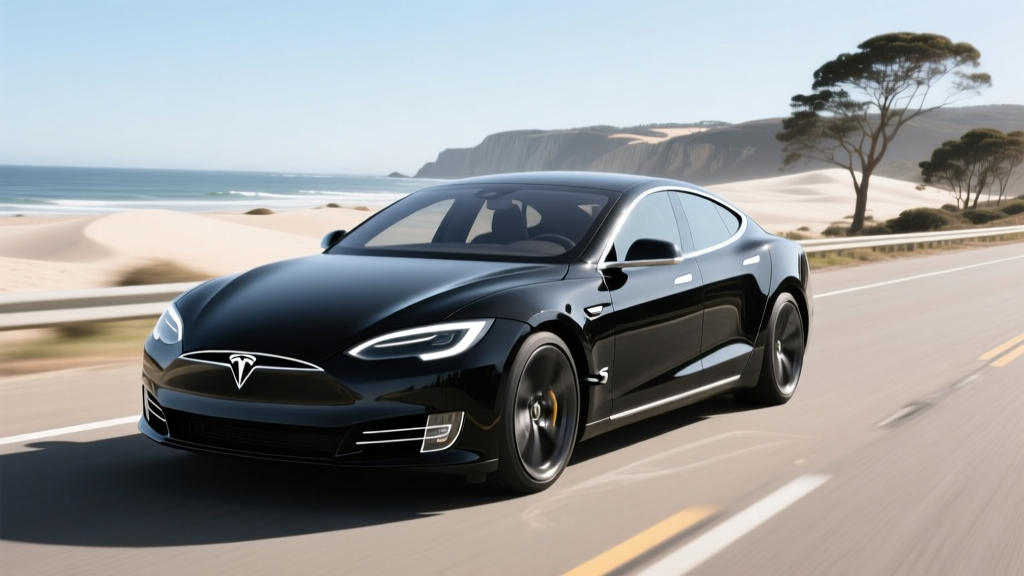
The Tesla Model S defined the modern luxury EV sedan. Over a decade after its debut, it remains a benchmark for straight-line performance, Supercharger network access, and over-the-air software evolution. For buyers exploring a Tesla Model S second hand in 2026, the proposition is compelling: a flagship EV that originally stickered above $80,000 can now be had for a fraction of that cost — provided you know which model years to target, what battery degradation to expect, and where the ownership pitfalls hide.
This guide cuts through the noise with exact specifications, real-world range data, charging benchmarks, and the ownership economics that matter when you're shopping pre-owned. We focus on the most relevant generations: the 2012–2020 legacy Model S (60, 75, 90, 100 kWh variants) and the 2021+ "Palladium" refresh (Long Range and Plaid).
Model S Generations at a Glance: Specs That Matter
| Generation / Trim | Battery (kWh, usable) | Chemistry | EPA Range (mi) | 0-60 mph | HP | Drivetrain |
|---|---|---|---|---|---|---|
| 2012–2016 Model S 60 | ~60 kWh | NMC (18650 cells) | 208 | 5.5s | 302 | RWD |
| 2016–2020 Model S 75D | ~75 kWh | NMC (18650) | 259 | 4.2s | 518 | AWD Dual Motor |
| 2016–2020 Model S 100D | ~100 kWh | NMC (18650) | 335 | 3.7s | 518 | AWD Dual Motor |
| 2016–2020 Model S P100D | ~100 kWh | NMC (18650) | 315 | 2.4s | 762 | AWD Dual Motor |
| 2021+ Model S Long Range | ~95 kWh usable | NMC (2170 cells, structural pack in later MY) | 405 | 3.1s | 670 | AWD Dual Motor |
| 2021+ Model S Plaid | ~95 kWh usable | NMC (2170 cells) | 396 | 1.99s | 1,020 | AWD Tri-Motor |
Sources: EPA Fueleconomy.gov, Tesla press archives. Usable kWh figures are approximate; Tesla does not publish official usable capacity.
Real-World Range: What the EPA Sticker Doesn't Tell You
EPA vs. Reality: A 2021+ Model S Long Range carries an EPA-estimated 405 miles of range. In real-world mixed driving, expect 340–370 miles. On sustained highway runs at 75 mph, plan for 300–330 miles. In freezing temperatures (below 32°F), range can drop 20–30%, yielding as little as 260–290 miles before needing a charge stop.
For older generations, the math is tighter. A 2017 Model S 100D with its EPA rating of 335 miles will realistically deliver 270–300 miles in mixed driving today, factoring in both natural battery degradation (typically 10–15% after 80,000–100,000 miles for NMC packs) and highway/cold-weather losses. The earlier 75D models are best treated as 190–220 mile vehicles in daily use — adequate for commuting but requiring planning on road trips.
The Plaid's tri-motor powertrain and aggressive performance tuning reduce its EPA figure to 396 miles, with real-world highway range closer to 280–310 miles if you actually use the performance the car offers.
Charging Speed: DC Fast Charge and Home Level 2
Charging infrastructure access is one of the strongest arguments for a used Model S: full access to the Tesla Supercharger network, which remains the most reliable DC fast-charging ecosystem in North America. However, charge speeds vary dramatically across generations.
| Generation | Peak DC Fast Charge (kW) | 10–80% Time | Level 2 Home Charge Rate | Miles Added per Hour (L2) |
|---|---|---|---|---|
| 2012–2020 (all trims) | ~120–150 kW (CHAdeMO adapter or CCS adapter on later builds) | ~35–45 min | 11.5 kW (48A on Wall Connector) | ~34 mi/hr |
| 2021+ Long Range / Plaid | 250 kW (native CCS architecture) | ~25–30 min | 11.5 kW (48A) | ~41 mi/hr |
Key insight: Pre-2021 Model S vehicles use Tesla's proprietary connector (now being phased out industry-wide in favor of NACS, which Tesla vehicles already use natively). Older cars charge at lower peak DC rates and taper aggressively above 60% State of Charge. The 2021+ Palladium models support the full 250 kW V3 Supercharger speeds, making road trips meaningfully faster.
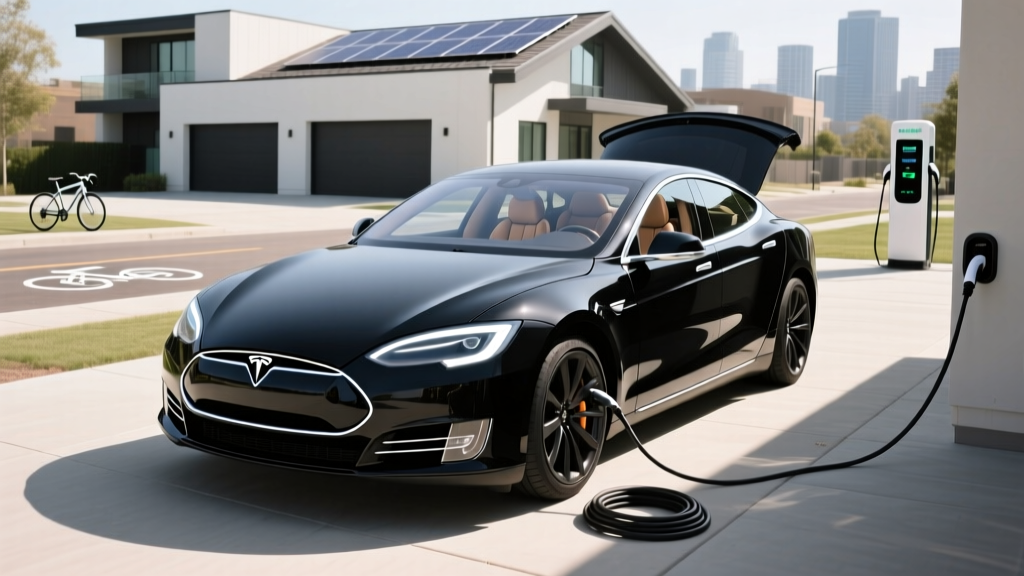
For home charging, all Model S generations accept up to 48 amps on a Tesla Wall Connector or any J1772 station with the included adapter. A full Level 2 home setup (240V, 60A circuit) typically costs $800–$2,000 including electrician labor, depending on panel proximity.
Battery Health and Degradation: What to Check Before You Buy
Every used Model S buyer's biggest question: how much battery life is left? Tesla's NMC lithium-ion packs degrade predictably but not uniformly.
Degradation Benchmarks
- Years 1–2: ~3–5% capacity loss (rapid initial drop)
- Years 3–5: ~1–2% per year (linear phase)
- 100,000+ miles: Expect 10–15% total degradation for most packs; some early 85 kWh packs lost up to 20%
- 2021+ 2170-cell packs: Early data suggests slower degradation curves, ~8–10% at 100,000 miles
How to check State of Health (SoH): On any used Model S, navigate to Controls → Software → Additional Vehicle Information or use third-party apps like Tessie or TeslaFi to pull the battery's nominal full-pack energy reading. Compare this to the original usable capacity. A 2018 100D that shows 82 kWh nominal from its original ~98 kWh usable has ~16% degradation — acceptable for a 7-year-old pack, but a negotiation point.
Battery Warranty — Does It Transfer?
Yes. Tesla's battery and drive unit warranty is fully transferable to subsequent owners:
- 2012–2020 Model S: 8 years / 150,000 miles (Long Range and Performance trims); 8 years / 125,000 miles (standard)
- 2021+ Model S: 8 years / 150,000 miles
- Threshold: Tesla covers replacement if capacity drops below 70% of nominal within the warranty window
A 2019 Model S Long Range with 60,000 miles still has warranty coverage through 2027 or 150,000 miles — significant peace of mind for a second-hand purchase.
Pricing in 2026: What You'll Actually Pay
The used Tesla Model S market has depreciated significantly, making it one of the best value propositions in the luxury EV segment. Here's what typical asking prices look like in early 2026:
| Model Year / Trim | Typical Used Price Range | Original MSRP | Federal Used EV Tax Credit (§25E) |
|---|---|---|---|
| 2015–2017 Model S 75D | $18,000–$25,000 | $74,500–$82,000 | Up to $4,000 (if ≤$25,000 sale price) |
| 2018–2020 Model S 100D / Long Range | $28,000–$42,000 | $85,000–$95,000 | Not eligible (exceeds $25K cap) |
| 2021–2023 Model S Long Range | $52,000–$68,000 | $89,990–$94,990 | Not eligible (exceeds $25K cap) |
| 2021–2023 Model S Plaid | $65,000–$85,000 | $129,990–$135,000 | Not eligible (exceeds $25K cap) |
Tax credit reality: The IRS §25E used clean vehicle credit offers up to $4,000 (30% of sale price) but only on vehicles sold for $25,000 or less, purchased from a licensed dealer, and subject to buyer income caps ($75,000 single / $150,000 joint). In practice, only older 75D models with high mileage qualify — and even then, only at the lower end of the price spectrum. Most used Model S purchases will not qualify for any federal credit.
Driving Dynamics, Tech, and Interior
Performance
Even the base rear-wheel-drive Model S 60 delivers brisk acceleration that outpaces most gas sedans. The 2021+ Plaid, with its tri-motor setup producing 1,020 horsepower and a 1.99-second 0-60 time, remains one of the fastest production cars ever built. All dual-motor AWD versions provide confident all-weather traction, and the air suspension (standard on most trims from 2016 onward) delivers a comfortable highway ride with adjustable ride height.
Interior and Cargo
The pre-2021 interior shows its age: the vertically oriented 17-inch touchscreen was pioneering in 2012 but feels dated against modern competitors. The 2021 Palladium refresh brought a horizontal 17-inch "cinematic" display, a rear passenger touchscreen, a yoke steering option (love it or hate it), and significantly improved build quality with premium materials.
- Cargo (trunk + frunk): ~28 cu ft total (pre-2021); ~28 cu ft (2021+, slightly reconfigured)
- Rear legroom: ~35.4 inches — adequate for adults but tighter than a Mercedes EQS or BMW i7
- Seating: 5 passengers standard; some 2014–2017 models offered optional rear-facing third-row jump seats (2 small children), bringing capacity to 7
Technology and Driver Assistance
All Model S vehicles receive over-the-air software updates, meaning even a 2015 model runs a recent version of Tesla's infotainment OS. Key tech features include:
- Autopilot (standard): Adaptive cruise control and lane-centering — an SAE Level 2 driver-assist system that requires active driver supervision at all times
- Full Self-Driving (FSD) Supervised: Available as a paid upgrade ($8,000 one-time or $99/month as of 2026); adds automated lane changes, navigation-on-autopilot, and traffic light recognition. Still Level 2 — not autonomous driving
- Sentry Mode: Cameras record surroundings when parked, a standout security feature
- App connectivity: Remote climate preconditioning, location tracking, charging status, and keyless phone entry
Important: Autopilot and FSD Supervised are SAE Level 2 systems. The driver must keep hands on the wheel (or demonstrate attention via cabin camera on 2021+ models) and remain fully responsible for the vehicle at all times. These are not self-driving systems.
Efficiency: MPGe and Operating Costs
The Model S has historically been one of the most efficient large luxury sedans on the market, thanks to Tesla's powertrain engineering and low drag coefficient (Cd 0.208 on 2021+ models).
- 2021+ Long Range: 124 MPGe combined / 27 kWh per 100 miles
- 2021+ Plaid: 116 MPGe combined / 29 kWh per 100 miles
- 2019 Long Range: 111 MPGe combined / 30 kWh per 100 miles
- 2017 100D: 104 MPGe combined / 33 kWh per 100 miles
At the U.S. average electricity rate of ~$0.17/kWh, charging a 2021+ Long Range at home costs roughly $4.60 per 100 miles. Compare that to a BMW 5 Series getting 27 MPG combined at $3.50/gallon: $12.96 per 100 miles. Over 15,000 annual miles, the Model S saves approximately $1,250/year in energy costs versus a comparable gas luxury sedan.
Pros and Cons of a Second-Hand Model S
Pros
- Supercharger network access — still the gold standard for reliable road-trip charging
- Strong performance across all trims; even base models are quick
- Over-the-air updates keep older vehicles current with new features
- Generous cargo space with frunk + trunk; practical for a sedan
- Transferable battery/drive unit warranty provides used-buyer confidence
- Low operating costs vs. gas luxury sedans
- Extensive Supercharger trip history and battery data available via third-party apps
Cons
- Pre-2021 interior quality and build consistency can be disappointing at this price tier
- Older 85/90 kWh packs showed higher degradation; some required replacement under warranty
- Repair costs outside warranty are steep — Tesla service center availability varies by region
- No federal tax credit on most used examples (price exceeds $25K §25E cap)
- Insurance premiums remain elevated vs. non-Tesla competitors
- Yoke steering (2021+) is polarizing and not easily swapped to a round wheel without aftermarket modification
- Competitors like the Lucid Air and Mercedes EQS offer more rear-seat luxury and comparable range new
Which Model S Should You Buy Used?
Best value pick: 2018–2020 Model S Long Range (or 100D pre-rename). You get ~300 real-world miles of range, AWD, modern Autopilot hardware (HW3), and a car still under battery warranty — typically in the $32,000–$42,000 range.
Best performance pick: 2021+ Model S Plaid if budget allows ($65K+). Unmatched acceleration, 250 kW charging, refreshed interior, and the latest HW4 computer.
Budget pick: 2016–2017 75D at $18,000–$25,000. Accept ~200 real-world miles of range and treat it as a commuter car. Verify battery SoH before purchase.
Avoid: Early 2012–2014 60/85 kWh models unless the battery has been replaced under warranty. These packs are now 10+ years old with high degradation risk and may be outside the 8-year warranty window.
Frequently Asked Questions
What is the real-world range of a used Tesla Model S?
It depends on the generation. A 2021+ Long Range delivers roughly 340–370 miles real-world; a 2018 100D gives about 270–300 miles; a 2017 75D yields 190–220 miles. Cold weather and sustained highway speeds reduce these figures by 15–30%.
How fast does a used Model S charge?
Pre-2021 models peak at roughly 120–150 kW on DC fast chargers (35–45 minutes for 10–80%). The 2021+ refresh supports 250 kW, cutting 10–80% to about 25–30 minutes. At home on Level 2 (48A / 11.5 kW), expect 34–41 miles of range added per hour, or a full overnight charge.
Does a used Tesla Model S qualify for the federal EV tax credit?
Only under the IRS §25E used vehicle credit, which caps eligibility at a $25,000 sale price. This means only older, higher-mileage 75D models might qualify (up to $4,000 credit). Buyer income must be under $75,000 (single) or $150,000 (joint), and the sale must be through a licensed dealer.
Is a used Model S worth it vs. a new EV?
For buyers who want flagship performance, Supercharger access, and 300+ mile range without paying $80K+, a 2019–2021 Long Range at $35,000–$55,000 is hard to beat. However, if you want the latest interior, warranty coverage from day one, and eligibility for the full $7,500 §30D new-vehicle credit, a new Hyundai Ioniq 6, Tesla Model 3, or BMW i4 may make more financial sense.
What should I check before buying a used Model S?
Prioritize: (1) Battery State of Health via TeslaFi or the car's energy screen — look for less than 15% degradation. (2) Remaining battery/drive unit warranty (8 years from original in-service date). (3) Autopilot hardware version — HW3 or HW4 is preferred; HW2/2.5 cars won't support the latest FSD features. (4) Service history for drive unit or battery replacements. (5) MCU (media control unit) version — MCU2 or newer is strongly preferred over the slow, failure-prone MCU1 in 2012–2018 cars.
Who is a used Model S best suited for?
The used Model S excels for daily commuters who want luxury and performance, road-trippers who value Supercharger network access, and tech-forward buyers who appreciate OTA updates. It's less ideal for those prioritizing rear-seat luxury (the Lucid Air and Mercedes EQS are better here) or buyers in regions with limited Tesla service center coverage.