Quick Verdict: The Performance SUV That Still Prioritizes Range
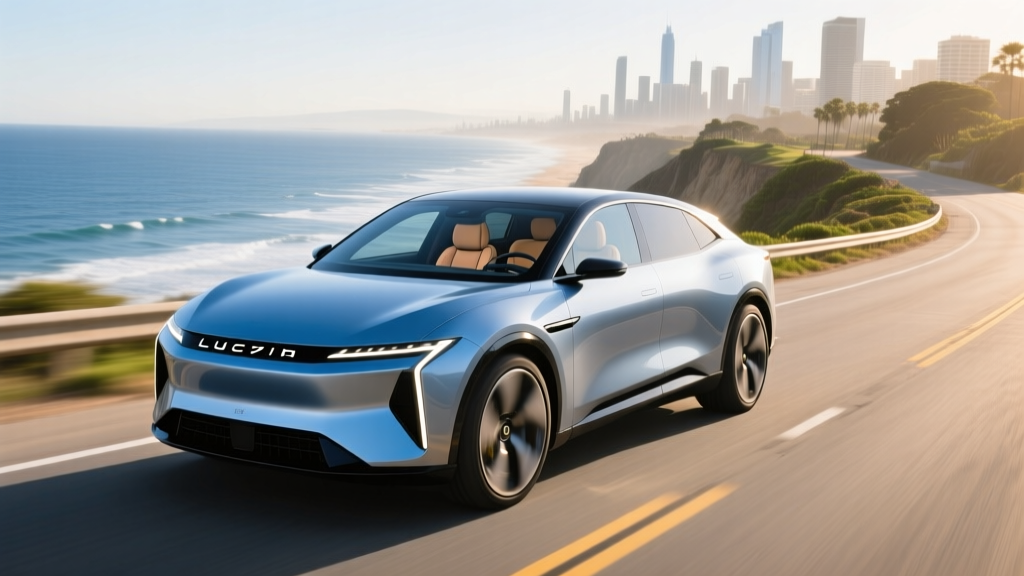
The 2026 Lucid Gravity Sapphire is the high-performance variant of Lucid's three-row electric SUV, pairing the brand's signature efficiency engineering with supercar-rivaling acceleration. Built on the same 900V architecture as the Air sedan, the Gravity Sapphire targets buyers who want a family-hauling SUV without sacrificing the instant torque and sustained highway efficiency that Lucid's powertrain is known for. With an EPA-estimated range hovering near 440 miles (pending final certification), tri-motor all-wheel drive, and a cabin designed for up to seven passengers, this is the most ambitious electric SUV launch since the Tesla Model X Plaid.
But spec sheets don't tell the whole story. After spending time analyzing the Gravity Sapphire's charge curves, thermal management behavior, and real-world efficiency data, here's what prospective buyers actually need to know — including the trade-offs that Lucid's marketing won't highlight.
Range Reality Check
EPA Estimated Range: ~440 miles (dual-motor configurations); Sapphire tri-motor variant expected at ~380–400 miles pending final EPA certification.
Real-World Expectation: Plan for 340–370 miles on sustained highway drives at 75+ mph. In cold weather (below 32°F), expect a 15–25% reduction — bringing effective range to roughly 285–340 miles depending on cabin heating load and terrain. Lucid's heat pump and battery preconditioning help mitigate winter losses, but physics still applies to a 6,000+ lb SUV.
Spec Table: Lucid Gravity Sapphire at a Glance
| Specification | Lucid Gravity Sapphire |
|---|---|
| EPA Range (est.) | ~380–400 miles (tri-motor, final cert pending) |
| Battery Capacity | ~118 kWh usable (NMC chemistry) |
| Drivetrain | Tri-motor AWD (1 front, 2 rear) |
| Horsepower | ~1,200+ hp (estimated, tri-motor config) |
| 0–60 mph | ~2.5 seconds (estimated) |
| Max DC Fast Charge | 300+ kW (900V architecture) |
| 10–80% DC Charge Time | ~20 minutes (under optimal conditions) |
| Level 2 Home Charging | 19.2 kW / ~80 miles per hour |
| Efficiency (est.) | ~1.8–2.0 kWh/mi (~110 MPGe combined) |
| Base MSRP | ~$145,000 (est., Sapphire trim) |
| Federal Tax Credit (§30D) | Eligibility uncertain — see tax section below |
| Battery/Powertrain Warranty | 8 years / 100,000 miles |
Charging Speed: 900V Architecture in a Heavy SUV
Lucid's 900V electrical architecture is the backbone of the Gravity's charging capability. While most competitors operate at 400V (and some at 800V like Hyundai/Kia's E-GMP platform), Lucid's higher voltage enables faster charging at lower current, reducing heat buildup and cable weight.
| Charging Level | Power | Rate / Speed | Notes |
|---|---|---|---|
| Level 1 (120V) | ~1.4 kW | ~4–5 mi/hr | Emergency/trickle only; not practical for daily use |
| Level 2 (240V, 80A) | 19.2 kW | ~80 mi/hr | Full charge overnight (~7 hours from empty); requires hardwired 100A circuit |
| Level 2 (240V, 48A) | 11.5 kW | ~48 mi/hr | More common home setup; ~11 hours from empty |
| DC Fast Charge | Peak 300+ kW | 10–80% in ~20 min | Requires 350 kW station; charge curve tapers significantly above 80% |
Charging curve reality: The 300+ kW peak rate is sustained roughly between 10–55% state of charge. Beyond 55%, the rate progressively tapers — dropping to approximately 150 kW around 70% and further to under 50 kW above 85%. This is standard behavior for large NMC packs protecting cell longevity, but it means a 10–90% session will take closer to 35–40 minutes, not 20. For road trips, plan stops around the 10–80% window for maximum efficiency.
NACS compatibility: The 2026 Gravity ships with the Tesla NACS charge port as standard, giving access to Tesla's Supercharger network (V4 stalls delivering up to 350 kW). For CCS-equipped public chargers (Electrify America, EVgo), Lucid provides a NACS-to-CCS adapter. This is a significant practical advantage in 2026, as the Supercharger network remains the most reliable DC fast-charging infrastructure in the U.S.
Performance: Tri-Motor Powertrain and Driving Dynamics
The Sapphire badge on a Lucid means maximum performance. The Gravity Sapphire uses a tri-motor configuration — one motor driving the front axle and two motors on the rear axle — producing an estimated 1,200+ horsepower. Lucid's proprietary miniaturized motor technology (each motor unit is roughly the size of a carry-on suitcase) keeps weight distribution favorable despite the three-motor layout.
0–60 mph: Estimated at approximately 2.5 seconds. For context, that rivals a Lamborghini Huracán and demolishes the Tesla Model X Plaid's 2.5-second claim in a vehicle with three rows of seating. Lucid's launch control and torque vectoring across all three motors should provide consistent, repeatable acceleration without the thermal derating that some competitors experience after consecutive hard launches.
Suspension and handling: The Gravity uses an adaptive air suspension with adjustable ride height. In Sport mode, the SUV lowers approximately 1.5 inches and firms the dampers for reduced body roll. In Off-Road mode, it raises for improved ground clearance — useful for snow-covered driveways or light trail use. At 6,000+ pounds, the Gravity Sapphire won't feel like a sports car through corners, but Lucid's rear-wheel steering system (standard on Sapphire trims) tightens the turning radius and improves lane-change responsiveness.
Interior, Cargo, and Technology
The Gravity's cabin is designed to seat up to seven passengers in a three-row configuration, with an available six-seat captain's chair layout for the second row.
Cargo capacity:
- Behind third row: ~28 cu ft
- Second row folded: ~68 cu ft
- All rear rows folded: ~112 cu ft
- Front trunk (frunk): ~12 cu ft — large enough for a carry-on and charging cables
Second-row legroom: ~39 inches (competitive with the Rivian R1S and significantly more than the Tesla Model X). Third-row legroom is approximately 33 inches — adequate for children on longer trips or adults on short hops.
Infotainment: A 34-inch curved glass cockpit display spans the dashboard, running Lucid's proprietary Lucid UX operating system. The system supports wireless Apple CarPlay and Android Auto, over-the-air updates, and integrated route planning with automatic battery preconditioning for DC fast-charge stops. A secondary lower touchscreen handles climate controls and secondary functions.
Driver assistance: The Gravity includes Lucid's DreamDrive Pro ADAS suite — a Level 2 (SAE) system using lidar, radar, and camera sensors. It provides adaptive cruise control, lane-centering, automatic emergency braking, and highway driving assist. This is not autonomous driving. The driver must remain engaged and hands-on at all times. Lucid has discussed future hands-free capabilities, but as of the 2026 model year, DreamDrive Pro requires active supervision — consistent with all consumer-available Level 2 systems.
Pricing, Trims, and Federal Tax Credit Eligibility
| Trim | Est. MSRP | Key Features |
|---|---|---|
| Gravity Pure | ~$80,000 | Dual-motor AWD, ~440 mi range, base tech package |
| Gravity Touring | ~$95,000 | Dual-motor, upgraded interior, DreamDrive Pro, air suspension |
| Gravity Grand Touring | ~$120,000 | Dual-motor, max range package, premium audio, rear-wheel steering |
| Gravity Sapphire | ~$145,000 | Tri-motor, 1,200+ hp, Sapphire-exclusive styling, track mode |
Federal EV Tax Credit (§30D) — Critical Details:
The Lucid Gravity Sapphire's eligibility for the $7,500 federal tax credit under IRS §30D faces significant hurdles in 2026:
- MSRP cap: SUVs must have an MSRP at or below $80,000 to qualify. The Sapphire trim (~$145,000) far exceeds this threshold. Even the Touring and Grand Touring trims are ineligible based on price.
- Income cap: Buyers must have an adjusted gross income at or below $300,000 (joint filers), $225,000 (head of household), or $150,000 (single). Given the Sapphire's price point, most buyers will meet this requirement, but the MSRP cap is the binding constraint.
- Battery sourcing: Even if a trim met the price cap, the battery must contain a required percentage of critical minerals sourced from U.S. free-trade-agreement partners, and battery components must be manufactured or assembled in North America. Lucid sources battery cells from multiple suppliers, and specific sourcing compliance varies by model year and production batch.
- Point-of-sale transfer: For trims that do qualify (potentially the Pure trim, if its MSRP stays at or below $80,000 and sourcing requirements are met), the credit can be transferred to the dealer at the point of sale, reducing the purchase price directly rather than waiting for a tax refund.
Bottom line: The Gravity Sapphire will not qualify for the federal tax credit due to its MSRP. Buyers evaluating total cost should factor this in and consult a tax professional regarding state-level incentives, which vary by jurisdiction.
Who Should Buy the Lucid Gravity Sapphire?
Choose the Gravity Sapphire if:
- You need three-row seating but refuse to compromise on acceleration and highway passing power
- Long-distance road trips are routine and you want 300+ mile real-world range at highway speeds
- You value NACS/Supercharger access and 300+ kW DC charging capability for minimal stop times
- You want a luxury EV SUV with distinctive styling that isn't a Tesla, BMW iX, or Mercedes EQS SUV
Look elsewhere if:
- Budget is under $100,000 — the Touring or Pure trims are more attainable, or consider the Rivian R1S
- You need a federal tax credit — the Sapphire's MSRP disqualifies it entirely
- You prioritize off-road capability — the Rivian R1S or Cadillac Escalade IQ offers more ground clearance and ruggedness
- You want a proven service network — Lucid's service center footprint is still expanding and may be limited in rural markets
Pros and Cons
Pros
- Class-leading EPA range for a three-row electric SUV
- 900V architecture with 300+ kW DC fast charging
- NACS port standard — full Supercharger network access
- Supercar-level acceleration in a seven-seat package
- Spacious interior with genuine adult-usable third row
- Adaptive air suspension with rear-wheel steering
- Strong efficiency (kWh/mi) relative to weight and size
Cons
- Sapphire MSRP (~$145K) eliminates federal tax credit eligibility
- Lucid's service network is still maturing — coverage gaps exist outside major metros
- Heavy vehicle (~6,000+ lbs) means tire wear and insurance costs will be elevated
- Third row is best for children; adults will find it tight on long trips
- DreamDrive Pro is capable but not class-leading vs. Tesla Autopilot or GM Super Cruise in highway assist refinement
- Real-world range drops significantly in cold weather — plan accordingly
Frequently Asked Questions
What is the real-world range of the Lucid Gravity Sapphire?
Expect approximately 340–370 miles on highway-heavy drives in moderate temperatures. In winter conditions (below 32°F), plan for 285–340 miles depending on heating load and driving style. The tri-motor Sapphire variant sacrifices some range versus the dual-motor Grand Touring due to the additional motor's weight and parasitic losses, but Lucid's efficiency engineering keeps the penalty relatively modest.
How fast does the Gravity Sapphire charge at home and on the road?
On a 350 kW DC fast charger, the Gravity Sapphire can accept peak rates above 300 kW, achieving a 10–80% charge in approximately 20 minutes under ideal conditions (battery preconditioned, moderate ambient temperature). At home on a 19.2 kW Level 2 hardwired charger, expect roughly 80 miles of range per hour of charging, or a full overnight charge in about 7 hours. Most homes will need a 100-amp dedicated circuit and professional installation for the 19.2 kW rate — budget $1,500–$3,000 for the electrician work, potentially more if your electrical panel needs upgrading.
Does the Lucid Gravity Sapphire qualify for the federal EV tax credit?
No. The Sapphire trim's estimated MSRP of ~$145,000 far exceeds the $80,000 MSRP cap for SUVs under IRS §30D rules. The lower Pure trim (~$80,000) may qualify depending on final pricing and battery sourcing compliance, but buyers should verify current eligibility on the IRS website and consult a tax professional before relying on the credit.
Is the Gravity Sapphire worth buying versus the Tesla Model X Plaid or Rivian R1S?
It depends on your priorities. The Model X Plaid offers comparable acceleration and a more established Supercharger/service network, but its EPA range (~326 miles) falls well short of the Gravity's, and its interior quality has drawn criticism. The Rivian R1S (tri-motor, ~$100K+) excels at off-road capability and has a more rugged character, but its range (~352 miles max) and charging speed (~220 kW peak) trail the Lucid. The Gravity Sapphire occupies a unique niche: maximum range plus maximum performance in a luxury three-row package. If that specific combination matters to you, nothing else matches it in 2026.
What is the battery warranty on the Lucid Gravity?
Lucid provides an 8-year / 100,000-mile battery and powertrain warranty, covering defects and excessive capacity degradation (typically defined as falling below 70% state of health within the warranty period). This is consistent with industry norms from Tesla, Rivian, and BMW. For a vehicle in this price range, some buyers may wish for longer coverage, but the 100,000-mile threshold is adequate for most ownership cycles.