The Tesla Model S has been on sale for over a decade, but it remains one of the most scrutinized electric sedans on the market — particularly when it comes to crash-test performance. For 2026, the Model S continues with the refreshed architecture introduced in 2021, offering dual-motor all-wheel drive, tri-motor Plaid performance, and a 100 kWh battery pack. But beyond the headline 0-60 numbers, buyers want to know: how does the Tesla Model S safety rating stack up, and does the car justify its premium price in a market now crowded with luxury EV sedans?
This review covers every number that matters — EPA range, real-world efficiency, DC fast-charging curves, battery chemistry, cargo dimensions, and the federal tax credit picture — so you can decide whether the Model S still earns its place in your garage.
Tesla Model S Safety Rating: NHTSA and IIHS Scores
The National Highway Traffic Safety Administration (NHTSA) has historically awarded the Model S a 5-Star Overall Safety Rating, the highest score in its program. The sedan performed well across frontal crash, side crash, and rollover resistance categories. Tesla's rigid battery-pack floor contributes to an exceptionally low center of gravity, reducing rollover risk to under 6% — among the lowest of any sedan.
The Insurance Institute for Highway Safety (IIHS) tested the pre-refresh Model S and awarded it top marks in most crashworthiness categories. However, the refreshed 2021+ Model S has not been fully re-evaluated by IIHS as of early 2026, so the current body style lacks a Top Safety Pick designation. This is a notable gap: IIHS testing has become more stringent since 2021, with updated side-crash and pedestrian-detection protocols. Buyers who prioritize IIHS validation should note this absence.
Spec Table: 2026 Tesla Model S at a Glance
| Specification | Model S Long Range | Model S Plaid |
|---|---|---|
| EPA Range | 402 miles | 396 miles |
| Battery Capacity (usable) | ~100 kWh, NMC | ~100 kWh, NMC |
| Drivetrain | Dual-Motor AWD | Tri-Motor AWD |
| Horsepower | 670 hp | 1,020 hp |
| 0-60 mph | 3.1 seconds | 1.99 seconds |
| Top Speed | 155 mph | 200 mph |
| Max DC Fast Charge | 250 kW | 250 kW |
| 10-80% DC Time | ~27 minutes | ~27 minutes |
| Level 2 Home Charge | 11.5 kW (~34 mi/hr) | 11.5 kW (~34 mi/hr) |
| EPA Efficiency | 124 MPGe / 27 kWh/100mi | 116 MPGe / 29 kWh/100mi |
| Cargo (rear + frunk) | 28.0 cu ft + 3.1 cu ft | 28.0 cu ft + 3.1 cu ft |
| Rear Legroom | 40.9 inches | 40.9 inches |
| Base MSRP | $79,990 | $94,990 |
| Battery/Drive Unit Warranty | 8 yr / 150,000 mi | 8 yr / 150,000 mi |
Real-World Range: What to Actually Expect
Real-World Highway (70-80 mph): ~310-340 miles
Cold Weather (below 32°F): ~250-290 miles, depending on cabin heating use
Mixed Commute (city/suburban): ~360-390 miles — regen-heavy driving recovers energy
The Model S Long Range's 402-mile EPA rating is among the highest of any EV sold in the US. But as with every EV, real-world results depend heavily on driving style and conditions. At sustained highway speeds of 75-80 mph, expect to lose roughly 15-20% versus the EPA sticker — putting real highway range in the 310-340 mile window. That's still exceptional for road trips.
Cold weather is the bigger variable. NMC chemistry in the Model S loses efficiency when ambient temps drop below freezing. The battery's thermal management system helps, but preconditioning (warming the pack before driving or charging) is essential to minimize range loss and maintain charge speed. Plan for 25-35% range reduction in sustained sub-freezing conditions.
On the positive side, Tesla's regenerative braking system is aggressive and effective. In stop-and-go city driving, one-pedal mode recovers significant energy, which is why the Model S often achieves close to its EPA number in urban commutes.
Charging Speed: DC Fast and Home Level 2
| Charging Level | Power | Speed | Typical Use |
|---|---|---|---|
| Level 1 (120V) | ~1.4 kW | ~4 miles/hour | Emergency/trickle only |
| Level 2 (240V, 48A) | 11.5 kW | ~34 miles/hour | Home daily charging |
| DC Fast (V3 Supercharger) | Peak 250 kW | ~200 mi in 15 min | Road trips |
| DC Fast (V4 Supercharger) | Peak 250 kW* | ~200 mi in 15 min | Newer stations |
*Note: The Model S is limited to 250 kW peak on current Supercharger hardware. It does not support 800V architecture or 350 kW charging like the Hyundai Ioniq 5 or Porsche Taycan.
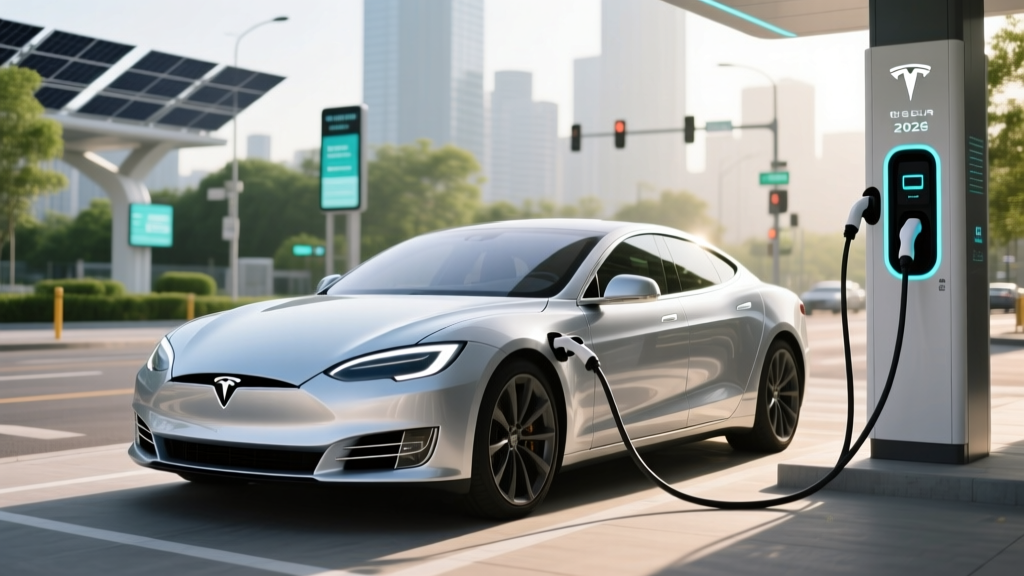
The Model S charges at a peak rate of 250 kW on Tesla's V3 and V4 Superchargers. In practice, the charge curve is front-loaded: you'll see peak speeds between 10-40% State of Charge (SoC), then a progressive taper. The 10-80% charge takes approximately 27 minutes, which is competitive but no longer class-leading. By comparison, vehicles on 800V architectures (Ioniq 5, EV6, Taycan) can complete 10-80% in 18 minutes or less at compatible chargers.
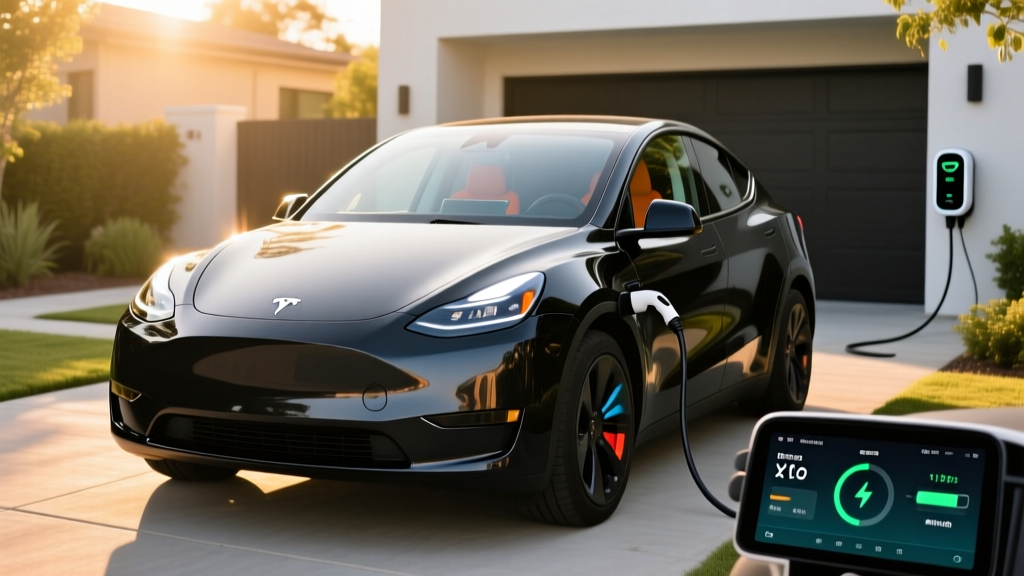
At home, a Wall Connector on a 60-amp circuit delivers 11.5 kW, adding roughly 34 miles of range per hour. A full overnight charge from 20% to 90% takes about 7-8 hours — more than adequate for daily use. Installation typically requires a 240V/60A circuit; budget $800-$2,000 for a licensed electrician, depending on panel proximity and local permitting.
A critical advantage: the Model S uses the NACS (North American Charging Standard) connector natively, giving it full access to Tesla's Supercharger network — the most reliable and expansive DC fast-charging network in the US, with over 25,000 stalls nationwide.
Pricing, Trims, and Federal Tax Credit Eligibility
| Trim | Base MSRP | As-Tested (typical) | §30D Credit Eligible? |
|---|---|---|---|
| Model S Long Range | $79,990 | $82,000-$87,000 | No — exceeds $55,000 sedan cap |
| Model S Plaid | $94,990 | $98,000-$105,000 | No — exceeds $55,000 sedan cap |
Under current IRS §30D rules, the federal clean vehicle credit offers up to $7,500 for qualifying new EVs. However, sedans are subject to an MSRP cap of $55,000. Since the Model S starts at $79,990, neither trim qualifies for the new-vehicle federal tax credit.
Additional §30D requirements — buyer income caps ($150,000 single / $300,000 joint), battery critical-mineral sourcing, and North American assembly rules — are moot for the Model S given the MSRP disqualification.
Buyers may explore the used EV tax credit (up to $4,000 or 30% of sale price, whichever is lower, on vehicles under $25,000) for pre-owned Model S examples, though finding one under that threshold is rare for recent model years.
State and local incentives may still apply. California, Colorado, and several other states offer additional rebates that are not subject to the federal MSRP cap. Check your state's energy office or the fueleconomy.gov incentives tool for specifics.
Interior, Tech, and Daily Usability
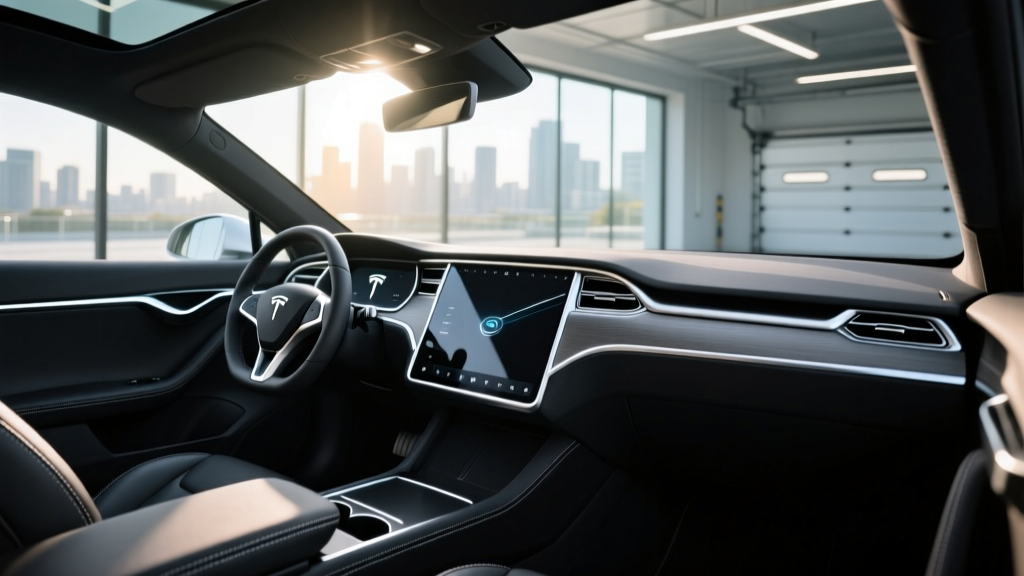
The Model S interior is minimalist and tech-forward, anchored by a 17-inch center touchscreen running Tesla's proprietary infotainment OS. A second 8-inch screen serves rear-seat passengers. The yoke steering wheel is standard (a conventional round wheel can be requested). Build quality on the 2021+ refresh improved meaningfully over earlier models, with better panel gaps, soft-touch materials, and ventilated front seats.
Cargo space is a standout: 28.0 cubic feet behind the rear seats (with the hatchback design offering van-like access), plus a 3.1 cubic foot frunk. Fold the rear seats and you get a massive flat load floor — practical for large items that wouldn't fit in a traditional sedan trunk.
Rear legroom measures 40.9 inches, generous for the segment, though the low roofline cuts into headroom for passengers over 6 feet. The glass roof creates an airy cabin but can increase heat load in summer — Tesla's tint helps but doesn't eliminate the need for sunshades in hot climates.
Tech highlights:
- Autopilot (standard): adaptive cruise, lane-keeping, auto emergency braking
- FSD Supervised ($8,000 option or $99/month): city-street navigation, traffic-light recognition, auto lane-change — still requires full driver supervision
- Over-the-air updates that add features post-purchase
- Sentry Mode (360° camera security), Dog Mode, and theater-grade 22-speaker audio
Notable drawbacks:
- No Apple CarPlay or Android Auto — Tesla's ecosystem is closed
- Turn-signal stalks removed (signals on yoke buttons) — polarizing ergonomics
- No physical instrument cluster — all info on the center screen
- Insurance premiums tend to run 20-40% higher than comparable luxury sedans
Pros, Cons, and Who Should Buy the Model S
Pros
- 402-mile EPA range — among the longest of any EV sedan
- NACS native — full Supercharger network access, best-in-class reliability
- Hatchback cargo versatility (28 cu ft) rare in luxury sedans
- 5-Star NHTSA rating, excellent crash structure
- OTA updates continuously improve the vehicle
- Plaid tri-motor performance (1.99s 0-60) is supercar territory
Cons
- $80K+ MSRP means no federal §30D tax credit
- 250 kW peak charge rate trails 800V competitors (Taycan, Ioniq 5)
- No IIHS re-test on refreshed body — no Top Safety Pick badge
- Yoke-only steering, no CarPlay — love-it-or-hate-it ergonomics
- Insurance costs significantly above segment average
- Plaid range drops noticeably under hard driving
Who the Model S suits best: Long-distance commuters and road-trippers who prioritize range and Supercharger access above all else. The hatchback cargo design makes it surprisingly practical for families with gear. The Plaid variant appeals to performance enthusiasts who want hypercar acceleration with four doors and daily-driver comfort.
Who should look elsewhere: Budget-conscious buyers who need tax-credit eligibility (consider the Model 3 or Hyundai Ioniq 6). Those who prioritize IIHS validation or want CarPlay integration should cross-shop the BMW i5 or Mercedes EQE.
Model S vs. Key Competitors
Against the Lucid Air Pure ($69,900, 419 mi EPA): The Air edges out the Model S on range and interior luxury, but Tesla's Supercharger network and software maturity remain advantages. The Air uses a CCS adapter for Supercharger access — functional but less seamless than native NACS.
Against the BMW i5 eDrive40 ($57,900, 295 mi EPA): The i5 qualifies for partial §30D credit eligibility depending on battery sourcing, offers CarPlay, and carries an IIHS rating. But it gives up over 100 miles of range and lacks Supercharger access.
Against the Porsche Taycan ($92,000+, 246-318 mi EPA): The Taycan charges faster (270 kW on 800V), handles better on back roads, and carries Porsche prestige. But it costs more, delivers less range, and relies on Electrify America for DC fast charging.
Frequently Asked Questions
What is the real-world range of the Tesla Model S?
The EPA rates the Long Range at 402 miles and the Plaid at 396 miles. In real-world highway driving at 75-80 mph, expect 310-340 miles. In cold weather below freezing, plan for 250-290 miles. City commuting with regenerative braking can approach the EPA number.
How fast does the Model S charge at home and on the road?
At home on a 240V/48A Level 2 Wall Connector, the Model S charges at 11.5 kW, adding about 34 miles per hour — a full overnight charge. On a Tesla V3 or V4 Supercharger, it peaks at 250 kW and completes a 10-80% charge in approximately 27 minutes.
Does the Tesla Model S qualify for the $7,500 federal EV tax credit?
No. Under IRS §30D rules, sedans must have an MSRP at or below $55,000 to qualify. The Model S starts at $79,990, disqualifying both trims regardless of buyer income or battery sourcing. State incentives may still apply.
How does the Tesla Model S safety rating compare to competitors?
NHTSA awarded the Model S a 5-Star Overall rating. However, IIHS has not re-tested the 2021+ refreshed Model S, so it lacks a current Top Safety Pick designation. Competitors like the BMW i5 and Genesis Electrified G80 carry current IIHS ratings.
Is the Model S worth buying over the Lucid Air or BMW i5?
Choose the Model S if Supercharger network access, 400-mile range, and Tesla's software ecosystem are your top priorities. Choose the Lucid Air for more range and luxury at a similar price. Choose the BMW i5 if you want IIHS validation, CarPlay, and potential tax-credit eligibility at a lower MSRP.
What is the battery warranty on the Model S?
Tesla covers the battery and drive units for 8 years or 150,000 miles, whichever comes first, with a minimum 70% capacity retention guarantee over that period. This is competitive with BMW (8/100,000) and slightly better than Lucid (8/100,000).