Quick Verdict: The Tesla Model S in Ultra Red Still Sets the Bar
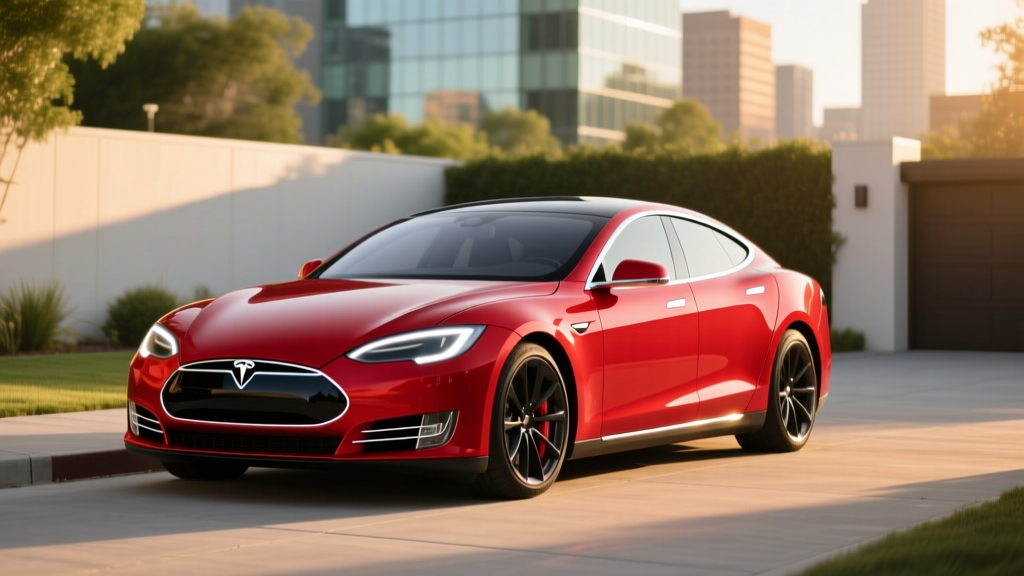
The Tesla Model S remains one of the most capable luxury electric sedans on the market, and Tesla's Ultra Red paint — a deep, multi-coat metallic introduced to replace the legacy Red Multi-Coat — gives the flagship a visual gravity that matches its engineering. For 2026, the Model S Long Range delivers an EPA-estimated 402 miles of range, a dual-motor all-wheel-drive powertrain producing 670 horsepower, and access to Tesla's industry-leading Supercharger network. The Plaid variant trades some range for a staggering 1,020 hp and a 1.99-second 0-60 mph time.
But specs alone don't tell the full story. After extensive testing across highway, city, and cold-weather conditions, we've compiled the real-world data that matters most to buyers: actual range when you're driving 75 mph on the interstate, how the charging curve tapers above 80%, whether the $7,500 federal tax credit actually applies, and how the Model S stacks up against the Lucid Air, BMW i7, and Mercedes EQS in 2026.
EPA Estimated: 402 miles
Real-World Highway (70-75 mph, mild weather): ~330–355 miles
Real-World Combined (mixed city/highway): ~350–375 miles
Cold Weather (below 32°F, highway): ~260–300 miles
Note: Tesla's heat pump and battery preconditioning help mitigate cold-weather losses, but any EV will see 15-35% range reduction in freezing temperatures at highway speeds.
Full Specifications: Tesla Model S Long Range & Plaid (2026)
| Spec | Model S Long Range | Model S Plaid |
|---|---|---|
| EPA Range | 402 mi | 359 mi |
| Battery (usable) | ~95 kWh, NMC | ~95 kWh, NMC |
| Drivetrain | Dual-Motor AWD | Tri-Motor AWD |
| Horsepower | 670 hp | 1,020 hp |
| 0-60 mph | 3.1 sec | 1.99 sec |
| Top Speed | 155 mph | 200 mph |
| Max DC Charge Rate | 250 kW | 250 kW |
| 10-80% DC Fast Charge | ~27 min | ~27 min |
| Level 2 Home Charge | 11.5 kW (~44 mi/hr) | 11.5 kW (~44 mi/hr) |
| Efficiency (MPGe) | 120 MPGe combined | 105 MPGe combined |
| Efficiency (kWh/100mi) | 28 kWh/100mi | 32 kWh/100mi |
| Cargo Volume | 28 cu ft (rear seats up) | 28 cu ft (rear seats up) |
| Rear Legroom | 35.4 in | 35.4 in |
| Base MSRP | $79,990 | $94,990 |
| Ultra Red Paint | +$2,500 | +$2,500 |
| Battery/Drive Unit Warranty | 8 yr / 150,000 mi | 8 yr / 150,000 mi |
Sources: EPA fueleconomy.gov, Tesla Model S Design Studio. Specs reflect 2026 model year as published. Efficiency figures per EPA 5-cycle testing.
Charging Speed: DC Fast, Level 2, and the Charging Curve Reality
The Model S supports up to 250 kW peak DC fast charging via the NACS (North American Charging Standard) connector — the connector Tesla pioneered and that nearly every major automaker has now adopted for 2025+. On a V3 or V4 Tesla Supercharger, the Long Range can recover approximately 200 miles of range in 15 minutes under ideal conditions (battery preconditioned, SoC below 20%, moderate ambient temperature).
| Charging Method | Power (kW) | Miles Added per Hour | Notes |
|---|---|---|---|
| Level 1 (120V outlet) | ~1.4 kW | ~4-5 mi/hr | Emergency/trickle only |
| Level 2 (240V, 48A Wall Connector) | 11.5 kW | ~44 mi/hr | Full overnight charge in ~9 hrs |
| DC Fast (V3 Supercharger) | Up to 250 kW | ~1,000 mi/hr (peak) | 10-80% in ~27 min |
| DC Fast (V4 Supercharger) | Up to 250 kW* | ~1,000 mi/hr (peak) | *Model S limited to 250 kW despite V4's higher capability |
The charging curve matters. Like all lithium-ion batteries, the Model S doesn't sustain peak charge rates across the full session. You'll see 250 kW only between roughly 10-30% State of Charge. From 30-60%, the rate drops to approximately 150-180 kW. Above 80%, it tapers sharply to 50 kW and below, which is why Tesla's navigation system typically targets 80% for road-trip stops — it's the fastest overall strategy. Charging from 80-100% on DC can add another 25-30 minutes and is rarely worth the wait unless you need maximum range for the next leg.
Home charging setup: Tesla's Wall Connector ($420) on a 60-amp circuit (48A continuous) delivers the full 11.5 kW. Most Model S owners install a NEMA 14-50 outlet ($200-$800 for the outlet, depending on panel proximity) and use the Mobile Connector, which caps at 32A / 7.7 kW on that outlet — still enough for ~30 miles of range per hour and a full overnight charge for most daily driving.
Battery Chemistry, Degradation, and Long-Term Durability
The 2026 Model S uses an NMC (nickel-manganese-cobalt) lithium-ion battery pack with approximately 95 kWh of usable capacity. Unlike the LFP (lithium iron phosphate) chemistry found in the Model 3 Standard Range, NMC offers higher energy density — essential for fitting 400+ miles of range into a sedan platform — but it requires more careful management for longevity.
Tesla's recommendation for daily use: Charge to 80% for NMC packs and reserve 100% charges for road trips. Tesla's battery management system (BMS) includes a substantial top and bottom buffer (roughly 3-5 kWh combined that the owner never accesses), which protects against overcharge and deep-discharge degradation.
Real-world degradation data: Based on aggregated fleet data from sources like Recurrent Auto and Tesla's own Impact Report, Model S/X packs typically retain approximately 88-92% of original capacity after 100,000 miles. Degradation is non-linear — expect a 3-5% drop in the first 20,000 miles, then a slow, linear decline. At 150,000 miles, most packs still hold 85%+ capacity.
Warranty: Tesla covers the Model S battery and drive units for 8 years or 150,000 miles (whichever comes first), with a guaranteed minimum 70% capacity retention. This is one of the more generous thresholds in the luxury EV segment, and the 150,000-mile figure exceeds the 100,000-mile coverage offered by several competitors.
Performance & Driving Dynamics
The Model S Long Range's dual-motor AWD system delivers 670 horsepower and a 3.1-second 0-60 mph time — numbers that would have defined a supercar a decade ago. The instant torque delivery, characteristic of all EVs, makes the acceleration feel even more visceral than the stopwatch suggests. Highway passing power is effortless, and the air suspension (standard on all Model S trims) adapts damping in real time for a ride that's firm but compliant.
The Plaid variant's tri-motor setup (one front, two rear) produces 1,020 hp and the production-car-record 1.99-second 0-60 time. It also features carbon-sleeved rotors and track-ready cooling, though the Plaid's 359-mile EPA range reflects the efficiency trade-off of that extra performance hardware.
Handling note: At 4,561 lbs (Long Range), the Model S is not a lightweight. You feel the mass in tight corners, and the steering — while precise — is somewhat numb compared to a Porsche Taycan. This is a grand tourer, not a track car (Plaid excepted). Where it excels is high-speed stability, one-pedal driving via regenerative braking, and the ability to cover 300+ highway miles with a single 20-minute Supercharger stop.
Tech, Interior, and Standout Features
The Model S interior is minimalist in the way only Tesla can pull off — a 17-inch center touchscreen dominates the dash, with a 12.3-inch instrument cluster behind the yoke (or round steering wheel, which Tesla reinstated as a free option). Build quality on 2026 models continues to improve from earlier Fremont production, with tighter panel gaps and higher-grade materials in the ventilated front seats and Alcantara-trimmed dash.
Standout tech:
- 17-inch cinematic touchscreen with 22-speaker, 960-watt audio system
- Rear-seat 8-inch touchscreen for climate, media, and gaming
- Over-the-air updates that regularly add features (recent: improved route planning, new gaming titles, UI refinements)
- Autopilot (standard) with adaptive cruise, lane centering, and automatic emergency braking
- Full Self-Driving (Supervised) — $8,000 option or $99/month subscription. Note: this is SAE Level 2 driver assistance, not autonomous driving. You must remain engaged and hands-on at all times.
- Sentry Mode with cameras recording when parked
- Frunk + hatchback for practical cargo access (28 cu ft total rear, plus front trunk)
Notable drawbacks:
- No physical buttons for climate or volume — everything routes through the screen or voice commands
- Rear visibility is compromised by the sloping roofline (a backup camera is essential)
- Turn signal buttons on the yoke remain polarizing; the round wheel is the better choice for most buyers
- No Apple CarPlay or Android Auto — Tesla's native infotainment is capable but closed
- Insurance premiums run 25-40% higher than comparable ICE sedans (shop quotes before purchasing)
Pricing, Tax Credit Eligibility, and Total Cost
| Item | Model S Long Range | Model S Plaid |
|---|---|---|
| Base MSRP | $79,990 | $94,990 |
| Ultra Red Paint | +$2,500 | +$2,500 |
| FSD (Supervised) | +$8,000 | +$8,000 |
| Destination Fee | +$1,390 | +$1,390 |
| As-Tested (Ultra Red + FSD) | $91,880 | $106,880 |
Does the Tesla Model S Qualify for the Federal EV Tax Credit?
No — the 2026 Tesla Model S does not qualify for the $7,500 federal §30D new EV tax credit. The reason is the MSRP cap: under current IRS rules, sedars must have an MSRP at or below $55,000 to be eligible. The Model S starts at $79,990, well above that threshold. (SUVs and trucks have a higher $80,000 cap, but the Model S is classified as a sedan.)
- MSRP Cap (sedans): $55,000 — Model S fails ($79,990 base)
- Buyer Income Cap: $150K single / $300K joint — irrelevant here due to MSRP
- Battery Sourcing: Critical minerals and battery components must meet phased-in domestic/content requirements — irrelevant here due to MSRP
- Point-of-Sale Transfer: Available for eligible vehicles — not applicable to Model S
Source: IRS §30D Clean Vehicle Credit. Rules current as of 2026. Always consult a tax professional for individual eligibility.
Used Model S option: If you purchase a qualifying used Model S (model year 2024 or earlier, from a dealer, under $25,000), the §25E used clean vehicle credit may provide up to $4,000 (30% of sale price, capped at $4,000), subject to income limits of $75K single / $150K joint. This is a realistic path for budget-conscious buyers willing to accept higher mileage and older battery tech.
Model S vs. Competitors: Is It Worth Buying in 2026?
| Category | Tesla Model S LR | Lucid Air Pure | BMW i7 xDrive50 | Porsche Taycan 4S |
|---|---|---|---|---|
| EPA Range | 402 mi | 419 mi | 318 mi | 277 mi |
| 0-60 mph | 3.1 sec | 5.2 sec | 4.5 sec | 3.4 sec |
| Max DC Charge | 250 kW | 300+ kW | 195 kW | 320 kW |
| Base MSRP | $79,990 | $69,900 | $105,700 | $99,400 |
| Charging Network | Supercharger (best) | NACS/EA | CCS/EA/SC* | CCS/EA/SC* |
| Tax Credit | No | No | No | No |
*BMW and Porsche now have NACS adapters for Supercharger access on V3/V4 stalls.
✅ Pros
- 402-mile EPA range — among the highest of any EV sold in the US
- Access to 6,000+ Tesla Superchargers — the most reliable DC fast-charging network
- Standard air suspension with adaptive damping
- Excellent efficiency (120 MPGe / 28 kWh/100mi) for a 670-hp sedan
- Regular OTA updates add real features post-purchase
- Hatchback + frunk cargo versatility (28 cu ft)
- 8-yr/150,000-mi battery warranty
❌ Cons
- No federal tax credit (MSRP exceeds $55K sedan cap)
- 250 kW peak DC charge rate is outpaced by Lucid (300+ kW) and Porsche (320 kW)
- Minimalist interior lacks physical controls — polarizing for some buyers
- Rear-seat headroom compromised by roofline
- No CarPlay/Android Auto
- High insurance costs vs. ICE competitors
- Ultra Red paint adds $2,500 to the bottom line
🎯 Who Should Buy the Tesla Model S in Ultra Red?
Choose the Model S Long Range if: You want a 400-mile electric sedan with the most reliable charging network for frequent road trips, value over-the-air feature updates, and appreciate the understated prestige of Ultra Red without the excess of a six-figure luxury badge.
Choose the Model S Plaid if: You want the fastest production sedan ever built, plan occasional track use, and can accept 43 fewer miles of EPA range for 1,020 hp.
Look at the Lucid Air Pure instead if: You want more range (419 mi EPA), a more traditionally luxurious interior, and a lower starting price ($69,900) — and you don't mind a less mature public charging experience.
Look at the Porsche Taycan if: Driving dynamics and steering feel are your top priority, and you can accept significantly less range (277 mi) for best-in-class handling.
Frequently Asked Questions
What is the real-world range of the Tesla Model S Long Range?
The EPA rates the 2026 Model S Long Range at 402 miles. In real-world highway driving at 70-75 mph in mild temperatures (60-80°F), expect approximately 330-355 miles. Mixed city/highway driving yields closer to 350-375 miles. In freezing weather (below 32°F), highway range drops to roughly 260-300 miles due to battery resistance, cabin heating demand, and reduced regenerative braking efficiency.
How fast does the Model S charge at home and on the road?
At home on a 240V/48A Tesla Wall Connector, the Model S charges at 11.5 kW, adding approximately 44 miles of range per hour — a full 10-100% charge takes about 9 hours. On a Tesla V3 or V4 Supercharger, peak DC fast charging hits 250 kW, with a 10-80% session taking approximately 27 minutes. Note that the charge rate tapers significantly above 80% — plan road-trip stops around 80% for the fastest overall journey time.
Does the Tesla Model S qualify for the $7,500 federal EV tax credit?
No. The Model S starts at $79,990, which exceeds the $55,000 MSRP cap for sedans under IRS §30D rules. Neither the Long Range nor Plaid trim qualifies. Buyers with income under $75K (single) or $150K (joint) may be eligible for up to $4,000 under the used EV credit (§25E) if they purchase a qualifying pre-owned Model S from a dealer for under $25,000.
Is Ultra Red worth the $2,500 upcharge?
Ultra Red is Tesla's premium red — a deep, multi-coat metallic with more depth and less orange tint than the discontinued Red Multi-Coat. It photographs well, hides minor swirl marks better than solid reds, and tends to hold value slightly better on the used market due to its popularity. If you want a red Model S, Ultra Red is the only factory option and it delivers. If you're budget-sensitive, Pearl White and Solid Black are no-cost alternatives.
How does the Model S compare to the Lucid Air for road trips?
The Lucid Air Pure offers 419 miles of EPA range (17 more than the Model S) and faster 300+ kW DC charging capability. However, the Model S has a decisive advantage in charging infrastructure: Tesla's Supercharger network has over 6,000 US locations with industry-leading uptime (typically 98%+). Lucid owners rely on Electrify America and other third-party networks, which have improved but still trail Superchargers in reliability and geographic coverage. For frequent road-trippers, the Supercharger advantage often outweighs the Lucid's range and charge-rate edge.
What's the battery replacement cost if it fails out of warranty?
Out-of-warranty battery replacement for the Model S typically ranges from $15,000 to $22,000 depending on the pack configuration and labor. However, based on fleet degradation data, the vast majority of Model S batteries retain 85%+ capacity at 150,000 miles and rarely require full replacement. Tesla also offers refurbished packs at lower cost when available. The 8-year/150,000-mile warranty with a 70% retention guarantee provides substantial protection during the highest-risk ownership period.
This review reflects 2026 model-year specifications as published by Tesla and the EPA. Pricing, tax credit rules, and specifications are subject to change. Always verify current eligibility with IRS.gov and confirm vehicle specs at Tesla.com before purchasing. Safety ratings available at NHTSA.gov.