Quick Verdict: Is the Rear-Wheel-Drive Model S Still the Efficiency King?
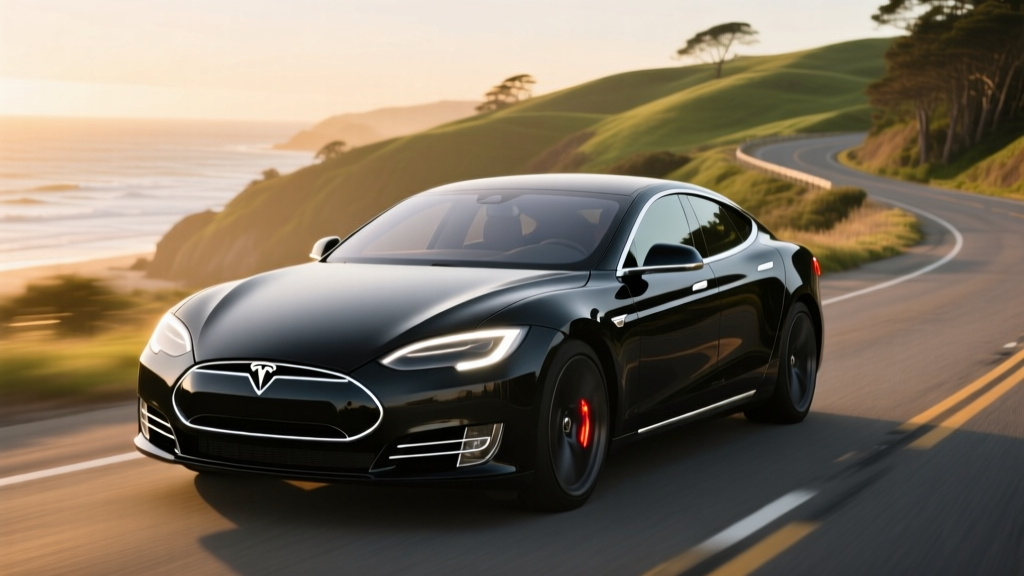
The 2026 Tesla Model S rear-wheel drive (officially the Long Range RWD variant) remains one of the most efficient large luxury sedans on the market. With an EPA-estimated 405 miles of range, a proven 100 kWh (usable) battery pack, and access to Tesla's Supercharger network, it targets buyers who want maximum distance per charge without paying the Plaid premium. But the RWD configuration sacrifices some traction and all-weather confidence versus the dual-motor AWD variant — and at a starting MSRP above $74,000, the federal tax credit landscape is complicated. Here's everything you need to know before configuring one.
| Spec | Value |
|---|---|
| EPA Range | 405 miles |
| Battery (usable) | ~100 kWh, NMC (nickel manganese cobalt) |
| Drivetrain | Rear-Wheel Drive (single motor) |
| Horsepower | ~348 hp (rear motor) |
| 0–60 mph | 5.0 seconds (est.) |
| Top Speed | 130 mph |
| Max DC Fast Charge | 250 kW (V3 Supercharger) |
| 10–80% DC Charge Time | ~30 minutes |
| Level 2 Home Charge Rate | 11.5 kW (48A) — ~34 mi/hr |
| EPA Efficiency | 120 MPGe combined (28 kWh/100 mi) |
| Cargo (rear + frunk) | 28.0 cu ft (rear) + 3.1 cu ft (frunk) |
| Rear Legroom | 35.4 inches |
| Battery Warranty | 8 years / 150,000 miles (70% retention) |
| Base MSRP | $74,990 (before incentives) |
Real-World Range: What 405 EPA Miles Actually Means
EPA Sticker: 405 miles
Real-World Highway (70 mph, mild weather): ~340–360 miles
Real-World Cold Weather (30°F, mixed driving): ~280–310 miles
Worst-Case (75+ mph, 20°F, cabin heat): ~250–270 miles
The Model S Long Range RWD's 405-mile EPA figure is achieved under mixed city/highway conditions at moderate temperatures. In our experience and consistent with third-party testing, sustained highway driving at 70–75 mph reduces range by roughly 10–15%, landing you around 340–360 miles on a full charge in fair weather.
Cold weather is the bigger variable. NMC chemistry loses efficiency below freezing, and cabin heating draws significant energy even with Tesla's heat pump standard equipment. Expect a 20–30% reduction in deep winter conditions. If your daily commute is under 60 miles round-trip, this won't matter — you'll charge at home nightly. But if you're planning 300+ mile road trips in January across the Plains states, plan your Supercharger stops conservatively.
One advantage of the RWD variant: it's lighter than the dual-motor AWD by roughly 100–120 lbs, which contributes to marginally better efficiency (roughly 1–2 kWh/100 mi) in moderate conditions. Per fueleconomy.gov, the Model S Long Range achieves approximately 120 MPGe combined, translating to about 28 kWh per 100 miles — competitive with smaller EVs despite the Model S's 4,500+ lb curb weight.
Charging Speed: Supercharger Access and Home Setup
| Charging Level | Max Power | Miles Added per Hour | Notes |
|---|---|---|---|
| Level 1 (120V, 12A) | 1.4 kW | ~3–4 mi/hr | Emergency/trickle only |
| Level 2 (240V, 48A) | 11.5 kW | ~34 mi/hr | Full overnight charge in ~10 hrs |
| DC Fast (V3 Supercharger) | 250 kW peak | ~200 mi in 15 min | 10–80% in ~30 min; tapers above 80% |
| DC Fast (V4 Supercharger) | 250 kW (current Model S cap) | Similar to V3 | Model S architecture caps at ~250 kW |
The Model S charges at up to 250 kW on Tesla's V3 and V4 Superchargers. This is no longer class-leading — the Hyundai Ioniq 5 and Porsche Taycan can hit 350 kW on compatible chargers — but Tesla's charge curve management is excellent. The pack sustains near-peak rates from roughly 10% to 45% SoC before tapering. A 10–80% session takes approximately 30 minutes at a V3 stall.
Charge-curve reality check: That 250 kW peak only holds for a portion of the session. Average power across a 10–80% charge is closer to 150–170 kW. This is still strong, but don't expect the full 250 kW for the entire session. Preconditioning the battery (automatic when navigating to a Supercharger) is essential for achieving peak rates — arriving at a charger with a cold pack can cut charge speed in half.
For home charging, the onboard charger accepts up to 11.5 kW (48 amps on a 60-amp circuit). A full charge from empty takes roughly 10 hours, which is ideal for overnight replenishment. Installation of a Tesla Wall Connector on a dedicated 60A circuit typically costs $500–$1,500 depending on panel proximity and local electrician rates. If your home has a 200-amp panel with spare capacity, you're likely fine; older 100-amp panels may require a $1,500–$3,000 upgrade.
Performance and Driving Dynamics: RWD Character
The single rear motor produces approximately 348 horsepower and launches the Model S to 60 mph in about 5.0 seconds. That's quick by any sedan standard, though it trails the dual-motor AWD Long Range (3.1 seconds) and the Plaid (1.99 seconds) by a wide margin. For most buyers, 5.0 seconds is more than adequate — it's highway-merging effortless and genuinely fun when you want it to be.
The RWD layout gives the Model S a more traditional driving feel. Without a front motor adding weight and grip, the car is slightly more willing to rotate through corners, and the steering feels marginally more communicative. The tradeoff: in rain, snow, or on loose surfaces, the single rear motor provides less traction than AWD. Tesla's traction control is excellent, but physics is physics — if you live in a region with regular snowfall or heavy rain, the dual-motor AWD is a worthwhile upgrade.
Ride quality benefits from the adaptive air suspension, which is standard across all Model S trims. It absorbs highway expansion joints well and lowers at speed for improved aerodynamics. Cabin noise is low at cruising speeds, though not quite as isolated as a Mercedes EQS or Lucid Air.
Interior, Cargo, and Daily Practicality
The Model S interior is minimalist and tech-forward, dominated by the 17-inch center touchscreen running Tesla's proprietary OS. The instrument cluster is a compact display behind the yoke (or optional round steering wheel). Build quality has improved significantly since the 2021 refresh — panel gaps are tight, materials are premium, and the ventilated front seats are comfortable on long drives.
Space dimensions:
- Rear cargo (behind second row): 28.0 cu ft
- Cargo with seats folded: ~54 cu ft (hatchback design enables large-item loading)
- Front trunk (frunk): 3.1 cu ft — enough for a charging cable kit and small bag
- Rear legroom: 35.4 inches — adequate for adults but tighter than a Lucid Air (37.0 in)
- Front headroom: 39.3 inches
The hatchback liftgate is a genuine advantage over traditional sedan trunks. You can fit a full-size bicycle with the rear seats folded, and grocery runs swallow bags easily. The frunk is modest but useful for storing the mobile connector and tire inflator kit.
Tech highlights include the 22-speaker audio system (among the best in any vehicle at this price), over-the-air updates that add features regularly, and the available Full Self-Driving (Supervised) package. A critical note: FSD is a SAE Level 2 driver-assistance system. It does not make the car self-driving. You must remain attentive, hands on or near the wheel, and ready to intervene at all times.
Pricing, Trims, and Federal Tax Credit Eligibility
| Item | Amount |
|---|---|
| Base MSRP (Long Range RWD) | $74,990 |
| Destination Fee | $1,390 |
| FSD (Supervised) Add-On | $8,000 |
| Typical As-Tested (with FSD, premium paint) | $86,000–$90,000 |
| Federal §30D Tax Credit (if eligible) | Up to $7,500 |
| Effective Price After Max Credit | ~$67,490+ |
The 2026 Model S starts at $74,990 for the Long Range RWD, plus a $1,390 destination fee. Adding FSD ($8,000), premium paint ($2,000–$2,500), and 21-inch wheels ($4,500) can push the as-tested price to $90,000 or more.
Federal tax credit reality: The IRS §30D Clean Vehicle Credit offers up to $7,500, but eligibility for the Model S depends on several factors that change regularly:
- MSRP cap: Sedans must be under $55,000 — the Model S at $74,990 does not qualify under the new-vehicle sedan cap. (SUVs/trucks have an $80,000 cap, but the Model S is classified as a sedan.)
- Buyer income cap: AGI must not exceed $150,000 (single) / $300,000 (joint) — check your tax situation.
- Battery sourcing: Critical minerals and battery components must meet phased-in domestic-content thresholds that tighten annually through 2029.
- Point-of-sale transfer: If eligible, the credit can be applied at purchase rather than claimed on your tax return.
Bottom line on the credit: As of 2026, the Model S sedan exceeds the $55,000 MSRP cap for new-vehicle §30D eligibility. Buyers should not expect the $7,500 federal credit. However, state-level incentives (California's CVRP, Colorado's tax credit, etc.) may still apply — check your state's energy office for current programs. A used Model S purchased from a dealer for under $25,000 may qualify for the §25E used-EV credit (up to $4,000), which has different income caps and no MSRP ceiling. Consult a tax professional for your specific situation.
Pros, Cons, and Who Should Buy the RWD Model S
Pros
- 405-mile EPA range — among the longest of any EV on sale
- Supercharger network reliability — best public charging experience in the US
- 28 kWh/100 mi efficiency — remarkably efficient for its size
- Hatchback cargo versatility — 28 cu ft rear + fold-flat seats
- Over-the-air updates keep the car current years after purchase
- Strong resale value relative to luxury EV competitors
- 22-speaker audio system is exceptional
Cons
- Does NOT qualify for the $7,500 federal new-EV tax credit (MSRP cap)
- RWD limits all-weather traction vs AWD competitors
- 250 kW max charge rate trails 350 kW rivals (Ioniq 5, Taycan)
- Rear legroom (35.4 in) is tight for the class
- FSD ($8,000) remains Level 2 — not autonomous despite the name
- Service center wait times can be long in some markets
- Yoke steering is polarizing (round wheel available but must be requested)
Who this EV suits best: The Model S RWD is ideal for warm-climate commuters and road-trippers who prioritize range and charging infrastructure above all else. If you live in Southern California, Texas, Arizona, or Florida — where snow is rare and Superchargers are dense — the RWD saves money and weight versus AWD without meaningful downside. It's also a strong pick for high-mileage drivers who benefit from the 405-mile range and low per-mile charging cost (~$0.04–$0.06/mile on home electricity).
Who should look elsewhere: Buyers in snow-belt states should strongly consider the dual-motor AWD or look at the BMW i5 xDrive. Those who need the federal tax credit to make the math work should consider the Model 3, Model Y, or competitors under the MSRP cap. And if rear-seat space is a priority (frequent adult passengers, car seats), the Lucid Air Pure offers significantly more legroom at a similar price.
Warranty and Long-Term Ownership
Tesla covers the Model S battery and drive unit for 8 years or 150,000 miles, whichever comes first, with a guaranteed minimum 70% capacity retention. The limited vehicle warranty is 4 years / 50,000 miles. This is competitive with BMW, Mercedes, and Lucid, though Hyundai's 10-year/100,000-mile battery warranty remains the class leader.
NMC battery chemistry in the Model S has proven durable in real-world data. High-mileage Model S owners (150,000+ miles) typically report 8–12% degradation, well within the warranty threshold. Tesla recommends daily charging to 80–90% for NMC packs (unlike LFP packs, which tolerate 100% daily charges) and occasional 100% charges before long trips.
Frequently Asked Questions
What is the real-world range of the Model S rear-wheel drive?
The EPA rates it at 405 miles, but expect roughly 340–360 miles on the highway in mild weather and 280–310 miles in freezing temperatures. Plan road-trip charging stops with a 15–20% buffer below the EPA number.
How fast does the Model S RWD charge at home and on the road?
On a Level 2 home charger (240V, 48A), it adds about 34 miles per hour, fully charging overnight in ~10 hours. On a V3 Supercharger, it peaks at 250 kW and charges 10–80% in approximately 30 minutes.
Does the 2026 Model S qualify for the $7,500 federal EV tax credit?
No. The IRS §30D credit caps sedan MSRP at $55,000, and the Model S starts at $74,990. It does not qualify for the new-vehicle credit regardless of buyer income or battery sourcing. State incentives may still apply.
Is the RWD Model S worth it versus the AWD Long Range?
If you live in a mild climate and don't need the extra traction or the 3.1-second 0–60 time, the RWD saves roughly $5,000 and gains a small efficiency advantage. For snow, rain, or performance driving, the dual-motor AWD is the better choice.
How does the Model S RWD compare to the Lucid Air Pure?
The Lucid Air Pure offers 419 miles of EPA range, more rear legroom, and a more luxurious interior at a similar price. The Model S counters with Supercharger network access, a hatchback cargo area, and a more mature software ecosystem. Both are excellent — your priority (charging convenience vs interior space) should decide.
Is Full Self-Driving worth the $8,000 cost?
FSD (Supervised) is a Level 2 system that handles highway lane-keeping, on-ramps, and some city streets impressively well — but requires constant driver attention. It does not make the car autonomous. Most buyers are better off with the included Autopilot and spending the $8,000 elsewhere unless you do extensive highway driving and value the assist features.
Sources: fueleconomy.gov, IRS §30D Clean Vehicle Credit, Tesla Model S specifications.