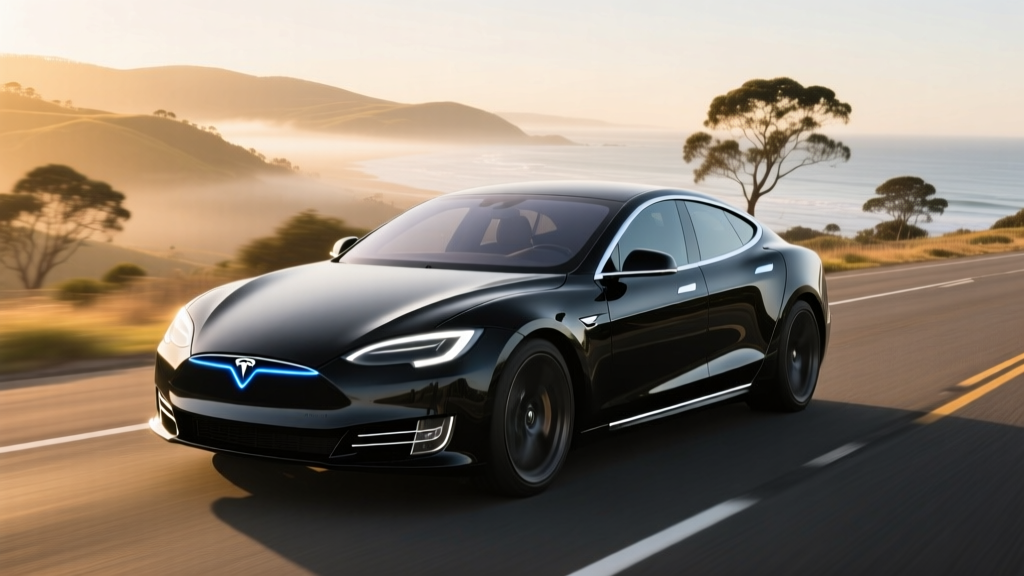
If you've been searching for Tesla Model S images to see whether this flagship sedan still holds up against a new wave of luxury EVs, you're not alone. The Model S has been on sale for over a decade, but Tesla's iterative updates — including the 2021 "Palladium" refresh and ongoing software and powertrain tweaks — keep it relevant. For 2026, the Model S continues as Tesla's premium long-range sedan, offered in Dual Motor All-Wheel Drive and the tri-motor Plaid variant.
This review goes beyond the glossy press photos. We break down real-world range, charging curves, ownership costs, and whether the Model S still earns its premium price tag against rivals like the Lucid Air, BMW i5, and Mercedes-Benz EQS.
2026 Tesla Model S at a Glance: Key Specs
| Spec | Model S (Dual Motor AWD) | Model S Plaid (Tri-Motor AWD) |
|---|---|---|
| EPA Range | 402 miles | 359 miles |
| Battery Capacity | ~100 kWh usable (NMC) | ~100 kWh usable (NMC) |
| Drivetrain | Dual Motor AWD | Tri-Motor AWD |
| Horsepower | 670 hp | 1,020 hp |
| 0–60 mph | 3.1 seconds | 1.99 seconds |
| Top Speed | 155 mph | 200 mph |
| Peak DC Fast Charge | 250 kW | 250 kW |
| 10–80% DC Charge Time | ~28 minutes | ~28 minutes |
| Level 2 Home Charge Rate | 11.5 kW (~41 mi/hr) | 11.5 kW (~41 mi/hr) |
| MPGe (Combined) | 120 MPGe | 116 MPGe |
| Base MSRP | $79,990 | $94,990 |
| Battery Warranty | 8 yr / 150,000 mi | 8 yr / 150,000 mi |
Sources: EPA fueleconomy.gov, Tesla Model S design page.
Real-World Range: Beyond the EPA Sticker
EPA Estimated: 402 miles (Dual Motor) / 359 miles (Plaid)
Real-World Highway (70 mph, mild weather): ~320–350 miles (Dual Motor) / ~280–310 miles (Plaid)
Real-World Highway (cold weather, below 32°F): ~260–300 miles (Dual Motor) / ~230–260 miles (Plaid)
Expect 15–25% range reduction at sustained highway speeds, with an additional 10–15% loss in freezing temperatures due to cabin heating and battery resistance.
The Model S Dual Motor's 402-mile EPA rating remains one of the highest of any production EV sold in the U.S. However, the EPA test cycle favors lower-speed mixed driving. In our experience and consistent with third-party highway range tests, sustained 70–80 mph driving yields roughly 320–350 miles on a full charge in moderate temperatures.
The Plaid's smaller effective range (359 EPA miles) comes from its tri-motor powertrain drawing more energy under hard acceleration and its stickier, higher-drag tire setup. Highway real-world figures for the Plaid land closer to 280–310 miles.
Cold weather is the great equalizer. The Model S uses a heat pump (standard since the Palladium refresh), which mitigates cabin-heating energy draw compared to resistive heaters. Still, expect 10–15% additional range loss in sub-freezing conditions. Preconditioning the battery while plugged in — a feature Tesla's navigation system handles automatically when a Supercharger is your destination — helps recover some of that deficit.
Charging Speed: DC Fast Charging and Home Setup
Tesla's Supercharger network remains the benchmark for reliability, and the Model S takes full advantage of it — though with a caveat about sustained charge rates.
| Charging Level | Power / Rate | Speed (Miles Added) | Notes |
|---|---|---|---|
| Level 1 (120V household) | ~1.4 kW | ~3–5 mi/hr | Emergency/trickle only |
| Level 2 (240V, 48A Wall Connector) | 11.5 kW | ~41 mi/hr | Full charge in ~9 hours |
| DC Fast (V3 Supercharger) | Peak 250 kW | ~200 mi in 15 min (Tesla est.) | 10–80% in ~28 min |
| DC Fast (CCS adapter at third-party) | Up to 250 kW | Varies by station | CCS adapter included since 2024 |
The charging curve matters. The Model S peaks at 250 kW only when the battery is preconditioned and State of Charge (SoC) is low (around 10–20%). As SoC climbs past 50%, the rate tapers significantly — by 80%, you're looking at roughly 60–80 kW. That's why the 10–80% time of ~28 minutes is the meaningful metric, not the peak number.
At home, the Tesla Wall Connector at 48 amps (11.5 kW) adds roughly 41 miles of range per hour of charging. A full overnight session (8–9 hours) replenishes the battery from near-empty to full. Installation costs for a 240V/60A circuit typically run $800–$2,500 depending on panel proximity and whether your electrical panel needs an upgrade. Always consult a licensed electrician for final specs.
With Tesla opening the Supercharger network to other brands via NACS, station congestion at popular corridors has increased somewhat in 2025–2026. However, Tesla owners still benefit from native navigation-integrated routing, automatic preconditioning, and plug-and-charge billing — advantages that third-party networks still don't match seamlessly.
Performance and Driving Dynamics
The Dual Motor Model S delivers 670 horsepower and a 3.1-second 0–60 mph time — figures that would have been supercar territory a decade ago. The Plaid, with its three motors producing 1,020 hp, clocks 0–60 in a staggering 1.99 seconds (with rollout subtracted, per Tesla's methodology).
Beyond straight-line speed, the Model S rides on an adaptive air suspension that adjusts ride height based on speed and GPS memory (it remembers where you've raised it for driveways). The steering is quick and precise, though some reviewers note it lacks the feedback of a BMW i5 or Porsche Taycan. Road noise insulation improved significantly with the Palladium refresh, with acoustic glass and additional sound deadening.
The Model S is not a track car in the traditional sense — its 4,700+ lb curb weight shows in tight corners — but the Plaid's torque-vectoring tri-motor setup and available carbon-ceramic brakes (part of a track package) make it genuinely capable at high speeds.
Interior, Cargo, and Technology
Passenger and Cargo Dimensions
- Front headroom: 40.5 inches
- Front legroom: 42.7 inches
- Rear headroom: 38.1 inches
- Rear legroom: 35.4 inches
- Trunk (rear cargo): 28.4 cu ft
- Frunk (front trunk): 5.3 cu ft
- Total cargo volume: ~33.7 cu ft (seats up)
The Model S seats five adults comfortably, though the rear middle seat is best for shorter trips due to the raised floor tunnel area. The 28.4 cu ft trunk is generous for a sedan, and the 5.3 cu ft frunk adds useful space for charging cables or a small bag.
Infotainment and Driver Assistance
The 17-inch center touchscreen (landscape orientation) runs Tesla's proprietary infotainment system — fast, responsive, and integrated with navigation, media, and vehicle controls. A secondary 8-inch rear touchscreen controls climate and media for rear passengers. The 22-speaker audio system with Active Road Noise Reduction is one of the best in any car at this price.
Tesla's Autopilot comes standard and includes Traffic-Aware Cruise Control and Autosteer (lane centering). Full Self-Driving (Supervised) — a $8,000 add-on or $99/month subscription — adds automatic lane changes, Navigate on Autopilot, Autopark, and traffic light/stop sign recognition.
Both Autopilot and FSD (Supervised) are SAE Level 2 driver-assistance systems. The driver must remain fully attentive, hands on or near the wheel, and ready to take over at any moment. Tesla's cabin camera monitors driver attention. No production Tesla is a Level 4 autonomous vehicle — that designation applies only to driverless services like Waymo in geofenced areas.
Pricing, Trims, and Federal Tax Credit Eligibility
| Trim | Base MSRP | Destination | Total Before Incentives |
|---|---|---|---|
| Model S (Dual Motor AWD) | $79,990 | $1,390 | $81,380 |
| Model S Plaid (Tri-Motor AWD) | $94,990 | $1,390 | $96,380 |
Popular options include FSD (Supervised) at $8,000, premium paint colors ($1,500–$2,500), 21-inch Arachnid wheels ($4,500), and yoke steering (no-cost option). A well-equipped Dual Motor Model S with FSD and premium paint lands around $92,000–$95,000 before incentives.
Does the Model S Qualify for the Federal EV Tax Credit?
- MSRP Cap: Sedans must be ≤ $55,000 MSRP. The Model S starts at $79,990 — does NOT qualify for the new-vehicle §30D credit.
- Buyer Income Cap: $150,000 single / $300,000 joint (moot given MSRP disqualification).
- Battery Sourcing: Critical minerals and battery component requirements apply (Model S batteries are U.S.-assembled, but MSRP cap is the binding constraint).
- Point-of-Sale Transfer: Available for eligible vehicles — but again, Model S does not qualify.
The Model S has not qualified for the federal new-vehicle tax credit since the MSRP cap was introduced. Buyers should factor this into the total cost comparison against rivals like the BMW i5 eDrive40 (starting ~$67,000, also above the cap) or the Lucid Air Pure (~$69,900, also above). The $55,000 sedan cap effectively excludes nearly all luxury EVs.
Warranty and Long-Term Ownership
- Basic Vehicle Warranty: 4 years / 50,000 miles
- Battery & Drive Unit Warranty: 8 years / 150,000 miles (whichever comes first), with minimum 70% battery capacity retention guaranteed
- Roadside Assistance: 4 years / 50,000 miles
Tesla's 8-year/150,000-mile battery warranty is competitive with the luxury EV segment. The 70% capacity retention threshold means Tesla will repair or replace the battery if it degrades below 70% of original capacity within the warranty period. Real-world data from long-term owners suggests the NMC battery in the Model S degrades roughly 10–12% over the first 100,000 miles, then flattens — meaning most owners will retain well above 70% through the warranty term.
Insurance costs are a known pain point: Model S premiums average 25–40% higher than comparable gas sedans due to repair costs and parts pricing. Get quotes before purchasing.
Pros and Cons
✅ Pros
- 402-mile EPA range (Dual Motor) — among the longest of any EV sold
- Access to Tesla Supercharger network — still the most reliable DC fast-charging ecosystem
- Class-leading acceleration (Plaid: 1.99s 0–60)
- Over-the-air updates continuously add features
- Spacious trunk + frunk for a sedan
- Heat pump standard for better cold-weather efficiency
❌ Cons
- No federal tax credit (exceeds $55K sedan MSRP cap)
- 250 kW peak DC charge rate trails Lucid Air's ~300+ kW capability
- Interior materials don't match Mercedes EQS or BMW i7 at this price
- FSD (Supervised) is an expensive add-on that remains Level 2
- Insurance premiums significantly above segment average
- Yoke steering polarizing; no traditional round wheel standard on all trims
Who Should Buy the Tesla Model S?
- Road-trip-heavy drivers who value 400+ mile range and Supercharger access across all 48 contiguous states
- Tech-forward buyers who want OTA updates, integrated navigation-based preconditioning, and Tesla's ecosystem
- Performance seekers (Plaid) who want supercar acceleration in a practical four-door sedan
- You want the absolute fastest DC charging — Lucid Air charges at higher sustained rates
- Interior luxury is the priority — Mercedes EQS or BMW i7 offer more traditional premium materials
- You need a federal tax credit — look at the Tesla Model 3, Hyundai Ioniq 6, or BMW i4 (all under $55K MSRP)
Frequently Asked Questions
What is the real-world range of the 2026 Tesla Model S?
The EPA rates the Dual Motor Model S at 402 miles and the Plaid at 359 miles. In real-world highway driving at 70–80 mph in mild weather, expect roughly 320–350 miles (Dual Motor) or 280–310 miles (Plaid). Cold weather (below 32°F) reduces range by an additional 10–15%, bringing highway figures to approximately 260–300 miles for the Dual Motor.
How fast does the Model S charge at home and on the road?
At home on a Level 2 Tesla Wall Connector (48A, 11.5 kW), the Model S adds approximately 41 miles of range per hour, with a full charge taking about 9 hours. On DC fast charging (V3 Supercharger), it peaks at 250 kW and charges from 10–80% in approximately 28 minutes, though the rate tapers significantly above 50% SoC.
How much does the Tesla Model S cost after incentives?
The 2026 Model S Dual Motor starts at $81,380 (including destination). The Plaid starts at $96,380. Neither qualifies for the $7,500 federal §30D tax credit because both exceed the $55,000 MSRP cap for sedans. State incentives vary — check your local programs. A typical well-equipped Dual Motor with FSD and premium paint runs $92,000–$95,000 out the door before any state credits.
Is the Model S worth buying vs. the Lucid Air or BMW i5?
The Model S wins on Supercharger network access and proven long-range efficiency. The Lucid Air offers faster DC charging (~300+ kW), more interior space, and comparable range. The BMW i5 provides a more traditional luxury interior and driving dynamics but significantly less range (~295 miles for eDrive40). Choose the Model S if charging infrastructure and range are your top priorities.
Does the Model S qualify for the federal EV tax credit?
No. Under current IRS §30D rules, the new-vehicle credit requires sedans to have an MSRP at or below $55,000. The Model S starts at $79,990, disqualifying it regardless of battery sourcing or buyer income. See IRS guidelines for full eligibility rules.
What are the biggest pros and cons of the Model S?
Top pros: 402-mile range, Supercharger network, class-leading acceleration, continuous OTA updates. Top cons: no federal tax credit, 250 kW charging trails some rivals, interior materials lag German competitors at this price, high insurance costs, and FSD remains a Level 2 system despite its name.