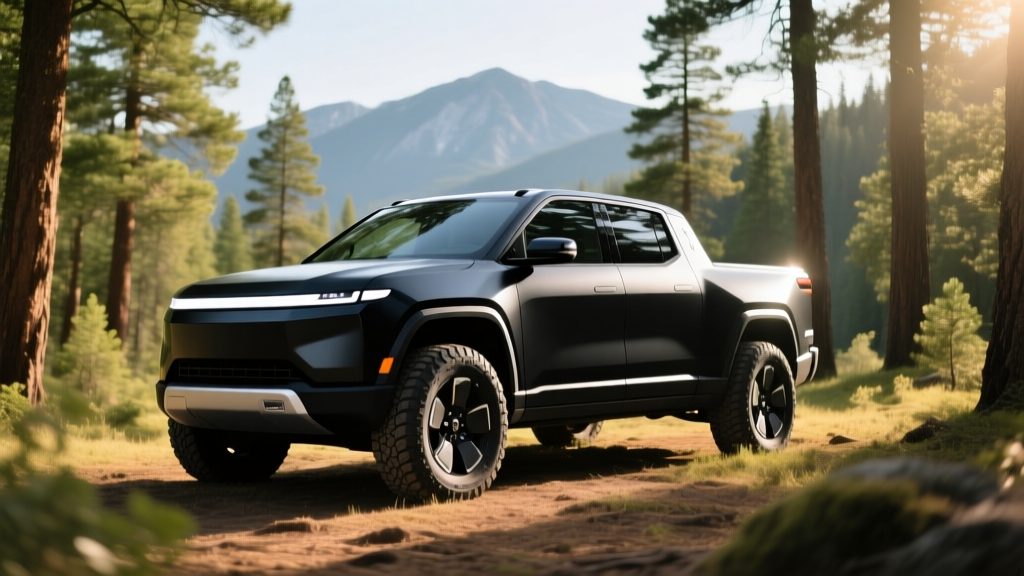
If you've searched "de dónde es la marca Rivian" (where is the Rivian brand from?), the short answer is: Rivian Automotive is an American electric-vehicle manufacturer headquartered in Irvine, California, with its primary production facility in Normal, Illinois. Founded in 2009 by MIT graduate RJ Scaringe, Rivian has grown into one of the most significant US-based EV startups, producing the R1T electric pickup and R1S electric SUV alongside commercial delivery vans for Amazon.
But knowing where Rivian comes from is only the beginning. For buyers considering a 2026 R1T or R1S, the real questions are about range, charging speed, pricing, and whether these trucks and SUVs deliver in the real world. This comprehensive review covers every spec that matters.
Rivian's American Roots and Manufacturing
Rivian was incorporated in Florida in 2009 as Mainstream Motors before relocating to Irvine, California, where its engineering, design, and corporate operations remain based today. The company's manufacturing plant occupies the former Mitsubishi Motors facility in Normal, Illinois — a 3.3-million-square-foot factory that Rivian purchased in 2017 and retooled for EV production.
Every consumer Rivian vehicle — the R1T pickup, R1S SUV, and the upcoming R2 and R3 compact models — is built in the United States. This domestic manufacturing footprint matters for two reasons: it supports US jobs in the EV supply chain, and it helps Rivian vehicles qualify for the IRS §30D federal clean vehicle credit, which requires North American final assembly among other criteria.
Rivian also operates battery-pack assembly and powertrain development in California and has invested heavily in vertical integration, including its own drive-unit design and skateboard platform architecture. A second manufacturing facility in Stanton, Georgia, is under construction for future R2 production, expected to begin in 2026.
2026 Rivian R1T and R1S: Key Specifications at a Glance
| Specification | R1T (Dual-Motor Max Pack) | R1S (Dual-Motor Max Pack) |
|---|---|---|
| EPA Range | 352 miles | 352 miles |
| Battery Capacity | ~141 kWh (usable) | ~141 kWh (usable) |
| Battery Chemistry | NMC (Nickel Manganese Cobalt) | NMC (Nickel Manganese Cobalt) |
| Max DC Fast Charge | 220 kW | 220 kW |
| 10–80% DC Charge Time | ~21 minutes | ~21 minutes |
| Level 2 Home Charging | 11.5 kW (~25 mi/hr) | 11.5 kW (~25 mi/hr) |
| 0–60 mph | 3.0 sec (Tri-Motor) | 3.4 sec (Tri-Motor) |
| Horsepower | 850 hp (Tri-Motor) | 850 hp (Tri-Motor) |
| Drivetrain | AWD (Dual/Tri/Quad-Motor) | AWD (Dual/Tri/Quad-Motor) |
| MPGe (Combined) | 73 MPGe | 76 MPGe |
| Efficiency | 46 kWh/100 mi | 44 kWh/100 mi |
| Towing Capacity | 11,000 lbs | 7,700 lbs |
| Cargo Volume | 54 cu ft bed + 11 cu ft frunk | 105.6 cu ft (seats folded) |
| Starting MSRP | $69,900 (Dual-Motor Standard) | $74,900 (Dual-Motor Standard) |
| As-Tested (Tri-Motor Max) | ~$99,000 | ~$104,000 |
| Battery/Powertrain Warranty | 8 years / 175,000 miles | 8 years / 175,000 miles |
Source: fueleconomy.gov and Rivian official specifications. Specs reflect 2026 model year Dual-Motor and Tri-Motor configurations.
Real-World Range: What the EPA Sticker Doesn't Tell You
Real-world expectations: On a 70-mph highway drive in moderate temperatures, expect approximately 280–310 miles before needing to charge. In cold weather (below 30°F), highway range can drop to 240–265 miles due to increased cabin heating demand and reduced battery efficiency. City driving with frequent regenerative braking opportunities can match or slightly exceed the EPA figure.
Rivian's 141 kWh Max Pack battery is one of the largest in any consumer EV, and that raw capacity gives the R1T and R1S genuine road-trip capability. However, the vehicles' boxy aerodynamic profiles and substantial curb weight (over 7,000 lbs for the R1T) work against highway efficiency. During sustained 75–80 mph driving, energy consumption rises sharply compared to the city cycle where regenerative braking recovers energy on deceleration.
The Standard Pack models use a ~106 kWh NMC battery with EPA ratings of 270 miles (R1T) and 278 miles (R1S). Real-world highway figures for these configurations land around 215–240 miles — adequate for commuting but requiring more planning on longer trips.
For buyers weighing range as a priority, the Max Pack's 352-mile EPA rating is genuinely useful. But understand that no 7,000-lb electric pickup will match the highway efficiency of a sedan, and Rivian's real-world range reflects the physics of moving a large vehicle at speed.
Charging Speed: DC Fast Charging and Home Level 2
| Charging Level | Power | Speed / Time |
|---|---|---|
| Level 1 (120V household) | 1.4 kW | ~3 mi/hr — overnight adds ~35 miles |
| Level 2 (240V home, 48A) | 11.5 kW | ~25 mi/hr — full charge in ~12 hours |
| DC Fast Charge (peak) | 220 kW | 10–80% in ~21 minutes |
| DC Fast Charge (sustained avg) | ~150 kW | 10–80% realistic average rate |
Rivian's second-generation R1 vehicles (introduced for the 2025 model year and continuing into 2026) use an NACS (North American Charging Standard) port natively, meaning direct access to Tesla Supercharger stations without an adapter. This is a significant practical advantage over the first-generation CCS-port Rivians, which require a Rivian-provided NACS adapter for Supercharger access.
The 220 kW peak DC fast-charge rate is competitive but not class-leading. The Hyundai Ioniq 5 peaks at 240 kW, and the Lucid Air can accept over 300 kW. However, peak rate only tells part of the story — Rivian's charge curve holds strong through the mid-state-of-charge range, delivering a practical 10–80% time of about 21 minutes at a capable 350 kW charger. Above 80% SoC, the charge rate tapers significantly to protect the NMC battery, adding another 25–35 minutes to reach full. This is normal behavior for all lithium-ion packs, but it's why the 10–80% metric matters more than a "full charge" time.
For home charging, Rivian's onboard charger accepts up to 11.5 kW on Level 2 (48 amps on a 60-amp circuit). A full overnight charge from near-empty takes roughly 12 hours for the Max Pack. Most owners will plug in each evening and rarely need a full 0–100% cycle, as daily driving typically consumes 20–30% of the battery. Budget $800–$1,500 for a professional Level 2 home charger installation, plus the cost of a 48-amp or higher wall connector.
Performance, Drivetrain, and On-Road Behavior
Rivian offers the R1T and R1S in three drivetrain configurations for 2026:
- Dual-Motor AWD: ~600 hp, 0–60 mph in 4.5 seconds. The volume seller and most efficient configuration.
- Tri-Motor AWD: 850 hp, 0–60 mph in 3.0 seconds (R1T). Adds a rear-axle motor for dramatically improved acceleration and off-road torque vectoring.
- Quad-Motor AWD: 1,025 hp, 0–60 mph in 2.5 seconds. The performance flagship, with independent motor control at each wheel enabling true torque vectoring and tank turns.
Regardless of configuration, every Rivian is all-wheel drive with sophisticated traction management. The Quad-Motor's ability to independently modulate torque at each wheel provides genuine off-road capability — not just marketing — with features like rock-crawl mode, adjustable air suspension (up to 14.4 inches of ground clearance), and water fording to 36 inches.
On-road, the R1T and R1S ride on a sophisticated air-suspension system that adjusts ride height and damping automatically. The result is a surprisingly composed ride for a vehicle of this size, though the steering is weighted more toward comfort than sportiness. Body roll is well-controlled, but these are not sports cars — they're adventure vehicles that happen to be very quick in a straight line.
Pricing, Trim Levels, and Federal Tax Credit Eligibility
Rivian's 2026 lineup spans a wide price range depending on battery pack, motor count, and trim:
| Configuration | MSRP | §30D Credit Eligibility | Effective Price |
|---|---|---|---|
| R1T Dual-Motor Standard Pack | $69,900 | Up to $7,500 (income + sourcing rules apply) | ~$62,400 |
| R1T Dual-Motor Max Pack | $83,900 | Up to $7,500 | ~$76,400 |
| R1T Tri-Motor Max Pack | $99,900 | Up to $7,500 | ~$92,400 |
| R1S Dual-Motor Standard Pack | $74,900 | Up to $7,500 | ~$67,400 |
| R1S Tri-Motor Max Pack | $104,900 | Up to $7,500 | ~$97,400 |
- MSRP Cap: Vans, SUVs, and pickups — $80,000. Sedans — $55,000. R1T pickups qualify under the $80,000 truck cap for Standard and Large packs. Max Pack configurations above $80,000 may not qualify — verify with your tax professional.
- Buyer Income Cap: Modified AGI ≤ $300,000 (joint), $225,000 (head of household), $150,000 (single).
- Battery Sourcing: Critical minerals and battery components must meet escalating domestic/free-trade sourcing thresholds. Rivian's US assembly helps, but component sourcing rules are complex and change annually.
- Point-of-Sale Transfer: Eligible buyers can transfer the credit to the dealer at purchase, reducing the purchase price directly rather than waiting for a tax refund.
Always verify current eligibility at irs.gov and consult a tax professional before purchasing. Rules are subject to legislative change.
Important note for the R1S: Because it is classified as an SUV, the $80,000 MSRP cap applies. Dual-Motor Standard and Large Pack R1S configurations generally fall under this cap, but Tri-Motor Max configurations exceed it and may not qualify for the federal credit. The R1T, classified as a pickup truck, also faces the $80,000 cap. Always confirm with your dealer and tax advisor before relying on the credit in your purchase decision.
Interior Space, Cargo, and Daily Practicality
The R1T is a midsize pickup with a 4.5-foot bed — shorter than a traditional full-size truck bed but compensated by the 11-cubic-foot front trunk (frunk) and the innovative Gear Tunnel, an available pass-through storage compartment spanning the width of the vehicle behind the rear seats (65 cu ft of additional enclosed storage on extended-cab configurations).
Inside, both the R1T and R1S seat five passengers with generous rear legroom (approximately 38.5 inches in the R1T, 37.2 inches in the three-row R1S, which can seat up to seven). The R1S offers up to 105.6 cubic feet of cargo volume with all rear seats folded — competitive with midsize SUVs like the Kia EV9.
The cabin materials are premium but not luxury-brand opulent. Rivian uses vegan leather, real wood accents, and a minimalist design centered on a 15.6-inch landscape touchscreen running Rivian's proprietary infotainment OS. There are no Apple CarPlay or Android Auto integrations — Rivian's native software handles navigation, media, and vehicle settings. This is a deliberate choice that some buyers love and others find limiting.
Tech, Driver Assistance, and Standout Features
Rivian's driver-assistance suite, branded Rivian Driver+, includes adaptive cruise control, lane-centering assist, automatic emergency braking, blind-spot monitoring, and rear cross-traffic alert. This is an SAE Level 2 system, meaning the driver must remain fully engaged and hands-on (or hands-monitored) at all times. It is not autonomous driving.
Standout technology features include:
- Over-the-air (OTA) updates: Rivian regularly pushes software updates that add features, improve efficiency, and refine the driving experience — similar to Tesla's approach.
- Camp Kitchen: An available slide-out kitchen system for the R1T's Gear Tunnel, with induction cooktop, sink, and utensil storage.
- Powered tonneau cover: Electric retractable bed cover on the R1T, integrated with the vehicle's electrical system.
- V2L (Vehicle-to-Load): The R1T can output up to 9.6 kW of AC power from bed-mounted outlets, enough to power tools, campsite equipment, or serve as emergency home backup.
- Adventure Network: Rivian's proprietary charging network at adventure destinations (national parks, trailheads), complementing public DC fast-charging infrastructure.
Pros and Cons: The Honest Assessment
Pros
- Genuine 352-mile EPA range on Max Pack — among the longest of any electric truck/SUV
- Exceptional off-road capability with air suspension, quad-motor torque vectoring, and 14.4" ground clearance
- Native NACS port (2025+ models) — direct Supercharger access without adapter
- Class-leading V2L output (9.6 kW) for work and camping use cases
- US-built in Illinois — supports domestic manufacturing and aids tax-credit eligibility
- 8-year/175,000-mile battery warranty exceeds the industry-standard 8/100,000
- Tri-Motor and Quad-Motor acceleration rivals sports cars (3.0 sec / 2.5 sec 0–60)
Cons
- Highway efficiency suffers — real-world range drops significantly at sustained 75+ mph speeds
- No Apple CarPlay or Android Auto — Rivian's native OS is the only option
- 220 kW peak DC charge rate trails Hyundai/Kia (240 kW) and Lucid (300+ kW)
- Higher trims exceed $80,000 MSRP cap, potentially disqualifying from §30D tax credit
- Service center network is still growing — rural owners may face long drives for warranty work
- No third-party NHTSA/IIHS crash-test ratings published as of early 2026
- Heavy curb weight (7,000+ lbs) increases tire wear and reduces efficiency vs. lighter EVs
Who Should Buy a Rivian — And Who Shouldn't
- You need a capable electric pickup or SUV for outdoor recreation, towing (up to 11,000 lbs), or off-road use
- You value US-built vehicles and want a domestically manufactured EV
- You need V2L power output for job-site tools or camping
- You want maximum range in a truck/SUV form factor (352 miles EPA on Max Pack)
- Your priority is maximum charging speed (consider Hyundai Ioniq 5 or Lucid Air)
- You require Apple CarPlay/Android Auto integration
- You primarily drive in urban environments and don't need truck capability (consider Tesla Model Y or Hyundai Ioniq 5)
- Budget is under $65,000 — Rivian's entry price starts near $70,000 before credits
The Rivian R1T competes most directly with the Ford F-150 Lightning (more affordable, lower range), the Chevrolet Silverado EV (larger, fleet-oriented), and the Tesla Cybertruck (polarizing design, similar performance). The R1S competes with the Kia EV9 (three rows, lower price), Tesla Model X (faster charging, established Supercharger network), and the Cadillac Escalade IQ (luxury pricing).
Frequently Asked Questions
¿De dónde es la marca Rivian? / Where is Rivian from?
Rivian is an American company headquartered in Irvine, California. It was founded in 2009 and manufactures all its vehicles at its factory in Normal, Illinois. A second factory in Stanton, Georgia, is under construction for future model production.
What is the real-world range of the Rivian R1T?
The EPA rates the R1T Max Pack at 352 miles. In real-world highway driving at 70 mph, expect approximately 280–310 miles. In cold weather (below 30°F), highway range typically drops to 240–265 miles. City driving with regenerative braking can approach or match the EPA figure.
How fast does the Rivian R1T charge at home and on DC fast chargers?
On a DC fast charger, the R1T peaks at 220 kW and charges from 10–80% in approximately 21 minutes. At home on a Level 2 charger (240V, 48A), the onboard charger accepts up to 11.5 kW, adding about 25 miles of range per hour. A full charge from near-empty takes roughly 12 hours for the Max Pack.
Does the Rivian R1T qualify for the $7,500 federal EV tax credit?
It depends. Under IRS §30D rules, pickup trucks must have an MSRP at or below $80,000, and the buyer must meet income caps ($300,000 joint / $150,000 single). Battery component and critical-mineral sourcing rules also apply. Standard and Large Pack Dual-Motor R1T configurations generally qualify; Max Pack and Tri-Motor configurations may exceed the MSRP cap. Always verify current eligibility with the IRS and a tax professional.
Is the Rivian R1T worth buying vs. the Ford F-150 Lightning or Tesla Cybertruck?
The R1T offers the best combination of range (352 mi EPA), off-road capability, and premium interior among electric trucks. The F-150 Lightning is more affordable (starting ~$55,000) with a larger bed but shorter max range (320 mi). The Cybertruck offers similar performance and Supercharger-native access but has a polarizing design and limited availability. If you prioritize adventure capability and range, the R1T is the strongest choice. If budget is paramount, the Lightning wins on value.
What battery chemistry does Rivian use?
Rivian uses NMC (Nickel Manganese Cobalt) lithium-ion cells across its R1 lineup. NMC offers high energy density, which is critical for achieving 352 miles of range in a heavy truck. The trade-off vs. LFP (Lithium Iron Phosphate) is that NMC batteries are more sensitive to sustained 100% state-of-charge storage — Rivian recommends daily charging to 80–90% for longevity.
How long is Rivian's battery warranty?
Rivian provides an 8-year / 175,000-mile warranty on the battery pack and drive unit, which exceeds the common industry standard of 8 years / 100,000 miles. The warranty covers defects and capacity degradation below 70% of original capacity during the warranty period.
For the latest Rivian specifications, visit rivian.com. For EPA range and efficiency data, check fueleconomy.gov. Tax credit rules are published at irs.gov.