Quick Verdict: The Model S in 2026
If you're searching for how much the Tesla Model S costs, the short answer is that it starts at $79,990 for the Long Range trim and climbs to $94,990 for the Plaid before options, delivery, and any applicable incentives. That puts it firmly in luxury-sedan territory, competing with the Porsche Taycan, Lucid Air, and Mercedes EQS. But the Model S isn't just a price tag — it's the vehicle that mainstreamed long-range electric driving, and in 2026 it still posts class-leading numbers in efficiency, Supercharger network access, and over-the-air evolution.
Whether you're cross-shopping it against newer rivals or deciding if a used Model S makes financial sense, this profile gives you the exact numbers that matter: real range on a road trip, what a DC fast-charge stop actually costs in minutes, and whether the federal EV tax credit applies to a sedan with this MSRP.
Tesla Model S Specs at a Glance
| Spec | Long Range (AWD) | Plaid (Tri-Motor AWD) |
|---|---|---|
| Base MSRP (2026) | $79,990 | $94,990 |
| EPA Range | 402 miles | 396 miles |
| Battery (usable, est.) | ~100 kWh, NMC | ~100 kWh, NMC |
| Drivetrain | Dual-motor AWD | Tri-motor AWD |
| Horsepower | 670 hp | 1,020 hp |
| 0–60 mph | 3.1 sec | 1.99 sec |
| Peak DC Fast Charge | 250 kW | 250 kW |
| 10–80% DCFC Time | ~30 min | ~30 min |
| Level 2 Home Charge | 11.5 kW (~41 mi/hr) | 11.5 kW (~41 mi/hr) |
| MPGe (combined) | 120 MPGe | 116 MPGe |
| Efficiency | 28 kWh/100 mi | 29 kWh/100 mi |
| Cargo Volume | 28 cu ft (rear + frunk) | 28 cu ft (rear + frunk) |
| Battery Warranty | 8 yr / 150,000 mi | 8 yr / 150,000 mi |
Sources: EPA fueleconomy.gov, Tesla.com official specs.
Range: EPA Sticker vs. What You'll Actually Get
Real-World Highway (70 mph, mild weather): ~320–340 mi
Cold Weather (below 32°F, highway): ~260–290 mi
Mixed City/Highway Commute: ~350–370 mi
The Model S Long Range's 402-mile EPA figure remains one of the highest of any production EV sold in the U.S. But EPA tests use moderate speeds and temperatures that don't mirror a 75-mph interstate run in January. In real-world highway testing, expect to use roughly 30–32 kWh per 100 miles at 70 mph, which nets about 320–340 miles from a full battery in mild conditions.
Cold weather compounds the loss. Lithium-ion NMC chemistry becomes less efficient below freezing, and cabin heating draws heavily on the pack. Tesla's heat pump (standard since the 2021 refresh) recovers some waste heat from the drivetrain, limiting cold-weather losses to roughly 25–35% rather than the 40%+ seen in older EVs without thermal management. If you live in the upper Midwest or Northeast, plan road trips around 260–290 miles between stops in deep winter.
For daily commuting at city speeds, the Model S easily approaches or exceeds its EPA number. Regenerative braking recaptures energy in stop-and-go traffic, and the sedan's low drag coefficient (0.208 Cd) pays dividends at lower velocities.
Charging Speed: DC Fast, Level 2, and the Supercharger Advantage
| Charging Level | Power / Rate | Miles Added per Hour | Typical Use Case |
|---|---|---|---|
| Level 1 (120V household) | ~1.4 kW | ~3–4 mi/hr | Emergency / trickle top-up |
| Level 2 (240V home wall connector) | 11.5 kW | ~41 mi/hr | Overnight home charging |
| DC Fast Charge (V3 Supercharger) | Peak 250 kW | ~200 mi in 15 min | Road trips |
| DC Fast Charge (V4 Supercharger) | Peak 250–350 kW* | ~200+ mi in 15 min | Road trips (newer stations) |
*V4 Supercharger cabinet supports higher output, but the Model S architecture caps at ~250 kW. Newer Tesla vehicles on the 4680-cell platform may accept higher rates.
The Model S charges at a peak rate of 250 kW on Tesla's V3 Superchargers. In practice, that peak is sustained only between roughly 10% and 30% state of charge (SoC). Above 50%, the charge curve tapers significantly — a common lithium-ion battery management strategy to protect cell longevity. A 10–80% session takes approximately 30 minutes under ideal conditions (warm battery, low SoC on arrival).
This is where the preconditioning feature matters: navigating to a Supercharger in the car's built-in navigation automatically warms the battery to optimal charging temperature before you arrive. Skip preconditioning (for instance, if you use a third-party app to find a charger) and your initial charge rate may be 50–100 kW slower until the pack heats up.
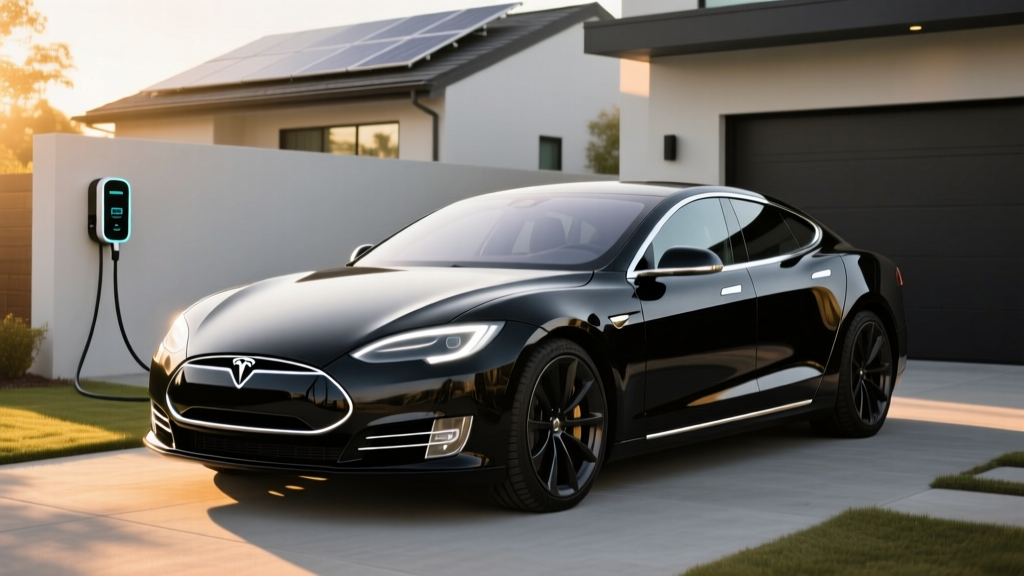
At home, the Tesla Wall Connector delivers up to 11.5 kW on a 60-amp circuit (48-amp continuous draw). That translates to roughly 41 miles of range per hour of charging, or a full 402-mile pack in about 10 hours. Most owners plug in overnight and wake up to a full battery every morning. Installation typically requires a 240V / 60A circuit; expect $800–$2,000 for a licensed electrician to run the line, depending on panel proximity and local permit costs. If your home's electrical panel is at capacity, a panel upgrade to 200A can add $1,500–$3,000.
Performance and Driving Impressions
The Long Range Model S delivers 670 horsepower from its dual-motor all-wheel-drive setup, hitting 60 mph in 3.1 seconds. That's supercar territory from just a few years ago, delivered silently and with zero gear shifts. The Plaid's tri-motor configuration produces 1,020 horsepower and a claimed 1.99-second 0–60 time — verified by multiple independent tests on prepped surfaces.
But the Model S story in 2026 isn't just about straight-line speed. The adaptive air suspension (standard on both trims) provides a comfortable highway ride while lowering the car at speed for improved aerodynamics. The yoke steering wheel remains polarizing — it's excellent for highway cruising and track use but requires hand-over-hand maneuvering in tight parking situations, which some drivers find awkward. A conventional round steering wheel is available as a no-cost option.
The 17-inch center touchscreen runs Tesla's latest software, which includes a full web browser, Netflix/YouTube streaming (while parked), and a gaming platform powerful enough to run Cyberpunk 2077. The secondary 8-inch rear touchscreen gives back-seat passengers climate and media controls. A 22-speaker audio system with active noise cancellation rounds out the tech package.
Driver Assistance: Autopilot and FSD Supervised
Autopilot and Full Self-Driving (Supervised) require continuous driver attention. You must keep your hands on the yoke/wheel and eyes on the road at all times. These are not self-driving systems.
Every Model S includes Tesla's basic Autopilot, which provides adaptive cruise control and lane-centering on highways. The optional Full Self-Driving (Supervised) package — currently $8,000 as a one-time purchase or $99/month — adds automated lane changes, traffic light and stop sign recognition, and city-street navigation assistance. In 2026, FSD (Supervised) operates on most U.S. roads but still requires active driver supervision and occasional intervention, particularly in construction zones, unmapped areas, and complex intersections.
Tesla's vision-only approach (no lidar or radar on current models) has drawn scrutiny, and NHTSA continues to investigate certain Autopilot-related incidents. Competitors like GM's Super Cruise and Ford's BlueCruise use driver-monitoring cameras and geofenced hands-free operation on mapped highways, which many reviewers find more intuitive for long road trips despite more limited coverage areas.
Pricing Breakdown and Federal Tax Credit Eligibility
| Cost Factor | Long Range | Plaid |
|---|---|---|
| Base MSRP | $79,990 | $94,990 |
| Destination / Delivery Fee | $1,990 | $1,990 |
| FSD (Supervised) Option | +$8,000 | +$8,000 |
| Paint / Wheel Upgrades | +$0–$4,500 | +$0–$4,500 |
| Typical As-Tested Price | $82,000–$95,000 | $97,000–$110,000 |
| Federal §30D Tax Credit (new) | $0 (exceeds MSRP cap) | $0 (exceeds MSRP cap) |
| Used Model S (≤$25K, §25E credit) | Up to $4,000 if eligible | |
Here's the critical detail many buyers miss: the Tesla Model S does not qualify for the $7,500 federal new-EV tax credit under IRS §30D. The reason is the MSRP cap — the law limits the credit to sedars priced at $55,000 or below. Since the Model S starts at $79,990, it exceeds this threshold regardless of battery sourcing or buyer income.
- MSRP cap: $55,000 for sedans; $80,000 for SUVs, vans, and trucks
- Buyer income cap: $150,000 single / $300,000 joint adjusted gross income
- Battery critical-mineral and component sourcing requirements (phased annually)
- Point-of-sale transfer available at participating dealers
- Model S Long Range and Plaid both exceed the $55,000 sedan cap — ineligible
Source: IRS.gov §30D Clean Vehicle Credits. Consult a tax professional for your specific situation.
However, the used-EV tax credit (§25E) offers a path to savings. If you purchase a pre-owned Model S for $25,000 or less from a licensed dealer, you may qualify for a credit of up to $4,000 (30% of the sale price, capped at $4,000), subject to the same income caps. Given Model S depreciation patterns, a 2020–2022 model with higher mileage may fall into this range by 2026.
Interior Space, Cargo, and Daily Practicality
The Model S offers 28 cubic feet of total cargo space — split between the rear hatch area and the front trunk (frunk). The hatchback design makes loading bulkier items easier than a traditional sedan trunk. Rear-seat legroom measures 35.4 inches, which is adequate for adults but trails the Mercedes EQS (39.8 inches) and Lucid Air (37.5 inches) in back-seat comfort.
Front-seat comfort is excellent, with 14-way power adjustment, heating, and ventilation standard. The panoramic glass roof creates an airy cabin but can contribute to heat soak in summer — Tesla includes a UV/IR-blocking tint, though some owners in hot climates add aftermarket ceramic tint for additional heat rejection.
The Model S is rated to tow up to 1,600 pounds when equipped with the optional tow hitch — enough for a small utility trailer or bike rack, but not a camping trailer. If towing is a priority, the Rivian R1S or Tesla Model X (both rated for 5,000+ lbs) are better fits.
Ownership Costs: 5-Year Outlook
Tesla provides an 8-year / 150,000-mile warranty on the battery and drive unit, with a guarantee that the battery will retain at least 70% of its original capacity during that period. The basic vehicle limited warranty covers 4 years / 50,000 miles.
Charging costs vary dramatically by scenario. At the national average residential electricity rate of ~$0.17/kWh, fully charging a 100 kWh pack at home costs roughly $17, yielding a fuel cost of about $0.042 per mile. Supercharger pricing averages $0.25–$0.35/kWh in most U.S. markets, pushing road-trip fuel costs to $0.06–$0.09 per mile. Compare this to a gas sedan averaging 28 MPG at $3.40/gallon ($0.12/mile), and the Model S saves roughly $1,200–$1,800 per year in fuel for a driver covering 15,000 miles annually — assuming predominantly home charging.
Insurance is a different story. The Model S consistently ranks among the most expensive EVs to insure, with national averages between $3,200 and $4,800 per year depending on driver profile and state. Tesla offers its own insurance product in many states that uses real-time driving data to set premiums, which can be cheaper for safe drivers.
Depreciation is a wildcard. The Model S has historically seen steeper depreciation than the Model 3 or Model Y, partly due to its higher starting price and the rapid pace of Tesla's technology updates. A 3-year-old Model S can lose 40–50% of its original value, which is worth factoring into your total cost of ownership.
Tesla Model S vs. Key Competitors
The Model S competes in a segment that has grown considerably. Here's how it stacks up against the three most common cross-shops:
- Lucid Air Pure ($69,900): More rear-seat room, up to 419 miles EPA range (Grand Touring), but a smaller and less proven service network. Better value for luxury-sedan buyers who prioritize space.
- Porsche Taycan ($92,000+): Sharper handling, 800V architecture for faster charging (270 kW peak), but significantly less range (~246–318 mi EPA depending on trim). The driver's car of the segment.
- Mercedes-Benz EQS ($105,000+): Quieter cabin, superior ride comfort, and class-leading rear-seat luxury. Range of ~305–390 mi EPA. Significantly more expensive, but the traditional luxury benchmark.
- You want the longest range in a luxury sedan at this price point
- Supercharger network access matters for your road-trip patterns
- You value over-the-air software updates and tech-forward infotainment
- You prefer a hatchback cargo layout over a traditional trunk
- Rear-seat passenger comfort is a top priority (Lucid Air, EQS)
- You want the sharpest handling and 800V charging (Porsche Taycan)
- Federal tax credit eligibility is essential to your budget (consider Model 3, which may qualify)
Pros and Cons
- 402-mile EPA range (Long Range) — among the highest of any production EV
- Access to 19,000+ Tesla Superchargers in North America (most reliable DC network)
- Tri-motor Plaid delivers 1,020 hp and sub-2-second 0–60
- Continuous OTA software updates add features post-purchase
- Hatchback practicality with 28 cu ft cargo space + frunk
- Excellent efficiency: 120 MPGe combined (Long Range)
- Starts at $79,990 — ineligible for the $7,500 federal new-EV tax credit
- Yoke steering is polarizing; not ideal for low-speed maneuvering
- Rear-seat legroom (35.4 in) trails Lucid Air and Mercedes EQS
- Insurance premiums among the highest in the EV segment
- 250 kW peak DC charge rate trails Porsche Taycan's 270+ kW (800V)
- Interior build quality, while improved, still draws some criticism vs. German luxury rivals
Frequently Asked Questions
What is the real-world range of the Tesla Model S?
The EPA rates the Long Range at 402 miles, but real-world highway driving at 70 mph typically yields 320–340 miles. In cold weather (below freezing), expect 260–290 miles. For city commuting with regenerative braking, you may approach or exceed the EPA number.
How fast does the Model S charge at home and on the road?
At home on a Level 2 Wall Connector (11.5 kW), the Model S adds about 41 miles of range per hour — a full charge in roughly 10 hours. On a V3 Supercharger (250 kW DC), a 10–80% session takes approximately 30 minutes with proper battery preconditioning.
Does the Tesla Model S qualify for the federal EV tax credit?
No. The Model S exceeds the $55,000 MSRP cap for sedans under IRS §30D, making it ineligible for the $7,500 new-EV credit regardless of buyer income or battery sourcing. However, a used Model S purchased for $25,000 or less may qualify for the §25E used-EV credit of up to $4,000, subject to income limits.
How much does a Tesla Model S cost after all options?
A Long Range Model S with delivery and no options totals approximately $81,980. Adding FSD (Supervised) and premium paint pushes the price to $94,000–$95,000. The Plaid typically lands between $97,000 and $110,000 as tested with options.
Is the Model S worth buying over the Lucid Air or Porsche Taycan?
It depends on your priorities. The Model S wins on range and Supercharger network access, making it ideal for frequent road-trippers. The Lucid Air offers more rear-seat space and competitive range at a lower starting price. The Porsche Taycan delivers superior handling and faster charging via 800V architecture but sacrifices range. Test-drive all three before committing.
What is the battery warranty on the Model S?
Tesla covers the battery and drive unit for 8 years or 150,000 miles, whichever comes first, with a guaranteed minimum 70% capacity retention during that period. The basic vehicle warranty is 4 years / 50,000 miles.
How much does it cost to charge a Model S?
At the average U.S. residential electricity rate (~$0.17/kWh), a full home charge costs about $17. Supercharger sessions average $25–$35 for a substantial charge, depending on local pricing. Annual fuel savings versus a comparable gas sedan typically run $1,200–$1,800 for 15,000 miles of driving.
Note: Pricing, specs, and tax-credit rules reflect the 2026 model year and current IRS guidance as of publication. Always verify eligibility with IRS.gov and confirm final pricing with Tesla before purchasing.