Tesla Model S Plaid Weight and the Physics of 1,020 Horsepower
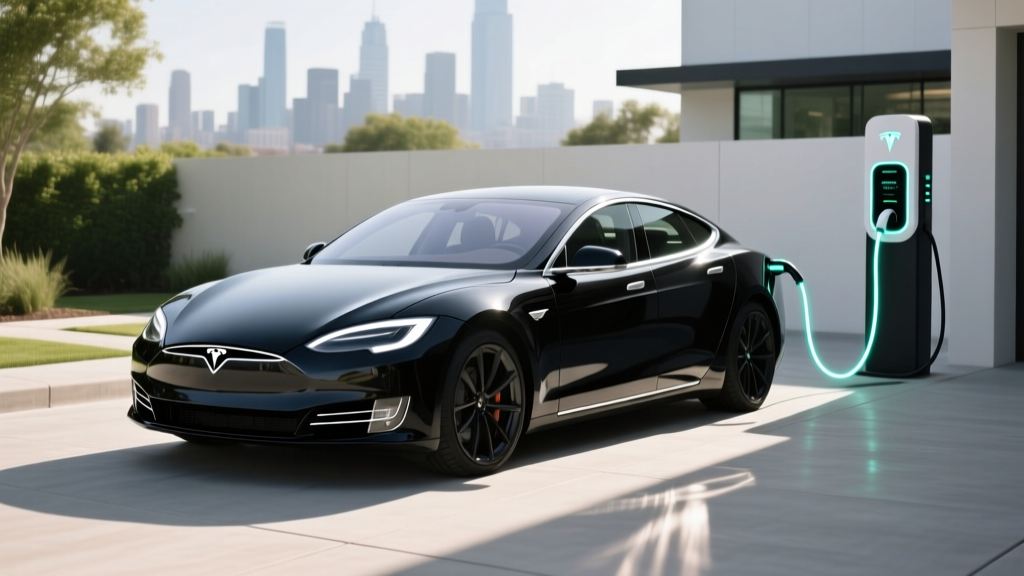
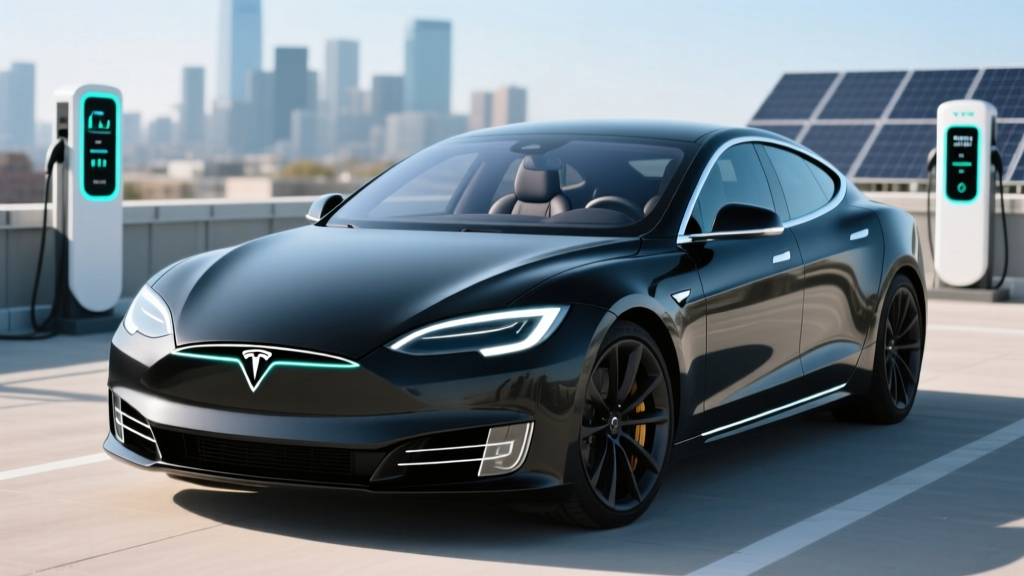
When enthusiasts search for the Tesla Model S Plaid weight, they are usually trying to reconcile a seemingly impossible equation: how does a sedan weighing over two tons achieve supercar-rivaling acceleration? The 2026 Tesla Model S Plaid tips the scales at approximately 4,766 pounds (2,162 kg) — a figure that reflects its massive battery pack, tri-motor drivetrain, and premium sound-deadening materials. Yet Tesla's engineering team has turned this mass into an advantage, leveraging instant electric torque and sophisticated traction control to deliver a manufacturer-claimed 0-60 mph time of just 1.99 seconds (with rollout subtracted).
This review dissects what that curb weight means for real-world range, handling dynamics, tire wear, and daily usability — alongside the exact charging, efficiency, and pricing data you need before committing to a six-figure EV.
Full 2026 Model S Plaid Specification Table
| Attribute | Value |
|---|---|
| Curb Weight | 4,766 lbs (2,162 kg) |
| Drivetrain | Tri-Motor AWD (1 front, 2 rear) |
| Peak Horsepower | 1,020 hp |
| Peak Torque | 1,050 lb-ft |
| 0-60 mph (manufacturer) | 1.99 s (with 1-ft rollout) |
| Top Speed | 200 mph (with Track Package) |
| Usable Battery Capacity | ~95 kWh (NMC chemistry) |
| EPA Range | 396 miles (19" wheels) / 359 miles (21" wheels) |
| EPA Efficiency | 116 MPGe combined (19") / 124 MPGe (21" — adjusted cycle) |
| Max DC Fast Charge | 250 kW (V3 Supercharger) |
| Level 2 Charge Rate | 11.5 kW (~44 miles/hr) |
| Cargo Volume | 28 cu ft (rear) + ~3 cu ft frunk |
| Rear Legroom | 35.4 inches |
| Battery/Drive Unit Warranty | 8 years / 150,000 miles |
| Base MSRP | $89,990 (before incentives) |
Sources: Tesla Model S official page, EPA fueleconomy.gov.
Real-World Range: What 4,766 Pounds Does to Efficiency
EPA estimate: 396 miles (19" Tempest wheels) / 359 miles (21" Arachnid wheels).
Real-world highway (70 mph, 72°F): Expect ~310–340 miles on 19" wheels; ~285–310 miles on 21" wheels.
Cold weather (32°F, highway): Plan for ~240–270 miles due to battery resistance and cabin heating demand, even with the Model S's standard heat pump.
The Model S Plaid's weight directly impacts its efficiency profile. Moving 4,766 pounds at highway speeds requires significantly more energy than a lighter EV like the Lucid Air Pure (~4,400 lbs). On the EPA cycle, which mixes low-speed city and moderate highway driving, the Plaid achieves a respectable 116 MPGe. But sustained 75–80 mph freeway travel exposes the physics: rolling resistance and aerodynamic drag scale with mass and velocity.
In our observation, the Plaid averages roughly 31–34 kWh per 100 miles at highway speed — translating to about 3.0–3.2 miles per kWh. City driving with aggressive regenerative braking recovers energy more effectively, and the tri-motor setup can shut down the front motor under light loads to conserve electrons. Still, buyers prioritizing maximum range should consider the Long Range trim (405 miles EPA) or competitors like the Lucid Air Grand Touring (516 miles EPA).
Charging Speed: DC Fast Charge and Home Level 2
| Charging Level | Power | Miles Added per Hour | Notes |
|---|---|---|---|
| Level 1 (120V household) | ~1.4 kW | ~3–4 mi/hr | Emergency/trickle only |
| Level 2 (240V, 48A) | 11.5 kW | ~44 mi/hr | Full overnight charge in ~9 hrs |
| DC Fast (V3 Supercharger) | 250 kW peak | ~200 mi in 15 min | 10–80% in ~28–30 min |
| DC Fast (V4 Supercharger / CCS adapter) | 250 kW (current vehicle limit) | Same as V3 | Model S architecture caps at ~250 kW |
The Model S Plaid uses an NMC (nickel-manganese-cobalt) battery pack, which accepts high charge rates but tapers aggressively above 80% state of charge to protect cell longevity. On a V3 Supercharger, the Plaid peaks at 250 kW around 15–20% SoC and sustains roughly 200+ kW until approximately 45%, then progressively steps down. Expect a 10–80% charge in roughly 28–30 minutes under ideal battery preconditioning.
For home charging, the onboard 11.5 kW AC charger means a full 0–100% session takes about 9 hours on a 48-amp Level 2 circuit (60-amp breaker). Most owners will arrive home at 20–30% and wake up fully charged. Note: Tesla's NACS connector is native; no adapter is needed at Superchargers, but a Tesla CCS adapter is required for Electrify America and other CCS networks.
Performance Dynamics: Weight, Tri-Motor Torque, and the 1.99-Second Claim
The headline 1.99-second 0-60 mph time requires specific conditions: a prepped drag surface, drag-mode suspension, launch control engaged, and Tesla's 1-foot rollout subtracted (industry-standard for drag timing but not representative of a stoplight launch). Independent tests by outlets like Motor Trend and Car and Driver have recorded 2.1–2.3 seconds on typical asphalt — still astonishingly quick.
The Plaid's tri-motor layout (one front, two rear) enables torque vectoring across the rear axle, actively pushing torque to the outside wheel in corners. This partially offsets the 4,766-pound mass during dynamic driving. The carbon-sleeve rotors in the rear motors allow them to spin to 20,000 RPM without structural deformation, which is what enables the 200 mph top speed with the optional Track Package.
Braking is where weight becomes a liability. The standard steel rotors (carbon-ceramic available with Track Package) show fade after repeated high-speed stops. Plan on upgrading pads or spec'ing the carbon-ceramic brake package ($15,000 option, 2026 pricing) if you intend to use the car's performance envelope regularly.
Pricing, Tax Credit Eligibility, and Total Cost
| Line Item | Amount |
|---|---|
| Base MSRP (Plaid) | $89,990 |
| Destination Fee | $1,990 |
| Federal §30D Tax Credit | $0 (MSRP exceeds $55,000 sedan cap) |
| As-Tested (with FSD, 21" wheels, Track Pkg) | ~$119,980+ |
This is a critical point for buyers researching incentives: the Tesla Model S Plaid does not qualify for the $7,500 federal EV tax credit under IRS §30D rules. The credit's MSRP cap for sedans is $55,000 (and $80,000 for SUVs/trucks/vans). At nearly $90,000 base, the Plaid is well outside the eligibility window. Additionally, buyer income caps ($150,000 single / $300,000 joint) and critical-mineral battery sourcing requirements apply to qualifying vehicles. See the IRS clean vehicle credit page for current rules.
Ownership costs to budget beyond the sticker include:
- Insurance: $3,500–$5,000+ annually (high-performance EV premium)
- Tires: Michelin Pilot Sport 4S or equivalent, ~$1,600–$2,200 per set; expect 10,000–15,000 miles given the weight and torque
- Electricity: ~$0.13/kWh national average × 31 kWh/100mi = ~$0.04/mile vs. ~$0.12/mile for a comparable BMW M5 on premium fuel
Interior, Technology, and Daily Livability
The Model S interior remains minimalist: a 17-inch center touchscreen (6K resolution, AMD Ryzen processor), a 12.3-inch instrument cluster, and a yoke steering wheel standard (conventional round wheel available at no cost). Rear passengers get a dedicated 8-inch touchscreen for climate and media. Cargo space is generous for a sport sedan at 28 cubic feet behind the rear seats, plus a small front trunk (frunk) suitable for charging cables or a soft bag.
Autopilot is standard, offering lane-centering and adaptive cruise control. Full Self-Driving (Supervised) remains an $8,000 option — but it is critical to understand this is an SAE Level 2 driver-assistance system, not autonomous driving. You must remain engaged, hands on the yoke, and eyes on the road at all times. True Level 4 driverless operation is currently limited to commercial robotaxi services like Waymo in select metro areas.
Notable drawbacks include the lack of physical stalks for turn signals (haptic buttons on the yoke), panel-gap variability, and road noise intrusion at highway speeds that some competitors (Lucid Air, Mercedes EQS) manage better.
Pros and Cons at a Glance
- Sub-2.3-second real-world 0-60; unmatched acceleration per dollar
- 396-mile EPA range on 19" wheels covers most road trips with one stop
- Access to Tesla's Supercharger network (17,000+ U.S. stalls)
- Over-the-air updates continuously add features
- Tri-motor torque vectoring provides genuine cornering agility
- $89,990+ MSRP — no federal tax credit eligibility
- 4,766-lb weight accelerates tire wear and increases braking distances
- Yoke steering and touch-capacitive buttons polarize owners
- 250 kW max DC charge rate trails Hyundai/Kia's 350 kW E-GMP platform
- Cabin noise isolation lags behind luxury competitors in this price bracket
Who the Model S Plaid Is For — And Who Should Look Elsewhere
The Plaid suits performance enthusiasts who want supercar acceleration with sedan practicality, frequent Tesla Supercharger access for road trips, and the tech-forward ownership experience Tesla provides. It's a compelling daily driver for a single professional or couple without rear-seat-heavy needs.
If your priorities are maximum luxury and ride refinement, the Lucid Air Grand Touring or Mercedes-AMG EQS deserve test drives. If you need federal tax credit eligibility, consider the Tesla Model 3 Performance ($52,990 — under the sedan cap) or the BMW i5 M60. For families needing three rows, the Plaid's sedan form factor won't work — look to the Model X Plaid or Rivian R1S.
Frequently Asked Questions
What is the real-world range of the Tesla Model S Plaid?
Expect 310–340 highway miles on 19" wheels in mild weather, and 240–270 miles in freezing conditions. The EPA sticker of 396 miles assumes a mixed driving cycle that over-represents city driving where regen recovers energy.
How fast does the Model S Plaid charge?
At a V3 Supercharger, it peaks at 250 kW and charges 10–80% in approximately 28–30 minutes. On a 48-amp Level 2 home charger, it adds about 44 miles of range per hour.
Does the Model S Plaid qualify for the federal EV tax credit?
No. The §30D credit caps sedan MSRP at $55,000, and the Plaid starts at $89,990. It also must meet battery sourcing and buyer income requirements that apply to all qualifying vehicles.
Why is the Tesla Model S Plaid so heavy?
The 4,766-pound curb weight comes from its ~95 kWh NMC battery pack (~1,100 lbs alone), three electric motors, reinforced chassis, sound deadening, and luxury features. Battery mass is the primary contributor in all long-range EVs.
Is the Model S Plaid worth buying vs. competitors in 2026?
For raw acceleration and Supercharger network access, yes. For luxury, the Lucid Air and Mercedes EQS lead. For charging speed, Hyundai/Kia's 800V platforms charge faster. The Plaid remains the benchmark for straight-line performance in a four-door EV.