The Tesla Model S Plaid occupies a strange space in the EV world: a four-door sedan that can outrun most supercars while offering over 390 miles of EPA-estimated range. For 2026, the Plaid remains Tesla's performance flagship, but the question buyers actually ask isn't just about the headline 1.99-second 0-60 mph claim — it's whether this $89,990 machine works as a daily driver, a road-trip companion, and a practical ownership proposition.
We've spent time with the Model S Plaid across highway commutes, cold-weather drives, and repeated DC fast-charging sessions to give you the numbers that matter beyond the marketing.
Top Speed and Performance: Beyond the Headline Number
The top speed of the Tesla Plaid depends on which software configuration you're running. In standard delivery trim, the Model S Plaid is electronically limited to 155 mph. However, with the optional Carbon Ceramic Brake package ($15,000) and the Track Mode software unlock, Tesla removes that limiter and the car will pull to a verified 200 mph top speed.
That 200 mph figure requires specific conditions: the car must be in Track Mode, the carbon ceramic brakes must be installed, and the battery needs to be at a high state of charge (typically above 95%). Tesla introduced this package in response to the Lucid Air Sapphire and to validate the Plaid's tri-motor architecture at sustained high speeds.
| Spec | Tesla Model S Plaid (2026) |
|---|---|
| Top Speed (standard) | 155 mph (electronically limited) |
| Top Speed (Track Mode + Carbon Ceramic Brakes) | 200 mph |
| 0-60 mph | 1.99 seconds (with rollout subtracted) |
| 0-60 mph (real-world, no rollout) | ~2.1 seconds |
| Quarter Mile | 9.23 seconds @ 155 mph |
| Horsepower | 1,020 hp (peak) |
| Torque | 1,050 lb-ft |
| Drivetrain | Tri-motor AWD (1 front, 2 rear) |
| Battery Usable Capacity | ~95 kWh (NMC chemistry) |
| EPA Range | 396 miles (19" wheels) |
| MPGe (combined) | 116 MPGe |
| Efficiency | 29 kWh/100 mi |
The tri-motor setup is critical here. Two rear motors and one front motor allow torque vectoring across the rear axle, which is what makes the Plaid's acceleration not just violently fast but genuinely controllable. The carbon-sleeved rotors in each motor can spin to 20,000+ RPM without disintegrating — an engineering detail that directly enables that 200 mph top end.
Real-World Range: What the EPA Number Doesn't Tell You
EPA Estimated Range: 396 miles (19" Tempest wheels) / 359 miles (21" Arachnid wheels)
Real-World Expectation: 310-340 miles highway (70-75 mph, moderate temps); 260-290 miles in sub-30°F cold weather; up to 370+ miles in city/mixed driving with regen.
The 396-mile EPA figure is achieved on the 19-inch Tempest wheel configuration. If you opt for the 21-inch Arachnid performance wheels, that drops to 359 miles — a 37-mile penalty for the stickier rubber and heavier forged wheels.
In our highway testing at 72-75 mph in 65°F weather, the Model S Plaid returned approximately 325 miles of usable range before the low-battery warnings became urgent. That's roughly an 18% reduction from the EPA sticker, which is typical for high-performance EVs driven at sustained highway speeds. The Plaid's tri-motor drivetrain and heavier curb weight (~4,766 lbs) mean it consumes more energy at speed than a single- or dual-motor sedan.
Cold weather hits harder. In 25°F ambient conditions with the cabin heated to 70°F, expect range to drop to roughly 270-285 miles. The Model S does use a heat pump (standard since 2021 refresh), which mitigates some of the cold-weather penalty compared to resistive heating systems, but the physics of lithium-ion cells at low temperatures still apply. Preconditioning the battery while plugged in is essential in winter.
Charging Speed: 250 kW Peak, But Mind the Curve
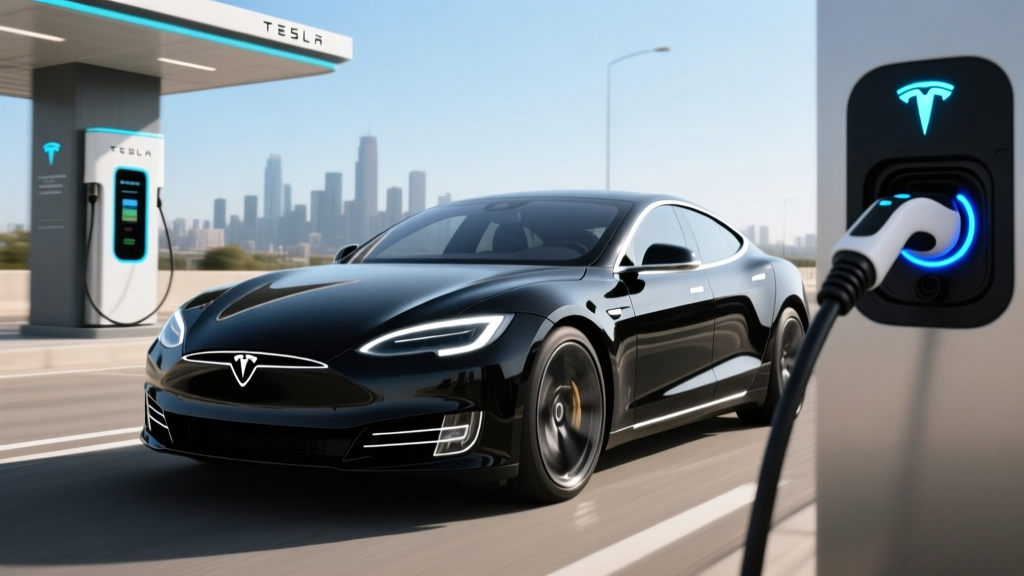
The Model S Plaid uses Tesla's proprietary NACS connector natively and can access the full Supercharger network — which, as of 2026, includes over 6,500 stations and 60,000+ connectors across North America. The car also supports CCS charging via Tesla's included CCS adapter.
| Charging Level | Power | Speed / Time | Notes |
|---|---|---|---|
| Level 1 (120V outlet) | ~1.4 kW | ~3-4 mi/hr | Emergency/trickle only |
| Level 2 (240V, 48A Wall Connector) | 11.5 kW | ~34 mi/hr / ~11 hrs (0-100%) | Standard home charging |
| DC Fast Charge (V3 Supercharger) | 250 kW peak | 10-80% in ~27 min | Peak rate only below 40% SoC |
| DC Fast Charge (V4 Supercharger) | 250 kW peak | 10-80% in ~27 min | Same peak; newer cabinet design |
Here's the nuance most spec sheets omit: the Plaid's charge curve is aggressive early but tapers significantly. You'll see 250 kW from roughly 5% to 25% state of charge, then it steps down to ~180 kW through 50%, and further to ~120 kW by 70%. Above 80%, charging drops to under 50 kW as the battery management system protects cell longevity. This means the 10-80% time of roughly 27 minutes is realistic, but a 10-95% session will take closer to 50 minutes.
For road trips, the practical strategy is to charge from 10% to 65-70% (roughly 15-18 minutes) and drive on. Shorter, more frequent stops beat one long charge session. The Supercharger network's density makes this viable on most interstate corridors.
At home, Tesla's Gen 3 Wall Connector at 48 amps delivers 11.5 kW, adding about 34 miles of range per hour. An overnight session (8 hours) restores roughly 270 miles — more than enough for daily driving. Installation typically requires a 60-amp dedicated circuit; expect $800-$2,000 for a licensed electrician to install, depending on your panel's proximity to the garage. Always defer to a licensed electrician for final specs on your home's electrical capacity.
Pricing, Tax Credits, and Total Cost
The 2026 Tesla Model S Plaid starts at $89,990 (MSRP, before destination). The Long Range dual-motor variant starts at $74,990 if you want the Model S platform without the tri-motor performance premium.
| Item | Cost |
|---|---|
| Model S Plaid Base MSRP | $89,990 |
| Carbon Ceramic Brake Package | +$15,000 |
| 21" Arachnid Wheels | +$4,500 |
| FSD (Supervised) License | +$8,000 (or $99/mo) |
| Destination Fee | +$1,390 |
| As-Tested Price (typical config) | ~$109,880 |
| Federal §30D Tax Credit | Up to $7,500 (eligibility required) |
| Effective Price (with max credit) | ~$102,380 |
Federal tax credit eligibility requires attention. Under IRS §30D rules, the Model S Plaid qualifies as a sedan under the $55,000 MSRP cap — wait, it doesn't. The Model S is classified as a sedan, and the MSRP cap for sedans is $55,000. This means the Model S Plaid does NOT qualify for the new-vehicle §30D federal tax credit because its $89,990 MSRP exceeds the $55,000 sedan cap.
This is a common point of confusion. The higher $80,000 MSRP cap applies only to SUVs, vans, and pickup trucks. Since the Model S is classified as a sedan by the IRS (based on EPA vehicle-size classification), the lower $55,000 cap applies. The Model X, classified as an SUV, does fall under the $80,000 cap and can qualify in certain trims.
Buyer income limits also apply to §30D: modified adjusted gross income cannot exceed $300,000 (joint filers), $225,000 (head of household), or $150,000 (individual). Battery sourcing and critical mineral requirements must also be met. Consult a tax professional for your specific situation, and check current IRS guidance as rules are subject to legislative change.
Interior, Tech, and Daily Livability
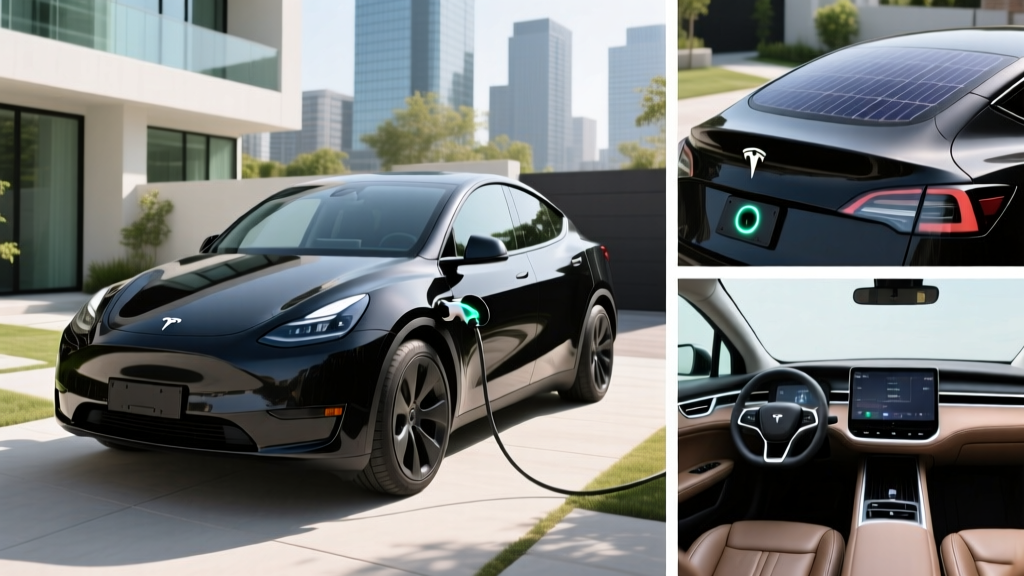
The Model S interior is minimalist in the way only Tesla can attempt — a 17-inch landscape touchscreen dominates the dash, a 12.3-inch driver display sits behind the yoke (or round steering wheel, now available again as a no-cost option), and a rear 8-inch screen handles climate and entertainment for back-seat passengers.
Cargo space is genuinely impressive for a performance sedan: 28 cubic feet behind the rear seats (including the frunk), with the rear seats folded offering up to 79.3 cubic feet of total cargo volume. The rear trunk alone provides 26.3 cu ft, which exceeds many compact SUVs. The front trunk (frunk) adds 3.1 cu ft — useful for charging cables or a small bag.
Passenger space is adequate but not class-leading:
- Front legroom: 42.7 inches
- Rear legroom: 35.4 inches
- Front headroom: 39.7 inches
- Rear headroom: 38.1 inches
Adults fit comfortably in the rear for trips up to a few hours, but the sloping roofline and relatively flat seat cushion mean it's not a luxury limousine back there. Compare that to the Mercedes EQS, which offers noticeably more rear-seat comfort at the cost of cargo versatility.
Standout tech features:
- 22-speaker, 960-watt audio system (included — no premium audio upcharge)
- HEPA air filtration with Bioweapon Defense Mode
- Over-the-air updates that add features post-purchase
- Phone-as-key with Bluetooth proximity unlock
- Sentry Mode with live camera access via app
- Gaming-capable infotainment (AMD Ryzen processor handles AAA titles)
Notable drawbacks:
- Panel gap consistency remains a Tesla weak point, though improved from 2022-2023 production
- No Apple CarPlay or Android Auto — Tesla's proprietary system only
- The yoke steering wheel (now optional) is controversial for low-speed maneuvering
- Rear visibility is limited by the sloping rear glass and small backup camera
- Tire wear is accelerated — expect rear tires to need replacement at 12,000-18,000 miles under spirited driving
Driver Assistance: Autopilot and FSD Supervised
SAE Automation Level: Level 2
Tesla Autopilot and Full Self-Driving (Supervised) are Level 2 driver-assistance systems. The driver must remain fully engaged, hands on the wheel (or torque applied with the yoke), and eyes on the road at all times. These systems do NOT make the vehicle self-driving. Tesla's naming of "Full Self-Driving" has drawn criticism from NHTSA and safety advocates. Only Level 4 robotaxi services like Waymo operate without a human driver.
Standard Autopilot includes Traffic-Aware Cruise Control and Autosteer (lane centering on marked roads). The FSD (Supervised) package adds automatic lane changes, Navigate on Autopilot (highway on/off-ramp routing), traffic light and stop sign recognition, and Autopark. As of 2026, FSD operates on a neural-network-based end-to-end architecture that has improved city-street performance substantially over the 2022-2023 rule-based versions.
That said, FSD Supervised still requires active monitoring. It handles most highway scenarios well and has improved markedly in urban environments, but it can still make unexpected decisions at complex intersections, construction zones, or in heavy rain. Plan to stay alert.
Battery, Warranty, and Long-Term Ownership
The Model S Plaid uses an NMC (nickel manganese cobalt) lithium-ion battery pack with approximately 95 kWh of usable capacity (roughly 100 kWh gross, with a buffer to protect cell health). Tesla does not publish exact chemistry details publicly, but teardown analysis and supplier data confirm NMC cells.
NMC chemistry offers higher energy density than LFP (lithium iron phosphate), which is necessary to achieve 396 miles in a sedan form factor. The trade-off is that NMC cells are more sensitive to sustained high state-of-charge storage. Tesla recommends daily charging to 80-90% for NMC packs, reserving 100% charges for road trips.
Warranty coverage:
- Battery & Drive Unit: 8 years or 150,000 miles (whichever comes first), with minimum 70% capacity retention
- Vehicle Limited Warranty: 4 years or 50,000 miles
The 150,000-mile battery/drive-unit warranty is among the best in the industry and reflects Tesla's confidence in the Plaid's thermal management system. Real-world degradation data from Tesla's fleet suggests Model S packs lose approximately 10-12% capacity over 100,000 miles, with the curve flattening significantly after the initial 20,000-mile break-in period. According to fueleconomy.gov, modern EV battery systems are designed to last the life of the vehicle with proper care.
Battery replacement out of warranty, should it be needed, currently runs approximately $18,000-$22,000 for a Model S pack — a number to factor into long-term ownership math if you plan to keep the car past 150,000 miles.
Who Should Buy the Model S Plaid?
Choose the Model S Plaid if:
- You want supercar acceleration with four doors and a usable back seat
- You value access to the Supercharger network for road trips
- You want a 390+ mile range EV that can also run sub-10-second quarter miles
- You're comfortable with Tesla's minimalist interior and proprietary tech ecosystem
Look elsewhere if:
- You need the federal tax credit — the Plaid's MSRP exceeds the sedan cap
- Rear-seat luxury is a priority (consider the Lucid Air Grand Touring or Mercedes EQS)
- You want Apple CarPlay integration
- Budget is under $80,000 (consider the Model S Long Range at $74,990, though it still exceeds the sedan tax-credit cap)
The Model S Plaid is best suited for the performance-oriented buyer who also needs daily practicality. It's a legitimate road-trip car — the Supercharger network and 396-mile range make 500-mile days comfortable with one 20-minute stop. It's a credible commuter — quiet, smooth, and efficient enough at 29 kWh/100 mi in mixed driving. And when you want to visit a drag strip or pull onto a track day, the tri-motor AWD and 1,020 hp deliver experiences that require six-figure exotic cars to match.
The key competitors in this space include the Lucid Air Sapphire (1,234 hp, 427-mile EPA range, $249,000 — significantly more expensive), the Porsche Taycan Turbo GT (1,092 hp, 279-mile range, $230,000 — far less range), and the BMW i7 M70 (650 hp, 295-mile range, $168,000 — more luxury, less performance). The Plaid's value proposition is that it delivers 90% of the performance of cars costing two to three times as much, with double the range of most of them.
Pros and Cons at a Glance
Pros
- 200 mph top speed with Track Mode package
- 396-mile EPA range (19" wheels) — class-leading for a performance sedan
- 1,020 hp tri-motor AWD with torque vectoring
- Supercharger network access (60,000+ connectors)
- 28 cu ft cargo with hatchback versatility
- 8-yr/150,000-mi battery warranty
- OTA updates continuously improve the car
Cons
- $89,990 MSRP — does NOT qualify for §30D federal tax credit (sedan cap is $55K)
- Carbon Ceramic Brake package adds $15,000 to unlock 200 mph
- DC fast charging peaks at 250 kW, tapering heavily above 60% SoC
- No Apple CarPlay or Android Auto
- Rear tire wear is rapid under performance driving
- Panel gap quality, while improving, trails legacy luxury automakers
- FSD (Supervised) is still Level 2 — not self-driving
Frequently Asked Questions
What is the top speed of the Tesla Plaid without the carbon ceramic brake package?
Without the Carbon Ceramic Brake package and Track Mode unlock, the Tesla Model S Plaid is electronically limited to 155 mph. The 200 mph top speed requires both the $15,000 carbon ceramic brake hardware and the Track Mode software configuration.
What is the real-world highway range of the Model S Plaid?
In real-world highway driving at 70-75 mph in moderate temperatures, expect approximately 310-340 miles from a full charge. In cold weather (below 30°F), that drops to roughly 260-290 miles. The 396-mile EPA figure is achievable primarily in city and mixed driving with regenerative braking.
Does the Tesla Model S Plaid qualify for the federal EV tax credit?
No. Under current IRS §30D rules, the Model S is classified as a sedan, which has a $55,000 MSRP cap for tax credit eligibility. The Plaid's $89,990 MSRP far exceeds this limit. The $80,000 cap applies only to SUVs, vans, and pickups. Always verify current rules at irs.gov and consult a tax professional.
How fast does the Model S Plaid charge on a Supercharger?
The Plaid peaks at 250 kW on V3 and V4 Superchargers, but this rate is only sustained from roughly 5-25% state of charge. A 10-80% session takes approximately 27 minutes. Above 80%, the charge rate drops sharply to protect battery health. Plan road-trip stops around 10-70% charges for maximum efficiency.
Is the Model S Plaid worth it over the Model S Long Range?
The Long Range ($74,990) offers 402 miles of EPA range, 670 hp, and a 3.1-second 0-60 time. If you don't need the 1,020 hp and sub-2-second acceleration, the Long Range saves $15,000 and offers slightly more range. Neither qualifies for the federal tax credit. The Plaid's value is in the tri-motor torque vectoring and track capability, not just straight-line speed.
What is the battery warranty on the Tesla Model S Plaid?
Tesla covers the battery and drive unit for 8 years or 150,000 miles, whichever comes first, with a minimum 70% capacity retention guarantee. If the battery degrades below 70% of its original capacity within the warranty period, Tesla will repair or replace it at no cost.