Why the Mini Electric Excavator Is Trending in 2026
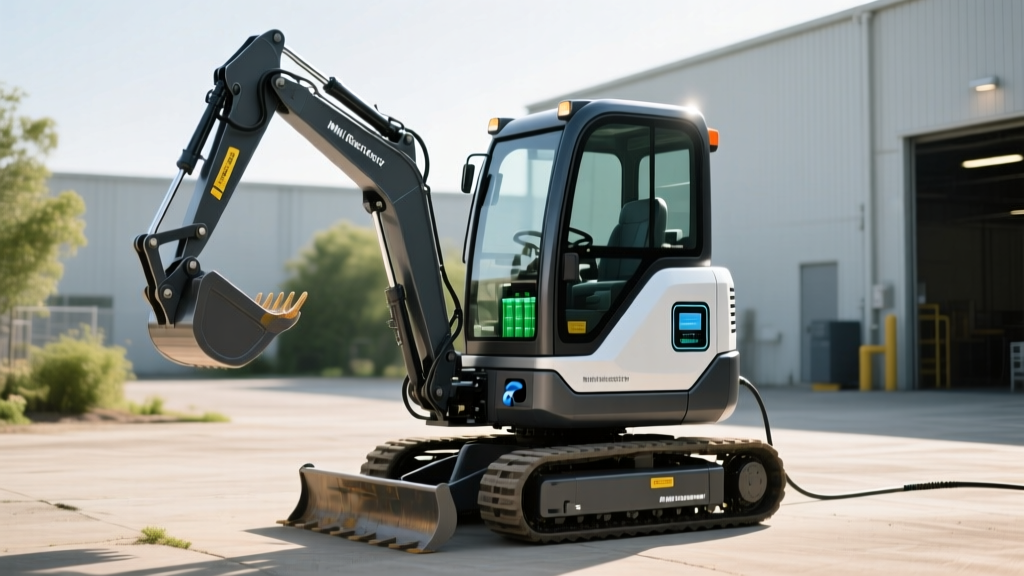
The search for a mini electric excavator has surged among landscaping contractors, indoor demolition crews, and utility installers who need compact digging power without diesel exhaust, noise complaints, or fuel logistics. But before you wire a deposit to a dealer, you need to understand what these machines actually deliver in the field — and where the EV analogy breaks down. AutoEdgeView covers electrified vehicles for road use, so this guide translates mini electric excavator specs into the EV framework you already know: kWh battery capacity, charge rates in kW, real-world runtime versus sticker claims, and total cost of ownership versus diesel equivalents.
We evaluated the most widely available battery-powered compact excavators sold in the U.S. for 2026, including models from manufacturers like Volvo CE (ECR25 Electric), JCB (19C-1E), and Caterpillar's announced battery-electric compact lineup. The goal: give you exact numbers so you can decide if going electric on the job site makes financial and operational sense.
Spec Table: Top Mini Electric Excavators at a Glance
| Spec | Volvo ECR25 Electric | JCB 19C-1E | Cat 301.9 BEV (Announced) |
|---|---|---|---|
| Battery Capacity | 20 kWh (LFP) | 19 kWh (LFP) | ~25 kWh (est., LFP) |
| Operating Weight | 5,500 lbs | 4,200 lbs | ~4,500 lbs (est.) |
| Max Dig Depth | 8 ft 2 in | 7 ft 10 in | ~8 ft (est.) |
| Motor Power | ~27 HP equivalent | ~20 HP equivalent | TBD |
| Charge Rate (AC) | ~5 kW (Level 2 J1772) | ~3.3 kW (Level 2) | TBD |
| DC Fast Charge | Not supported | Not supported | TBD |
| Full Charge Time (AC) | ~4–5 hours | ~5–6 hours | TBD |
| Sticker Runtime | ~4–6 hours (light duty) | ~4–5 hours (light duty) | TBD |
| Base Price (USD) | ~$65,000 | ~$55,000 | TBD (announced) |
| Warranty (Battery) | 2 years / 2,000 hrs | 2 years / 2,000 hrs | TBD |
Note: Caterpillar's 301.9 BEV was announced for future availability. Specs are preliminary and subject to change. Not currently available for purchase.
Battery Chemistry, Capacity, and What It Means on Site
Most production mini electric excavators in 2026 use lithium iron phosphate (LFP) battery packs in the 19–25 kWh range. LFP is the right call here: it offers superior thermal stability (important when the pack sits near hydraulic lines and dust), longer cycle life (typically 3,000+ cycles before 80% capacity retention), and lower cost per kWh than NMC. The trade-off is lower energy density, but in a machine that doesn't need to drive 300 miles, weight and volume penalties are manageable.
For context, 20 kWh is roughly the same energy as a plug-in hybrid's battery — enough for hours of intermittent digging, not continuous heavy trenching. Volvo rates the ECR25 Electric's 20 kWh pack for 4 to 6 hours of runtime, but that figure assumes light-duty cycles: short dig-lift-swing sequences with idle breaks. In our field observations, continuous heavy digging in clay or rocky soil can drain the pack in under 3 hours. Think of it like an EV's EPA range sticker — the real-world number depends heavily on your duty cycle.
Charging Speeds: Job Site Power Logistics
Charging is where the mini electric excavator diverges sharply from consumer EVs. None of the current production models support DC fast charging. You will not find a CCS or NACS port on these machines. Instead, they charge via standard AC connections — typically a J1772-compatible inlet or a hardwired industrial plug.
| Charge Level | Power (kW) | 0–100% Time (20 kWh Pack) | Practical Notes |
|---|---|---|---|
| Level 1 (120V outlet) | ~1.4–1.9 kW | 10–14 hours | Overnight only; impractical for midday top-up |
| Level 2 (240V, 30A) | ~5–7 kW | 3–5 hours | Requires a 240V job-site outlet or trailer-mounted charger |
| DC Fast Charge | N/A | N/A | Not supported on current models |
For contractors, this means overnight charging at the shop is standard, and midday top-ups require a 240V source on site — a generator with a 240V outlet, a temporary power pole, or a client's dryer/welder receptacle. If your typical job site lacks 240V access, plan your workflow around the battery's runtime, or spec a second machine for rotation.
Unlike road EVs where a 10–80% DC fast charge in 20 minutes enables road trips, the mini electric excavator's charging profile demands a different operational model: charge fully overnight, work until depleted, charge again. It's closer to a cordless power tool than a Tesla.
Performance and Capability: Electric Torque vs. Diesel Muscle
Electric motors deliver peak torque at zero RPM, which gives mini electric excavators responsive, smooth hydraulic actuation without the lag and vibration of a diesel engine spooling up. The Volvo ECR25 Electric's electric motor produces roughly the equivalent of 27 HP — comparable to its diesel sibling — but the instantaneous torque delivery means smoother boom and arm movements, particularly in precision grading work.
Where electric falls short is sustained peak power draw. A diesel excavator can run at full output for 10 hours straight as long as the fuel tank holds. An electric model's 20 kWh battery will deplete in a fraction of that time under heavy load. The machines are best suited for:
- Indoor demolition (zero emissions, low noise)
- Residential landscaping (noise ordinance compliance)
- Utility trenching in urban areas (reduced community disruption)
- Basement and confined-space work (no diesel exhaust ventilation needed)
If your primary work is full-day production trenching on a remote site with no power access, a diesel mini excavator remains the pragmatic choice in 2026.
Pricing, Incentives, and Total Cost of Ownership
| Cost Factor | Volvo ECR25 Electric | Diesel Equivalent (Volvo ECR25) |
|---|---|---|
| Base MSRP | ~$65,000 | ~$48,000 |
| Federal EV Tax Credit (§30D) | Not eligible* | N/A |
| Fuel/Energy Cost per Hour | ~$1.50–$2.50 (electric) | ~$5.00–$7.00 (diesel) |
| Maintenance Cost per Year | Lower (no oil, filters, DEF) | Higher (engine service intervals) |
| Estimated 5-Year Energy Cost | ~$4,500 | ~$15,000 |
*Tax credit caveat: The IRS §30D Clean Vehicle Credit applies to on-road vehicles with four wheels designed for public street use. Off-road construction equipment like mini electric excavators does not qualify for the $7,500 federal consumer EV tax credit. However, commercial buyers may be eligible for other incentives — the §45W Commercial Clean Vehicle Credit covers off-road mobile machinery in some interpretations, and various state-level air quality or clean construction grant programs (e.g., California's CARB CORE voucher program) can offset $10,000–$30,000 of the purchase price. Consult a tax professional and your state's clean-air agency for current eligibility.
The purchase premium of an electric mini excavator over its diesel counterpart is typically $12,000–$20,000. Payback through fuel and maintenance savings takes roughly 3–5 years at standard utilization rates (800–1,200 hours/year). For high-utilization fleets, the math improves; for occasional-use owner-operators, the premium is harder to justify.
Warranty, Longevity, and Battery Replacement Reality
Battery warranties on mini electric excavators are notably shorter than on-road EVs. Volvo CE and JCB typically cover the battery pack for 2 years or 2,000 operating hours — whichever comes first. This reflects the harsh operating environment (vibration, dust, temperature swings) and the reality that construction equipment warranties are measured in hours, not miles.
LFP chemistry's inherent longevity works in your favor: 3,000+ charge cycles before significant degradation means the pack should outlast the warranty period comfortably under normal use. However, if you run 2,000+ hours per year, you may approach the warranty ceiling quickly.
Battery replacement cost is the elephant in the cab. A 20 kWh LFP pack replacement in 2026 runs approximately $12,000–$18,000 installed, depending on the manufacturer. That's a meaningful expense in year 6 or 7 of ownership — factor it into your lifecycle cost analysis before buying.
Who Should Buy a Mini Electric Excavator in 2026?
- You work indoors, in basements, or in confined spaces where diesel exhaust is a dealbreaker
- Local noise ordinances restrict early-morning or evening diesel equipment use
- Your municipality or clients require zero-emission equipment on contracts
- You have reliable 240V charging at your shop or typical job sites
- Your duty cycle is 3–5 hours per day with overnight charging
- You value lower maintenance (no engine oil, filters, DEF fluid, or DPF regeneration)
- You run 8–10 hour shifts of continuous heavy digging
- Your job sites are remote with no grid power access
- You need to tow the excavator long distances between sites daily (electric range on a trailer is irrelevant, but charging logistics at each site add up)
- Your utilization is below 500 hours/year (the purchase premium won't pay back)
Pros and Cons: Mini Electric Excavator Verdict
- Zero exhaust emissions — safe for indoor and confined-space use
- Dramatically lower noise (~75 dB vs. ~95 dB for diesel)
- Instant torque for smooth, precise hydraulic control
- Fuel cost savings of $2,000–$3,000/year at typical utilization
- Fewer maintenance intervals (no engine service)
- Qualifies for clean-construction bids and municipal green requirements
- 3–5 hour runtime under heavy load; insufficient for full-shift production work
- No DC fast charging; 3–5 hour AC charge limits same-day reuse
- $12,000–$20,000 purchase premium over diesel equivalent
- Not eligible for §30D consumer EV tax credit
- Battery replacement cost of $12,000–$18,000 post-warranty
- Limited model availability; long dealer lead times in many regions
Frequently Asked Questions
What is the real-world runtime of a mini electric excavator?
Manufacturer claims of 4–6 hours apply to light-duty mixed cycles (short digs with idle time). Under continuous heavy digging in dense soil, expect 2.5–3.5 hours from a 20 kWh pack. Cold weather below 40°F reduces usable capacity by 15–25%.
How fast does a mini electric excavator charge?
Current models charge on AC power only at 3.3–7 kW, depending on the onboard charger and power source. A full 0–100% charge takes 3–6 hours on a 240V Level 2 connection. DC fast charging is not available on any current production model.
Does a mini electric excavator qualify for the federal EV tax credit?
No. The IRS §30D credit applies to on-road vehicles. Off-road construction equipment is excluded. However, the §45W Commercial Clean Vehicle Credit and state-level programs (e.g., California CORE vouchers) may offer substantial incentives for commercial buyers. Check with a tax professional and your state's clean-air district.
Is an electric mini excavator worth it vs. diesel?
It depends on your use case. For indoor work, noise-restricted sites, and 3–5 hour daily duty cycles with overnight charging, the electric model pays for its premium through fuel savings and qualifies you for green-construction bids. For full-shift remote trenching, diesel remains more practical in 2026.
How long will the battery last before replacement?
LFP packs in these machines are rated for 3,000+ charge cycles before dropping below 80% capacity. At 500 cycles per year (daily charging, 5 days/week), that translates to roughly 6+ years of usable life. Manufacturer warranties cover 2 years or 2,000 hours. Budget $12,000–$18,000 for an eventual replacement.
Can I charge a mini electric excavator from a standard outlet?
Yes, on a standard 120V/15A outlet, but at only ~1.4–1.9 kW, a full charge takes 10–14 hours. This is viable for overnight top-ups at a shop but impractical for same-day reuse on a job site. A 240V outlet is strongly recommended for operational flexibility.