The Tesla Model S Plaid remains one of the quickest production cars ever built, regardless of powertrain. But beyond the headline 0-60 mph time, buyers evaluating this $89,990+ electric sedan need to understand its real-world range, charging behavior, and whether it still justifies its premium against rivals like the Lucid Air Sapphire and Porsche Taycan Turbo GT. This review breaks down every number that matters.
How Fast Is Tesla Plaid? The Acceleration Numbers
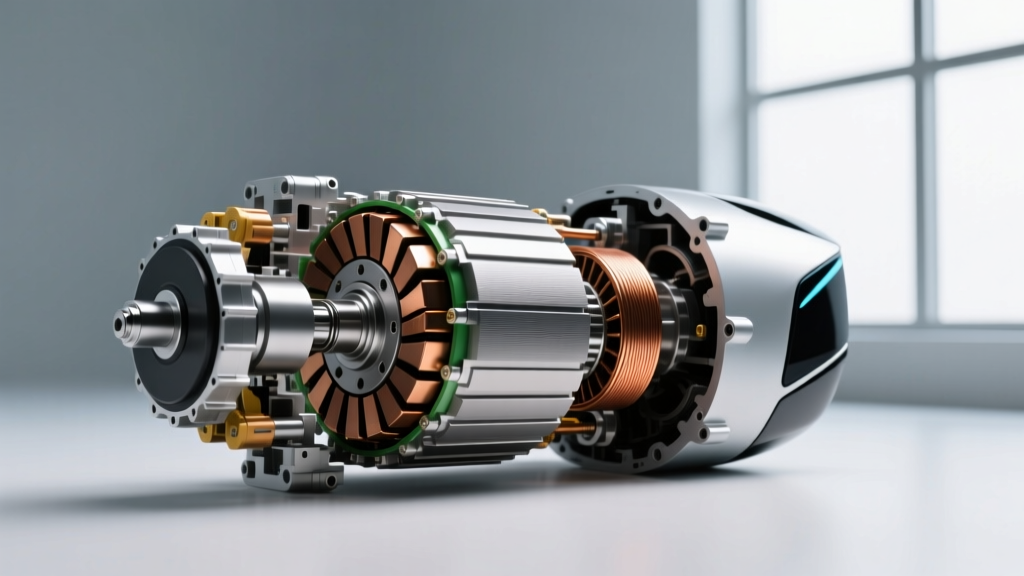
The tri-motor Model S Plaid produces 1,020 horsepower from three permanent-magnet synchronous motors (one front, two rear). Tesla's official claim is a 1.99-second 0-60 mph time with rollout subtracted. In independent testing by outlets like Car and Driver and Motor Trend, the Plaid has consistently delivered 1.99–2.1 second runs under ideal conditions on a prepped surface with launch control engaged and the battery preconditioned above 90% state of charge.
The quarter-mile arrives in roughly 9.2 seconds at 152 mph. Top speed is electronically limited to 200 mph (with the optional carbon-ceramic brake package and Track Mode unlocked). For context, this puts the Plaid in hypercar territory — the Bugatti Chiron hits 60 in about 2.3 seconds.
Real-world caveats: that 1.99-second figure requires a warm battery, dry and level pavement, and Performance tires at proper pressure. On typical public roads with ambient temperatures below 50°F, expect 0-60 times in the 2.3–2.8 second range — still ferociously quick, but not quite sub-2. The Plaid's torque-vectoring rear axle and carbon-sleeved rotors are what enable this repeatable performance without the drivetrain wind-up common in lesser dual-motor EVs.
| Specification | 2025 Tesla Model S Plaid |
|---|---|
| Horsepower | 1,020 hp |
| Drivetrain | Tri-Motor AWD |
| 0-60 mph | 1.99 sec (with rollout) |
| Quarter-Mile | ~9.2 sec @ 152 mph |
| Top Speed | 200 mph (Track Mode) |
| Battery (usable) | ~95 kWh (NMC) |
| EPA Range | 396 miles (19" wheels) / 359 miles (21" wheels) |
| MPGe (combined) | 116 MPGe (19") / 109 MPGe (21") |
| Max DC Fast Charge | 250 kW |
| 10-80% DCFC Time | ~27 minutes |
| Level 2 Home Charging | 11.5 kW (~41 mi/hr) |
| Cargo Volume | 28 cu ft (rear seats up), 79 cu ft (folded) + 3.1 cu ft frunk |
| Base MSRP | $89,990 |
| Battery/Drive Unit Warranty | 8 years / 150,000 miles (70% retention) |
Real-World Range: What the EPA Sticker Doesn't Tell You
The EPA rates the 2025 Model S Plaid at 396 miles on the 19-inch Tempest wheel and tire package, dropping to 359 miles with the optional 21-inch Arachnid performance wheels. Efficiency is rated at 116 MPGe combined (29 kWh/100 mi) for the 19" configuration, per fueleconomy.gov.
EPA Range: 396 mi (19" wheels) | 359 mi (21" wheels)
Real-World Highway (70-80 mph): ~300–330 mi (19") | ~270–300 mi (21")
Cold Weather (below 30°F): ~240–280 mi (19") — expect 25–35% range reduction
Mixed Commute (city + highway): ~340–370 mi (19") — regenerative braking recovers city miles effectively
The Model S Plaid uses a nickel-manganese-cobalt (NMC) battery pack with roughly 95 kWh of usable capacity. NMC chemistry provides higher energy density than LFP, which is necessary to hit 396 EPA miles in a heavy performance sedan (curb weight ~4,766 lbs). However, NMC cells are more sensitive to sustained high state-of-charge storage — Tesla recommends daily charging to 80% and only charging to 100% before long trips.
At sustained highway speeds above 75 mph, aerodynamic drag increases exponentially. The Plaid's wider rear tires and tri-motor drivetrain create more parasitic loss than the dual-motor Long Range variant. On a 75°F day at 75 mph on flat interstate, plan for about 310–330 miles before needing to stop. In winter conditions with cabin heating active, that drops to roughly 250 miles — still enough for most trips with Supercharger spacing, but a meaningful reduction for unplanned road trips.
Charging Speed: DC Fast, Level 2, and the Supercharger Advantage
The Plaid supports a maximum DC fast-charge rate of 250 kW via its native NACS (North American Charging Standard) connector. At a V3 or V4 Tesla Supercharger, the charge curve peaks near 250 kW up to approximately 30% SoC, then tapers through the mid-range, and drops significantly above 80%.
| Charging Method | Power | Speed (approx.) | Notes |
|---|---|---|---|
| DC Fast Charge (Supercharger V3/V4) | Up to 250 kW | ~200 mi in 15 min; 10-80% in ~27 min | Requires battery preconditioning via navigation routing |
| DC Fast Charge (CCS adapter at non-Tesla stations) | Up to 150-250 kW | Similar to Supercharger at equivalent-power stalls | CCS adapter included with newer vehicles; confirm station output |
| Level 2 Home (Tesla Wall Connector, 48A) | 11.5 kW | ~41 miles per hour | Full charge in ~10 hours; requires 60A circuit |
| Level 2 Home (32A mobile connector) | 7.7 kW | ~28 miles per hour | Requires 40A circuit; adequate for daily driving under 200 mi/day |
| Level 1 (120V standard outlet) | ~1.4 kW | ~5 miles per hour | Emergency/trickle only — full charge takes 3+ days |
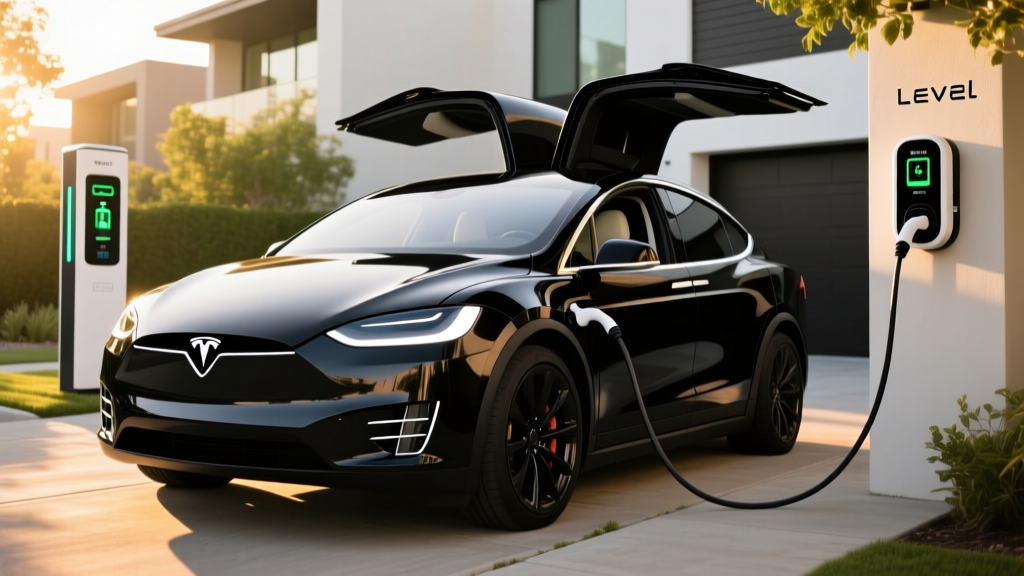
Home charging is where most Plaid owners will refuel. With a Tesla Wall Connector on a dedicated 60-amp circuit, you'll recover about 41 miles of range per hour. That means an overnight 8-hour session adds roughly 325 miles — more than enough to replenish a day's driving. Installation cost for a Level 2 home setup typically ranges from $500 (simple outlet near the panel) to $2,500+ if a panel upgrade or long conduit run is required. Always get a quote from a licensed electrician before committing.
One critical Plaid-specific note: to achieve peak DC charge rates, the battery must be preconditioned. Tesla's navigation system automatically initiates thermal preconditioning when you route to a Supercharger. If you drive to a charger without navigating to it, charge speeds may be 30-50% slower in cool weather.
Pricing, Trims, and Federal Tax Credit Eligibility
The 2025 Model S Plaid starts at $89,990 before destination and options. That single trim includes the tri-motor powertrain, adaptive air suspension, 17" cinematic touchscreen, 22-speaker audio, heated and ventilated front and rear seats, and Basic Autopilot. Key options include Full Self-Driving (Supervised) for $8,000, the 21" Arachnid wheels, and carbon-ceramic brakes.
| Configuration | MSRP | Federal Tax Credit (§30D) | Effective Price |
|---|---|---|---|
| Model S Plaid (base, 19" wheels) | $89,990 | $0 — exceeds MSRP cap | $89,990 |
| Plaid + FSD (Supervised) | $97,990 | $0 — exceeds MSRP cap | $97,990 |
Federal tax credit reality: The Model S Plaid does not qualify for the IRS §30D federal EV tax credit. Under current rules, the credit is capped at vehicles with an MSRP of $55,000 or less for sedans. At $89,990, the Plaid is far above this threshold. Additionally, the buyer must have a modified adjusted gross income below $150,000 (single) or $300,000 (joint) — though this is moot given the MSRP exclusion.
Some states offer their own EV incentives that may apply regardless of MSRP (California's CVRP rebate, for instance, has its own income and price thresholds). Check your state's energy or DMV website for current local programs. A tax professional can advise on eligibility for any applicable credits.
Interior, Tech, and Daily Livability
The Model S interior centers on a 17-inch floating touchscreen running Tesla's proprietary OS. The Plaid adds a yoke-style steering wheel (a conventional round wheel is available at no cost), a rear-seat 8-inch touchscreen for climate and media controls, and a 22-speaker 960-watt audio system. Wireless phone charging, USB-C ports (front and rear), and a panoramic glass roof are standard.
Passenger space: Front legroom is generous at 42.7 inches; rear legroom measures 35.4 inches — adequate for adults on shorter trips but tighter than a full-size luxury sedan like the Mercedes EQS. The rear seat fits three across, though the center position is best for a child seat.
Cargo: With the rear seats up, the Model S offers 28 cubic feet of trunk space (hatchback-style opening provides excellent access). Fold the 60/40 rear seats and you get 79 cubic feet. The front trunk (frunk) adds 3.1 cubic feet — enough for a charging cable bag or small groceries.
Driver assistance: Basic Autopilot (lane centering, adaptive cruise, automatic emergency braking) is included. Full Self-Driving (Supervised) is an $8,000 option that adds automated lane changes, intersection handling, and parking maneuvers. Crucially, FSD is an SAE Level 2 system — the driver must remain fully attentive with hands on the wheel at all times. It is not autonomous driving.
SAE Level 2 — Driver Assistance, Not Self-Driving: Tesla Autopilot and FSD (Supervised) require continuous driver supervision. The system can steer, accelerate, and brake within its lane, but the driver is legally and practically responsible for all vehicle operation. Only Level 4 systems (like Waymo robotaxis in designated zones) operate without a human driver.
Ownership Costs and Warranty Coverage
Tesla covers the Model S Plaid's battery and drive units for 8 years or 150,000 miles, whichever comes first, with a minimum 70% capacity retention guarantee. The basic vehicle limited warranty is 4 years or 50,000 miles. This battery warranty is competitive with rivals — Porsche covers the Taycan battery for 8 years/100,000 miles with a slightly higher 70% retention threshold.
Charging costs vary significantly by method. At home on a national average electricity rate of ~$0.16/kWh, fully charging the ~95 kWh battery costs about $15.20, or roughly $0.04 per mile. At Tesla Superchargers (averaging $0.30-$0.40/kWh nationally in 2025), a full charge runs $28-$38, or about $0.07-$0.10 per mile. For comparison, a BMW M5 getting 17 mpg combined at $3.50/gallon costs about $0.21 per mile in fuel alone.
Insurance is a real cost factor. The Plaid's performance profile and Tesla's repair-cost history push annual premiums to an estimated $3,500-$5,500 depending on driver profile and state. Get quotes before purchasing — this is often the largest ownership surprise.
Model S Plaid vs. Key Competitors
The Plaid's closest rivals are the Lucid Air Sapphire ($249,000, 1,234 hp, 427 mi EPA) and the Porsche Taycan Turbo GT ($230,000, 1,092 hp, 269 mi EPA). The Air Sapphire is quicker and has more range but costs nearly three times as much. The Taycan Turbo GT offers superior chassis dynamics and build quality but sacrifices range and value. At $89,990, the Plaid occupies a unique position: hypercar acceleration at a fraction of the price, with the Supercharger network as a practical road-trip advantage.
Pros
- Sub-2-second 0-60 mph — among the fastest production cars ever
- 396-mile EPA range is exceptional for a 1,000+ hp vehicle
- Access to Tesla Supercharger network (most reliable DC fast-charging in the US)
- Over-the-air updates continuously add features and refinements
- Hatchback cargo versatility with 28 cu ft trunk + frunk
- Relatively competitive pricing for the performance delivered
Cons
- No federal tax credit due to MSRP cap ($55K sedan limit)
- Yoke steering is divisive and takes adaptation for low-speed maneuvers
- Build quality and panel gaps still lag German luxury competitors
- Insurance premiums are significantly above segment average
- 250 kW peak charge rate trails newer 800V architectures (Hyundai Ioniq 5, Porsche Taycan at 350 kW)
- Rear seat comfort is adequate but not limousine-grade for a $90K sedan
Who Should Buy the Model S Plaid?
Buy the Model S Plaid if: You want the fastest-accelerating sedan under $100,000, you regularly take road trips and value Supercharger access, and you prioritize technology and performance over traditional luxury materials.
Consider alternatives if: You need maximum rear-seat luxury (look at the Mercedes EQS or BMW i7), you want a federal tax credit (consider the Model 3 Performance or Hyundai Ioniq 5 N), or you prioritize track handling over straight-line speed (the Porsche Taycan Turbo GT or Lucid Air Sapphire deliver better chassis balance, at much higher cost).
Frequently Asked Questions
What is the real-world range of the Tesla Model S Plaid?
The EPA rates the Plaid at 396 miles (19" wheels) or 359 miles (21" wheels). In real-world highway driving at 75 mph, expect 300-330 miles. In cold weather below 30°F, plan for 240-280 miles. The tri-motor drivetrain and performance tires consume more energy at speed than the Long Range dual-motor variant.
How fast does the Plaid charge at home and on the road?
At a Tesla Supercharger (250 kW peak), the Plaid charges from 10-80% in approximately 27 minutes, adding about 200 miles in 15 minutes under ideal conditions. At home on a Level 2 Wall Connector (11.5 kW), you'll recover about 41 miles per hour, meaning a full overnight charge replenishes the entire battery.
Does the Model S Plaid qualify for the $7,500 federal EV tax credit?
No. Under IRS §30D rules, sedans must have an MSRP of $55,000 or less to qualify. The Plaid's $89,990 base price far exceeds this cap. Buyer income limits and battery-sourcing requirements also apply to eligible vehicles. Check irs.gov for the latest rules.
Is the Model S Plaid worth it versus the Lucid Air or Porsche Taycan?
At $89,990, the Plaid delivers roughly 90% of the Lucid Air Sapphire's performance for one-third the price, with far better charging infrastructure. The Porsche Taycan Turbo GT offers a more refined driving experience and build quality but at 2.5x the cost and with significantly less range. For pure value-to-performance ratio, the Plaid remains the benchmark.
How long will the Plaid's battery last?
Tesla warranties the battery for 8 years or 150,000 miles with at least 70% capacity retention. Independent data from Tesla fleet telemetry suggests NMC packs in Model S vehicles typically retain 85-90% capacity at 100,000 miles when charged responsibly (daily limit of 80%, avoiding prolonged 100% storage). Replacement cost, if needed out of warranty, is estimated at $15,000-$22,000.
Can I use non-Tesla chargers with the Model S Plaid?
Yes. The Model S Plaid uses the NACS connector natively and can charge at Tesla Superchargers directly. For CCS-equipped public chargers (Electrify America, EVgo, etc.), Tesla includes a CCS adapter. Charging speeds at non-Tesla stations depend on the station's output and whether battery preconditioning was activated.