The 2026 Tesla Model S Plaid: Still the Performance Sedan Benchmark?
If you are researching the Tesla Model S Plaid, chances are you have already seen the headline numbers: 1,020 horsepower, a sub-two-second 0-60 time, and a top speed that brushes 200 mph. But for buyers spending north of $90,000 on a luxury performance EV, the questions go far beyond launch-mode theatrics. How comfortable are the Model S Plaid seats on a 400-mile road trip? Does the real-world range hold up at highway speeds in winter? And does the 2026 model year bring meaningful updates to a platform that has been in production since 2012?
This review breaks down every spec that matters — from the tri-motor drivetrain and 100 kWh battery pack to the exact charging curve you will experience at a Supercharger. We will also address the interior, including the much-discussed Model S Plaid seats, yoke steering, and whether this car still justifies its price against the Lucid Air Sapphire, Porsche Taycan Turbo GT, and BMW i7 M70.
| Spec | Value |
|---|---|
| EPA Range | 396 miles (Long Range: 402 mi) |
| Battery (usable) | ~95 kWh, NMC (nickel manganese cobalt) |
| Drivetrain | Tri-motor AWD (1 front, 2 rear) |
| Horsepower | 1,020 hp |
| 0-60 mph | 1.99 seconds (with rollout subtracted) |
| Top Speed | 200 mph (with paid unlock) |
| Max DC Fast Charge | 250 kW (V3 Supercharger) |
| 10-80% DC Charge Time | ~27 minutes |
| Level 2 Home Charge Rate | 11.5 kW (~44 mi/hr at 48A) |
| Efficiency | 120 MPGe combined / 28 kWh/100 mi |
| Cargo Volume | 28 cu ft (rear trunk + frunk combined) |
| Rear Legroom | 35.4 inches |
| Base MSRP (Plaid) | $89,990 (before destination) |
| Battery Warranty | 8 years / 150,000 miles (70% retention) |
Tesla Model S Plaid Seats and Interior: Track-Day Meets Daily Driver
The Model S Plaid seats are a frequent topic on forums and in reviews, and for good reason. Tesla redesigned the front seats for the 2021+ refresh with more aggressive side bolsters, active ventilation, and heating across all five seating positions. The upholstery is a synthetic "vegan leather" (polyurethane-based), which holds up well to daily use but lacks the hand-feel of genuine Nappa leather you would find in a Mercedes EQS or BMW i7.
For long-distance driving, the front seats offer reasonable thigh support and a 12-way power adjustment with memory profiles. However, the seat bottom cushion is slightly shorter than what you will find in the Lucid Air, which matters on 5+ hour drives. The rear seats recline modestly and accommodate adults up to about 6'1" comfortably, though the 35.4 inches of rear legroom trails the BMW i7 (39.8 inches) significantly. This is a performance sedan, not a limousine — rear passengers will notice the firm ride on rough pavement.
The yoke steering wheel remains standard on the Plaid (a conventional round wheel is now a no-cost delete option). If you have not driven with a yoke, expect a two-week adaptation period for roundabout and parking-lot maneuvers. On highway cruising and canyon roads, the yoke provides an unobstructed view of the 12.3-inch driver display and feels natural at speed.
The 17-inch center touchscreen runs Tesla's latest infotainment software, which in 2026 includes wireless Apple CarPlay and Android Auto alongside Tesla's native navigation, Spotify, and a surprisingly capable gaming system (the Plaid's AMD Ryzen processor handles Cyberpunk 2077 at playable frame rates while parked). The 22-speaker, 960-watt audio system is among the best in any production car, rivaling the Burmester systems in Mercedes at a fraction of the price.
Range, Efficiency, and Real-World Expectations
The EPA rates the 2026 Tesla Model S Plaid at 396 miles of range on its 19-inch Tempest wheels. Switch to the optional 21-inch Arachnid wheels and that drops to approximately 359 miles due to increased rolling resistance and weight.
EPA Sticker: 396 miles (19" wheels)
Highway (70-75 mph, moderate climate): Expect ~310-330 miles. The Plaid's tri-motor setup and wide tires carry an efficiency penalty versus the dual-motor Long Range.
Cold Weather (30°F and below): Plan for 250-280 miles. NMC chemistry loses 20-30% range in freezing temps without preconditioning. The Model S heat pump helps, but physics wins.
Mixed Commute (city + suburban): 350-370 miles is achievable thanks to regenerative braking recovery.
Efficiency lands at roughly 28 kWh per 100 miles (120 MPGe combined per fueleconomy.gov). That is less efficient than the Long Range AWD variant (124 MPGe) but still competitive with the Lucid Air Grand Touring (131 MPGe) and significantly better than the Porsche Taycan Turbo GT (79 MPGe).
The roughly 95 kWh usable battery capacity (from a ~100 kWh gross pack) uses NMC chemistry. NMC offers higher energy density than LFP, which is why Tesla reserves it for performance and long-range models. The trade-off: NMC degrades slightly faster over time and prefers daily charging to 80-90% rather than 100%. For daily commuting, set your charge limit to 80% and reserve 100% for road trips.
Charging Speed: DC Fast, Level 2, and the Supercharger Advantage
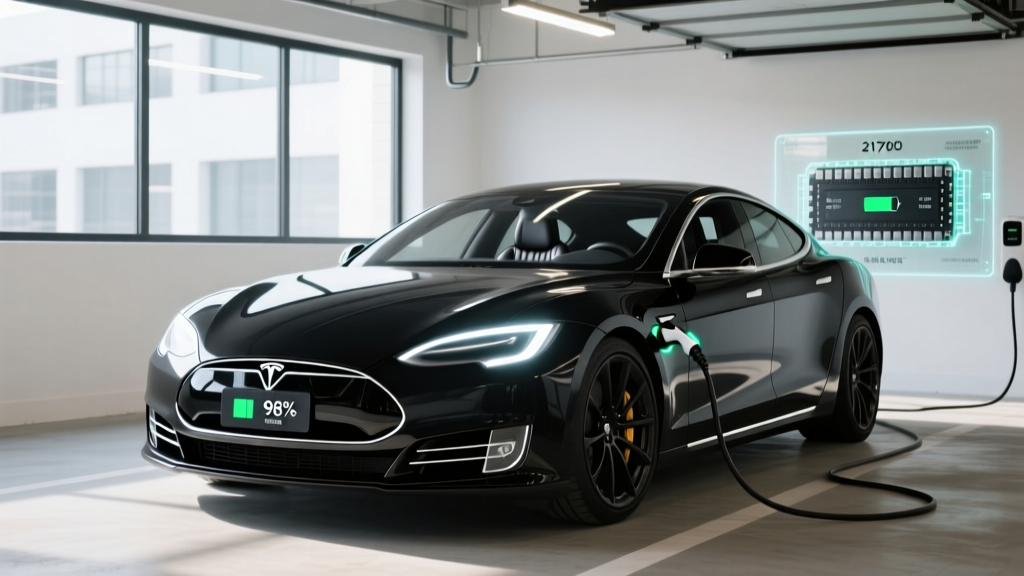
The Model S Plaid charges at a peak rate of 250 kW on Tesla V3 Superchargers. While this is not the fastest peak rate in the industry — the Hyundai Ioniq 5 hits 350 kW on compatible chargers — Tesla's charging curve is among the best managed. The pack preconditioning system (activated automatically when you navigate to a Supercharger) brings the battery to optimal temperature, allowing the car to sustain higher charge rates for longer.
| Charging Level | Power | Speed / Time |
|---|---|---|
| Level 1 (120V outlet) | ~1.4 kW | ~5 miles per hour |
| Level 2 (240V, 48A Wall Connector) | 11.5 kW | ~44 miles per hour |
| Level 2 (240V, 32A mobile connector) | 7.7 kW | ~30 miles per hour |
| DC Fast (V3 Supercharger, 250 kW peak) | 250 kW peak | 10-80% in ~27 min; adds ~200 mi in 15 min |
| DC Fast (CCS adapter, non-Tesla) | Up to 250 kW | Similar to Supercharger at compatible stations |
The charge curve tapers significantly above 80% state of charge. From 80-100%, expect an additional 20-25 minutes — a common trait across NMC packs designed to protect long-term battery health. For road trips, the 10-80% strategy is optimal: stop for 25-30 minutes, stretch, eat, and resume.
At home, the Tesla Wall Connector ($420 for the unit) on a 60A circuit delivers 48A / 11.5 kW to the car, adding roughly 44 miles of range per hour of charging. An overnight charge from 20% to 80% takes about 5 hours — more than sufficient for daily replenishment. Expect a home installation cost of $800-$2,500 depending on your electrical panel capacity and run distance, per a licensed electrician. Homes with 100A panels may need a $1,500-$3,000 panel upgrade to support a 60A circuit.
Performance: 1,020 Horsepower and the Tri-Motor Experience
The tri-motor Plaid powertrain uses one permanent-magnet motor on the front axle and two induction motors on the rear. This configuration enables torque vectoring across the rear wheels, which you feel immediately in corners — the car rotates with a precision that belies its 4,766-pound curb weight.
The 1.99-second 0-60 mph claim requires specific conditions: a prepped surface, launch mode engaged, battery above 95% state of charge, and the 1-foot rollout subtraction that Tesla (and drag racing convention) uses. In independent testing on unprepared surfaces, expect 2.1-2.3 seconds — still absurdly fast and quicker than any production car at this price point.
The carbon-ceramic brake package (a $15,000 option bundled with the Track Package) is necessary to access the 200 mph top speed and provides fade-free stopping during track sessions. Without it, the standard steel rotors are adequate for street use but will overheat during repeated hard stops. For 99% of owners who will never see a racetrack, the standard brakes are fine, and regenerative braking handles the majority of daily deceleration.
Adaptive air suspension is standard, offering a comfortable default ride with adjustable firmness and ride height. The system automatically lowers the car at highway speeds for aerodynamic efficiency and raises it for steep driveways and speed bumps via GPS memory.
Pricing, Tax Credits, and Ownership Costs
The 2026 Tesla Model S Plaid starts at $89,990 before the $1,390 destination charge. The Long Range dual-motor variant starts at $74,990 and offers 402 miles of EPA range with 670 hp — a compelling alternative if tri-motor performance is not a priority.
| Trim | Base MSRP | Federal Tax Credit (§30D) | Effective Price |
|---|---|---|---|
| Long Range AWD | $74,990 | $0 (exceeds MSRP cap) | $74,990 |
| Plaid | $89,990 | $0 (exceeds MSRP cap) | $89,990 |
Federal tax credit status: The Model S does not qualify for the $7,500 IRS §30D Clean Vehicle Credit. The sedan MSRP cap under current law is $55,000, and both Model S trims exceed this threshold substantially. Additionally, buyer income caps ($150,000 single / $300,000 joint AGI) would eliminate many Plaid buyers regardless. Do not factor a federal credit into your purchase budget for this vehicle.
Some states offer their own EV incentives that apply regardless of MSRP — check your state's energy office or DMV for current programs. California's CVRP rebate, for example, has its own income and price qualifications that change annually.
Ownership costs beyond the purchase price include:
- Insurance: Expect $2,800-$4,200 annually depending on your profile. The Plaid's performance classification and repair costs push premiums higher than the Long Range.
- Electricity: At the US average of $0.16/kWh, charging the ~95 kWh pack from 10-80% at home costs roughly $10.60 — equivalent to about $1.50 per gallon of gasoline in a comparable ICE sedan.
- Maintenance: Minimal. No oil changes, no transmission fluid. Budget for cabin air filter replacement (~$150/yr), tire rotation, and wiper fluid. Tires are the big consumable: the Michelin Pilot Sport 4S tires on 21-inch wheels run $350-$450 per corner and may need replacement every 15,000-20,000 miles given the car's weight and torque.
- Depreciation: The Model S historically depreciates 40-50% over 5 years. High initial price and rapid platform iteration contribute. If depreciation is a primary concern, consider a certified pre-owned Model S instead.
Warranty, Safety, and Driver Assistance
Tesla covers the Model S Plaid battery and drive unit for 8 years or 150,000 miles, whichever comes first, with a minimum 70% capacity retention guarantee. The basic vehicle limited warranty is 4 years / 50,000 miles. Compared to Hyundai's 10-year/100,000-mile battery warranty or Lucid's 8-year/100,000-mile coverage, Tesla's battery mileage allowance is generous, though the 70% retention threshold is industry-standard rather than exceptional.
Autopilot comes standard and includes adaptive cruise control, lane-keeping assist, and automatic emergency braking. Full Self-Driving (Supervised) remains a $8,000 add-on (or $99/month subscription as of 2026). It is critical to understand that FSD is an SAE Level 2 driver-assistance system — you must keep your hands on the wheel (or yoke) and eyes on the road at all times. It is not autonomous driving. Only Level 4 services like Waymo operate without driver supervision, and those are geofenced robotaxi services, not consumer vehicles.
Both Autopilot and FSD (Supervised) require continuous driver engagement. The system can steer, accelerate, and brake under certain conditions, but the driver is legally and operationally responsible at all times. Do not treat this as self-driving capability.
The Model S earned a 5-star overall safety rating from NHTSA and top marks from IIHS, though headlight ratings and pedestrian detection scores vary by model year. The car's low center of gravity (battery pack under the floor) contributes to excellent rollover resistance.
Model S Plaid vs. the Competition: Is It Still Worth It?
The ultra-luxury performance EV segment has grown considerably since the Model S Plaid launched. Here is how it stacks up against the three most direct competitors:
| Tesla Model S Plaid | Lucid Air Sapphire | Porsche Taycan Turbo GT | BMW i7 M70 | |
|---|---|---|---|---|
| Price | $89,990 | $249,000 | $236,000 | $168,000 |
| Horsepower | 1,020 hp | 1,234 hp | 1,019 hp | 650 hp |
| 0-60 mph | 1.99s | 3.1s | 2.1s | 3.5s |
| EPA Range | 396 mi | 427 mi | 269 mi | 295 mi |
| Rear Legroom | 35.4 in | 36.3 in | 32.5 in | 39.8 in |
| Max DC Charge | 250 kW | 300 kW | 320 kW | 195 kW |
The Model S Plaid occupies a unique value position: it delivers hypercar acceleration at a fraction of the Lucid Sapphire's price, with substantially more range than the Porsche Taycan Turbo GT and a more engaging driving experience than the BMW i7 M70. Its weaknesses are rear-seat comfort (tightest legroom of the group), interior material quality (below Porsche and BMW), and the aging platform architecture dating to 2012.
- Best price-to-performance ratio in the segment ($89k for 1,020 hp)
- 396-mile EPA range with access to the Supercharger network (17,000+ US stalls)
- Over-the-air updates continuously add features
- Class-leading infotainment and gaming capability
- 28 cu ft cargo space with hatchback practicality + frunk
- Rear seat comfort and legroom trail every competitor
- No federal tax credit eligibility (MSRP exceeds $55k sedan cap)
- Yoke steering polarizing; adaptation required
- Interior materials do not match price point vs. BMW/Porsche
- 250 kW peak DC charge rate is no longer class-leading
- Platform architecture dates to 2012 (refreshed 2021)
Choose the Lucid Air Grand Touring instead if: You want 500+ miles of range, a more spacious rear seat, and do not need tri-motor track performance ($109,900 starting).
Choose the Porsche Taycan Turbo GT if: Build quality, driving dynamics, and brand prestige matter more than range and you have access to reliable DC fast charging (269 mi EPA is limiting).
Choose the BMW i7 M70 if: Rear-seat comfort, executive luxury, and dealer service infrastructure are your top priorities, and straight-line speed is secondary.
Frequently Asked Questions
What is the real-world range of the Tesla Model S Plaid?
The EPA rates it at 396 miles on 19-inch wheels. In real-world highway driving at 70-75 mph in moderate temperatures, expect 310-330 miles. In freezing weather, plan for 250-280 miles. The tri-motor drivetrain and wider tires create an efficiency penalty versus the dual-motor Long Range variant (402 mi EPA).
How fast does the Model S Plaid charge?
At a Tesla V3 Supercharger, it peaks at 250 kW and charges from 10-80% in approximately 27 minutes, adding about 200 miles of range in 15 minutes. At home on a Level 2 Wall Connector (48A), it adds roughly 44 miles per hour, meaning a full overnight charge easily covers daily needs.
Does the Model S Plaid qualify for the federal EV tax credit?
No. The IRS §30D credit caps sedan eligibility at $55,000 MSRP. The Model S Plaid's $89,990 price far exceeds this limit. Buyer income caps ($300,000 joint AGI) and battery critical-mineral sourcing rules would further restrict eligibility. Check your state for separate EV incentives that may apply.
Are the Model S Plaid seats comfortable for long trips?
The front seats are well-bolstered and ventilated, suitable for 4-5 hour drives without major fatigue. The seat cushion is slightly shorter than the Lucid Air's, and the synthetic leather lacks premium hand-feel. Rear seats are adequate for adults on shorter trips but tight for long highway stretches due to 35.4 inches of legroom and a firm ride.
How does the yoke steering feel in daily driving?
Most owners report a 1-2 week adaptation period. Highway driving and canyon roads feel natural with excellent visibility of the instrument cluster. Low-speed maneuvers (parking, roundabouts, three-point turns) require more hand movement than a conventional wheel. Tesla now offers a round wheel as a no-cost delete if you prefer.
Is the Model S Plaid worth buying in 2026 versus competitors?
At $89,990, it remains the most accessible way to get 1,000+ hp, 396 miles of range, and Supercharger network access in a single package. If rear-seat space, interior luxury, or the newest platform architecture are priorities, the Lucid Air Grand Touring or BMW i7 may serve you better. For pure performance-per-dollar, the Plaid is still unmatched.