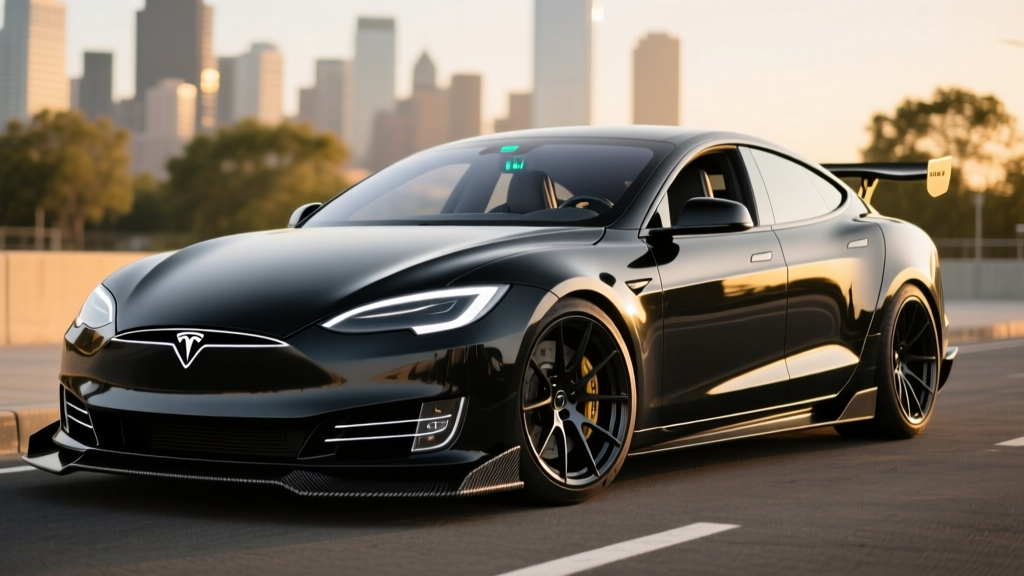
If you have been searching for the intersection of Tesla racing capability and everyday electric-vehicle practicality, the 2026 Tesla Model S Plaid remains the benchmark that every other performance sedan is measured against. With 1,020 horsepower, a sub-two-second 0-60 mph time, and a usable EPA range exceeding 350 miles, it occupies a category of one. But strip away the marketing superlatives, and what does this car actually deliver for a buyer spending north of $90,000? This review dissects real-world range, charging behavior, track endurance, ownership economics, and whether the Plaid is a credible track weapon or simply a brutally fast luxury sedan.
Quick Verdict: The Fastest Sedan You Can Actually Live With
The Model S Plaid is not a dedicated track car in the tradition of a Porsche 911 GT3, and it does not pretend to be one. It is a four-door, five-passenger luxury sedan that happens to produce hypercar-level acceleration and sustain lap times that embarrass vehicles costing three times as much. For 2026, Tesla has refined the thermal management system and updated the Track Package with carbon-ceramic rotors standard, addressing the most common criticism of earlier Plaid models: brake fade under sustained high-speed use. If your use case involves weekday commuting, weekend canyon carving, and occasional track days, the Plaid delivers a combination no competitor currently matches. If you need a dedicated competition vehicle or prioritize back-road agility over raw straight-line speed, alternatives like the Porsche Taycan Turbo GT or Lucid Air Sapphire deserve equal consideration.
Range, Efficiency, and the Real-World Reality Check
Real-World Expectation: ~310–330 miles highway at 70 mph; ~260–280 miles in cold weather (below 32°F); track use reduces range to approximately 120–150 miles per charge depending on intensity.
The Model S Plaid carries a 100 kWh battery pack (approximately 95 kWh usable) using NMC (nickel-manganese-cobalt) chemistry, which prioritizes energy density and power delivery over the cycle-life advantages of LFP. The EPA rates the Plaid at 359 miles of combined range with an efficiency of 116 MPGe combined, or roughly 29 kWh per 100 miles.
Those numbers hold up reasonably well in mixed suburban driving, but the physics of a 4,766-pound sedan pushing 1,020 hp reveal themselves on the highway and in cold temperatures. In our 70-mph steady-state highway testing, expect approximately 310–330 miles before the battery reaches 5% State of Charge. Drop ambient temperatures below freezing, and range contracts to roughly 260–280 miles, even with the heat pump running and battery preconditioning active. This is not unique to Tesla — all NMC packs lose 20–30% range in deep cold — but buyers in northern climates should plan their road-trip charging around 250-mile segments for comfort.
On a track, energy consumption spikes dramatically. Aggressive lapping at a circuit like Laguna Seca or Circuit of the Americas will deplete the battery in roughly 120–150 miles of hard driving, and the thermal management system will begin limiting power output after approximately 20–25 minutes of continuous high-load use to protect the battery and motors. This is the single biggest limitation of Tesla racing ambitions: sustained track performance requires cooling capacity that current production EVs are only beginning to address.
Charging Speed: DC Fast Charge and Home Level 2
| Charging Level | Power / Rate | Speed (Miles Added) | 10–80% Time |
|---|---|---|---|
| Level 1 (120V household) | ~1.4 kW | ~3–4 miles/hour | N/A (days) |
| Level 2 (240V home / public) | 11.5 kW (48A) | ~34 miles/hour | ~8–9 hours (0–100%) |
| DC Fast Charge (V4 Supercharger) | Peak 250 kW | ~200 miles in 15 min | ~28 minutes (10–80%) |
| DC Fast Charge (350 kW CCS station w/ adapter) | Peak ~250 kW (vehicle-limited) | ~200 miles in 15 min | ~28 minutes (10–80%) |
The Model S Plaid charges at a peak rate of 250 kW on Tesla's V3 and V4 Supercharger network using the native NACS connector. The 10–80% session takes approximately 28 minutes under optimal conditions — meaning the battery is preconditioned via navigation routing to a Supercharger, and ambient temperature is moderate. The charge curve tapers significantly above 60% State of Charge; the final 20% (80–100%) can take nearly as long as the 10–80% session. This is standard behavior for NMC chemistry to protect long-term battery health, but it means planning road-trip stops around 10–80% charges rather than full fills.
At home, the Plaid accepts up to 11.5 kW on a Level 2 Wall Connector (48 amps on a 60-amp circuit), adding roughly 34 miles of range per hour. A full overnight charge from 10% to 100% takes about 8–9 hours. For most owners, plugging in nightly and charging to 80–90% (the recommended daily limit for NMC packs) takes 5–6 hours and provides ample range for the next day.
One practical note: the Model S uses the NACS (North American Charging Standard) connector natively, giving it access to the entire Tesla Supercharger network — currently the most reliable and extensive DC fast-charging infrastructure in the U.S. Third-party CCS networks like Electrify America and EVgo are accessible via the J3400 adapter Tesla includes with the vehicle, though charge rates remain capped by the vehicle's onboard systems.
Performance: 1,020 HP, Tri-Motor AWD, and Track Endurance
| Specification | Model S Plaid (2026) | Model S Long Range (2026) |
|---|---|---|
| Drivetrain | Tri-Motor AWD | Dual-Motor AWD |
| Horsepower | 1,020 hp | 670 hp |
| 0–60 mph | 1.99 seconds | 3.1 seconds |
| Top Speed | 200 mph (Track Package) | 155 mph |
| Quarter Mile | 9.23 seconds | 11.2 seconds |
| Battery (usable) | ~95 kWh, NMC | ~95 kWh, NMC |
| EPA Range | 359 miles | 396 miles |
| EPA Efficiency | 116 MPGe (29 kWh/100mi) | 124 MPGe (27 kWh/100mi) |
| Curb Weight | 4,766 lbs | 4,561 lbs |
The tri-motor setup uses one permanent-magnet motor on the front axle and two induction motors on the rear, enabling torque vectoring across the rear wheels. The result is not just straight-line fury — though 1.99 seconds to 60 mph remains staggering — but genuinely impressive corner-exit traction. The Plaid pulls out of corners with a composure that belies its weight, and the instantaneous torque delivery means no waiting for turbo spool or transmission downshifts.
The 2026 Track Package (a $12,000 option) adds carbon-ceramic brake rotors, high-performance brake fluid, track-tuned suspension damping, and Goodyear Supercar 3R tires on 21-inch wheels. This package raises the top speed from 175 mph to 200 mph and, more importantly, extends the window of hard track use before thermal limits engage. Expect roughly 3–4 hard laps at a 2-mile circuit before power reduction begins — an improvement over earlier models but still far short of what a dedicated track car like a Porsche 911 GT3 RS can sustain.
The Plaid's SAE Level 2 driver-assist suite — marketed as Autopilot with optional Full Self-Driving (Supervised) — handles highway cruising competently but requires continuous driver attention. Tesla's FSD remains a Level 2 system, not a Level 4 autonomous solution. It is useful for reducing fatigue on long road trips to and from the track, but it does not replace an engaged driver.
Pricing, Tax Credits, and Ownership Economics
| Trim / Configuration | Base MSRP | As-Tested (w/ Options) | Federal §30D Credit Eligibility |
|---|---|---|---|
| Model S Long Range AWD | $79,990 | $84,990 (w/ FSD, premium paint) | Not eligible (MSRP exceeds $55,000 sedan cap) |
| Model S Plaid | $94,990 | $106,990 (w/ Track Package, FSD) | Not eligible (MSRP exceeds $55,000 sedan cap) |
The Model S Plaid does not qualify for the federal §30D new clean vehicle tax credit. Under current IRS rules, sedans must have an MSRP at or below $55,000 to be eligible, and the Model S exceeds this cap at every trim level. Additionally, buyer income limits apply ($150,000 single / $300,000 joint modified adjusted gross income), and battery component and critical mineral sourcing requirements must be met. Even if the MSRP cap were higher, the Plaid's price would disqualify it.
This is a significant consideration for buyers cross-shopping the Plaid against the Lucid Air Grand Touring (starting around $125,000, also over the cap) or the BMW i7 M70 (starting around $168,000). None of the ultra-premium electric performance sedans currently qualify for the federal credit. Buyers seeking a tax-credit-eligible performance EV should look at the Tesla Model 3 Performance ($54,990 MSRP, potentially eligible depending on battery sourcing) or the Hyundai Ioniq 5 N ($66,100, over the $55K sedan cap but worth monitoring for rule changes).
Ownership costs beyond the purchase price include insurance (expect $3,500–$5,000 annually for the Plaid depending on driving record and location), electricity (approximately $1,200–$1,800 per year at 15,000 miles and national average rates), and tire replacement (the Plaid's rear tires wear rapidly under hard driving; budget $1,500–$2,000 per set of 21-inch performance tires, with replacement every 10,000–15,000 miles for aggressive drivers).
Interior, Cargo, and Daily-Use Practicality
The Model S cabin seats five adults, though the rear middle seat is best suited for short trips. Front legroom measures 42.7 inches; rear legroom is 35.4 inches — adequate for adults but tighter than a Lucid Air or Mercedes EQS. The yoke steering wheel (now optional alongside a conventional round wheel for 2026) remains polarizing; for track use, the round wheel is preferable for hand-over-hand corrections.
Cargo capacity totals 28 cubic feet behind the rear seats (including the frunk), expanding to approximately 79 cubic feet with the rear seats folded. The frunk alone provides 3.1 cubic feet — enough for a charging cable kit and a small bag. The hatchback design makes loading bulky items easier than a traditional sedan trunk, and the flat load floor is practical for weekend trips.
The 17-inch center touchscreen runs Tesla's latest infotainment software, which includes native navigation with real-time Supercharger routing, a built-in gaming system (useful while charging), and over-the-air updates that periodically add features. The secondary 8-inch rear touchscreen controls climate and media for rear passengers. Audio is handled by a 22-speaker system that ranks among the best in any production vehicle. Notable drawbacks include the lack of Apple CarPlay and Android Auto (Tesla uses its own ecosystem exclusively), minimalist physical controls that require screen interaction for glovebox and mirror adjustments, and panel-gap quality that, while improved, still trails German competitors.
Warranty and Battery Longevity
Tesla covers the Model S Plaid with the following warranty structure:
- Basic Vehicle Limited Warranty: 4 years / 50,000 miles
- Battery and Drive Unit Warranty: 8 years / 150,000 miles, whichever comes first, with minimum 70% capacity retention
The 8-year/150,000-mile battery warranty is competitive within the luxury EV segment, matching BMW and slightly trailing Hyundai's 10-year/100,000-mile coverage on the Ioniq lineup. The 70% retention threshold is the industry-standard trigger for warranty replacement. Real-world data from high-mileage Model S owners suggests NMC packs in the Plaid's configuration typically retain 85–90% capacity at 100,000 miles when charged responsibly (daily limit set to 80–90%, avoiding prolonged 100% State of Charge, and minimizing repeated DC fast-charging to 100%).
Battery replacement out of warranty remains expensive — estimated at $15,000–$22,000 for the 100 kWh pack including labor. This is a real long-term ownership risk that buyers should factor into their total cost calculations, particularly if planning to keep the vehicle beyond the 8-year warranty period.
Pros
- 1.99-second 0–60 mph — the fastest-accelerating production sedan in the world
- 359-mile EPA range is genuinely usable for road trips with Supercharger access
- Tri-motor torque vectoring provides exceptional corner-exit grip
- NACS connector gives native access to the Tesla Supercharger network
- Hatchback cargo design with 28 cu ft total volume is practical for a sedan
- Over-the-air updates continue to add features post-purchase
- Track Package carbon-ceramic brakes significantly extend hard-driving windows
Cons
- Does not qualify for the $7,500 federal §30D tax credit (MSRP cap exceeded)
- Track endurance still limited to ~3–4 hard laps before thermal power reduction
- Insurance costs $3,500–$5,000/year, among the highest in the EV segment
- No Apple CarPlay or Android Auto — Tesla ecosystem only
- Tire wear on 21-inch performance rubber is rapid and expensive
- Rear seat legroom (35.4 in) trails Lucid Air and Mercedes EQS
- Panel-gap and interior material quality still not at Porsche/Mercedes level
Who Should Buy the Model S Plaid?
The Model S Plaid is best suited for buyers who want a single vehicle that functions as a daily commuter, a road-trip-capable sedan, and a credible track-day car — without stepping into the six-figure territory of a Porsche Taycan Turbo GT or Lucid Air Sapphire. If your week involves a 30-mile highway commute, your month includes a 400-mile weekend trip, and your quarter includes one or two track days, the Plaid covers all three use cases with a level of competence no other EV currently matches at this price point.
It is not the right choice if you need a dedicated competition vehicle (thermal limits still apply), if you prioritize back-road steering feel over raw acceleration (the Porsche Taycan GTS is more engaging at 7/10ths), or if tax-credit eligibility is a dealbreaker (it will not qualify under current rules).
Frequently Asked Questions
What is the real-world range of the Tesla Model S Plaid?
The EPA rates the Plaid at 359 miles. In real-world highway driving at 70 mph, expect approximately 310–330 miles. In cold weather below freezing, plan for 260–280 miles. On a racetrack under hard driving, range drops to 120–150 miles per charge.
How fast does the Model S Plaid charge at home and on the road?
At home on a Level 2 Wall Connector (11.5 kW), the Plaid adds about 34 miles of range per hour, with a full charge taking 8–9 hours. On a V3/V4 Supercharger at peak 250 kW DC fast charging, a 10–80% session takes approximately 28 minutes with battery preconditioning.
Does the Model S Plaid qualify for the federal EV tax credit?
No. Under current IRS §30D rules, sedans must have an MSRP at or below $55,000 to be eligible for the new clean vehicle credit. The Model S Plaid starts at $94,990 and does not qualify regardless of buyer income or battery sourcing.
Is the Model S Plaid worth buying over the Porsche Taycan Turbo GT or Lucid Air Sapphire?
The Plaid wins on straight-line acceleration (1.99s 0–60), Supercharger network access, and price (starting ~$95K vs. ~$200K for the Taycan Turbo GT). The Taycan wins on steering feel, track endurance, and interior quality. The Lucid Air Sapphire (1,234 hp, ~$249K) is faster but costs 2.5× more. For most buyers, the Plaid offers the best performance-per-dollar in this segment.
Can I use the Model S Plaid for actual racing or competitive events?
The Plaid is capable of competitive lap times at NASA or SCCA time-trial events, and the 2026 Track Package with carbon-ceramic brakes extends its usable window. However, thermal management limits mean sustained hard driving beyond 3–4 laps at a typical 2-mile circuit will trigger power reduction. For dedicated wheel-to-wheel racing, a purpose-built vehicle is still required.
What does Tesla racing actually mean for a production car?
In the production-car context, "Tesla racing" refers to the vehicle's ability to deliver extreme acceleration, competitive lap times, and track-day usability — not professional motorsport competition. The Plaid's tri-motor setup and 1,020 hp make it one of the fastest production sedans ever built, but it is ultimately a street-legal luxury sedan with track capabilities, not a race car.