Quick Verdict: The Benchmark Performance Sedan Still Has Teeth
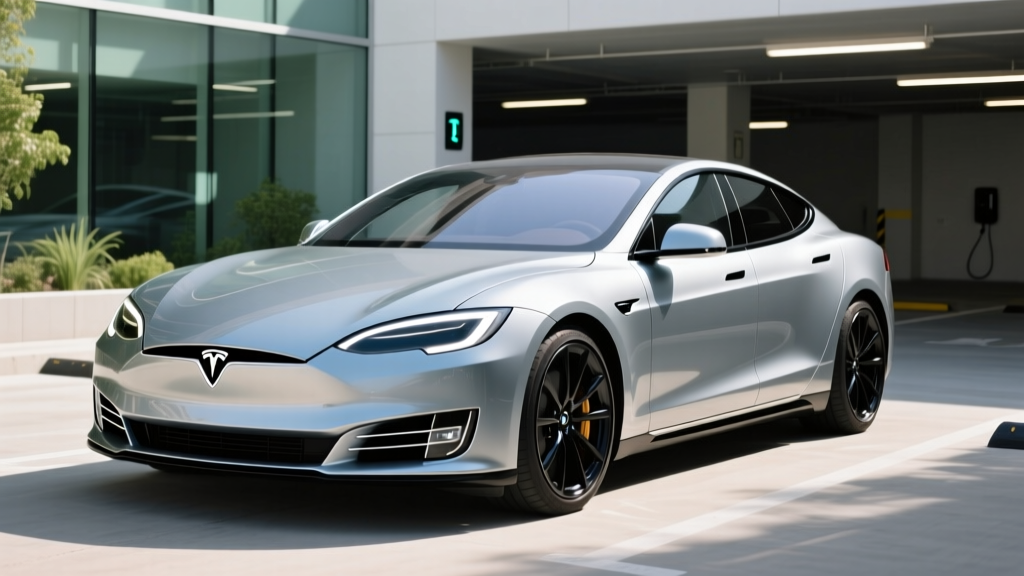
The Tesla Model S Plaid remains the quickest production sedan money can buy, and in 2026, it continues to defend its territory against a wave of luxury EV challengers. With 1,020 horsepower, a sub-two-second 0-60 mph time, and a usable EPA range approaching 400 miles, the Plaid occupies a rare intersection of hypercar performance and daily-driver practicality. But at a starting price pushing $90,000, buyers need to know exactly what they're getting — and what the real-world ownership experience actually looks like beyond the spec sheet.
This review covers the 2026 Tesla Model S Plaid's MSRP breakdown, real-world range data, charging performance, and whether it still justifies its premium against competitors like the Lucid Air Sapphire, Porsche Taycan Turbo GT, and BMW i7 M70.
2026 Tesla Model S Plaid MSRP and Pricing Breakdown
| Specification | 2026 Tesla Model S Plaid |
|---|---|
| Base MSRP | $89,990 |
| As-Tested (with options) | $97,490 – $102,490 |
| Destination Fee | $1,390 |
| Federal Tax Credit (§30D) | Not eligible (exceeds MSRP cap) |
| EPA Range | 396 miles |
| Battery (usable) | ~100 kWh, NMC |
| Drivetrain | Tri-Motor AWD |
| Horsepower | 1,020 HP |
| 0-60 mph | 1.99 seconds |
| Top Speed | 200 mph |
| MPGe (combined) | 116 MPGe |
| Efficiency | 29 kWh/100 mi |
| Battery Warranty | 8 years / 150,000 miles |
The 2026 Tesla Model S Plaid MSRP of $89,990 places it firmly in luxury performance territory. Tesla offers the Model S in two trims: the dual-motor Long Range (starting around $74,990) and the tri-motor Plaid. The Plaid commands a roughly $15,000 premium over Long Range, justified by the third motor, 1,020 HP output, track-tuned suspension, and carbon-sleeved rotor technology.
Options that push the as-tested price above $100,000 include Ultra Red or Quicksilver paint ($2,500), 21-inch Arachnid wheels ($4,500), yoke steering (no-cost option), and Full Self-Driving (Supervised) capability at $8,000. Tesla has periodically adjusted FSD pricing, so check the current configurator before ordering.
Federal Tax Credit Eligibility
The Model S Plaid does not qualify for the $7,500 federal EV tax credit under IRS §30D rules. The law caps sedan eligibility at an MSRP of $55,000 — well below the Plaid's $89,990 starting price. Even the Long Range Model S exceeds this cap. Buyers should not factor any federal credit into their purchase math. Some states offer separate incentives that aren't bound by the federal MSRP cap; check your state's energy office or AFDC state incentive database for local programs.
Real-World Range: What 396 EPA Miles Actually Means
EPA Estimated Range: 396 miles (19-inch wheels) / 359 miles (21-inch wheels)
Real-World Expectations:
- Mixed city/highway (65-75°F): ~340–370 miles
- Sustained highway (75 mph, 70°F): ~300–330 miles
- Cold weather (20-30°F, highway): ~250–280 miles
- Track mode / aggressive driving: Expect 150–200 miles
The EPA's 396-mile figure applies to the Model S Plaid equipped with 19-inch Tempest wheels. Opt for the 21-inch Arachnids and range drops to 359 miles — a meaningful 37-mile penalty for stickier rubber and higher rolling resistance.
According to fueleconomy.gov, the Model S Plaid returns 116 MPGe combined (29 kWh/100 mi). That efficiency figure is impressive for a 1,020-HP, 4,766-pound sedan, but real-world highway driving at sustained speeds above 70 mph will push consumption closer to 33–36 kWh/100 mi, translating to roughly 300–330 miles of practical range on a full charge.
Cold weather remains the Plaid's range kryptonite. Tesla's heat pump helps mitigate cabin heating losses, but battery chemistry (NMC) and the physics of lithium-ion cells at low temperatures mean you should plan for 30–35% range reduction in sub-freezing highway driving. Preconditioning the battery before departure — something Tesla's Scheduled Departure feature handles automatically — recovers some of that loss.
The ~100 kWh usable battery pack uses NMC (nickel manganese cobalt) chemistry, which prioritizes energy density over the cycle-life longevity of LFP cells. For a performance sedan, this is the correct trade-off: you get maximum range in a package that still fits within the car's floorpan constraints.
Charging Performance: DC Fast Charging and Home Setup
| Charging Level | Power / Rate | Time / Range Added |
|---|---|---|
| Level 1 (120V household) | ~1.4 kW | ~3–4 miles per hour |
| Level 2 (240V, 48A Wall Connector) | 11.5 kW | ~34 miles per hour / full charge in ~9 hrs |
| DC Fast Charge (Tesla Supercharger V3) | Peak 250 kW | 10–80% in ~30 minutes |
| DC Fast Charge (V4 Supercharger) | Peak 250 kW (vehicle-limited) | 10–80% in ~30 minutes |
The Model S Plaid peaks at 250 kW on DC fast chargers — specifically Tesla's V3 and V4 Supercharger network. That's a competitive number, though newer architectures from Lucid (300+ kW capability) and Hyundai/Kia (800V systems peaking at 350 kW) have moved the goalposts.
Here's where the charging curve matters more than the peak number. The Plaid sustains its highest charge rates between roughly 10–40% state of charge, then tapers progressively. The 10–80% charge takes approximately 30 minutes at a V3 Supercharger. Above 80%, charging slows dramatically to protect the NMC cells — expect another 20–25 minutes if you need to push to 100%. For road trips, the practical strategy is to charge to 80% and drive.
At home, Tesla's Gen 3 Wall Connector delivers up to 11.5 kW (48 amps on a 60-amp circuit), adding about 34 miles of range per hour. A full 10–100% charge takes roughly 9 hours, meaning an overnight charge easily replenishes even a depleted pack. Installation costs for a Level 2 home setup typically range from $800 to $2,500 depending on panel proximity and whether your electrical panel needs a 200-amp upgrade — a factor many buyers overlook.
The Plaid uses the NACS (North American Charging Standard) connector natively. With Tesla opening its Supercharger network to other manufacturers, the NACS connector is now the de facto industry standard, meaning Plaid owners will never need an adapter at any major network.
Performance: 1,020 HP and the Sub-2-Second 0-60
The tri-motor powertrain — one motor up front, two in the rear — delivers 1,020 horsepower and a claimed 1.99-second 0-60 mph time with rollout subtracted. Independent testing by outlets like Motor Trend and Car and Driver has verified sub-2.0-second runs on prepped surfaces. On a typical street surface, expect 2.1–2.3 seconds, which is still absurdly quick.
The Plaid's carbon-sleeved rotors in the rear motors allow them to spin at up to 20,000 RPM without expanding beyond their stator clearance — an engineering solution to a problem most EVs don't encounter because they simply don't rev that high. The result is sustained power delivery well past 150 mph, where many EVs start to fall off.
Torque vectoring across the tri-motor setup gives the Plaid exceptional corner-exit grip. The adaptive air suspension lowers the car at speed and can be adjusted for track use. Tesla's Track Mode allows fine-tuning of torque distribution, stability control intervention, and cooling system behavior — genuinely useful for owners who attend HPDE events.
Braking is the Plaid's most debated characteristic. Standard steel rotors with Brembo calipers provide adequate stopping power for street use, but repeated track laps will overheat them. Tesla offers an optional carbon-ceramic brake package (approximately $15,000 installed) for serious track use, though it's been subject to availability fluctuations.
Interior, Tech, and Cargo: Practicality Meets Minimalism
The Model S interior has aged better than critics expected after the 2021 refresh, but it remains a polarizing space. The 17-inch center touchscreen dominates the dashboard, running Tesla's proprietary infotainment OS — responsive, feature-rich, and occasionally frustrating in its menu nesting. The 12.3-inch driver display is small by 2026 standards but legible.
The yoke steering wheel remains optional at no extra charge. On track, it works well — you never need to cross your arms. On the street, particularly during low-speed maneuvers and parking, the lack of a full circle is genuinely annoying. Tesla has not introduced variable-ratio steering to compensate, which would solve the issue. Most buyers should opt for the conventional round wheel.
Passenger and cargo dimensions:
- Front legroom: 42.4 inches
- Rear legroom: 35.4 inches
- Cargo (rear trunk): 26.3 cu ft
- Frunk (front trunk): 3.1 cu ft
- Total cargo: 29.4 cu ft (rear seats up)
- Seating: 5 passengers
The rear seat is adequate for adults on shorter trips but not class-leading — the Lucid Air offers noticeably more rear legroom. The 26.3 cu ft trunk is generous for a sedan, and the hatchback-style liftgate makes loading easier than a traditional trunk opening. The frunk is small — useful for charging cables and a soft bag, not much more.
The 22-speaker audio system is one of the best factory-installed units in any vehicle at any price. Active noise cancellation keeps the cabin quiet at highway speeds. Wireless phone charging, ventilated front seats, and a panoramic glass roof (with power sunshade) are standard.
Driver Assistance: Autopilot and FSD (Supervised)
Tesla's Autopilot comes standard and includes adaptive cruise control, lane centering, and automatic emergency braking. It's competent highway driving assistance — nothing more.
SAE Automation Level: Level 2
Both Autopilot and Full Self-Driving (Supervised) are SAE Level 2 systems. The driver must remain fully engaged, hands on the wheel (or yoke), and eyes on the road at all times. These are not self-driving systems. Tesla's FSD (Supervised) handles more complex scenarios — city streets, traffic lights, stop signs — but still requires constant driver supervision and intervention readiness.
The $8,000 FSD (Supervised) upgrade is a personal calculus. It's improved substantially in 2025–2026 with Tesla's v13/v14 neural-network-based stack, handling most urban and suburban scenarios with fewer interventions than earlier versions. But it still makes errors — phantom braking, awkward lane positioning in construction zones, occasional confusion at complex intersections. Consider it an advanced convenience feature, not a chauffeur replacement.
Warranty and Long-Term Battery Outlook
Tesla covers the Model S Plaid's battery and drive unit with an 8-year / 150,000-mile warranty, whichever comes first, with a minimum 70% capacity retention guarantee. The basic vehicle limited warranty is 4 years / 50,000 miles.
NMC batteries in the Model S have demonstrated relatively predictable degradation curves based on fleet data. Expect roughly 5–8% capacity loss in the first 50,000 miles, followed by a slower linear decline. Many high-mileage Model S vehicles from earlier generations retain 85–90% of original capacity at 100,000 miles, though the Plaid's higher-output pack may degrade slightly faster under heavy track use.
Best practices for longevity: charge to 80–90% for daily use (set the charge limit in the app), avoid frequent 100% charges unless needed for trips, and precondition before Supercharger sessions. Battery replacement outside warranty, if ever needed, currently runs $15,000–$22,000 at Tesla service centers — a number to file away for long-term ownership planning.
Model S Plaid vs. the Competition: Is It Worth It?
The Plaid's competitive set has expanded significantly. Here's how it stacks up against key rivals:
| Spec | Tesla Model S Plaid | Lucid Air Sapphire | Porsche Taycan Turbo GT | BMW i7 M70 |
|---|---|---|---|---|
| Base MSRP | $89,990 | $249,000 | $230,000 | $168,500 |
| Horsepower | 1,020 | 1,234 | 1,019 | 650 |
| 0-60 mph | 1.99s | 1.89s | 2.1s | 3.5s |
| EPA Range | 396 mi | 427 mi | 269 mi | 295 mi |
| Peak DC Charge | 250 kW | 300+ kW | 320 kW | 195 kW |
| FSD / ADAS | FSD (Supervised) | DreamDrive Pro | InnoDrive | Driving Asst Pro |
Choose the Model S Plaid if: You want the best performance-per-dollar ratio in a luxury EV sedan, you value Tesla's Supercharger network access, you prioritize range alongside acceleration, and you're comfortable with Tesla's minimalist interior approach and direct-sales service model.
Choose the Lucid Air Sapphire if: Budget is not a constraint and you want the absolute fastest sedan with more interior space and a higher peak charge rate.
Choose the Porsche Taycan Turbo GT if: Track driving is a priority, you want superior build quality and dealer service, and you accept significantly less range.
Choose the BMW i7 M70 if: You prioritize rear-seat luxury, traditional dealer relationships, and don't need sub-2-second acceleration.
The Plaid's price advantage is stark. At $89,990, it delivers 95% of the Lucid Sapphire's performance for roughly 36% of the price. No competitor matches its combination of range, acceleration, and charging infrastructure access at this price point. NHTSA safety data and IIHS ratings should be checked closer to your purchase date for the latest crash-test results.
Pros and Cons
Pros
- Sub-2-second 0-60 mph is unmatched at this price
- 396-mile EPA range eliminates most range anxiety
- Tesla Supercharger network remains the most reliable DC fast-charging option
- Over-the-air updates continuously add features
- 26.3 cu ft hatchback cargo area is highly practical
- Best-in-class infotainment responsiveness
- Excellent 22-speaker audio system
Cons
- No federal tax credit eligibility (MSRP exceeds $55K cap)
- 250 kW peak charge rate now trails 800V competitors
- Yoke steering is impractical for daily street use
- Panel gaps and interior fit/finish lag Porsche and Lucid
- Steel brakes overheat on track without $15K carbon-ceramic upgrade
- Rear seat space is tighter than Lucid Air and BMW i7
- Service center wait times can be lengthy in some markets
Who Should Buy the Tesla Model S Plaid?
The Model S Plaid is built for a specific buyer: someone who wants supercar acceleration in a four-door package they can drive to work every day, who values the security of 396 miles of range and Tesla's Supercharger network for road trips, and who is comfortable with Tesla's tech-forward, dealer-free ownership model.
It's an excellent commuter car if your daily round trip falls within 100–150 miles — you'll charge at home and rarely think about range. It's a capable road-tripper thanks to fast DC charging and route-planning built into the navigation system. It's a legitimate track car in dry conditions, provided you've invested in the carbon-ceramic brakes.
It's not the best choice if you prioritize traditional luxury build quality, need maximum rear-seat comfort for adults, or want the reassurance of a local dealer service department. For those needs, the Porsche Taycan or BMW i7 may serve better — at significantly higher cost.
Frequently Asked Questions
What is the real-world range of the Tesla Model S Plaid?
Expect 300–370 miles in typical mixed driving, depending on speed, temperature, and wheel choice. Highway driving at 75 mph in moderate temperatures yields roughly 300–330 miles. Cold weather (below freezing) reduces this to 250–280 miles on the highway. The 21-inch Arachnid wheels reduce EPA range by 37 miles compared to 19-inch Tempest wheels.
How fast does the Model S Plaid charge at home and on DC fast chargers?
On a Tesla Wall Connector (Level 2, 11.5 kW), the Plaid adds about 34 miles per hour, with a full charge taking roughly 9 hours. On a V3 Supercharger (DC fast), it peaks at 250 kW and charges from 10–80% in approximately 30 minutes. Charging above 80% slows significantly to protect battery health.
Does the Tesla Model S Plaid qualify for the federal EV tax credit?
No. Under IRS §30D rules, the federal tax credit for sedans is capped at vehicles with an MSRP of $55,000 or less. The Model S Plaid starts at $89,990, making it ineligible. Some state-level incentives may still apply — check your state's energy office for details. Consult a tax professional for personalized guidance.
Is the Model S Plaid worth buying over the Lucid Air Sapphire?
For most buyers, yes. The Plaid delivers 95% of the Sapphire's straight-line performance for roughly $160,000 less. The Sapphire offers more power (1,234 HP), more range (427 mi EPA), and a faster peak charge rate, but at $249,000 it occupies a different tier entirely. The Plaid is the rational performance-sedan choice; the Sapphire is an exotic.
What are the biggest drawbacks of the Model S Plaid?
The 250 kW peak charge rate now trails competitors with 800V architectures. The yoke steering wheel is poorly suited to street driving. Interior fit and finish, while improved, don't match Porsche or Lucid. Steel brakes overheat during repeated track use without the expensive carbon-ceramic upgrade. And at $89,990, there's no federal tax credit to soften the price.
How long will the Model S Plaid battery last?
Tesla warranties the battery for 8 years / 150,000 miles with a minimum 70% capacity retention guarantee. Fleet data suggests NMC packs in the Model S typically retain 85–92% capacity at 100,000 miles with normal use. Charging to 80–90% daily (rather than 100%) and preconditioning before fast charging will maximize longevity.