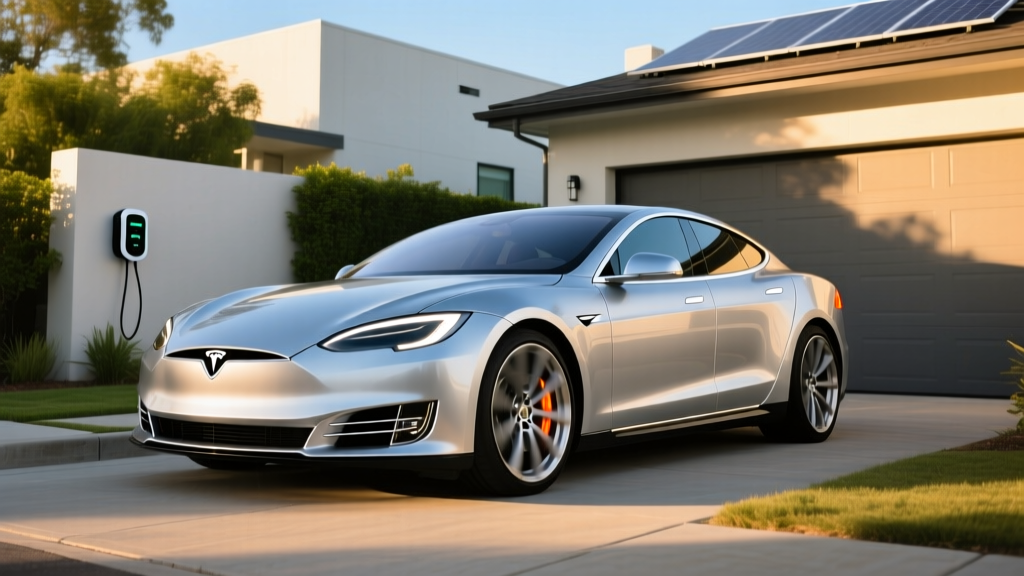
Quick Verdict: Is Leasing the Model S Plaid the Smart Move?
If you want a 1,020-horsepower luxury sedan that hits 60 mph in 1.99 seconds and still delivers over 350 miles of real-world range, the Tesla Model S Plaid remains in a class of one. But buying outright at $89,990+ means absorbing steep depreciation on a six-figure EV. A Tesla Plaid lease — or more accurately, a Tesla-financed arrangement structured like a lease — lets you drive one of the fastest production cars ever built while sidestepping the long-term battery degradation risk and resale-value uncertainty that plague high-performance EVs.
This guide breaks down everything you need to know before signing: real-world range expectations, charging infrastructure requirements, the tax-credit leasing loophole, and how the Plaid stacks up against the Lucid Air Sapphire and Porsche Taycan Turbo GT.
2026 Tesla Model S Plaid: Full Spec Breakdown
| Spec | Value |
|---|---|
| Base MSRP | $89,990 (before incentives) |
| As-Tested (w/ FSD + Paint) | ~$99,490 |
| EPA Range | 396 miles (19" wheels) / 359 miles (21" wheels) |
| Battery Capacity | ~100 kWh usable (NMC chemistry) |
| Drivetrain | Tri-Motor AWD (1 front, 2 rear carbon-sleeved rotors) |
| Horsepower | 1,020 hp |
| 0–60 mph | 1.99 seconds (with rollout subtracted) |
| Top Speed | 200 mph (with hardware upgrade) |
| MPGe (Combined) | 116 MPGe |
| Efficiency | 29 kWh / 100 mi |
| Max DC Fast Charge | 250 kW (V3 Supercharger) |
| 10–80% DC Charge Time | ~30 minutes |
| Level 2 Home Charge Rate | 11.5 kW (~41 mi/hr) |
| Cargo Volume | 28 cu ft (rear) + 5.3 cu ft (frunk) |
| Rear Legroom | 35.4 inches |
| Battery Warranty | 8 years / 150,000 miles (70% capacity retention) |
| Vehicle Warranty | 4 years / 50,000 miles (basic) |
Real-World Range: What the EPA Sticker Doesn't Tell You
EPA Estimate: 396 miles (19" Tempest wheels) / 359 miles (21" Arachnid wheels)
Real-World Highway (70–80 mph, mild weather): ~310–340 miles
Real-World Highway (cold weather, 30°F or below): ~250–280 miles
City / Mixed Commute (mild weather): ~350–380 miles
The Model S Plaid's 396-mile EPA figure is among the highest of any performance sedan, but real-world results depend heavily on three variables: wheel choice, driving style, and ambient temperature.
Wheel selection matters enormously. The 21" Arachnid wheels reduce EPA range by 37 miles compared to the 19" Tempest set. For a Plaid buyer who tracks the car or prioritizes grip, that trade-off may be worth it — but on a road trip from Denver to Moab, those 37 miles could mean the difference between making it to the next Supercharger or not.
Cold weather is the Plaid's biggest range enemy. The NMC battery chemistry, while energy-dense, loses roughly 25–30% of its effective capacity at sustained sub-freezing temperatures. Tesla's heat pump and battery preconditioning mitigate this, but on a January highway run at 75 mph, expect closer to 260 miles before you need to plug in. According to fueleconomy.gov, the Plaid's combined efficiency is 29 kWh/100mi — excellent for a 1,020-hp tri-motor, but physics still demands more energy at high speeds and low temperatures.
The tri-motor advantage: Unlike dual-motor setups, the Plaid's carbon-sleeved rear motors can disconnect under light load, reducing parasitic drag during highway cruising. This is why the Plaid achieves nearly the same EPA range as the dual-motor Model S Long Range (402 miles) despite 350+ more horsepower.
Charging Speed: Supercharger Network vs. Home Setup
Charging a 100 kWh battery requires planning — whether you're on a road trip or topping off in your garage. Here's the full breakdown:
| Charge Level | Power (kW) | Miles Added per Hour | 10–80% Time | Typical Use Case |
|---|---|---|---|---|
| Level 1 (120V household) | ~1.4 kW | ~5 mi/hr | N/A (days) | Emergency / trickle only |
| Level 2 (240V / 48A Wall Connector) | 11.5 kW | ~41 mi/hr | ~7 hours | Overnight home charging |
| DC Fast (V3 Supercharger) | 250 kW peak | ~200 mi in 15 min | ~30 minutes | Road trips |
| DC Fast (V4 Supercharger) | 250 kW (current Plaid cap) | ~200 mi in 15 min | ~30 minutes | Newer Supercharger stations |
The charging curve reality: The Plaid peaks at 250 kW only when the battery is preconditioned (via navigation to a Supercharger) and at a low state of charge (10–25%). Above 50% SoC, the rate tapers significantly — by 80%, you're pulling closer to 70–80 kW. This is standard for NMC chemistry to protect long-term battery health, but it means the last 20% takes nearly as long as the first 50%. For road trips, the practical strategy is to charge from 10–80% and skip the final top-off unless you need the extra miles to reach your destination.
Home charging requirements: To achieve the full 11.5 kW Level 2 rate, you need a Tesla Wall Connector on a 60-amp circuit (requiring a 50-amp breaker). Most modern homes with 200-amp electrical panels can accommodate this, but older homes may need a panel upgrade — typically $1,500–$3,000 from a licensed electrician. A NEMA 14-50 outlet on a 50-amp circuit delivers about 9.6 kW (~34 mi/hr), which is sufficient for most overnight needs.
Tesla Plaid Lease Economics: Pricing, Tax Credits & Monthly Costs
Tesla does not offer traditional leases through a captive finance arm the way BMW or Mercedes do. Instead, Tesla partners with third-party leasing companies and offers its own financing. However, there's a critical distinction in how the IRS §30D federal tax credit applies:
The Model S Plaid's MSRP of $89,990 falls under the §30D sedan cap of $55,000 — it does NOT qualify for the $7,500 new-vehicle tax credit via purchase. However, if leased through a qualifying lessor, the commercial clean vehicle credit (§45W) may allow the leasing company to claim the credit and pass savings through as a reduced lease payment. This is commonly called the "lease loophole." Always confirm with the leasing company and a tax professional before signing.
| Cost Factor | Lease (36 months) | Purchase (Financed) |
|---|---|---|
| Base MSRP / Cap Cost | $89,990 | $89,990 |
| Down Payment / Due at Signing | $7,500–$10,000 | $15,000–$20,000 |
| Estimated Monthly Payment | $1,350–$1,650 | $1,400–$1,700 (72 mo @ 6.5%) |
| Federal Tax Credit (§30D/§45W) | Potentially passed through by lessor | Not eligible (MSRP exceeds $55K sedan cap) |
| End of Term | Return or buy at residual (~55–60%) | Own outright; absorb depreciation |
| Insurance (annual avg.) | $3,800–$4,800 | $3,800–$4,800 |
| Maintenance (annual avg.) | $400–$600 | $400–$800 (increases post-warranty) |
Who benefits most from a Plaid lease? Buyers who want to drive a cutting-edge performance EV for 2–3 years without worrying about battery degradation curves, resale value on a $90K EV, or the risk of Tesla introducing a major refresh that undercuts their trade-in value. The lease structure also allows you to walk away before the battery warranty's 8-year window becomes a concern for second owners.
Performance & Driving: Beyond the 1.99-Second Headline
The 0–60 time gets the headlines, but the Plaid's tri-motor torque vectoring is what transforms daily driving. Each rear wheel receives independent torque management, meaning the car can push more power to the outside wheel in a corner — effectively rotating the car without the stability control cutting power. On canyon roads, this makes a 4,766-lb sedan handle like something 800 pounds lighter.
Track mode allows custom torque distribution (front/rear bias), stability control tuning, and regenerative braking intensity. The carbon-sleeved rotors in the rear motors sustain their 20,000 RPM redline without the sleeve expansion issues that plagued early prototypes — a genuine engineering achievement.
Everyday drivability: In "Chill" mode, the Plaid is a docile luxury cruiser with one-pedal regenerative braking that's among the smoothest in the industry. The adaptive air suspension absorbs highway expansion joints better than most luxury sedans, and the cabin noise at 80 mph is remarkably low thanks to acoustic laminated glass.
Interior, Tech & Standout Features
The Plaid's interior is polarizing — minimalist to some, barren to others. The 17" cinematically-tilted center screen runs a full desktop-class processor (AMD Ryzen), making the infotainment genuinely responsive. Netflix, YouTube, and a full web browser are available while parked. The 22-speaker audio system with active road noise cancellation rivals anything from Burmester or Bowers & Wilkins.
Autopilot & FSD (Supervised): Tesla's driver-assistance suite is standard (Autopilot), with Full Self-Driving (Supervised) available as a $8,000 add-on or $99/month subscription. Important: this is an SAE Level 2 system — you must remain engaged, hands on or near the wheel, eyes on the road at all times. It is not autonomous driving. FSD handles highway on-ramps, lane changes, and some city intersections competently, but requires constant supervision.
Notable drawbacks:
- No physical instrument cluster — speed and navigation info are projected on a small secondary screen to the left, which some drivers find hard to glance at
- Rear seat headroom is tight for passengers over 6'2" due to the sloping roofline
- Build quality has improved significantly since 2022, but panel gaps still don't match Porsche or Lucid at this price point
- Touchscreen-dependent climate and mirror controls require muscle memory
Model S Plaid vs. the Competition
| Spec | Tesla Model S Plaid | Lucid Air Sapphire | Porsche Taycan Turbo GT |
|---|---|---|---|
| Base MSRP | $89,990 | $249,000 | $236,350 |
| Horsepower | 1,020 hp | 1,234 hp | 1,019 hp (Launch Control) |
| 0–60 mph | 1.99 sec | 1.89 sec | 2.1 sec |
| EPA Range | 396 mi | 427 mi | 269 mi |
| Max DC Charge | 250 kW | 300+ kW | 320 kW |
| Battery Warranty | 8 yr / 150K mi | 8 yr / 100K mi | 8 yr / 100K mi |
| Supercharger Access | Native | Adapter available | Adapter available |
| Lease Availability | Third-party / Tesla financing | Limited | Widely available |
The verdict: The Plaid delivers 80% of the Sapphire's performance for 36% of the price, with double the Taycan's range and native Supercharger access. If your budget tops $200K and you want exclusivity, the Sapphire is unmatched. If you prioritize track-focused handling and dealer service infrastructure, the Porsche wins. But for raw value in the hyper-sedan segment, the Plaid has no equal — and leasing makes the math even more compelling.
Pros, Cons & Who Should Lease the Plaid
- Fastest production sedan under $100K (1.99s 0–60)
- 396-mile EPA range — road-trip capable
- Native Supercharger network (17,000+ stalls in North America)
- Tri-motor torque vectoring transforms cornering
- Over-the-air updates continuously add features
- Leasing avoids long-term depreciation risk
- No federal purchase tax credit (MSRP exceeds $55K cap)
- Insurance premiums average $3,800–$4,800/year
- Rear seat headroom limited for tall passengers
- Touchscreen-only controls have a learning curve
- 250 kW max charge rate trails newer 800V competitors
- No traditional lease program — requires third-party arrangement
Best suited for: Performance enthusiasts who daily-drive their cars, tech-forward professionals who value OTA updates and Supercharger convenience, and buyers who want hypercar acceleration without hypercar maintenance. The lease structure specifically suits those who upgrade vehicles every 3 years and want to avoid the depreciation cliff that hits six-figure EVs.
Frequently Asked Questions
Does the Tesla Model S Plaid qualify for the federal EV tax credit?
Not through a direct purchase — the §30D credit caps sedans at $55,000 MSRP, and the Plaid is $89,990. However, leasing through a qualifying lessor may allow the commercial clean vehicle credit (§45W) to apply, with savings potentially passed through as a lower lease payment. Confirm with your lessor and a tax professional. Income limits and battery sourcing rules also apply. See IRS guidelines for current requirements.
What is the real-world highway range of the Model S Plaid?
Expect 310–340 miles at highway speeds (70–80 mph) in mild weather with the 19" wheels. In cold weather (below 30°F), that drops to roughly 250–280 miles. City driving with regenerative braking recovers more energy, pushing mixed-commute range closer to the EPA estimate.
How fast does the Plaid charge at home?
On a Tesla Wall Connector with a 60-amp circuit, the Plaid charges at 11.5 kW, adding about 41 miles of range per hour. A full charge from 10% to 100% takes roughly 8–9 hours. Most owners charge overnight and wake up to a full battery every morning.
Is the Tesla Plaid lease worth it over buying?
Leasing makes sense if you plan to keep the car 2–3 years, want to avoid long-term battery degradation risk, and prefer predictable monthly costs. Buying makes more sense if you plan to keep the car 5+ years, drive fewer than 12,000 miles annually, and want to build equity. The Plaid's depreciation is steeper than a Model 3 or Model Y, making leasing the lower-risk option for most buyers.
Can I charge a Tesla Plaid at non-Tesla chargers?
Yes. The Model S Plaid uses the NACS (North American Charging Standard) connector natively. With a CCS adapter (sold by Tesla for ~$175), you can also use Electrify America, EVgo, and other CCS networks. The Supercharger network remains the most reliable option for road trips, with over 17,000 V3/V4 stalls across North America.
What's the battery replacement cost out of warranty?
A Model S Plaid battery replacement currently costs between $18,000 and $25,000 including labor. However, Tesla's NMC packs have shown strong longevity — data from fleet operators suggests roughly 10–12% degradation over 150,000 miles. The 8-year/150,000-mile warranty covers replacement if capacity drops below 70%.